- Company Articles
- Products and Technology
- Application Cases
- Applications of Heavy Duty Split Foot Seats in Automotive Assembly Lines

Applications of Heavy Duty Split Foot Seats in Automotive Assembly Lines
Related Product
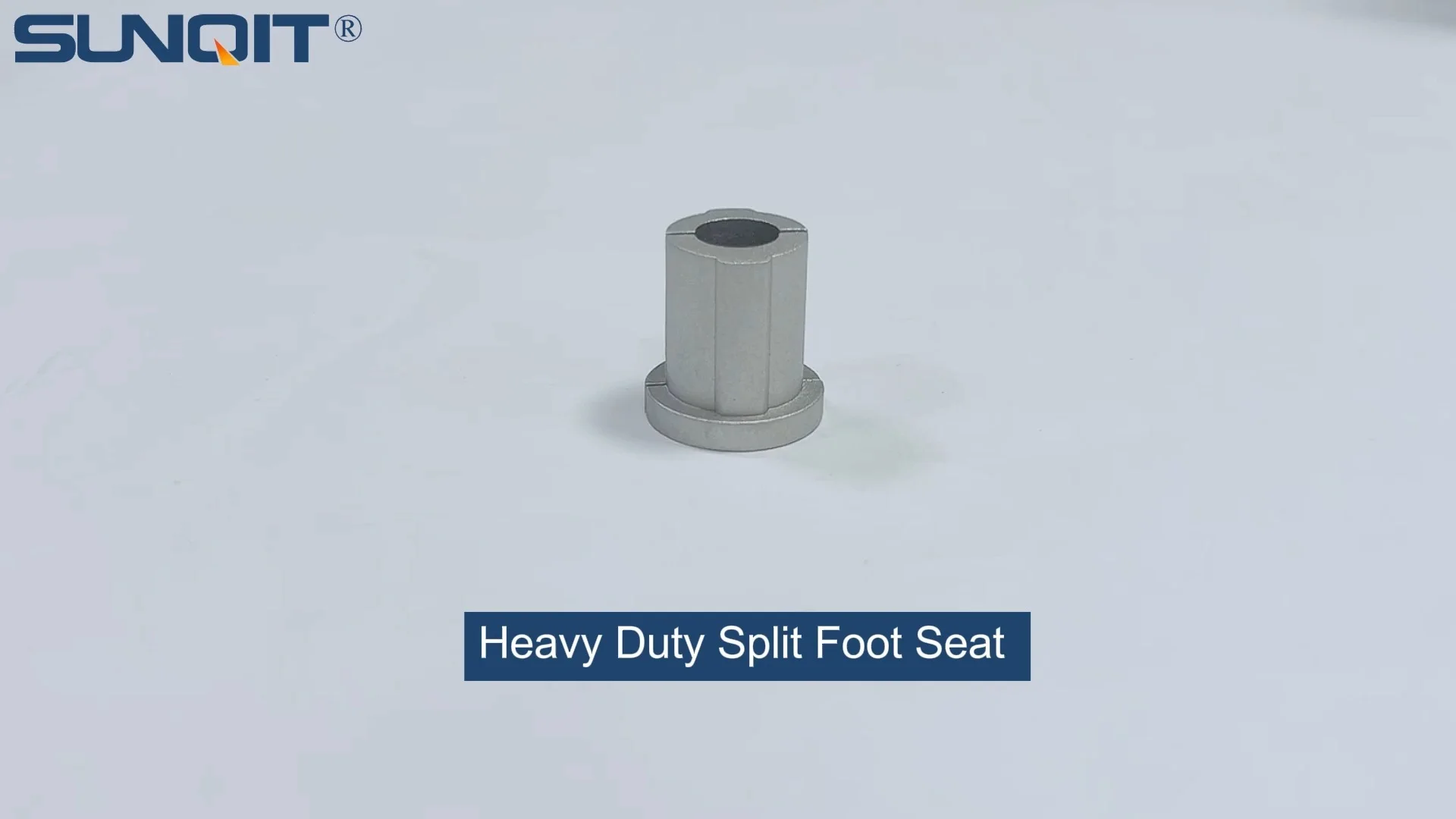
Heavy Duty Split Foot Seat
M10 aluminum heavy duty split foot deat with foot adjuster for workbench and flow rack.
The automotive assembly line is a symphony of precision, where every second counts and every component plays a critical role. From the roar of robotic arms lifting engine blocks to the steady hum of conveyor belts carrying door panels, the rhythm of production depends on the seamless interaction of countless parts—some grand and attention-grabbing, others small but indispensable. Among these unsung heroes are heavy duty split foot seats, unassuming yet vital components that anchor workbenches, stabilize conveyors, and support the backbone of lean manufacturing systems. In this article, we'll explore how these robust fixtures enhance efficiency, ergonomics, and reliability in automotive assembly, and why they've become a cornerstone for facilities aiming to thrive in the fast-paced world of modern car production.
Understanding Heavy Duty Split Foot Seats: Design and Functionality
At first glance, a heavy duty split foot seat might seem like little more than a metal bracket, but its design is a testament to engineering pragmatism. Unlike traditional solid-base foot seats, the "split" structure divides the base into two interconnected parts, allowing for greater adjustability, weight distribution, and stability. Typically crafted from high-grade steel or reinforced aluminum—materials chosen for their tensile strength and resistance to corrosion—these foot seats are built to withstand the relentless demands of automotive environments, where vibrations, heavy loads, and constant use are the norm.
Key features include adjustable height mechanisms (often via threaded bolts or hydraulic systems), non-slip rubber or plastic pads to grip the floor, and compatibility with modular mounting systems. This versatility makes them adaptable to a range of surfaces, from smooth factory floors to uneven concrete, ensuring that whatever they support—be it a workbench, a conveyor segment, or a material rack—remains steady and secure. For automotive plants, where even a minor wobble can lead to misaligned parts or tool malfunctions, this stability is not just a convenience; it's a safeguard against costly errors.
Aligning with Lean Systems: Efficiency at the Core
In the world of automotive manufacturing, the lean system reigns supreme—a philosophy centered on eliminating waste, streamlining processes, and maximizing value. Heavy duty split foot seats align perfectly with these goals, acting as silent enablers of efficiency. Let's break down how:
- Reduced Downtime: Their robust construction minimizes the risk of failure, meaning less time spent replacing broken foot seats and more time focused on production. In a line that produces hundreds of cars daily, even 10 minutes of unplanned downtime per station can translate to significant losses.
- Adaptability: Lean systems thrive on flexibility, and split foot seats deliver. Whether a workbench needs to be repositioned for a new model or a conveyor adjusted to accommodate larger parts, their adjustable design allows for quick modifications without the need for custom fabrication.
- Long-Term Cost Savings: While initial costs may be higher than generic foot seats, their durability lowers replacement and maintenance expenses over time—a classic example of lean's "invest to save" mindset.
Consider a scenario where a plant switches from flimsy, one-size-fits-all foot seats to heavy duty split versions. Workers notice that their workbenches no longer shift when they apply force with power tools, reducing the need to recheck part alignments. Maintenance crews report fewer service calls for loose or broken bases. Over six months, the plant calculates a 12% reduction in time spent on non-value-added tasks related to workstation stability—all thanks to a component that often goes unnoticed. That's the lean difference, and split foot seats are right in the thick of it.

Supporting Workbenches: The Heart of Assembly Tasks
Walk through any automotive assembly line, and you'll find workbench stations scattered throughout—hubs where workers assemble intricate components, from wiring harnesses to brake calipers. These workbenches are more than just tables; they're command centers, holding tools, parts bins, and sometimes even small machinery. For them to function effectively, they need a base that can handle heavy loads (often 500kg or more) and adapt to the physical needs of workers.
Heavy duty split foot seats shine here. Their split design distributes weight evenly across the floor, preventing the bench from tilting even when loaded unevenly (e.g., a 20kg torque wrench on one corner and a bin of screws on the other). Height adjustability is another game-changer: Workers of different statures can tweak the bench height to avoid hunching or reaching, reducing strain on backs and shoulders. Over time, this ergonomic benefit translates to lower absenteeism and higher productivity—a win for both employees and management.
Many modern workbenches in automotive plants are built using aluminum profile frames—lightweight, modular, and easy to customize. Heavy duty split foot seats integrate seamlessly with these profiles, often via pre-drilled holes or clamping mechanisms. This compatibility allows for quick assembly and reconfiguration, a boon when the line switches from producing sedans to SUVs and workbench needs change. For example, a bench used for installing door panels might need additional support when handling larger SUV doors; with split foot seats, workers can add extra bases or adjust existing ones in minutes, rather than waiting for a new bench to be built.

Stabilizing Conveyor Systems: Keeping the Line Moving
If workbenches are the command centers, conveyor systems are the circulatory system of the assembly line, transporting parts from one station to the next with clockwork precision. Whether it's a belt conveyor carrying dashboard assemblies or a roller conveyor moving engine blocks, stability is non-negotiable. A shaky conveyor can jostle parts out of alignment, cause jams, or even damage sensitive components like electronic control units.
Heavy duty split foot seats play a critical role in anchoring these conveyors. Unlike fixed mounts, their split design absorbs vibrations from the conveyor's motor and the movement of heavy parts, preventing resonance that could loosen bolts or warp frames. This is especially important for high-speed conveyors, where even minor instability can escalate into major issues. Additionally, in plants that use mobile conveyors (equipped with caster wheel systems for flexibility), split foot seats often double as "brakes": when the conveyor is in use, the foot seats are lowered to grip the floor, locking the unit in place; when repositioning is needed, they're raised, allowing the casters to roll freely.
Case Study: A Mid-Size Automotive Plant's Success Story
A automotive component manufacturer in Michigan recently upgraded 30 conveyor stations and 15 workbenches with heavy duty split foot seats. Prior to the upgrade, they struggled with frequent conveyor jams caused by unstable bases, leading to 2-3 hours of downtime weekly. Workers also reported wrist and back pain from poorly positioned workbenches.
After installing the new foot seats, conveyor jams dropped by 85%, cutting downtime to under 30 minutes weekly. Worker surveys showed a 40% reduction in reported discomfort, and the plant saw a 5% increase in daily output. The ROI? The upgrade paid for itself in just 4 months, thanks to reduced downtime and improved productivity.

Compatibility with Aluminum Profiles: Modularity and Speed
The rise of aluminum profile systems in manufacturing has revolutionized how workstations and equipment are built. These lightweight, durable profiles can be assembled into frames, shelves, and enclosures in hours, not days, using simple connectors. Heavy duty split foot seats are designed to work hand-in-hand with these systems, offering pre-engineered mounting points that align with standard profile grooves (e.g., T-slots). This means that when a plant needs to build a new workbench or modify an existing conveyor, the foot seats can be attached in minutes, without welding or custom drilling.
For example, a plant producing electric vehicle batteries might need a custom workbench to hold specialized testing equipment. Using aluminum profiles and split foot seats, the maintenance team can design the bench, assemble the frame, attach the foot seats, and have the station operational in a single shift. This agility is crucial in today's automotive industry, where product cycles are shorter and customization demands are higher than ever.
The Human Factor: Ergonomics and Worker Well-Being
Beyond efficiency and stability, heavy duty split foot seats have a profound impact on the people behind the production line. Automotive assembly is physically demanding work, and ergonomic design is key to keeping workers healthy and motivated. Split foot seats contribute here by allowing precise height adjustment of workbenches and conveyor stations, ensuring that workers can maintain neutral postures (e.g., elbows at 90 degrees, wrists straight) while performing tasks.
Studies show that ergonomically optimized workstations reduce the risk of musculoskeletal disorders (MSDs) by up to 60%. For employers, this means lower workers' compensation claims, higher retention rates, and a more engaged workforce. As one assembly line supervisor put it: "When your team isn't worrying about their back hurting or the bench shaking, they can focus on building quality parts. That's priceless."
Future Trends: Innovations in Heavy Duty Split Foot Seats
As automotive manufacturing evolves, so too do the components that support it. Heavy duty split foot seats are no exception. Emerging trends include:
- Smart Adjustment: Integration with sensors and IoT technology to automatically adjust height based on worker proximity or task requirements (e.g., lowering the bench when a worker approaches, raising it when they step away).
- Eco-Friendly Materials: Use of recycled steel and aluminum, plus biodegradable non-slip pads, to align with sustainability goals.
- Enhanced Vibration Dampening: Advanced rubber compounds and spring-loaded designs to better absorb shock in high-impact areas (e.g., near stamping presses).
Conclusion: Small Parts, Big Impact
In the grand scheme of automotive manufacturing, heavy duty split foot seats may not grab headlines like autonomous robots or 3D-printed parts. But their role is undeniable: they anchor the tools, stabilize the conveyors, and support the workers who bring cars to life. By aligning with lean systems, enhancing ergonomics, and integrating seamlessly with modern modular setups (like aluminum profile workbenches and caster-equipped conveyors), these unassuming components are quietly driving efficiency and reliability in plants worldwide.
As the automotive industry continues to push for faster production, higher quality, and greater sustainability, the demand for smart, durable, and adaptable components like heavy duty split foot seats will only grow. After all, in a world where every detail matters, the smallest parts often make the biggest difference.