- Company Articles
- Products and Technology
- Application Cases
- Applications of Internal Straight Aluminum Joint in Pharmaceutical Packaging Lines

Applications of Internal Straight Aluminum Joint in Pharmaceutical Packaging Lines
Related Product
Internal straight aluminum joint
Aluminum pipe joint inside connection used for two pcs 28pcs aluminum pipe connection in straight angle,it connects two pcs pipe from inside.
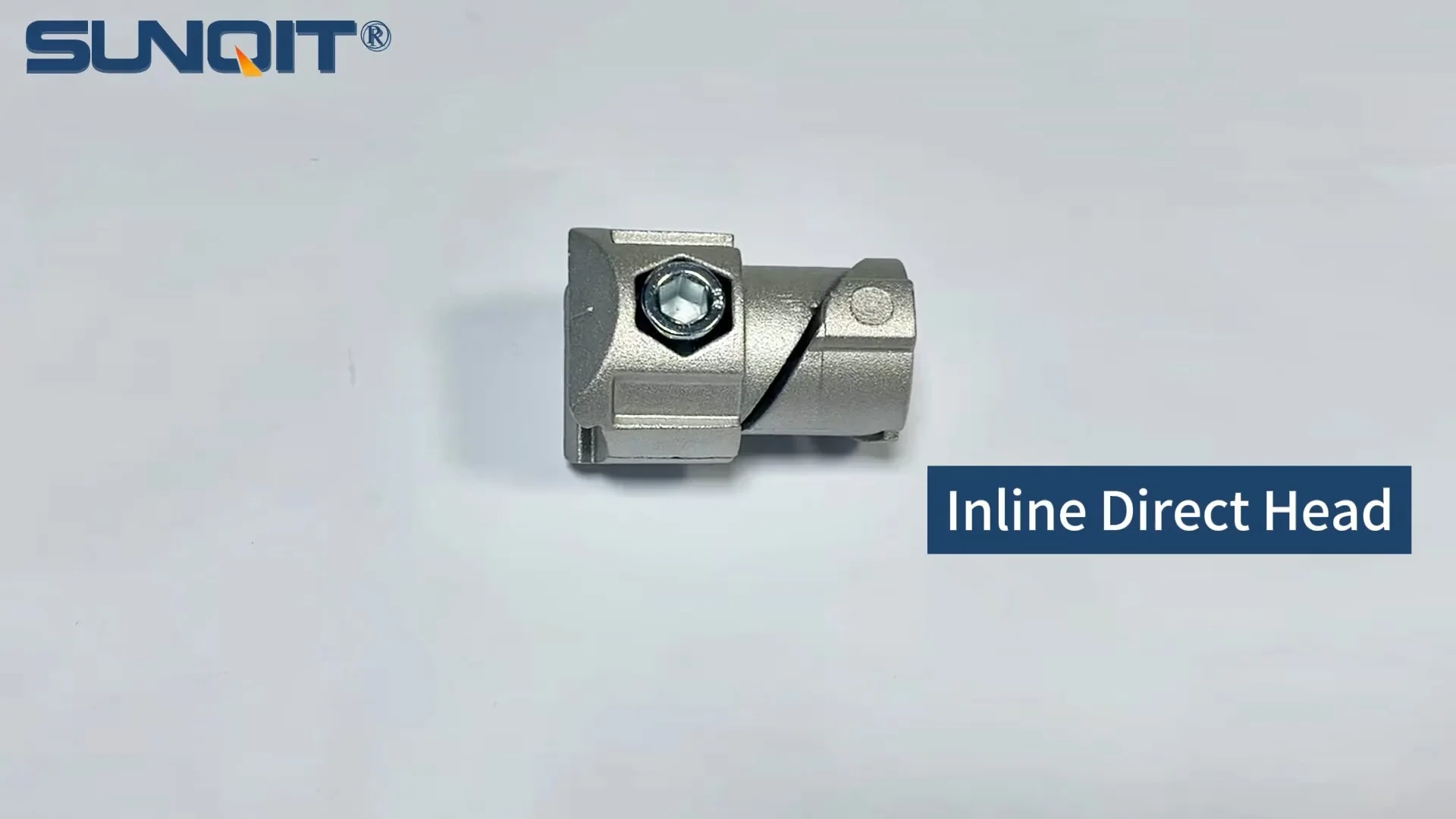
In the fast-paced world of pharmaceutical manufacturing, where precision, compliance, and adaptability are non-negotiable, the tools and systems that power production lines play a silent yet critical role. Among these, modular industrial components have emerged as game-changers, offering the flexibility to evolve with shifting production needs while upholding the strict hygiene and safety standards the industry demands. Today, we're shining a spotlight on one such unsung hero: the internal straight aluminum joint. Far more than a simple connector, this component is the linchpin of modular systems that keep pharmaceutical packaging lines running smoothly, efficiently, and in line with regulatory requirements. Let's dive into how it works, why it matters, and the tangible impact it has on the day-to-day operations of pharmaceutical facilities worldwide.
What Are Internal Straight Aluminum Joints?
Before we explore their applications, let's start with the basics: what exactly is an internal straight aluminum joint? At its core, it's a specialized connector designed to join lengths of aluminum lean pipe (or aluminum profile) in a straight line, creating rigid, stable frameworks for everything from workbenches to flow racks. Unlike external joints that clamp around the pipe's exterior, internal straight joints fit inside the hollow aluminum pipe, creating a seamless, low-profile connection that minimizes gaps, reduces debris buildup, and enhances the overall cleanliness of the system.
Constructed from high-grade aluminum alloy, these joints are lightweight yet surprisingly strong, capable of supporting heavy loads without compromising on durability. They typically feature precision-machined threads or friction-fit designs that allow for tool-free assembly—meaning workers can set up or reconfigure systems in minutes, not hours. This blend of strength, simplicity, and hygiene makes them ideal for environments where every detail counts, especially pharmaceutical packaging lines where even a tiny crevice for dust could violate GMP (Good Manufacturing Practice) standards.
But what truly sets internal straight aluminum joints apart is their compatibility with aluminum lean pipe and aluminum profile accessories. When paired with these components, they form modular systems that can be customized to fit almost any production need. Whether you're building a workbench for labeling vials, a flow rack for moving blister packs, or a turnover trolley for transporting raw materials, these joints provide the structural integrity to keep things stable while allowing for quick adjustments as production demands change.
The Design Benefits: Why Pharmaceutical Lines Choose Internal Straight Aluminum Joints
Pharmaceutical packaging isn't just about putting products in boxes—it's about ensuring every step of the process meets FDA, EMA, and local regulatory standards. That means equipment must be easy to clean, resistant to corrosion, and adaptable enough to handle small-batch runs or large-scale production. Internal straight aluminum joints check all these boxes, and more. Let's break down their key advantages:
- Hygiene by Design: In pharmaceutical settings, even the smallest gap can harbor bacteria or contaminants. Internal straight aluminum joints eliminate this risk by fitting flush inside the aluminum pipe, leaving no external crevices where dust, moisture, or product residue can accumulate. This seamless design makes cleaning a breeze—simply wipe down the framework with a disinfectant, and you're ready for the next batch. Compare this to traditional welded steel joints, which often have rough edges or weld beads that trap debris, and it's clear why aluminum joints are the preferred choice for GMP-compliant facilities.
- Corrosion Resistance: Aluminum naturally forms a protective oxide layer that resists rust and corrosion, making it far more durable than steel in humid or chemically treated environments. Pharmaceutical packaging lines often use sanitizing agents or alcohol-based cleaners; with internal straight aluminum joints, there's no need to worry about rust weakening the structure over time. This longevity translates to lower replacement costs and fewer production disruptions—critical in an industry where downtime can cost thousands of dollars per hour.
- Tool-Free Assembly and Reconfiguration: Traditional manufacturing systems are often "set it and forget it"—welded steel frames that can't be adjusted without cutting or rewelding. Internal straight aluminum joints, however, are designed for flexibility. Most models twist or snap into place, requiring only a rubber mallet or hand pressure to secure. This means if your packaging line needs to switch from filling 10ml vials to 50ml bottles, you can reconfigure your workbench or flow rack in minutes, not days. For pharmaceutical companies juggling multiple product lines, this adaptability is a game-changer.
- Lightweight Strength: Aluminum is significantly lighter than steel, which makes modular systems easier to move, install, and reposition. Yet despite their light weight, internal straight aluminum joints (when paired with aluminum lean pipe) can support impressive loads—often up to 200kg per linear meter. This is crucial for flow racks holding heavy batches of medications or workbenches loaded with packaging equipment like labelers or cappers. Workers no longer need to strain to adjust systems, reducing the risk of workplace injuries and improving overall ergonomics.
- Compatibility with Aluminum Profile Accessories: The true power of internal straight aluminum joints lies in their ability to work with a wide range of aluminum profile accessories. Need to add a shelf to your workbench? Screw in a bracket using the T-slot on the aluminum profile. Want to attach a tool holder or a monitor arm? There's an accessory for that. This modularity means pharmaceutical facilities can build systems that grow with their needs, without investing in entirely new equipment every time production requirements change.

Real-World Applications: How Pharmaceutical Packaging Lines Use Internal Straight Aluminum Joints
Now that we understand the "why," let's explore the "how." Internal straight aluminum joints aren't just theoretical—they're hard at work in pharmaceutical facilities around the globe, powering critical parts of the packaging process. Below are some of the most common applications, along with how these joints enhance performance:
1. Workbenches: The Heart of Packaging Operations
Every pharmaceutical packaging line has workbenches where operators sort, inspect, label, or assemble products. These workbenches need to be stable, adjustable (to accommodate workers of different heights), and easy to clean. Internal straight aluminum joints make this possible by forming the backbone of the workbench frame—typically built from aluminum lean pipe. For example, the "Workbench E (Single Deck-Without Caster)" model, a popular choice in pharmaceutical facilities, uses internal straight joints to connect vertical and horizontal aluminum pipes, creating a sturdy surface that can support labelers, checkweighers, and even small filling machines.
What makes these workbenches so versatile is their ability to adapt. If a facility switches from manual labeling to automated systems, operators can quickly add side shelves (using aluminum profile accessories like brackets or T-slot nuts) to hold the new equipment. The internal straight joints ensure these additions stay secure, even during long production runs. And when it's time for deep cleaning—say, between product batches—the workbench can be disassembled in minutes, with joints simply twisted apart for thorough sanitization.
2. Flow Racks: Streamlining Material Handling
Pharmaceutical packaging lines thrive on efficiency, and nothing slows down production like bottlenecks in material flow. Flow racks—systems of inclined roller tracks that allow products to glide from one station to the next—solve this problem by ensuring a steady supply of packaging materials (like bottles, caps, or blister packs) to operators. Internal straight aluminum joints are critical here, as they anchor the aluminum profile frames that support the roller tracks, ensuring alignment and stability.
Take the "Material Rack B (3 Row and 3 Floor)" design, commonly used for storing and dispensing empty vials. Built with aluminum lean pipe and internal straight joints, this rack features multiple levels of roller tracks, each angled slightly to let vials roll forward as the front ones are used. The joints keep the frame square and rigid, preventing the tracks from misaligning (which could cause jams or spills). And because the joints allow for tool-free adjustments, facilities can reconfigure the rack's height or number of rows to fit different vial sizes—no need to buy a new rack for each product.
3. Conveyor Systems: Moving Products with Precision
From filling to capping to final inspection, pharmaceutical products spend a lot of time on conveyors. These systems need to be reliable, gentle (to avoid damaging delicate vials or tablets), and easy to clean. Many modern conveyor frames are built using aluminum lean pipe and internal straight aluminum joints, which offer the perfect balance of strength and flexibility.
For example, roller conveyors used to transport blister packs often feature aluminum frames assembled with internal straight joints. The joints ensure the rollers are evenly spaced and aligned, preventing packs from getting stuck or skewed. And if a section of the conveyor needs to be extended or shortened (to accommodate a new machine, for instance), workers can simply add or remove pipe lengths and reattach the joints—no welding or heavy tools required. This modularity is especially valuable for pharmaceutical companies that frequently update their packaging lines to meet new regulatory requirements or introduce new products.
4. Turnover Trolleys: Safe, Sanitary Transport
Behind the scenes, turnover trolleys are the unsung workhorses of pharmaceutical facilities, shuttling raw materials, semi-finished products, and waste between stations. These trolleys need to be lightweight (for easy maneuvering), durable (to withstand daily use), and easy to sanitize. Internal straight aluminum joints make them all of these things.
A typical trolley might feature an aluminum lean pipe frame with a flat aluminum honeycomb panel top, assembled using internal straight joints. The joints keep the frame rigid enough to carry heavy loads (like cases of empty syringes) while keeping the overall weight low—so workers can push or pull the trolley without straining. When not in use, the trolley can be disassembled for compact storage, with joints twisted apart and pipes stacked neatly. And because aluminum resists corrosion, there's no risk of rust stains transferring to clean products—a common issue with steel trolleys in humid environments.

Comparing Joint Types: Why Internal Straight Aluminum Stands Out
To truly appreciate the value of internal straight aluminum joints, it helps to see how they stack up against other common joint types used in industrial settings. Below is a comparison table highlighting key features relevant to pharmaceutical packaging lines:
| Feature | Internal Straight Aluminum Joint | Plastic Lean Pipe Joint | Stainless Steel Welded Joint |
|---|---|---|---|
| Material | Aluminum alloy | Polypropylene or nylon | Stainless steel (welded) |
| Corrosion Resistance | Excellent (oxide layer protection) | Good (resistant to chemicals, but prone to UV damage) | Excellent, but heavier and more expensive |
| Assembly Time | Tool-free; 5–10 minutes per joint | Tool-free; 3–5 minutes per joint | Requires welding; 30–60 minutes per joint |
| Modularity | High (easily disassembled/reconfigured) | High (but less durable for heavy loads) | Low (permanent; cannot be reconfigured) |
| Hygiene Compliance | Excellent (seamless internal fit; no crevices) | Good (smooth exterior, but may develop cracks over time) | Poor (weld beads trap debris; hard to clean) |
| Load Capacity | High (up to 200kg per linear meter with aluminum pipe) | Medium (best for light loads; prone to bending) | Very high (but overkill for most packaging needs) |
| Cost | Moderate (higher than plastic, lower than stainless steel) | Low (but shorter lifespan) | High (material + labor costs for welding) |
As the table shows, internal straight aluminum joints strike a balance that's hard to beat for pharmaceutical applications. They offer better durability and hygiene than plastic joints, without the high cost and lack of flexibility of stainless steel welded joints. For facilities prioritizing compliance, adaptability, and long-term value, they're the clear choice.
Case Study: How a Global Pharma Company Improved Efficiency with Internal Straight Aluminum Joints
To put these benefits into perspective, let's look at a real-world example. A leading global pharmaceutical manufacturer with a facility in Germany was struggling with its packaging line for oral tablets. The line used older steel workbenches and welded conveyor frames, which were heavy, hard to clean, and impossible to reconfigure. When the company introduced a new tablet size, the existing setup couldn't accommodate the larger blister packs, leading to production delays and increased labor costs as workers manually adjusted equipment.
Seeking a solution, the facility turned to modular systems built with aluminum lean pipe and internal straight aluminum joints. Over a weekend, they replaced the steel workbenches with adjustable aluminum models (using Workbench E designs) and reconfigured the flow racks and conveyors to fit the new blister pack size. The results were striking:
- 30% Faster Changeovers: Reconfiguring the workbench and flow racks now takes just 2 hours, down from 8 hours with the old steel systems. This allowed the facility to run three product batches per day instead of two.
- 50% Reduction in Cleaning Time: The seamless aluminum frames with internal joints are easier to wipe down, cutting daily cleaning time from 45 minutes to 20 minutes.
- Improved Compliance: GMP audits now show zero findings related to equipment hygiene, compared to previous issues with debris trapped in steel welds.
- Lower Labor Costs: Workers no longer need to strain to move heavy steel equipment, reducing fatigue and lowering the risk of injuries. The facility reported a 25% decrease in workplace incidents in the first six months.
Today, the company has rolled out aluminum modular systems with internal straight joints across 12 of its global packaging facilities, citing "unmatched flexibility and compliance" as the key drivers of success.
Maintenance and Best Practices for Longevity
Like any industrial component, internal straight aluminum joints perform best when properly maintained. Fortunately, their design makes upkeep simple—here are a few tips to ensure your joints (and the systems they support) last for years:
- Regular Inspections: Check joints monthly for looseness, especially in high-vibration areas like near conveyors or labelers. A loose joint can cause misalignment, leading to jams or unstable workbenches. Tighten gently by hand or with a rubber mallet—over-tightening can strip threads or damage the aluminum.
- Cleaning Protocol: Use mild, pH-neutral detergents and a soft cloth to clean joints and aluminum pipes. Avoid abrasive scours or harsh chemicals (like bleach or ammonia), which can damage the aluminum's protective oxide layer. For stubborn residue, a 50/50 mix of water and isopropyl alcohol works well.
- Protect from Impact: While aluminum is strong, it can dent if struck by heavy equipment. Use corner guards or bumpers on workbenches and flow racks in high-traffic areas to prevent accidental damage to joints.
- Store Spare Joints: Keep a small stock of internal straight aluminum joints on hand for quick replacements. This minimizes downtime if a joint becomes damaged or worn.
Future Trends: Where Internal Straight Aluminum Joints Are Headed
As pharmaceutical manufacturing continues to evolve—with trends like personalized medicine, smaller batch sizes, and Industry 4.0 integration—modular systems will only grow in importance. Internal straight aluminum joints are poised to play a key role in this evolution, with several exciting developments on the horizon:
- Smart Joints with Sensors: Imagine joints embedded with tiny sensors that monitor temperature, vibration, or load stress. These "smart" joints could send real-time data to a central system, alerting maintenance teams to loose connections or potential failures before they cause downtime. Early prototypes are already being tested in pilot facilities.
- 3D-Printed Custom Accessories: While internal straight joints themselves are mass-produced, 3D printing could allow facilities to create custom aluminum profile accessories (like specialized brackets or tool holders) that snap into T-slots, further enhancing system flexibility.
- Eco-Friendly Materials: Aluminum is already 100% recyclable, but manufacturers are exploring ways to use recycled aluminum in joint production, reducing the carbon footprint of modular systems even further.
Conclusion: The Silent Partner in Pharmaceutical Packaging Success
In the high-stakes world of pharmaceutical packaging, every component matters. From the precision of filling machines to the reliability of conveyor belts, each piece contributes to the final product's safety and quality. Internal straight aluminum joints may not grab headlines, but they're the silent partners that make modern, flexible, and compliant packaging lines possible.
By offering unmatched hygiene, adaptability, and durability, these joints empower pharmaceutical facilities to meet strict regulatory standards, adapt to changing production needs, and keep costs in check. Whether you're building a simple workbench or a complex conveyor system, they provide the foundation for efficiency and success.
As the industry continues to evolve, one thing is clear: modular systems built with aluminum lean pipe, aluminum profile accessories, and internal straight aluminum joints will remain at the forefront of pharmaceutical packaging innovation. They're not just tools—they're the future of flexible, compliant, and efficient manufacturing.