- Company Articles
- Products and Technology
- Application Cases
- Applications of M10*56 Rubber Leveling Feet in Automotive Manufacturing

Applications of M10*56 Rubber Leveling Feet in Automotive Manufacturing
Related Product
M10*56 Rubber Leveling Feet
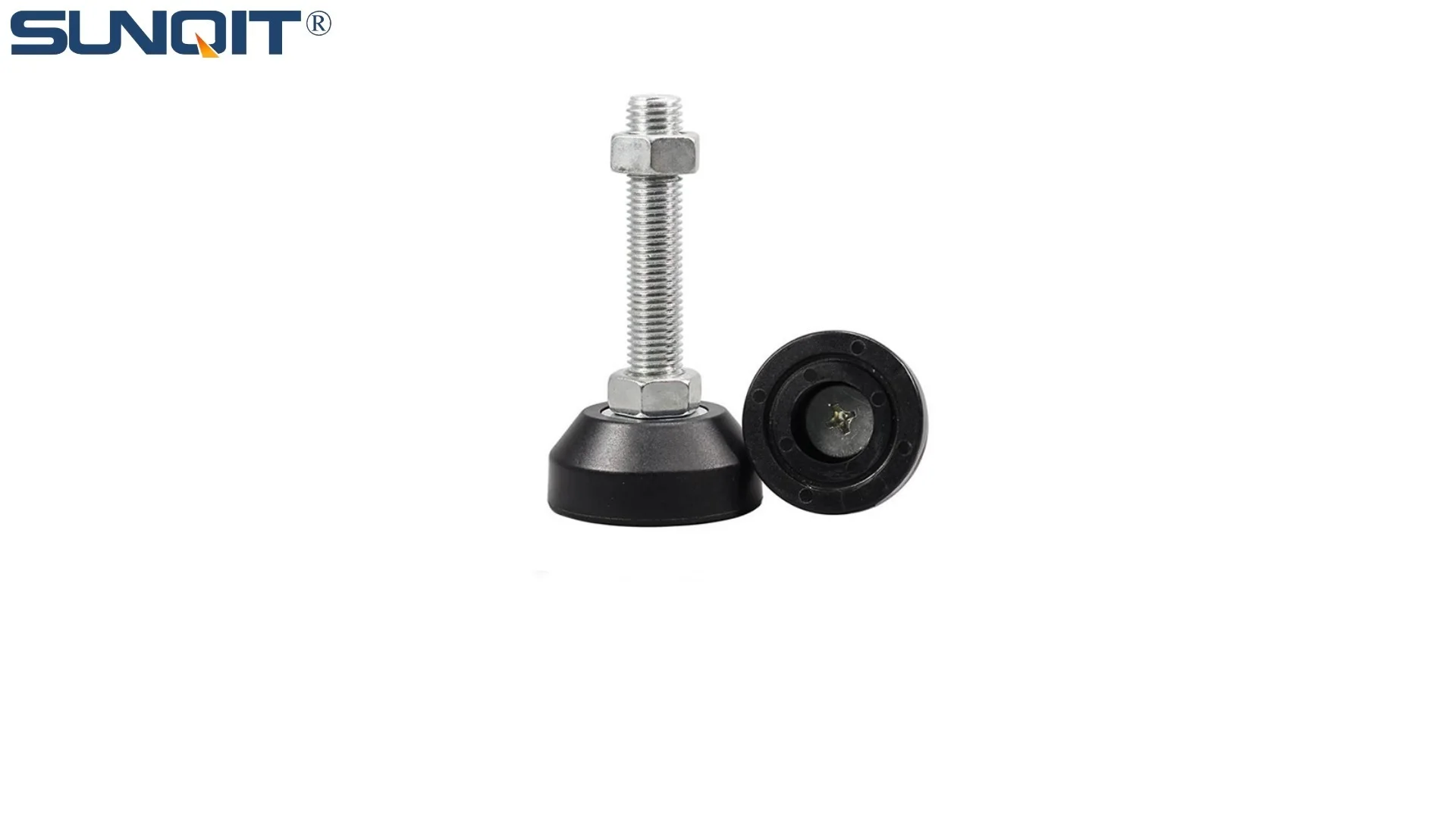
Adjustable leveling feet are designed to keep machines level when placed on uneven or sloped ground. Otherwise known as adjustable equipment feet, they are available to order in a wide variety of size and load capacity combinations.
In the high-stakes world of automotive manufacturing, where precision is measured in millimeters and production timelines leave no room for error, every component—no matter how small—plays a critical role in ensuring success. From the roaring engines that power vehicles to the intricate wiring harnesses that connect their systems, each part demands careful handling, assembly, and testing. Yet, among the industry's most celebrated innovations, there exists a humble yet indispensable component that often goes unnoticed: the M10*56 rubber leveling foot. Though small in size, this unassuming part is a silent workhorse, quietly ensuring stability, precision, and safety across production lines. In this article, we'll explore how M10*56 rubber leveling feet have become a cornerstone of modern automotive manufacturing, supporting everything from workbenches and conveyors to lean systems and aluminum profile structures. By the end, you'll understand why these tiny components are so vital to keeping the wheels of automotive production turning smoothly.
Understanding M10*56 Rubber Leveling Feet: Design, Materials, and Specifications
Before diving into their applications, let's take a closer look at what makes M10*56 rubber leveling feet unique. At first glance, they may seem simple—a threaded stem topped with a rubber base—but their design is the result of careful engineering to meet the rigorous demands of automotive environments. Let's break down their key components and specifications.
Design and Structure
The M10*56 rubber leveling foot consists of two primary parts: a threaded metal stem and a rubber base. The stem, typically made of high-grade steel, features an M10 thread (meaning a 10mm diameter) and a length of 56mm, allowing for significant adjustability. This threading is critical—it enables operators to twist the foot up or down, raising or lowering the equipment it supports to compensate for uneven floors or achieve precise height alignment. The rubber base, often crafted from durable materials like EPDM (ethylene propylene diene monomer) or nitrile rubber, serves two key purposes: providing grip to prevent slipping and absorbing vibrations that could disrupt sensitive operations.
Many models also include a hexagonal nut welded to the stem, allowing for easy adjustment with a wrench, and a metal plate between the stem and rubber base to distribute weight evenly. This plate ensures that the load is spread across the entire rubber surface, reducing wear and extending the foot's lifespan. Some variants may also feature a corrosion-resistant coating on the steel stem, such as zinc plating, to protect against the oils, coolants, and chemicals commonly found in automotive plants.
Materials: Balancing Strength and Flexibility
The choice of materials in M10*56 rubber leveling feet is no accident. Steel is selected for the stem for its exceptional strength-to-weight ratio; it can support heavy loads—often up to 500kg or more per foot—without bending or warping. This is crucial in automotive manufacturing, where workbenches may hold engine blocks, and conveyors may transport fully assembled car doors. Meanwhile, the rubber base is chosen for its elasticity and resilience. EPDM rubber, for example, offers excellent resistance to heat, ozone, and chemicals, making it ideal for environments where temperatures can fluctuate and exposure to oils or cleaning agents is common. Nitrile rubber, on the other hand, provides superior abrasion resistance, ensuring the base doesn't wear down quickly even with constant contact with concrete or epoxy floors.
Key Specifications
To appreciate their versatility, let's outline the typical specifications of M10*56 rubber leveling feet:
- Thread Size: M10 (10mm diameter), with a standard pitch of 1.5mm, ensuring compatibility with most industry-standard threaded holes in equipment legs.
- Stem Length: 56mm, providing an adjustment range of approximately 30-40mm (depending on how much of the stem is threaded into the equipment). This range is sufficient to compensate for most floor unevenness in manufacturing facilities.
- Load Capacity: Typically 300-500kg per foot, though heavy-duty variants can support up to 1000kg. This makes them suitable for both light equipment (like inspection workbenches) and heavy machinery (like conveyor supports).
- Rubber Base Diameter: Usually 40-60mm, offering a stable footprint to prevent tipping. The larger the base, the more weight it can distribute, reducing pressure on the floor.
- Temperature Resistance: -40°C to 100°C (for EPDM rubber), ensuring performance in both cold storage areas and warm production zones (e.g., near welding stations).
- Chemical Resistance: Resistant to oils, greases, coolants, and mild acids—common in automotive plants where spills are inevitable.
These specifications aren't arbitrary; they're tailored to address the unique challenges of automotive manufacturing, where equipment must withstand heavy loads, harsh chemicals, and constant use. Now that we understand their design, let's explore how these features translate to real-world applications.
The Critical Role of M10*56 Rubber Leveling Feet in Automotive Manufacturing
Automotive manufacturing is a symphony of precision and efficiency. Every step—from stamping metal sheets into body panels to assembling intricate electronic systems—requires stability. Even the smallest wobble in a workbench or misalignment in a conveyor can lead to defective parts, production delays, or safety hazards. This is where M10*56 rubber leveling feet shine. They perform three vital functions: ensuring precision, enhancing stability, and improving safety. Let's examine each in detail.
Ensuring Precision: The Foundation of Quality
In automotive assembly, precision is non-negotiable. A bracket that's misaligned by just 1mm can prevent a door from closing properly; a tilted workbench can cause a technician to apply uneven torque to a bolt, leading to premature wear or failure. M10*56 rubber leveling feet address this by providing micro-adjustable height control. By twisting the threaded stem, operators can fine-tune the height of equipment to within fractions of a millimeter, ensuring that workbenches, jigs, and fixtures are perfectly level. This levelness is especially critical for tasks like:
- Component Assembly: When assembling parts like gearboxes or suspension systems, all components must align perfectly. A level workbench ensures that parts sit flat, allowing bolts to thread smoothly and bearings to seat correctly.
- Quality Inspection: Inspection stations use tools like coordinate measuring machines (CMMs) or optical scanners to check part dimensions. These tools require a stable, level surface to deliver accurate readings. Even minor tilting can throw off measurements, leading to false rejects or missed defects.
- Robotic Integration: Modern automotive plants rely heavily on robots for tasks like welding and painting. Robots are programmed to move with pinpoint accuracy, but their precision depends on their base being level. M10*56 leveling feet ensure that robot pedestals or workstations remain stable, preventing drift in robotic movements and ensuring consistent results.
Enhancing Stability: Minimizing Vibration and Movement
Automotive production lines are noisy, dynamic environments. Heavy machinery rumbles, conveyors hum, and forklifts zoom by—all generating vibrations that can travel through floors and disrupt sensitive equipment. M10*56 rubber leveling feet combat this with their rubber bases, which act as shock absorbers. The rubber's elasticity dampens vibrations, preventing them from transferring to workbenches, conveyors, or inspection tools. This is particularly important for:
- Electronics Assembly: Delicate components like circuit boards or sensors are highly sensitive to vibration. Excessive movement can damage solder joints or misalign tiny components, leading to faulty electronics in finished vehicles.
- Conveyor Systems: Conveyors transport parts between stations at high speeds. If a conveyor is unstable, parts may slide off, jam, or collide, causing production halts. Leveling feet ensure the conveyor frame remains rigid, keeping belts or rollers aligned and parts moving smoothly.
- Heavy Equipment: Machinery like presses or CNC machines generates significant vibration during operation. Without proper damping, this vibration can loosen bolts, wear down moving parts, or even damage the equipment itself. The rubber base of M10*56 feet absorbs these shocks, extending equipment lifespan and reducing maintenance costs.
Improving Safety: Protecting Workers and Assets
Safety is paramount in automotive plants, where workers operate heavy machinery and handle large, often cumbersome parts. Unstable equipment poses a serious risk—tipping workbenches can injure operators or damage expensive tools, while misaligned conveyors can trap hands or feet. M10*56 rubber leveling feet mitigate these risks in two ways: by preventing movement and by ensuring equipment remains upright.
The rubber base's high coefficient of friction provides excellent grip, even on smooth concrete or epoxy floors. This prevents equipment from sliding during operation or when bumped by forklifts. Additionally, the adjustability of the threaded stem allows operators to level equipment on uneven floors, reducing the risk of tipping. For example, a workbench loaded with a 200kg engine block could become unstable if one leg is shorter than the others. By adjusting the M10*56 feet, the workbench is balanced, distributing the load evenly across all legs and eliminating the risk of collapse.
Moreover, in environments where oils or coolants spill onto floors, the rubber base resists slipping, providing an extra layer of safety. Unlike metal feet, which can become slick when wet, rubber maintains traction, reducing the likelihood of accidents.

Applications in Key Automotive Manufacturing Areas
Now that we've established their importance, let's explore how M10*56 rubber leveling feet are applied in specific areas of automotive manufacturing. From workbenches where technicians assemble components to conveyors that keep production flowing, these feet are integral to daily operations. We'll focus on four critical areas: workbenches, conveyors, lean systems, and aluminum profile structures.
Workbenches: The Heart of Assembly and Inspection
Workbenches are the backbone of automotive manufacturing. They're where technicians spend hours assembling parts, testing components, and preparing subassemblies for integration into vehicles. Whether it's a simple bench for sorting screws or a specialized station for building dashboard clusters, stability and levelness are essential. This is where M10*56 rubber leveling feet prove invaluable.
Consider an engine assembly workbench. Here, technicians mount cylinder heads, install pistons, and torque bolts to exact specifications. The workbench must be level to ensure that the engine block sits flat, allowing for proper alignment of parts. If the bench is tilted, the crankshaft may not seat correctly, leading to oil leaks or premature engine failure. M10*56 leveling feet allow operators to adjust each leg individually, compensating for uneven floors common in older plants or areas where heavy machinery has caused minor floor (settling). Even a 2mm slope can be corrected with a few twists of the leveling foot, ensuring the bench remains level throughout the shift.
Inspection workbenches, too, rely on M10*56 feet. These stations use tools like micrometers, calipers, or vision systems to check part dimensions. A level surface ensures that measurements are accurate—for example, when checking the flatness of a brake rotor, a tilted bench could make the rotor appear warped, leading to unnecessary rework. The rubber base of the leveling feet also dampens vibrations from nearby machinery, preventing shaky readings on sensitive instruments.
In addition to fixed workbenches, mobile workstations (equipped with casters for easy movement) often use M10*56 leveling feet. When a mobile bench is positioned at a workstation, operators can lower the leveling feet to lock it in place, converting it from a rolling cart to a stable work surface. This versatility is key in flexible manufacturing environments, where production lines are reconfigured to accommodate new vehicle models or seasonal demand.
Conveyors: Keeping Production Flowing Smoothly
Conveyors are the arteries of automotive plants, transporting parts from stamping and welding to painting and final assembly. A typical plant may have miles of conveyor systems, including belt conveyors, roller conveyors, and overhead monorails. For these systems to function reliably, their frames must be level and stable—otherwise, parts can jam, slide, or fall, causing costly downtime. M10*56 rubber leveling feet play a critical role in supporting conveyor frames, ensuring they remain aligned even as floors shift or machinery vibrates.
Take roller conveyors, which are commonly used to move heavy parts like engine blocks or door panels. These conveyors consist of a series of rollers mounted on a steel frame. If the frame is uneven, rollers may not rotate freely, causing parts to slow down or get stuck. M10*56 leveling feet are installed at the base of the conveyor's support legs, allowing operators to adjust each leg's height to ensure the frame is perfectly level. This levelness ensures that parts move at a consistent speed, preventing backups and ensuring they arrive at the next station on time.
Belt conveyors, which transport lighter parts like wiring harnesses or plastic trim, also benefit from leveling feet. A tilted belt can cause parts to drift to one side, leading to misalignment with downstream equipment (e.g., robotic pickers). By leveling the conveyor frame, M10*56 feet ensure the belt runs straight, keeping parts centered and reducing the risk of jams. The rubber base further helps by absorbing vibrations from the conveyor motor, preventing the frame from shaking and reducing wear on belt tensioners and rollers.
Even overhead conveyors, which hang from the ceiling, rely on stable support structures. While the conveyors themselves don't use leveling feet, the frames or rails that support them often do. These frames are anchored to the floor with legs equipped with M10*56 feet, ensuring they don't sway or vibrate, which could cause the overhead conveyor to swing and damage parts.
Lean Systems: Supporting Efficiency and Waste Reduction
Lean manufacturing has revolutionized automotive production, focusing on eliminating waste, reducing inventory, and improving flow. At the core of lean systems is the principle of "just-in-time" (JIT) production, where parts arrive exactly when needed, minimizing storage costs and reducing the risk of obsolescence. For JIT to work, production lines must be highly efficient, with minimal downtime or disruptions. M10*56 rubber leveling feet support this by ensuring that equipment remains stable and reliable, even in fast-paced, high-volume environments.
One common lean tool is the "kanban" system, which uses visual signals to trigger production or material replenishment. Kanban boards, often mounted on mobile carts or fixed stations, need to be stable to prevent cards from falling or signals from being misread. M10*56 leveling feet ensure these carts or stations remain upright, even when bumped by operators rushing to meet production targets.
Another lean staple is the "U-shaped production cell," where workers stand at a central workbench surrounded by tools and materials, minimizing movement and maximizing efficiency. These cells rely on workbenches, tool racks, and material bins being perfectly positioned. M10*56 leveling feet allow for quick adjustments when cells are reconfigured (a common practice in lean environments), ensuring that new layouts maintain the same level of stability and precision as the old ones.
Waste reduction is also a key lean goal, and M10*56 feet contribute here by extending equipment lifespan. By reducing vibration and preventing uneven wear on machinery, they minimize the need for repairs or replacements, cutting down on waste from broken parts and downtime. For example, a conveyor that's properly leveled with M10*56 feet will experience less stress on its motor and rollers, lasting longer and requiring fewer maintenance interventions.
Aluminum Profile Structures: Flexibility Meets Stability
Aluminum profile has become a favorite material in automotive manufacturing for building custom structures like workstations, material racks, and machine guards. Its modularity—thanks to T-slot designs and compatible accessories—allows plants to quickly assemble and reconfigure equipment to meet changing needs. However, aluminum profiles are only as effective as their support systems, and M10*56 rubber leveling feet are often the unsung heroes that make these structures stable and functional.
Aluminum profile workstations, for example, are built by connecting aluminum extrusion profiles (like 4040 or 3030 series) with brackets and fasteners. These workstations are lightweight yet strong, but their stability depends on their feet. M10*56 leveling feet are screwed into the bottom of the profile legs, allowing operators to level the entire structure, even if the floor is uneven. This is critical because aluminum profiles, while rigid, can flex slightly under load—without proper leveling, this flexing could lead to instability or misalignment of attached tools.
Material racks built from aluminum profiles also use M10*56 feet. These racks store parts like bolts, washers, or small subassemblies, and they need to be level to prevent parts from rolling off or bins from tipping. By adjusting the leveling feet, workers can ensure that each shelf is flat, even when the rack is loaded with heavy items. The rubber base of the feet also prevents the rack from sliding on smooth floors, adding an extra layer of safety.
Another application is in custom machine guards. These guards, built from aluminum profiles, protect workers from moving parts while allowing visibility. To be effective, guards must be securely anchored and level—otherwise, gaps could form, exposing workers to hazards. M10*56 leveling feet ensure that guard frames sit flush against the floor, eliminating gaps and ensuring a snug fit around machinery.
| Application Area | Key Function of M10*56 Rubber Leveling Feet | Automotive Use Case |
|---|---|---|
| Workbenches | Precision leveling, vibration dampening | Engine assembly, electronics inspection |
| Conveyors | Frame alignment, stability during operation | Roller conveyors for door panels, belt conveyors for wiring harnesses |
| Lean Systems | Stability for JIT production, quick reconfiguration | Kanban stations, U-shaped production cells |
| Aluminum Profile Structures | Support for modular workstations, racks, guards | Custom assembly stations, material storage racks |

Benefits of M10*56 Rubber Leveling Feet Over Alternatives
While M10*56 rubber leveling feet are not the only option for stabilizing equipment, they offer several advantages over alternatives like fixed metal feet, plastic glides, or wooden shims. These benefits—ranging from durability to cost-effectiveness—make them the preferred choice in automotive manufacturing. Let's compare them to common alternatives to understand why.
vs. Fixed Metal Feet: Adjustability Wins the Day
Fixed metal feet are simple: a solid metal block welded to a leg. While they're strong, they lack adjustability. In automotive plants, where floors are rarely perfectly level, this is a major drawback. If a workbench or conveyor is installed with fixed feet on an uneven floor, it will wobble or tilt, leading to the precision and stability issues we've discussed. M10*56 rubber leveling feet solve this with their threaded stems, allowing for on-site adjustment to level equipment regardless of floor conditions. This adjustability also makes them ideal for temporary setups or reconfigurable lines, where equipment is moved frequently.
Additionally, fixed metal feet offer no vibration dampening. Metal-on-concrete contact transmits vibrations directly to equipment, increasing wear and disrupting sensitive tasks. The rubber base of M10*56 feet absorbs these vibrations, extending equipment life and improving accuracy.
vs. Plastic Glides: Durability in Harsh Environments
Plastic glides are often used on lightweight furniture or office equipment for their low cost and smooth movement. However, they're no match for the demands of automotive manufacturing. Automotive plants expose equipment to oils, chemicals, high temperatures, and heavy loads—all of which cause plastic to degrade, crack, or melt. M10*56 rubber leveling feet, with their steel stems and chemical-resistant rubber bases, are far more durable. EPDM or nitrile rubber resists oil and chemical damage, while steel stems withstand heavy loads without bending. Plastic glides also lack the grip of rubber, increasing the risk of equipment sliding during operation.
vs. Wooden Shims: Precision and Reliability
In a pinch, some facilities use wooden shims to level equipment. Shims are thin pieces of wood inserted under legs to compensate for uneven floors. While cheap, they're a temporary fix at best. Wood absorbs moisture, warping over time and causing equipment to become unlevel again. They also compress under heavy loads, losing thickness and requiring constant replacement. M10*56 leveling feet, by contrast, are permanent and reliable. The threaded stem maintains its height setting indefinitely, and the rubber base doesn't warp or compress. This reliability reduces maintenance time and ensures equipment remains level for years, not weeks.
Cost-Effectiveness: Long-Term Savings
At first glance, M10*56 rubber leveling feet may cost more than fixed feet or plastic glides. However, their long-term savings far outweigh the initial investment. By reducing defects from unstable equipment, minimizing downtime from jams or repairs, and extending the lifespan of machinery, they lower overall production costs. For example, a single defect in a critical component like a transmission can cost hundreds of dollars to rework; preventing just a few such defects per year justifies the cost of leveling feet. Additionally, their adjustability eliminates the need for expensive floor repairs or custom fabrication to level equipment, further saving money.

Installation and Maintenance Tips for M10*56 Rubber Leveling Feet
To maximize the benefits of M10*56 rubber leveling feet, proper installation and maintenance are essential. While they're designed to be user-friendly, following best practices ensures they perform optimally and last as long as possible. Below are step-by-step installation guidelines and maintenance tips tailored to automotive manufacturing environments.
Installation Best Practices
- Prepare the Equipment and Work Area: Before installing leveling feet, ensure the equipment is clean and the installation area is clear of debris. Sweep or vacuum the floor to remove dirt, oil, or loose particles that could prevent the rubber base from gripping properly.
- Thread the Feet into Equipment Legs: Most equipment legs have pre-drilled holes with M10 threads (matching the leveling feet). Screw the feet into these holes by hand until they're snug. Avoid over-tightening with tools at this stage—you'll need to adjust them later.
- Position the Equipment: Move the equipment to its final location, taking care to avoid dragging it (which could damage the rubber base or floor). If the equipment is heavy, use a forklift or pallet jack with care to prevent bending the leveling feet.
- Level the Equipment: Place a spirit level on the equipment's surface (e.g., the top of a workbench or conveyor frame). Check both front-to-back and side-to-side. For each leg, twist the leveling foot clockwise to lower it or counterclockwise to raise it, adjusting until the bubble in the spirit level is centered. Repeat until the equipment is level in both directions.
- Lock the Feet in Place: Once level, use a wrench to tighten the hexagonal nut on the leveling foot against the equipment leg. This locks the foot in position, preventing it from loosening due to vibration.
- Test Stability: Apply gentle pressure to the equipment to ensure it doesn't rock. If it does, recheck the level and adjust as needed.
Maintenance Guidelines
- Regular Inspection: Inspect leveling feet monthly for signs of wear, damage, or loosening. Look for cracks in the rubber base, rust on the steel stem, or a loose hexagonal nut. In high-vibration areas (e.g., near stamping presses), inspect every two weeks.
- Clean the Rubber Base: Wipe the rubber base with a damp cloth to remove oil, grease, or debris. Buildup can reduce grip, increasing the risk of sliding. For stubborn stains, use a mild detergent—avoid harsh chemicals that could damage the rubber.
- Lubricate the Threads: If the leveling foot becomes difficult to adjust, apply a small amount of anti-seize lubricant to the threaded stem. This prevents rust and ensures smooth adjustment. Avoid using oil-based lubricants, which can attract dirt.
- replace Worn Feet: If the rubber base is cracked, hardened, or losing grip, or if the steel stem is bent or rusted through, replace the leveling foot immediately. Continuing to use damaged feet risks equipment instability and safety hazards.
- Recheck Levelness After Moves: If equipment is moved (even slightly), recheck its levelness and adjust the feet as needed. Moving can cause feet to twist or floors to compress, throwing off alignment.
By following these installation and maintenance steps, automotive plants can ensure their M10*56 rubber leveling feet provide reliable service for years, supporting efficient, precise, and safe production.
Case Studies: M10*56 Rubber Leveling Feet in Action
To illustrate the real-world impact of M10*56 rubber leveling feet, let's explore two hypothetical but realistic case studies based on common scenarios in automotive manufacturing. These examples highlight how these feet solved specific challenges, improved production outcomes, and delivered tangible benefits.
Case Study 1: Reducing Defects in Dashboard Assembly
A mid-sized automotive supplier specializing in dashboard assemblies was struggling with high defect rates. Approximately 8% of dashboards were being rejected due to misaligned airbag modules—a problem traced to the assembly workbench. The bench, which had fixed metal feet, sat on a floor that had settled slightly over time, causing a 3mm tilt from front to back. This tilt made it difficult for technicians to align the airbag module with the dashboard frame, leading to gaps or uneven seating.
The supplier's engineering team recommended installing M10*56 rubber leveling feet on the workbench. Over a weekend, the old fixed feet were replaced with leveling feet, and the bench was leveled using a spirit level. The results were immediate: within the first week, defect rates dropped to 2%, a 75% improvement. Technicians reported that the airbag modules aligned more easily, reducing assembly time by 10 minutes per dashboard. Over a year, this translated to savings of $120,000 in rework costs and increased production capacity of 5,000 dashboards.
Case Study 2: Eliminating Conveyor Jams in a Transmission Plant
A major automaker's transmission plant was experiencing frequent jams on its roller conveyor line, which transported transmission housings between machining and assembly stations. The jams occurred when housings (weighing up to 50kg each) tilted as they moved along the conveyor, catching on guide rails. Maintenance teams spent 15-20 hours per week clearing jams and repairing damaged rollers, costing an estimated $50,000 annually in downtime and repairs.
An investigation revealed that the conveyor's steel frame was uneven due to floor irregularities. The frame had been installed with fixed feet, and over time, vibrations from nearby machining centers had caused the feet to sink into the concrete in some areas. The plant's maintenance manager decided to retrofit the conveyor with M10*56 rubber leveling feet, adjusting each leg to level the frame. The rubber bases also helped dampen vibrations from the machining centers, reducing stress on the conveyor's rollers and motors.
After installation, conveyor jams decreased by 90%. Maintenance hours dropped to 2-3 per week, and roller replacements fell by 60%. The plant saved $45,000 in annual maintenance costs and increased transmission production by 8% due to reduced downtime. Operators also noted that housings moved more smoothly, reducing the risk of scratches or dents during transport.
Future Trends and Innovations in Leveling Foot Technology
As automotive manufacturing continues to evolve—with trends like electric vehicles (EVs), Industry 4.0, and sustainable production driving change—so too will the technology behind components like M10*56 rubber leveling feet. Manufacturers of leveling feet are already exploring innovations to meet new challenges, from heavier loads in EV battery production to the need for smart, connected equipment. Let's look at some emerging trends.
Smart Leveling Feet with Sensors
Industry 4.0 is bringing connectivity to the factory floor, with sensors and IoT (Internet of Things) devices providing real-time data on equipment performance. In the future, M10*56 rubber leveling feet could integrate sensors that monitor levelness, vibration, and load. These sensors would send data to a central system, alerting maintenance teams if a foot becomes loose, equipment tilts, or vibration levels exceed thresholds. For example, in an EV battery plant, where precision is critical for assembling lithium-ion cells, a sensor in a leveling foot could detect a 0.5mm tilt in a workbench and trigger an alert before defects occur. This predictive maintenance would reduce downtime and improve quality control.
Eco-Friendly Materials
Sustainability is becoming a top priority for automotive manufacturers, with many aiming for carbon-neutral production by 2030. Leveling foot manufacturers are responding by developing eco-friendly materials, such as rubber made from recycled tires or plant-based polymers. Steel stems could also be made from recycled steel, reducing the carbon footprint of production. Additionally, modular designs that allow for easy replacement of worn parts (e.g., a detachable rubber base) would extend the lifespan of leveling feet, reducing waste.
Enhanced Load Capacity for EV Manufacturing
EVs are heavier than traditional vehicles, primarily due to their large battery packs. Battery production lines must support these heavier components, with workbenches and conveyors handling loads of 1,000kg or more. To meet this demand, M10*56 rubber leveling feet are being engineered with stronger steel stems (e.g., high-tensile steel) and reinforced rubber bases, increasing load capacity to 1,500kg or higher. Some designs also feature wider rubber bases to distribute weight more evenly, reducing pressure on factory floors.
Heat-Resistant Rubber for Battery Production
EV battery production involves processes like welding, drying, and thermal testing, which generate high temperatures. Traditional rubber bases can degrade at temperatures above 100°C, but new formulations—such as silicone rubber or fluorocarbon rubber—can withstand temperatures up to 200°C or higher. These heat-resistant leveling feet will be critical in battery plants, ensuring stability even in extreme conditions.
Conclusion: The Unsung Hero of Automotive Manufacturing
In the grand tapestry of automotive manufacturing, where innovation often takes center stage, the M10*56 rubber leveling foot is a quiet yet indispensable thread. It may lack the glamour of a high-performance engine or the sophistication of a self-driving system, but its role in ensuring precision, stability, and safety is irreplaceable. From workbenches where technicians assemble life-saving airbags to conveyors that keep production flowing, these tiny components work tirelessly to support the industry's most critical operations.
As we've explored, M10*56 rubber leveling feet offer a unique combination of adjustability, durability, and vibration dampening that alternatives like fixed metal feet or plastic glides simply can't match. They enable the precision required for assembling complex automotive components, the stability needed for reliable conveyor systems, and the flexibility demanded by lean manufacturing and aluminum profile structures. Their benefits—reduced defects, lower maintenance costs, improved safety—translate directly to the bottom line, making them a smart investment for any automotive plant.
Looking ahead, as automotive manufacturing embraces EVs, Industry 4.0, and sustainability, M10*56 rubber leveling feet will evolve right along with it. Smart sensors, eco-friendly materials, and enhanced load capacities will ensure they remain relevant in the factories of tomorrow. Yet, no matter how advanced they become, their core mission will stay the same: to keep the industry's equipment level, stable, and ready to build the vehicles of the future.
So, the next time you see a car rolling off the production line, take a moment to appreciate the unseen components that made it possible. Among them, the M10*56 rubber leveling foot will be there—silent, steady, and essential.