- Company Articles
- Products and Technology
- Application Cases
- Applications of One Side Rotatory Chrome Parallel Lean Pipe Joints in Automated Warehouses

Applications of One Side Rotatory Chrome Parallel Lean Pipe Joints in Automated Warehouses
Related Product
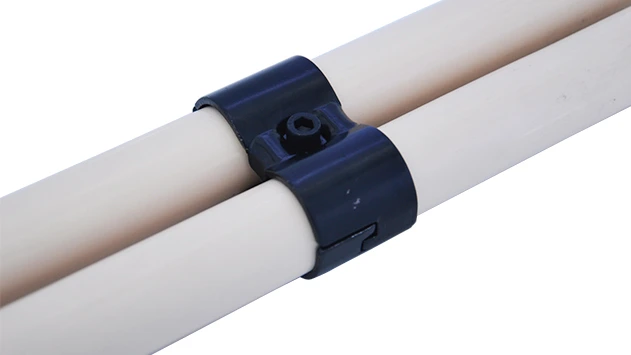
Parallel Lean Pipe Joint
Parallel lean pipe joint used for 2 pcs 28MM lean pipe connection in parallel direction to enhance frame structure, usually for heavy payload requirement for workbench. flow rack, hand trolley.
The Evolution of Automated Warehouses: A Need for Adaptive Solutions
In the fast-paced world of modern logistics, automated warehouses stand as the backbone of efficient supply chains. From e-commerce giants racing to meet same-day delivery demands to manufacturing facilities streamlining production lines, these hubs of activity rely on more than just robots and software—they depend on the physical infrastructure that keeps materials moving, sorting, and storing seamlessly. Yet, as consumer preferences shift and product lines diversify, warehouses face a critical challenge: rigidity. Traditional fixed structures, once the cornerstone of stability, now hinder the ability to adapt to changing workflows, seasonal demands, or new product dimensions. This is where flexible material handling components step in, and among them, the one side rotatory chrome parallel lean pipe joint has emerged as a quiet game-changer.
At first glance, a joint might seem like a minor detail in the grand scheme of warehouse operations. But anyone who has watched a team struggle to reconfigure a flow rack for a new SKU, or spent hours disassembling and rebuilding a workstation to accommodate a larger component, knows better. The right joint can transform a static setup into a dynamic, adaptable system—one that bends, pivots, and evolves with the needs of the business. In this article, we'll dive into how these unassuming yet innovative joints are reshaping automated warehouses, making them more efficient, resilient, and ready for whatever the future throws their way.
Understanding One Side Rotatory Chrome Parallel Lean Pipe Joints: Design That Drives Flexibility
Let's start with the basics: What exactly is a one side rotatory chrome parallel lean pipe joint ? Imagine a connector that links two parallel sections of lean pipe or aluminum profile, but with a twist—literally. Unlike fixed joints that lock components into a rigid angle, this joint features a rotating mechanism on one side, allowing the connected pipes or profiles to pivot smoothly along a single axis. The chrome plating adds a layer of durability, resisting corrosion and wear even in high-traffic warehouse environments, while the "parallel" design ensures alignment remains precise, even after repeated adjustments.
To appreciate its value, consider the materials it's built to work with. Lean pipe, a staple in lean manufacturing systems, is lightweight yet strong, often used to construct workbenches, material racks, and flow racks. Aluminum profile, with its T-slot design, offers modularity for custom setups. The rotatory joint acts as the bridge between these materials, turning static structures into dynamic tools. Its design is deceptively simple: a central housing with a rotating pin on one end, allowing 180-degree movement (or more, depending on the model), while the other end remains fixed to maintain stability. This balance of mobility and sturdiness is what sets it apart from traditional fixed joints or even fully swiveling connectors, which can sometimes sacrifice precision for flexibility.
But why chrome? In a warehouse where spills, humidity, and constant handling are par for the course, corrosion resistance is non-negotiable. Chrome plating creates a hard, smooth surface that repels moisture and resists scratches, ensuring the joint maintains its functionality and appearance over years of use. This durability is especially critical in automated systems, where even a stuck joint can disrupt an entire workflow, leading to downtime and lost productivity.

Core Applications: Where These Joints Shine in Automated Warehouses
Now, let's explore the practical side: how are these rotatory joints actually used in day-to-day warehouse operations? The answer lies in their ability to solve common pain points—reconfiguration speed, adaptability to varied loads, and seamless integration with existing systems. Below are key applications where they make the biggest impact:
1. Flow Racks: Optimizing Material Flow with Adjustable Angles
Flow racks are the workhorses of order picking, using gravity to move products from the back (loading end) to the front (picking end). But not all products are created equal: a heavy carton of electronics requires a steeper angle than a lightweight package of cosmetics to ensure smooth flow. Traditional flow racks often have fixed angles, forcing warehouses to use separate racks for different product types—a waste of space and resources.
Enter the one side rotatory chrome parallel lean pipe joint . By integrating these joints into the side rails of a flow rack, warehouse managers can adjust the angle of the roller track with a simple pivot. Need to switch from handling 50-pound boxes to 10-pound envelopes? Loosen the locking mechanism on the joint, tilt the track to the desired angle, and lock it back in place—no tools, no disassembly, no downtime. This flexibility is a game-changer for warehouses dealing with seasonal fluctuations or frequent product line changes. For example, a clothing retailer preparing for the holiday rush can quickly reconfigure flow racks to handle bulkier winter coats, then adjust them back for spring apparel once the season ends.
Pairing these joints with roller track connectors and plastic roller track guide rails (available in yellow or grey for visual organization) further enhances functionality. The guide rails keep products centered, while the rotatory joints ensure the entire system can adapt to the unique needs of each SKU.
2. Workstations: Adapting to Human and Automated Workers Alike
Modern warehouses aren't just about robots—human workers still play a critical role in tasks like quality control, packing, and maintenance. Workstations need to accommodate both ergonomic needs (adjustable heights, angles) and the tools of the trade (scanners, label printers, bins). A fixed workstation might work for one employee or one task, but with turnover and job rotation, adaptability is key.
Here, the rotatory joint transforms standard workbenches into customizable hubs. Imagine a workbench E (single deck, without casters) used for packing small electronics. The side shelves, supported by lean pipe and rotatory joints, can be pivoted outward to hold bins of components when needed, then folded back to free up space for larger items. For ESD workstations (designed to prevent electrostatic discharge), where sensitive electronics are handled, the ability to adjust the angle of tool holders or component trays without disrupting the ESD grounding path is invaluable. The chrome finish also adds a clean, professional look, which matters in environments where precision and attention to detail are paramount.
Even automated workstations benefit. Collaborative robots (cobots) often work alongside humans, and their work envelopes (the area they can reach) vary by model. By using rotatory joints to adjust the height or angle of conveyor feeds into the cobot's workspace, warehouses can ensure seamless handoff between human and machine, reducing errors and bottlenecks.
3. Turnover Trolleys and Material Racks: From Static Storage to Mobile Flexibility
Turnover trolleys and material racks are essential for moving goods between warehouse zones—from receiving to storage, storage to picking, and picking to shipping. But static racks with fixed shelves limit the types of items they can carry. A rack designed for small parts bins can't easily adapt to hold a large, irregularly shaped component, forcing warehouses to invest in multiple trolley types.
The rotatory joint solves this by allowing shelves or dividers to pivot. Take a material rack B (3 rows, 3 floors), a common setup for bulk storage. By attaching the shelf supports to the main frame using one side rotatory chrome parallel lean pipe joints , each shelf can be tilted to create a shallow angle for loose parts (preventing them from sliding off) or locked flat for boxes. For fragile items, the ability to adjust the angle slightly can reduce jostling during transport. Even better, when the trolley isn't in use, the shelves can be folded in to save space—critical in crowded warehouses where every square foot counts.
Pairing these trolleys with caster wheels (another key accessory) amplifies their utility. Casters allow for easy movement, while the rotatory joints ensure the load remains stable during transport. For example, a trolley carrying heavy aluminum profile can have its shelves locked in place to prevent shifting, while one carrying lightweight plastic components can tilt the shelves for quick access—all with the same base trolley.

Traditional vs. Rotatory: A Comparative Look
To truly understand the value of one side rotatory chrome parallel lean pipe joints , it helps to compare them with traditional alternatives. Below is a breakdown of how they stack up against fixed joints and fully swiveling joints in key categories:
| Feature | Traditional Fixed Joints | Fully Swiveling Joints | One Side Rotatory Chrome Parallel Joints |
|---|---|---|---|
| Flexibility | None—angle is fixed during assembly | High—360-degree rotation, but may lack stability | Balanced—one side rotates (180°+), other side fixed for stability |
| Reconfiguration Speed | Slow—requires disassembly and reassembly | Fast, but may require readjustment for alignment | Very fast—adjust with a quick pivot and lock; no disassembly |
| Durability | High (simple design), but prone to wear if frequently disassembled | Moderate—moving parts may wear faster without proper plating | High—chrome plating resists corrosion; rotating pin is reinforced |
| Best For | Static structures with permanent layouts | Applications needing full rotation (e.g., tool hangers) | Flow racks, workstations, and trolleys needing angle adjustments |
| Cost-Effectiveness | Low upfront cost, but high long-term costs (replacement racks) | Moderate upfront cost; may need frequent replacements | Higher upfront cost, but saves on reconfiguration labor and new equipment |
As the table shows, the rotatory joint fills a unique niche: it offers the flexibility to adapt without sacrificing the stability needed for heavy loads or precision workflows. This balance is why it's becoming a staple in forward-thinking warehouses.
Material Compatibility: Working in Harmony with Warehouse Infrastructure
A key advantage of the one side rotatory chrome parallel lean pipe joint is its compatibility with a wide range of warehouse materials, making it easy to integrate into existing systems. Let's break down how it pairs with common components:
Lean Pipe and Aluminum Profile: The Perfect Partners
Lean pipe (often coated in PE for grip and protection) is lightweight and affordable, ideal for temporary or frequently changed setups. Aluminum profile, with its T-slot design, offers rigidity and modularity for more permanent structures. The rotatory joint works seamlessly with both: its clamping mechanism adjusts to fit standard lean pipe diameters (e.g., 28mm) and can be bolted into the T-slots of aluminum profile using standard accessories like aluminum profile accessories (e.g., brackets, end caps). This versatility means warehouses don't have to replace their existing infrastructure—they can simply upgrade key joints to add flexibility.
Stainless Steel Pipe Series: For Heavy-Duty Applications
In environments where hygiene is critical (e.g., food and beverage, pharmaceuticals) or where loads are extremely heavy, stainless steel pipe is often the material of choice. The chrome plating of the rotatory joint complements stainless steel's corrosion resistance, creating a system that can withstand harsh cleaning chemicals and high moisture levels. Whether used in a material rack B or a custom conveyor, the joint ensures stainless steel structures remain adaptable without compromising on durability.
Accessories That Enhance Functionality
No joint exists in a vacuum, and the rotatory joint shines when paired with the right accessories. Roller track connectors link sections of roller track, allowing the entire assembly to pivot as a unit. Caster accessories (e.g., brake levers, mounting plates) ensure trolleys stay steady when parked and move smoothly when in use. Even small components like plastic roller track guide rails (yellow for high visibility, grey for a sleek look) work with the joint to create organized, efficient workflows.
For example, a roller track placon mount (used to connect roller tracks to aluminum profile) can be attached to a rotatory joint, allowing the track to tilt for optimal product flow. This combination is particularly useful in order picking zones, where items of varying weights need to move at different speeds to the picking station.
Operational Benefits: Beyond Flexibility
While flexibility is the headline benefit, the one side rotatory chrome parallel lean pipe joint delivers a host of operational advantages that impact the bottom line:
Reduced Downtime During Reconfiguration
Traditional reconfiguration can take hours: disassembling bolts, removing pipes, remeasuring, and rebuilding. With rotatory joints, this process is cut to minutes. A team can adjust a flow rack's angle or a workstation's shelf position during a short break, minimizing disruption to shifts. In a warehouse operating 24/7, even an hour of downtime can cost thousands—making this time savings invaluable.
Lower Long-Term Costs
Investing in adaptable infrastructure reduces the need to purchase new racks, workstations, or trolleys every time workflows change. A single rotatory joint-equipped flow rack can replace multiple fixed racks, paying for itself in a matter of months. Additionally, the chrome plating extends the joint's lifespan, reducing replacement costs over time.
Improved Safety
Loose bolts, misaligned pipes, and unstable structures are common safety hazards in warehouses. The rotatory joint's locking mechanism ensures it stays in place once adjusted, preventing unexpected movement. The smooth chrome surface also reduces the risk of snags or cuts during handling, making it safer for workers to interact with the equipment.
Support for Lean Manufacturing Principles
Lean manufacturing focuses on eliminating waste—whether of time, space, or materials. The rotatory joint aligns perfectly with this philosophy by enabling "just-in-time" reconfiguration: only the necessary space and resources are used, and workflows are optimized for current demand. This reduces overproduction (of unnecessary structures) and inventory waste (of unused equipment), supporting a more sustainable, efficient operation.
Real-World Scenario: A Case Study in Adaptability
To bring these benefits to life, let's consider a hypothetical (but realistic) case study: a mid-sized electronics manufacturer that produces both smartphones (small, lightweight) and laptops (larger, heavier). The company's warehouse struggled with fixed flow racks: the smartphone line required a shallow angle for delicate components, while laptops needed a steeper angle to move quickly. They were using two separate racks, taking up valuable floor space.
After upgrading to flow racks equipped with one side rotatory chrome parallel lean pipe joints , the warehouse team could adjust a single rack's angle in minutes. During morning shifts, they'd set it to 5 degrees for smartphone parts; in the afternoon, they'd pivot it to 15 degrees for laptop components. The result? They freed up 30% of floor space, reduced order picking time by 15%, and eliminated the need to purchase a third rack for a new tablet line they were launching. The chrome joints held up to daily cleaning with alcohol-based disinfectants (critical for electronics production), and the ability to lock the angle prevented component damage during handling.
This scenario isn't unique. From automotive parts suppliers to e-commerce fulfillment centers, warehouses are discovering that adaptability isn't a luxury—it's a competitive advantage. And the rotatory joint is at the heart of that adaptability.
Addressing Modern Warehouse Challenges
Today's warehouses face unprecedented challenges: labor shortages, rising customer expectations for fast delivery, and the need to handle an ever-wider range of product sizes and weights. The one side rotatory chrome parallel lean pipe joint addresses these head-on:
Labor Shortages: Doing More with Less
With fewer workers available, warehouses need tools that reduce the time and effort required for setup and reconfiguration. A single employee can adjust a rotatory joint-equipped workstation or flow rack in minutes, whereas traditional setups might require a team. This efficiency allows warehouses to reallocate labor to higher-value tasks like quality control or customer service.
Varied Product Sizes: One Rack, Many Possibilities
E-commerce has led to warehouses storing everything from tiny jewelry boxes to large furniture. Fixed racks can't keep up, but rotatory joints allow a single material rack to adapt to different load sizes and weights. Need to store 0.5-inch swivel roller balls one week and 1-inch stainless steel swivel roller balls the next? A quick angle adjustment is all it takes.
Sustainability: Reducing Waste Through Reuse
Modern businesses are under pressure to reduce their environmental footprint. By extending the lifespan of existing infrastructure and reducing the need for new purchases, the rotatory joint supports sustainability goals. Its durable design also means less waste from broken or obsolete components, making it a greener choice than disposable or short-lived alternatives.
Conclusion: Paving the Way for Future-Ready Warehouses
In the end, the one side rotatory chrome parallel lean pipe joint is more than just a connector—it's a symbol of the future of warehousing: flexible, durable, and adaptable. As automated systems become more sophisticated and consumer demands more unpredictable, the ability to pivot quickly will separate thriving warehouses from struggling ones. These joints may not grab headlines like the latest robotic picker or AI-powered inventory system, but they're the unsung heroes that make those technologies work seamlessly.
Whether used in flow racks, workstations, or turnover trolleys, their impact is clear: reduced downtime, lower costs, improved safety, and a workforce empowered to adapt on the fly. For warehouse managers looking to future-proof their operations, the message is simple: invest in flexibility. And when it comes to flexibility, few components deliver as much bang for the buck as the one side rotatory chrome parallel lean pipe joint.
So, the next time you walk through an automated warehouse, take a closer look at the racks, the workstations, the trolleys. Chances are, you'll spot these unassuming joints hard at work—quietly keeping the world of logistics moving, one pivot at a time.