- Company Articles
- Products and Technology
- Product knowledge
- Applications of One Way Rotatory Straight Lean Pipe Joints in Mechanical Manufacturing

Applications of One Way Rotatory Straight Lean Pipe Joints in Mechanical Manufacturing
Related Product
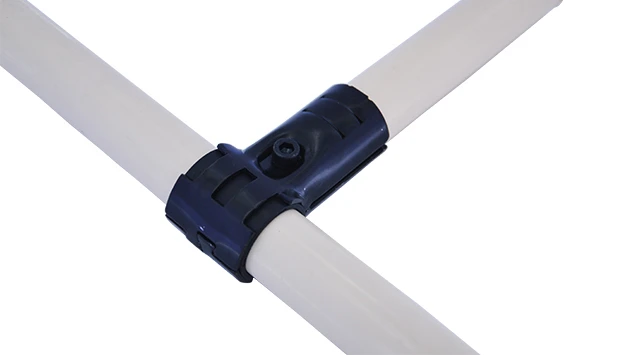
One Way Rotatory Straight Lean Pipe Joint
Two way lean pipe joint for 2 pcs 28MM lean pipe connection in straight angle with rotatory fucntion, which used widely in workbench, flow rack, hand trolley frame connection.
Exploring the unsung heroes of modular efficiency in modern production lines
The Backbone of Lean Manufacturing: Lean Pipe Systems
In the fast-paced world of mechanical manufacturing, where efficiency and adaptability reign supreme, lean pipe systems have emerged as the silent architects of productive workspaces. These modular systems, built from interconnected pipes and joints, are the chameleons of factory floors—easily reconfigured to meet shifting production needs, reduce waste, and streamline workflows. At the heart of this flexibility lies a diverse ecosystem of components, from sturdy aluminum pipes to versatile casters, but few parts play as critical a role as the one way rotatory straight lean pipe joint .
Lean manufacturing isn't just a buzzword; it's a philosophy centered on maximizing value while minimizing waste. And lean pipe systems embody this philosophy by offering a cost-effective, customizable solution for everything from assembly lines to material storage racks. What makes these systems truly transformative is their reliance on small, unassuming components that punch far above their weight. Among these, the one way rotatory straight lean pipe joint stands out for its ability to balance structure with controlled movement—a feature that has revolutionized how materials flow through production processes.
Understanding One Way Rotatory Straight Lean Pipe Joints
What Sets Them Apart?
At first glance, a one way rotatory straight lean pipe joint might seem like just another connector. But its design hides a clever mechanism: unlike fixed joints that lock pipes in place or multi-rotatory joints that swivel freely, this joint allows rotation in only one direction. Think of it as a mechanical traffic cop for your production line—guiding materials forward while preventing backtracking.
Typically crafted from high-grade steel with a corrosion-resistant coating (often chrome or zinc), these joints are built to withstand the rigors of factory environments. Their core structure includes a cylindrical body, internal bearings for smooth rotation, and a locking mechanism that engages when turned in the "reverse" direction. This simple yet ingenious design makes them indispensable in scenarios where controlled material flow is non-negotiable.
Key Features
- Unidirectional Rotation: Prevents reverse movement, ensuring materials or components flow in a single, intended direction.
- Modular Compatibility: Works seamlessly with standard lean pipes (often 28mm diameter), aluminum pipes, and accessories like roller tracks.
- Quick Assembly: No welding or specialized tools required—simply twist and lock into place, reducing setup time.
- Durability: Withstands repeated use and heavy loads, making it ideal for high-cycle manufacturing environments.
- ESD Options: Available with electrostatic discharge (ESD) coatings for sensitive electronics manufacturing.

A Comparative Look: Joint Types in Lean Systems
| Joint Type | Rotation Range | Best For | Limitations |
|---|---|---|---|
| Traditional Fixed Joints | 0° (no rotation) | Static structures like rigid workbenches or fixed racks | No adaptability; requires disassembly to reconfigure |
| Multi-Rotatory Joints | 360° (full rotation) | Flexible workstations or adjustable material handlers | Lacks direction control; risk of unintended movement |
| One Way Rotatory Straight Joints | 180° (one-way only) | Assembly lines, flow racks, and directional material flow systems | Not ideal for fully static or 360° adjustable setups |

Applications in Mechanical Manufacturing: Where Efficiency Meets Precision
1. Assembly Line Flow Control
In automotive or electronics assembly, where hundreds of components move through stations daily, maintaining a consistent flow direction is critical. One way rotatory straight lean pipe joints shine here, often integrated into roller track systems to guide parts from one workstation to the next. For example, in a smartphone assembly line, circuit boards must move from soldering to testing to packaging—no detours, no backtracking.
By installing these joints at key junctions of the roller track, manufacturers ensure that each board progresses forward only. If a worker accidentally bumps the track, the joint's locking mechanism prevents the board from sliding back into the previous station, eliminating rework and delays. This might seem like a small detail, but in a line producing 10,000 units daily, even a 1% reduction in errors translates to 100 fewer defective products—a significant cost saver.
2. Lean Workbench Ergonomics
Modern workbenches are no longer static tables; they're dynamic hubs tailored to worker needs. One way rotatory joints enable adjustable sections, such as tool holders or component trays that swing into place when needed and lock securely during use. Imagine a mechanic assembling engine parts: their workbench might have a side tray holding screws and washers, mounted on a lean pipe arm with a one way joint. When the mechanic rotates the tray into position, the joint locks it there, preventing it from swinging back and spilling parts.
This adaptability reduces worker fatigue—no more reaching across cluttered surfaces—and minimizes the risk of repetitive strain injuries. For suppliers of lean pipe workbenches, integrating these joints has become a selling point, as they allow clients to customize workspaces without sacrificing stability.
3. Flow Rack Inventory Management
Flow racks, used to store and dispense materials like fasteners or small parts, rely on gravity to feed items to the front. But without direction control, heavier items can sometimes push lighter ones backward, causing jams. One way rotatory joints solve this by installing them along the rack's inclined roller tracks. As new boxes of screws are loaded from the back, the joints let them slide forward toward the pick face but block them from rolling back when the front box is removed.
This ensures strict FIFO (First In, First Out) inventory rotation—a cornerstone of lean manufacturing. For a supplier of flow racks, this feature is a game-changer: clients in automotive or aerospace, where part freshness (e.g., adhesives with expiration dates) is critical, prioritize racks with such directional control, making the joint a key differentiator in a competitive market.
4. Conveyor System Directional Gates
In large-scale manufacturing facilities, main conveyor belts often feed into smaller (branches) for specialized processing. Here, one way rotatory joints act as "gates," directing items onto the correct without manual intervention. For instance, in a food packaging plant, cans of soup might need to split into two lines: one for labeling and one for quality inspection. A gate made with lean pipes and one way joints can be triggered to rotate open for inspection-bound cans, then snap shut to guide the next batch to labeling.
The joint's quick response and secure locking prevent misdirected cans, reducing waste and ensuring compliance with food safety standards. Conveyor suppliers often pair these joints with sensors for automated operation, creating a seamless, hands-free system that scales with production demands.
5. Turnover Trolley Safety
Turnover trolleys—used to transport materials between warehouses and production lines—often have collapsible or adjustable shelves. One way rotatory joints allow these shelves to fold flat for storage but lock upright when loaded. A trolley carrying fragile glass panels, for example, needs shelves that stay rigid during transport. The joint ensures that even if the trolley hits a bump, the shelves won't fold inward, protecting the cargo.
For suppliers of turnover trolleys and racks, this feature enhances safety certifications, a critical factor for clients in regulated industries like pharmaceuticals or medical device manufacturing.
The Ripple Effect: Benefits Beyond Direction Control
Cost Efficiency
By reducing errors and rework, these joints lower operational costs. A mid-sized manufacturer reported saving $12,000 annually after retrofitting their assembly line with one way joints, primarily from reduced scrap and labor hours spent correcting misdirected parts.
Scalability
As production needs grow, lean systems with these joints can be expanded quickly. Adding a new roller track section or workbench arm takes minutes, not days—ideal for seasonal demand spikes.
Sustainability
Modular systems reduce waste compared to fixed infrastructure. When a production line is reconfigured, joints and pipes are reused, not discarded—aligning with corporate sustainability goals.
Choosing the Right Supplier: What to Look For
Not all one way rotatory straight lean pipe joints are created equal. For manufacturers, selecting a reliable supplier is as important as the joint itself. Here are key factors to consider:
- Material Quality: Opt for suppliers using high-carbon steel or aluminum alloys with durable coatings—these resist wear and corrosion in factory environments.
- Testing Standards: Reputable suppliers test joints for load capacity (often up to 50kg per joint) and rotation cycles (10,000+ cycles without failure).
- Compatibility: Ensure the joint works with your existing lean pipe system (e.g., 28mm pe-coated lean pipe or aluminum profile).
- Customization: Some suppliers offer ESD coatings or color-coded joints for visual management (e.g., yellow for high-priority lines).
For suppliers, highlighting these features in product descriptions and technical specs can set them apart. A lean pipe supplier that emphasizes the durability and versatility of their one way joints is more likely to win contracts with manufacturers prioritizing long-term efficiency.
Future Trends: Where Lean Pipe Systems Are Headed
As manufacturing embraces Industry 4.0, lean pipe systems are evolving too. One way rotatory joints may soon integrate with smart sensors, sending data on rotation cycles and wear to maintenance teams. Imagine a joint that alerts managers when it's approaching 10,000 cycles, allowing proactive replacement before failure.
Additionally, lightweight materials like aluminum lean pipe are gaining popularity, reducing system weight while maintaining strength. Suppliers are already offering aluminum joints paired with aluminum guide rails for even more flexible, corrosion-resistant setups—ideal for cleanrooms or food processing facilities.