- Company Articles
- Products and Technology
- Application Cases
- Applications of Parallel Lean Pipe Joint Chrome in Automotive Assembly Lines

Applications of Parallel Lean Pipe Joint Chrome in Automotive Assembly Lines
Related Product
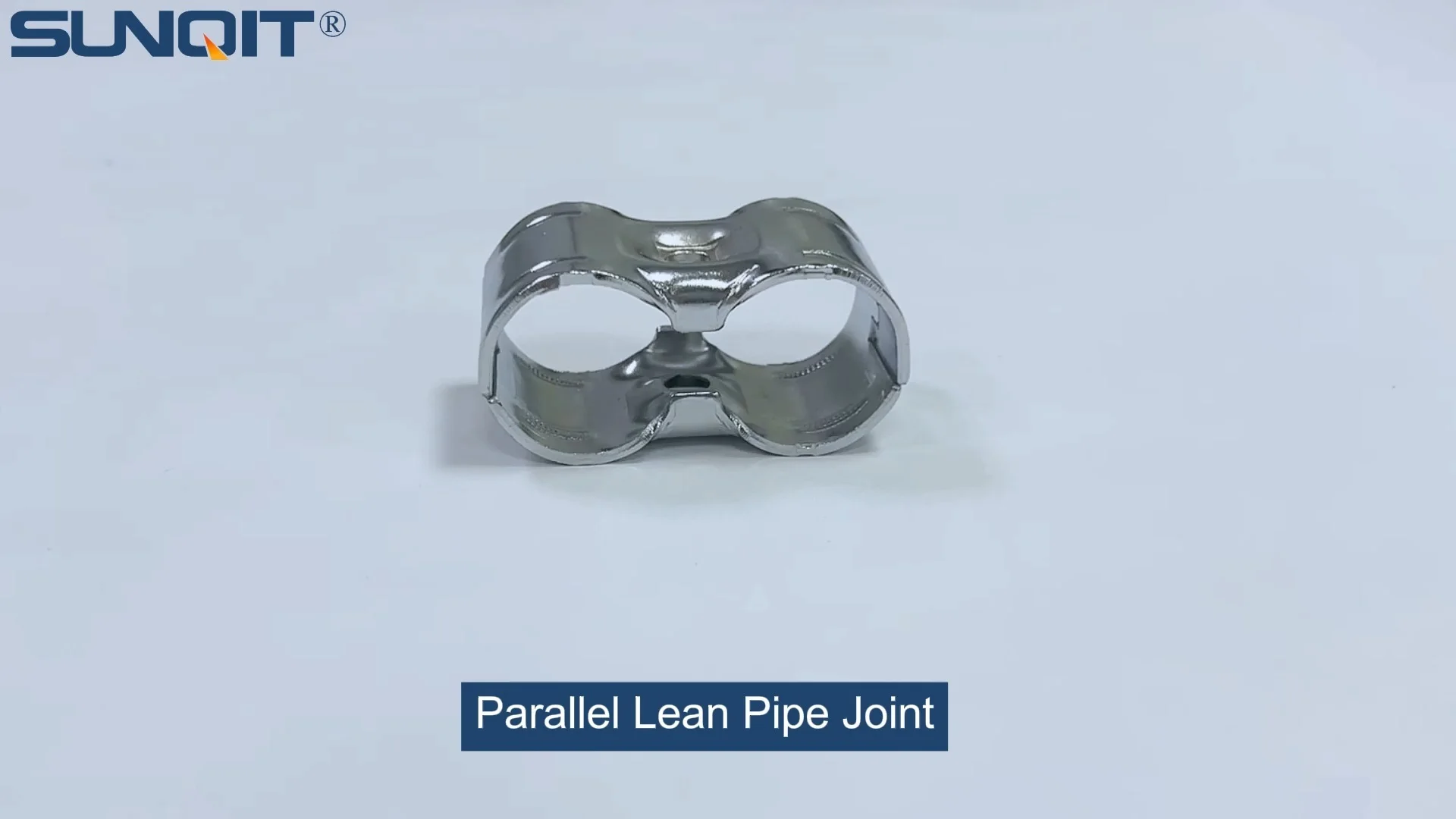
Parallel Lean Pipe Joint Chrome
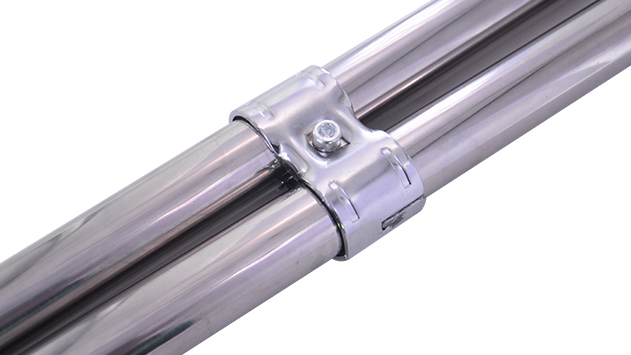
Parallel lean pipe joint used for 2 pcs 28MM lean pipe connection in parallel direction to enhance frame structure, usually for heavy payload requirement for workbench. flow rack, hand trolley.
The Heartbeat of Automotive Assembly Lines: Where Precision Meets Speed
Walk into any modern automotive factory, and you'll feel it immediately—the hum of machinery, the synchronized movement of parts, the focused energy of workers collaborating to build something tangible. Every second counts here. A single delay in one station can ripple through the entire line, costing thousands in lost productivity. But behind this orchestrated chaos lies a hidden backbone: the tools and systems that make efficiency possible. Among these, lean systems have emerged as the unsung architects of modern manufacturing, turning clunky, rigid processes into agile, adaptable workflows. And at the center of many of these systems? Components like the Parallel Lean Pipe Joint Chrome —small in size, but monumental in impact.
Automotive manufacturing isn't just about building cars; it's about building them better, faster, and with fewer resources. Today's factories face relentless pressure: new models with shorter lifespans, evolving safety standards, and customer demands for customization. A production line that worked perfectly for last year's sedan might need a complete overhaul to accommodate this year's electric SUV. Rigid, fixed structures—once the industry norm—simply can't keep up. That's where lean systems step in, designed around the principle that flexibility isn't a luxury; it's a necessity.
Understanding Lean Systems: More Than Just a Buzzword
When we talk about lean system in manufacturing, we're referring to a philosophy rooted in eliminating waste—whether that's wasted time, materials, or effort. It's about creating value for the customer by streamlining every step of the process. But lean isn't just a set of ideas; it's a physical reality, built from components that adapt to change. Imagine a production line where a workbench can be reconfigured in an hour instead of a week, or a material rack that adjusts to hold larger parts without needing a complete rebuild. That's the power of lean systems, and it all starts with the right building blocks.
Lean systems rely on modularity—parts that connect, disconnect, and reconfigure with minimal hassle. Traditional steel structures, welded or bolted into place, are the opposite of this. They're heavy, time-consuming to modify, and often end up as scrap when a line is redesigned. Lean components, by contrast, are lightweight, reusable, and designed for quick assembly. Think of them as the Lego blocks of manufacturing: simple on their own, but capable of creating endless configurations when combined.
Meet the Parallel Lean Pipe Joint Chrome: Small Part, Big Responsibility
At first glance, a Parallel Lean Pipe Joint Chrome might not look like much. It's a small, metallic connector, often chrome-plated, designed to join two lean pipes in a parallel configuration. But don't let its size fool you. This unassuming component is the glue that holds many lean structures together—providing stability, flexibility, and durability in one compact package.
So why chrome? In a factory environment, where oil, grease, and occasional spills are part of daily life, corrosion resistance is non-negotiable. Chrome plating creates a hard, smooth surface that repels moisture and chemicals, ensuring the joint won't rust or degrade over time. This is critical for longevity; a joint that fails could compromise an entire workbench or roller track, leading to downtime or, worse, safety risks. Chrome also reduces friction, making it easier to adjust or rotate pipes when reconfiguring a structure—no more struggling with stuck or seized connections.
The "parallel" design is equally important. Unlike joints that connect pipes at angles, parallel joints keep pipes aligned side-by-side, creating sturdy, horizontal or vertical frames. This is essential for structures like workbenches, where stability directly impacts worker safety and precision. Imagine a mechanic assembling an engine component on a wobbly workbench—even a slight shift could throw off measurements. Parallel joints distribute weight evenly, ensuring the structure stays firm, even under heavy loads.

Applications in Automotive Assembly Lines: Turning Theory Into Action
Let's dive into the real-world impact of the Parallel Lean Pipe Joint Chrome. From the moment raw materials enter the factory to the final inspection of a finished vehicle, this component plays a role in countless processes. Here are three key areas where it shines:
1. Custom Workbench Solutions: Ergonomics Meets Adaptability
Walk through any assembly line, and you'll notice that no two workstations are identical. One worker might be installing door handles, another wiring a dashboard, a third torqueing bolts on an engine block. Each task requires a unique setup—specific tools within arm's reach, parts organized for quick access, and a surface height that minimizes strain. This is where lean workbenches, built with parallel lean pipe joints, truly excel.
Traditional workbenches are often one-size-fits-all: heavy, fixed-height tables that force workers to adapt to them, rather than the other way around. But with lean pipes and parallel chrome joints, factories can build workbenches tailored to each task. Need a taller surface for standing work? Add a few extra pipe segments. Want to integrate a tool rail above the bench? Use parallel joints to mount it securely. Even the (tabletop) can be swapped out—wood for general assembly, anti-static materials for electronics, or metal for heavy-duty tasks.
Consider a scenario where a factory switches from assembling gasoline engines to electric motors. The new motors are bulkier, requiring workers to stand rather than sit. With a traditional workbench, this would mean replacing the entire setup—a costly, time-consuming process. With a lean workbench, it's as simple as adjusting the height using parallel joints and repositioning the parts bin holders. The same structure, repurposed in hours instead of days.
Workers notice the difference, too. A study by the Manufacturing Ergonomics Institute found that adjustable lean workbenches reduced worker fatigue by 32% and decreased errors by 18%, thanks to better posture and easier access to tools. And at the heart of that adjustability? Parallel joints that keep the structure stable, even as its shape changes.
2. Roller Track Systems: Keeping Parts Flowing Smoothly
In automotive assembly, parts rarely stay in one place. A door panel might start at the stamping shop, move to painting, then to interior installation, and finally to the final assembly line. Each transfer needs to be seamless—no jams, no delays, no damage to the part. That's where roller tracks come in, and parallel lean pipe joints are critical to their performance.
Roller tracks are exactly what they sound like: pathways of rotating rollers that allow parts to glide from one station to the next, often using gravity or minimal manual push. But for a roller track to work, the rollers must be perfectly aligned. Even a slight misalignment can cause a part to get stuck, bringing the line to a halt. Parallel lean pipe joints ensure that the track's side rails stay parallel and level, keeping the rollers in sync.
Take the example of a door panel moving from the interior trim station to final assembly. The panel is lightweight but bulky, and any (jolt) could scratch the newly installed upholstery. A roller track built with parallel chrome joints keeps the path smooth and consistent. The chrome plating resists the grease and dust that accumulate on the track, ensuring the joints don't seize up over time. And if the factory introduces a new, wider door panel? The track can be widened by adding more pipe segments and parallel joints—no need to replace the entire system.
Another advantage? Roller tracks built with lean components are easy to extend or re-route. If a new station is added to the line, workers can quickly connect a new section of track using parallel joints, without disrupting existing workflows. It's this adaptability that makes lean roller tracks a staple in factories where change is constant.
3. Modular Material Racks: Organizing Chaos, One Joint at a Time
A disorganized parts storage area is a factory's worst enemy. Workers waste precious minutes searching for the right bolt or bracket, and misplaced parts can lead to assembly errors. Material racks, built with lean pipes and parallel joints, solve this problem by turning chaos into order—all while staying flexible enough to evolve with changing needs.
Traditional steel racks are fixed in size: a shelf that's 18 inches deep can't suddenly become 24 inches to accommodate larger parts. Lean racks, by contrast, are built from the ground up with adjustability in mind. Using parallel lean pipe joints, shelves can be added, removed, or repositioned in minutes. Need to store longer items like wiring harnesses? Remove a few crossbars and expand the vertical space. Switching to smaller components? Add more shelves at tighter intervals. The chrome joints ensure that even with these changes, the rack remains stable—no wobbling, no sagging, no risk of parts toppling over.
Consider a factory that produces both sedans and SUVs. SUVs require larger interior panels, which need deeper shelves. With a lean rack, workers can adjust the shelf depth using parallel joints when switching production runs. The same rack that held sedan panels yesterday holds SUV panels today, with no downtime. It's this kind of versatility that makes lean systems indispensable in modern automotive manufacturing.
The Aluminum Profile Advantage: Complementing Lean Pipes
While parallel lean pipe joints are stars in their own right, they rarely work alone. In many lean systems, they're paired with aluminum profile —another modular powerhouse that enhances flexibility and durability. Aluminum profiles are lightweight, strong, and designed with T-slots that make attaching components a breeze. When combined with parallel lean pipe joints, they create structures that are both sturdy and adaptable.
Take, for example, a workbench used in battery assembly for electric vehicles. Batteries are heavy, so the frame needs to support significant weight. Aluminum profiles form the main structure, providing rigidity, while parallel lean pipe joints connect the crossbars and shelves, allowing for quick adjustments. The aluminum resists corrosion from battery fluids, and the chrome joints ensure that moving parts (like adjustable shelves) stay smooth and functional. Together, they create a hybrid system that's stronger than pipe alone and more flexible than solid aluminum.
Aluminum profiles also excel at integrating accessories—think tool holders, label holders, or even small conveyor belts. The T-slots allow these accessories to be clipped on anywhere along the profile, with no drilling or welding required. Pair that with parallel lean pipe joints, which can connect profiles at odd angles or extend the structure, and the possibilities are endless. It's this synergy that makes lean systems so powerful: components working together to solve problems no single part could tackle alone.
The Numbers Speak: Benefits That Drive Bottom-Line Results
At the end of the day, manufacturing is a business—and businesses care about results. So what tangible benefits do parallel lean pipe joints and lean systems deliver? Let's break it down:
| Benefit | Traditional Steel Structures | Lean Systems with Parallel Chrome Joints |
|---|---|---|
| Cost of Reconfiguration | High (requires welding, new materials) | Low (parts reused, no specialized labor) |
| Setup Time for New Line | Weeks to months | Days to weeks |
| Durability in Factory Environments | Prone to rust, heavy wear | Chrome plating resists corrosion; aluminum resists wear |
| Worker Productivity | Stagnant (fixed setups limit efficiency) | Up to 25% higher (ergonomic, adaptable workspaces) |
| Sustainability | High waste (scrapped when obsolete) | Low waste (parts reused across multiple lines) |
One automotive manufacturer in Michigan reported saving $450,000 in the first year after switching to lean systems, largely due to reduced reconfiguration costs and downtime. Another plant in Germany saw a 30% reduction in material waste, as lean racks and roller tracks minimized damage to parts during transport. These aren't just anecdotes—they're proof that components like parallel lean pipe joints deliver measurable value.
A Day in the Life: How Lean Systems Transform Work
Let's put a human face to these benefits. Meet Maria, a line worker at a mid-sized automotive factory. Her station assembles dashboard components, a task that requires precision and focus. A year ago, her workstation was a fixed steel workbench with a single shelf below. Tools were scattered, parts bins were too low to reach without bending, and when the factory introduced a new dashboard design with more wiring, the entire setup felt cramped.
Then the factory switched to a lean system. Today, Maria's workstation is built with lean pipes, aluminum profiles, and parallel chrome joints. The workbench height adjusts with a simple lever, so she can alternate between sitting and standing. A tool rail above the bench holds her screwdrivers and pliers, positioned exactly where she needs them. The parts bins are mounted on a roller track, sliding smoothly into place as she needs each component. When the new dashboard design arrived, the maintenance team reconfigured the bin layout in 45 minutes using parallel joints—no welding, no downtime.
"I used to go home with a sore back from bending over the old bench," Maria says. "Now? I barely notice the time passing. The station works with me, not against me." It's a small story, but it illustrates a big truth: lean systems aren't just about machines and parts—they're about people. And when people have the right tools, they build better cars, faster.
Future-Proofing Factories: Lean Systems in the Age of Smart Manufacturing
As automotive manufacturing evolves, so too will the tools that power it. The rise of smart factories—where IoT sensors, AI, and automation work alongside humans—demands even greater flexibility. Lean systems, with components like parallel lean pipe joints, are poised to play a key role in this future.
Imagine a roller track equipped with sensors that monitor the speed of parts and alert workers if a jam is imminent. The track itself, built with parallel joints, can be easily modified to add sensor mounts or adjust roller spacing. Or consider a workbench that connects to a digital twin of the production line, where engineers can test reconfigurations virtually before making physical changes—using the same modular components to bring those designs to life.
Sustainability is another growing focus. Factories are under pressure to reduce their carbon footprint, and lean systems align perfectly with this goal. Components like aluminum profiles and chrome-plated joints are reusable and recyclable, reducing waste. A study by the Lean Enterprise Institute found that lean manufacturing facilities produce 20% less waste than traditional plants, in part due to the reusability of modular components.
Conclusion: Building the Future, One Joint at a Time
The next time you see a car on the road, take a moment to appreciate what went into building it—not just the engineers or the robots, but the humble components that made the process possible. The Parallel Lean Pipe Joint Chrome may not have a starring role in the showroom, but it's a hero in the factory, enabling the flexibility, efficiency, and adaptability that modern automotive manufacturing demands.
From custom workbenches that prioritize worker well-being to roller tracks that keep parts flowing seamlessly, from modular racks that adapt to changing needs to hybrid systems pairing lean pipes with aluminum profiles—these components are more than tools. They're the building blocks of a manufacturing revolution, one that's making cars better, factories smarter, and workers more empowered.
In the end, lean systems are about more than eliminating waste. They're about creating value—for the customer, for the business, and for the people who bring products to life. And in that mission, the Parallel Lean Pipe Joint Chrome will continue to play a vital role, quietly connecting the pieces that build the future of automotive manufacturing.