- Company Articles
- Products and Technology
- Application Cases
- Applications of Parallel Lean Pipe Joint One Side Rotatory in Communication Equipment Production

Applications of Parallel Lean Pipe Joint One Side Rotatory in Communication Equipment Production
Related Product
Parallel Lean Pipe Joint One Side Rotatory
Parallel rotatory lean pipe joint, for 2 pcs 28mm pipe conenction in parallel direction with one side rotatory function.
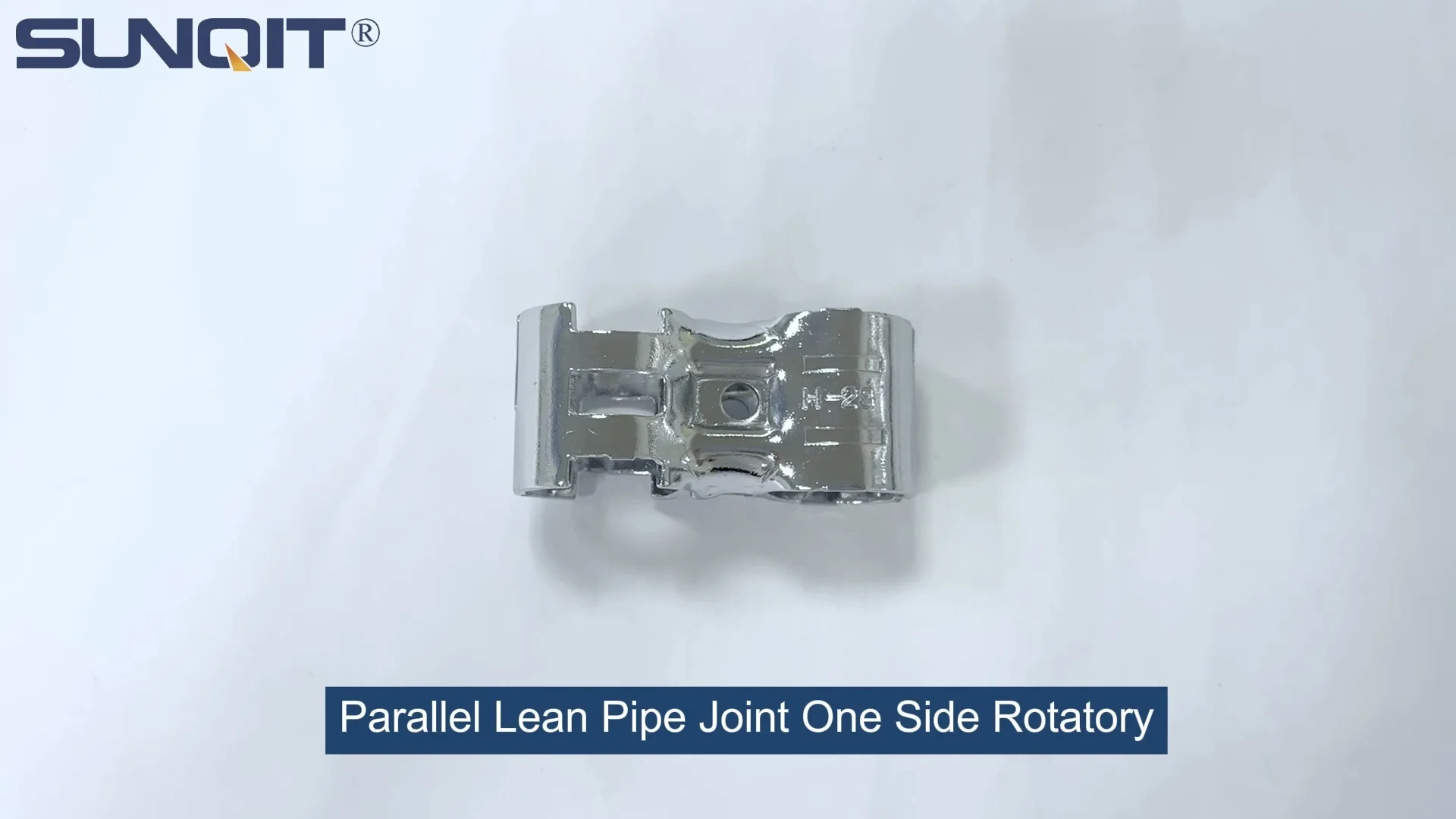
In the fast-paced world of communication equipment production, where precision, efficiency, and adaptability are non-negotiable, the tools and systems that support manufacturing processes play a critical role. From assembling intricate circuit boards to testing high-frequency components, every step demands a workspace that can keep up with evolving production needs. This is where lean manufacturing solutions shine—and among them, the parallel lean pipe joint one side rotatory has emerged as a quiet game-changer. More than just a hardware component, this joint embodies the spirit of lean principles: flexibility, waste reduction, and continuous improvement. Let's dive into how this unassuming yet innovative part is transforming communication equipment production floors, from lean pipe workbenches to dynamic flow racks, and why it's becoming a staple for manufacturers aiming to stay ahead in a competitive industry.
Understanding the Parallel Lean Pipe Joint One Side Rotatory: A Closer Look
Before exploring its applications, it's essential to grasp what makes the parallel lean pipe joint one side rotatory unique. Unlike traditional fixed joints that lock pipes into rigid, unchanging angles, this joint is designed for movement. As the name suggests, it features a rotating mechanism on one side, allowing connected lean pipes to swivel up to 360 degrees while maintaining stability. The other side remains fixed, providing a secure anchor point. This balance of mobility and rigidity is what sets it apart.
Constructed from durable materials like high-grade steel or aluminum (often compatible with aluminum profile systems), the joint is built to withstand the daily wear and tear of manufacturing environments. Its modular design means it can be easily attached to standard lean pipes, stainless steel pipes, or even aluminum extrusion profiles, making it a versatile addition to existing setups. Whether you're building a temporary assembly station or a permanent production line, this joint adapts without requiring specialized tools or extensive training.
Why Communication Equipment Production Needs This Flexibility
Communication equipment—think routers, switches, fiber optic transceivers, and 5G base stations—is getting smaller, more complex, and more customized by the day. A single production line might need to shift from assembling a high-volume, standard router to a low-volume, specialized 5G component within weeks. Traditional fixed workstations and material handling systems struggle with this pace of change. Disassembling and rebuilding rigid structures eats into valuable production time, and investing in new equipment for every product iteration is cost-prohibitive.
Here's where the parallel lean pipe joint one side rotatory steps in. By enabling quick reconfiguration, it reduces downtime between product runs. It also supports ergonomic adjustments: workers of different heights can tweak the angle of a tool rack or the height of a work surface without tools, reducing strain and improving productivity. For sensitive components that require ESD workstation setups, the joint's compatibility with ESD-safe materials ensures static control isn't compromised during adjustments.

Practical Applications in the Production Floor
Let's walk through real-world scenarios where this joint proves invaluable. From lean pipe workbenches to flow racks, its impact is felt across every stage of production.
1. Lean Pipe Workbenches: Customizable Assembly Hubs
The lean pipe workbench is the heart of any assembly line, and the parallel lean pipe joint one side rotatory transforms it from a static table into a dynamic workspace. Imagine a workbench used for soldering circuit boards. On one side, a technician needs a tool holder positioned at a 45-degree angle for easy access to soldering irons and tweezers. On the other side, a colleague assembling the same board prefers the holder straight up to save space for larger components. With traditional joints, this would require swapping out the entire holder or adjusting with wrenches—costing time and disrupting workflow.
With the parallel lean pipe joint one side rotatory, the tool holder can be rotated to the desired angle in seconds. The fixed side keeps the holder stable, even when pressure is applied (e.g., when yanking a stubborn tweezers from the rack). For workbenches with overhead shelving, the joint allows shelves to be tilted slightly downward, preventing small screws or washers from rolling off. This might seem like a minor detail, but in a production line where a single lost screw can halt assembly, it's a game-changer.
Another advantage is compatibility with accessories. Add a monitor arm to the workbench, and the joint lets the monitor swivel from landscape to portrait mode, depending on whether the technician is viewing schematics or part lists. Attach a bin for waste disposal, and rotate it out of the way when not in use to free up legroom. The possibilities are limited only by the team's needs.
2. Flow Racks: Smoother Material Flow with Adjustable Angles
Flow racks are critical for keeping materials moving from storage to assembly lines. They rely on gravity to slide bins or trays toward workers, reducing the need for manual lifting. But not all materials are the same: a bin of heavy aluminum chassis might need a steeper angle to flow, while a tray of delicate fiber optic cables needs a gentler slope to avoid damage. Traditional flow racks have fixed angles, forcing compromises that either slow down material flow or risk component damage.
The parallel lean pipe joint one side rotatory solves this by allowing the angle of the flow rack's roller tracks to be adjusted. By rotating the joint, operators can tweak the slope in minutes, ensuring each material type flows at the optimal speed. For example, when switching from aluminum chassis (heavy) to fiber optic trays (light), a quick twist of the joint reduces the angle, preventing the trays from sliding too fast and spilling components.
Additionally, the joint's compatibility with roller track connectors and aluminum guide rails means flow racks can be extended or reconfigured to fit new material sizes. A sudden order for larger 5G base station components? Rotate the joints to widen the track spacing, add a few extra aluminum profiles, and the flow rack is ready—no need to buy a new one.
3. ESD Workstations: Safe Adjustments for Sensitive Components
Static electricity is the enemy of communication equipment. A single electrostatic discharge can fry a microchip, rendering an entire router or transceiver useless. ESD workstations are designed to prevent this by grounding all surfaces and tools. But adjustability and ESD safety have historically been at odds: moving parts can disrupt grounding paths, and metal joints might conduct static unpredictably.
The parallel lean pipe joint one side rotatory addresses this with ESD-safe coatings and conductive materials. When used in ESD workstations, it maintains a continuous grounding path even during rotation. For example, a technician assembling a sensitive 5G antenna module might need to rotate a component holder to get a better angle for soldering. With a standard joint, this movement could create a static charge, but the ESD-compatible version ensures any static is safely grounded through the joint to the workstation's base.
Moreover, the joint's smooth rotation reduces friction, which is another source of static buildup. Unlike traditional joints that might "catch" or jerk during adjustment (generating static), this joint moves fluidly, keeping the environment safe for even the most delicate components.
4. Material Handling Trolleys: Maneuverable and Adaptable
Material handling trolleys transport components between stations, and their design directly impacts efficiency. A trolley that's too tall for a worker to load comfortably, or too narrow to hold a new component size, becomes a bottleneck. The parallel lean pipe joint one side rotatory lets trolleys evolve with changing needs.
For instance, a trolley used to carry circuit board bins might need side rails to prevent bins from sliding off during transport. With traditional joints, the rails are fixed—if a new bin is taller, the rails either block loading or need to be cut and rewelded. With the rotatory joint, the rails can be rotated upward when loading tall bins, then rotated back down to secure them during transport. This adaptability reduces the need for multiple trolleys (one for each bin size), saving space in the warehouse.

Comparing Traditional vs. Rotatory Joints: A Quick Reference
| Feature | Traditional Fixed Joints | Parallel Lean Pipe Joint One Side Rotatory |
|---|---|---|
| Adjustability | Fixed angles; requires disassembly to reconfigure | 360° rotation on one side; no tools needed for adjustments |
| Installation Time | 20–30 minutes per joint (including tightening bolts) | 5–10 minutes per joint (snap-on or quick-lock mechanism) |
| Compatibility | Limited to specific pipe diameters; often brand-specific | Works with lean pipe, aluminum profile, stainless steel pipe; universal fit |
| Cost Over Time | High (replacement needed for reconfigurations) | Low (reusable across multiple setups; reduces need for new equipment) |
| Ergonomic Benefits | Minimal; fixed positions may cause worker strain | Significant; on-the-fly adjustments reduce repetitive motion injuries |
| ESD Compatibility | Limited; may disrupt grounding paths during adjustments | High; ESD-safe materials maintain grounding during rotation |

The Ripple Effect: Benefits Beyond the Joint
The impact of the parallel lean pipe joint one side rotatory extends far beyond individual workstations. Let's explore the broader benefits it brings to communication equipment manufacturers.
Reduced Lead Times for New Product Introductions
Launching a new product often involves reconfiguring production lines. With traditional systems, this can take days or even weeks. With rotatory joints, teams can prototype new workstation layouts in hours. For example, a manufacturer a rush order for a custom 5G router might need to set up a small-batch assembly line. Using lean pipe workbenches with rotatory joints, they can adjust tool positions, add flow racks for components, and integrate ESD safeguards—all in a single shift. This agility lets manufacturers respond faster to market demands, gaining a competitive edge.
Lower Total Cost of Ownership
Investing in modular components like the parallel lean pipe joint one side rotatory might seem like a small expense, but it adds up to significant savings over time. Traditional fixed systems require replacement when product lines change, while modular systems adapt. A study by the Lean Manufacturing Association found that manufacturers using rotatory joints reduced equipment costs by 30% over three years by reusing components across multiple product lines.
Additionally, the joint's durability reduces maintenance costs. Unlike plastic joints that crack or metal joints that rust, high-quality rotatory joints withstand years of use with minimal upkeep. When a component does wear out (e.g., a bearing), it can be replaced individually instead of replacing the entire joint—a fraction of the cost.
Improved Worker Satisfaction and Retention
Manufacturing jobs are physically demanding, and ergonomic issues are a leading cause of turnover. Workers who struggle with poorly adjusted workstations are more likely to experience fatigue, injuries, or dissatisfaction. The parallel lean pipe joint one side rotatory puts control in workers' hands: they can adjust their workspace to fit their body, not the other way around.
Consider a scenario where two workers share a lean pipe workbench: one is 5'4" and the other is 6'2". With traditional joints, one will always be uncomfortable. With rotatory joints, each can tweak the height of their tool rack, the angle of their component tray, and the position of their monitor in seconds. This personalization leads to happier, more productive workers—and lower turnover rates.
Case Study: A Telecom Manufacturer's Success Story
To illustrate the impact, let's look at a mid-sized telecom equipment manufacturer based in Shenzhen, China. Before adopting parallel lean pipe joint one side rotatory, they struggled with frequent product changes. Their production line for routers and switches required a full day of downtime to reconfigure between models, and their ESD workstations often failed static tests after adjustments. Worker turnover was high due to ergonomic complaints.
In 2023, they began phasing in rotatory joints across their lean pipe workbenches, flow racks, and material trolleys. The results were striking:
- Downtime between product runs dropped by 75%: Reconfiguring a workbench now takes 15 minutes instead of 8 hours.
- ESD failures decreased by 90%: The ESD-compatible joints maintained grounding paths, even during adjustments.
- Worker turnover fell by 25%: Ergonomic adjustments reduced reported back and shoulder pain.
- New product launch lead times shortened by 40%: They launched three new router models in 2024, up from one in 2022.
As the plant manager noted, "The rotatory joint didn't just change our workstations—it changed how we think about production. We no longer see our lines as fixed; they're living systems that grow with us."
Choosing the Right Joint: Key Considerations
Not all parallel lean pipe joint one side rotatory products are created equal. When selecting joints for your production floor, keep these factors in mind:
Material Quality
Opt for joints made from high-strength steel or aluminum. Steel is durable for heavy-duty applications (e.g., flow racks carrying metal components), while aluminum is lighter and corrosion-resistant, making it ideal for cleanrooms or humid environments.
Load Capacity
Check the joint's load rating. A joint used on a workbench tool rack might only need to support 10kg, but one on a flow rack carrying aluminum chassis could need to handle 50kg or more. Overloading a joint risks failure and injury.
ESD Compatibility
If you work with sensitive components, ensure the joint is labeled ESD-safe. Look for conductive coatings or materials that maintain a resistance of less than 10^9 ohms (the industry standard for ESD protection).
Ease of Adjustment
The best joints require no tools for rotation. Look for quick-lock mechanisms or friction-based systems that hold position securely but release easily when adjusted. Avoid joints that require wrenches or Allen keys—they defeat the purpose of quick reconfiguration.
Supplier Support
Choose a supplier that offers technical support and replacement parts. A reliable supplier can help you design custom setups and troubleshoot issues, ensuring you get the most out of your investment.
Conclusion: Building the Future of Communication Equipment Production
The parallel lean pipe joint one side rotatory is more than a hardware component—it's a catalyst for change in communication equipment manufacturing. In an industry defined by rapid innovation, it empowers manufacturers to be agile, efficient, and worker-centric. From lean pipe workbenches that adapt to every worker's needs to flow racks that keep pace with material changes, its impact is felt in every corner of the production floor.
As telecom technology continues to evolve—with 6G on the horizon, smaller components, and more complex assemblies—the need for flexible production systems will only grow. The parallel lean pipe joint one side rotatory isn't just keeping up; it's helping manufacturers lead the way. By investing in this simple yet powerful tool, they're not just building better workstations—they're building a more resilient, innovative future.