- Company Articles
- Products and Technology
- Application Cases
- Applications of Parallel Rotatory Lean Pipe Joint Chrome in Mechanical Manufacturing

Applications of Parallel Rotatory Lean Pipe Joint Chrome in Mechanical Manufacturing
Related Product
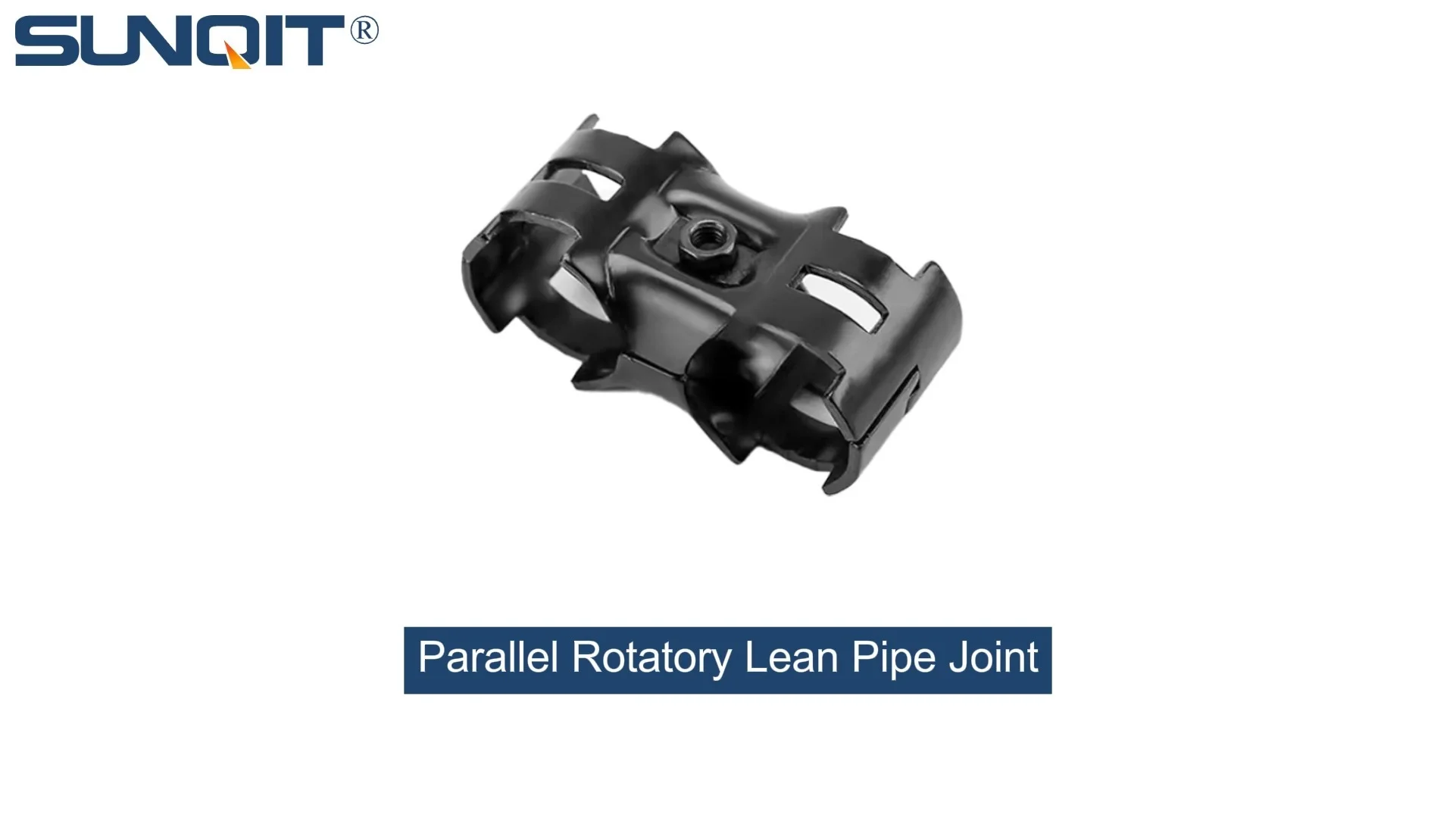
Parallel Rotatory Lean Pipe Joint
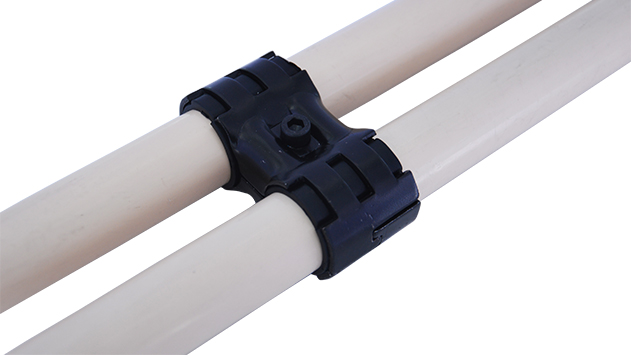
Parallel rotatory lean pipe joint, for 2 pcs pipe conenction in parallel direction with rotatory function.
In the fast-paced world of mechanical manufacturing, where every second counts and adaptability is key, the difference between a smooth workflow and a frustrating bottleneck often lies in the smallest components. Lean manufacturing has long been the gold standard for optimizing production—minimizing waste, maximizing value, and keeping operations agile. But even the most well-designed lean systems rely on the heroes that hold them together: the joints, pipes, and connectors that form the backbone of workbenches, racks, and conveyor lines. Today, we're taking a deep dive into one such hero that's quietly transforming factory floors: the Parallel Rotatory Lean Pipe Joint Chrome . This unassuming component isn't just a piece of hardware; it's a catalyst for flexibility, durability, and efficiency. Let's explore how it works, why it matters, and the countless ways it's reshaping mechanical manufacturing.
Understanding the Parallel Rotatory Lean Pipe Joint Chrome: More Than Just a Connector
Before we jump into its applications, let's break down what makes this joint unique. At its core, the Parallel Rotatory Lean Pipe Joint Chrome is a specialized connector designed for use with lean pipes—hollow tubes commonly used in modular industrial structures. What sets it apart? Two key features: its parallel rotatory design and chrome plating .
First, the rotation. Unlike fixed joints that lock pipes into rigid angles, this joint allows for smooth, controlled rotation along a parallel axis. Imagine a workbench shelf that can tilt up or down with a simple twist, or a conveyor segment that adjusts its angle to align with a new production line—all without tools or disassembly. That's the power of parallel rotation. It's not about 360-degree free movement (though some variants offer limited swivel); it's about intentional, stable adjustability that keeps structures sturdy while adapting to changing needs.
Then, the chrome plating. Chrome isn't just for shine—it's a functional choice. In manufacturing environments, where exposure to oils, coolants, and moisture is common, corrosion resistance is non-negotiable. Chrome plating forms a hard, protective barrier that shields the joint from rust and wear, extending its lifespan far beyond uncoated or plastic alternatives. It also makes cleaning a breeze; a quick wipe with a cloth removes grime, ensuring the joint maintains its smooth rotation over time.
But durability and adjustability aren't the only perks. This joint is also designed for compatibility . It works seamlessly with standard lean pipes, aluminum profiles , and even roller track systems, making it a versatile addition to existing setups. Whether you're building a new workstation or retrofitting an old flow rack, the Parallel Rotatory Lean Pipe Joint Chrome slots in without requiring overhauls to your current infrastructure.
Why It Matters: The Problem with Rigid Joints in Modern Manufacturing
To appreciate the value of the Parallel Rotatory Lean Pipe Joint Chrome, let's first consider the limitations of traditional fixed joints. In many factories today, workbenches, racks, and conveyors are built with rigid, non-adjustable connectors. Need to lower a shelf by 6 inches to fit a taller component? You'll likely need to unscrew the joint, cut a new pipe, and reassemble—wasting 30 minutes or more. Want to tilt a flow rack to speed up material flow? Impossible without rebuilding the entire structure. These inefficiencies add up: production delays, frustrated workers, and missed opportunities to adapt to new product lines or sudden demand shifts.
In an era where manufacturing runs on agility—think short production runs, frequent design changes, and customized orders—rigid joints are a liability. The Parallel Rotatory Lean Pipe Joint Chrome turns that liability into an asset. By allowing on-the-fly adjustments, it reduces downtime, empowers workers to tailor their spaces, and ensures that your infrastructure can evolve as quickly as your business does.
Applications in Mechanical Manufacturing: Where Flexibility Meets Function
Now, let's get to the heart of the matter: how does this joint actually improve day-to-day manufacturing? From assembly lines to material handling, its applications are as diverse as the factories that use it. Below are five key areas where the Parallel Rotatory Lean Pipe Joint Chrome is making a tangible difference.
1. Lean Pipe Workbenches: Customizable Workspaces for Every Task
The lean pipe workbench is the cornerstone of any manufacturing workstation, and it's where the Parallel Rotatory Lean Pipe Joint Chrome truly shines. Consider an automotive assembly line, where workers switch between installing small electronics and heavy engine components throughout the day. A fixed-height workbench forces them to hunch, stretch, or kneel—leading to fatigue and errors. With rotatory joints, the solution is simple: adjust the bench height or tilt the work surface with a quick twist.
Take, for example, a workbench used for circuit board assembly. When soldering tiny components, the worker might lower the surface to eye level for precision. When testing the assembled board, they tilt it slightly to access ports on the bottom. Later, when packaging the finished product, they raise the bench to waist height to avoid bending. All these adjustments happen in seconds, without tools, thanks to the joint's smooth rotation. The result? Happier workers, fewer mistakes, and a 15-20% boost in productivity—numbers that add up quickly over a shift.
But it's not just about height. Attach tool holders or storage bins to the bench using rotatory joints, and workers can swing them into reach when needed and out of the way when not. No more fumbling for a wrench across the bench or knocking over bins—everything stays within arm's reach, exactly where it's needed.
2. Flow Racks: Controlling Material Flow with Precision
In material handling, flow racks are the unsung heroes that keep parts moving from storage to assembly lines. These racks use gravity to slide components down inclined tracks, ensuring a steady supply to workers. But here's the catch: not all parts flow the same way. A lightweight plastic bracket might glide too fast, while a heavy metal gear could get stuck halfway down. Traditional flow racks, with fixed angles, offer no solution—you're stuck with one speed, leading to jams, spills, or wasted time sorting overflow.
Enter the Parallel Rotatory Lean Pipe Joint Chrome. By attaching the rack's side rails to the frame with these joints, workers can (fine-tune) the incline in seconds. Need to slow down that plastic bracket? Tilt the rack back slightly by rotating the joint, reducing the angle and gravity's pull. Heavy gear jamming? Tilt it forward a hair to increase flow speed. It's like having a dimmer switch for material flow—precise control that prevents waste and keeps lines moving.
One electronics manufacturer in Japan reported a 30% reduction in material jams after retrofitting their flow racks with rotatory joints. "Before, we'd have to stop the line every hour to unjam capacitors or resistors," said a production manager. "Now, the operators adjust the angle themselves—no more waiting for maintenance. It's saved us hours of downtime."
3. Conveyor Systems: Adapting to Curves, Heights, and Shifts
Modular conveyor systems are the arteries of manufacturing, carrying parts between stations. But connecting conveyor segments—especially around corners or between different heights—has always been a challenge. Misalignment leads to jams, damaged parts, or even safety hazards. Traditional fixed joints require precise measurements during installation, leaving no room for error. If the floor isn't perfectly level or the production line shifts, the entire conveyor section might need rebuilding.
The Parallel Rotatory Lean Pipe Joint Chrome simplifies this dramatically. In curved conveyor sections, for example, joints connect straight segments at slight angles. With rotatory joints, workers can adjust the angle by a degree or two to ensure parts glide smoothly around the bend, even if the initial installation was slightly off. Similarly, when connecting conveyors of different heights—say, from a lower assembly line to an upper packaging station—rotatory joints allow for (fine adjustment) of the incline, preventing parts from sliding backward or tipping over.
A food packaging plant in Germany recently used these joints to reconfigure their conveyor system for a new product line. Instead of replacing the entire system (a $50,000 expense), they adjusted the existing segments using rotatory joints, saving 80% of the cost and completing the reconfiguration in a single weekend. "We didn't just save money—we avoided shutting down production for a week," said the plant engineer. "That's the power of flexibility."
4. Turnover Trolleys: Versatile Transport for Every Load
Turnover trolleys are the workhorses of material transport, shuttling parts between warehouses, assembly lines, and shipping areas. But not all loads are created equal—one trolley might carry fragile glass panels in the morning and heavy metal castings in the afternoon. Fixed-shelf trolleys force workers to either overload shelves (risking damage) or use multiple trolleys (wasting space). The Parallel Rotatory Lean Pipe Joint Chrome solves this with adjustable shelving that adapts to the load.
Imagine a trolley with three shelves. In the morning, for glass panels, workers rotate the joints to lower the shelves, creating more vertical space and preventing the panels from leaning. In the afternoon, for castings, they raise the shelves to reduce height, lowering the trolley's center of gravity and making it easier to push. Some variants even allow shelves to tilt, so fragile items can rest at a slight angle to prevent sliding. It's like having a custom trolley for every job—without the cost of buying multiple trolleys.
A furniture manufacturer in Italy took this a step further, adding rotatory joints to the trolley's handle. Workers of different heights can now adjust the handle angle to avoid bending, reducing strain and injuries. "We used to have workers complaining about back pain," said the safety officer. "Since adding the rotatory joints, those complaints dropped by 60%. It's a small change, but it made a huge difference in morale."
5. Material Racks: Adapting to Changing Inventory
Warehouses and storage areas are constantly evolving, with inventory shifting between small parts, large components, and seasonal items. Fixed material racks with set shelf spacing quickly become obsolete—either wasting space with gaps too large for small parts or unable to fit larger items. The Parallel Rotatory Lean Pipe Joint Chrome turns static racks into dynamic storage systems that grow with your inventory.
Consider a rack used for automotive parts. In January, it stores small screws and bolts, with shelves spaced 6 inches apart. In March, the factory switches to producing truck engines, requiring shelves for 2-foot-long hoses. With rotatory joints, workers simply rotate the shelf supports to widen the spacing—no tools, no disassembly. Later, when storing bulky alternators, they can tilt the shelves slightly to angle the parts, making them easier to grab without reaching deep into the rack.
A aerospace supplier in the U.S. reported saving 40% on storage space after retrofitting their racks with rotatory joints. "We used to have separate racks for small, medium, and large parts," said the warehouse manager. "Now, one rack does it all. We adjust the shelves as needed, and we've freed up an entire corner of the warehouse for new equipment."

Traditional Joints vs. Parallel Rotatory Chrome Joints: A Comparison
| Feature | Traditional Fixed Joints | Parallel Rotatory Lean Pipe Joint Chrome |
|---|---|---|
| Adjustability | None—fixed angles only; requires disassembly to reconfigure. | Parallel rotation allows on-the-fly adjustments (height, tilt, angle) without tools. |
| Durability | Prone to rust in moist environments; plastic variants wear quickly. | Chrome plating resists corrosion, oils, and wear; lasts 2-3x longer in industrial settings. |
| Setup/Reconfiguration Time | 30-60 minutes per adjustment (disassembly + reassembly). | 2-5 minutes per adjustment (simple rotation + locking). |
| Compatibility | Often limited to specific pipe sizes or brands. | Works with standard lean pipes, aluminum profiles, and roller tracks. |
| Long-Term Cost | Lower upfront cost, but higher replacement/repair costs over time. | Higher upfront cost, but lower maintenance and downtime savings offset it within 6-12 months. |

The Human Touch: How Rotatory Joints Empower Workers
Beyond efficiency and cost savings, the Parallel Rotatory Lean Pipe Joint Chrome has a quieter, more profound impact: it empowers workers. In manufacturing, where employees spend hours at their stations, small frustrations—like a workbench that's too high, a rack that jams, or a trolley that's hard to push—add up. Over time, these frustrations lead to disengagement, lower productivity, and higher turnover.
Rotatory joints change that by putting control back in the hands of the people who use the equipment. A line worker doesn't need to wait for a supervisor or maintenance team to adjust their workspace—they can do it themselves, in seconds. It's a small act of autonomy that fosters pride in their work and a sense of ownership over their environment.
"Before, if my workbench was too low, I'd have to ask my manager to send someone with a wrench," said a worker at a machinery plant in Ohio. "By the time they got around to it, my back was already sore. Now, I twist the joint and fix it myself. It makes me feel like my comfort matters."
Looking Ahead: The Future of Flexible Manufacturing
As manufacturing continues to shift toward customization, small-batch production, and Industry 4.0, the demand for flexible infrastructure will only grow. The Parallel Rotatory Lean Pipe Joint Chrome is more than a component of today's factories—it's a preview of tomorrow's. Imagine joints with built-in sensors that alert managers when rotation becomes stiff (predictive maintenance), or smart locking mechanisms that remember preferred configurations for different products. The possibilities are endless.
But even without high-tech add-ons, this joint is already a game-changer. It embodies the lean philosophy not just in reducing waste, but in valuing people and adaptability. In a world where change is the only constant, the ability to adjust, evolve, and thrive is everything. The Parallel Rotatory Lean Pipe Joint Chrome doesn't just connect pipes—it connects manufacturers to a future where efficiency and humanity go hand in hand.
Conclusion: Small Joints, Big Impact
In the grand scheme of mechanical manufacturing, the Parallel Rotatory Lean Pipe Joint Chrome might seem (insignificant). But as we've seen, its impact is anything but. From customizable workbenches that reduce worker strain to flow racks that prevent jams, from conveyors that adapt to new layouts to trolleys that carry every load with ease, this joint is redefining what it means to build flexible, efficient, and human-centered factories.
So the next time you walk through a manufacturing plant, take a closer look at the workbenches, racks, and conveyors. Chances are, the smooth, chrome-plated joints holding them together are more than just hardware—they're the unsung heroes keeping production moving, workers thriving, and businesses adapting to whatever the future brings. In the end, it's not about the size of the component, but the size of the difference it makes. And the Parallel Rotatory Lean Pipe Joint Chrome? It's making a very big difference.