- Company Articles
- Products and Technology
- Application Cases
- Applications of Three Way Aluminum Pipe Joints in Automotive Manufacturing

Applications of Three Way Aluminum Pipe Joints in Automotive Manufacturing
Related Product
Three Way Aluminum Pipe Joint
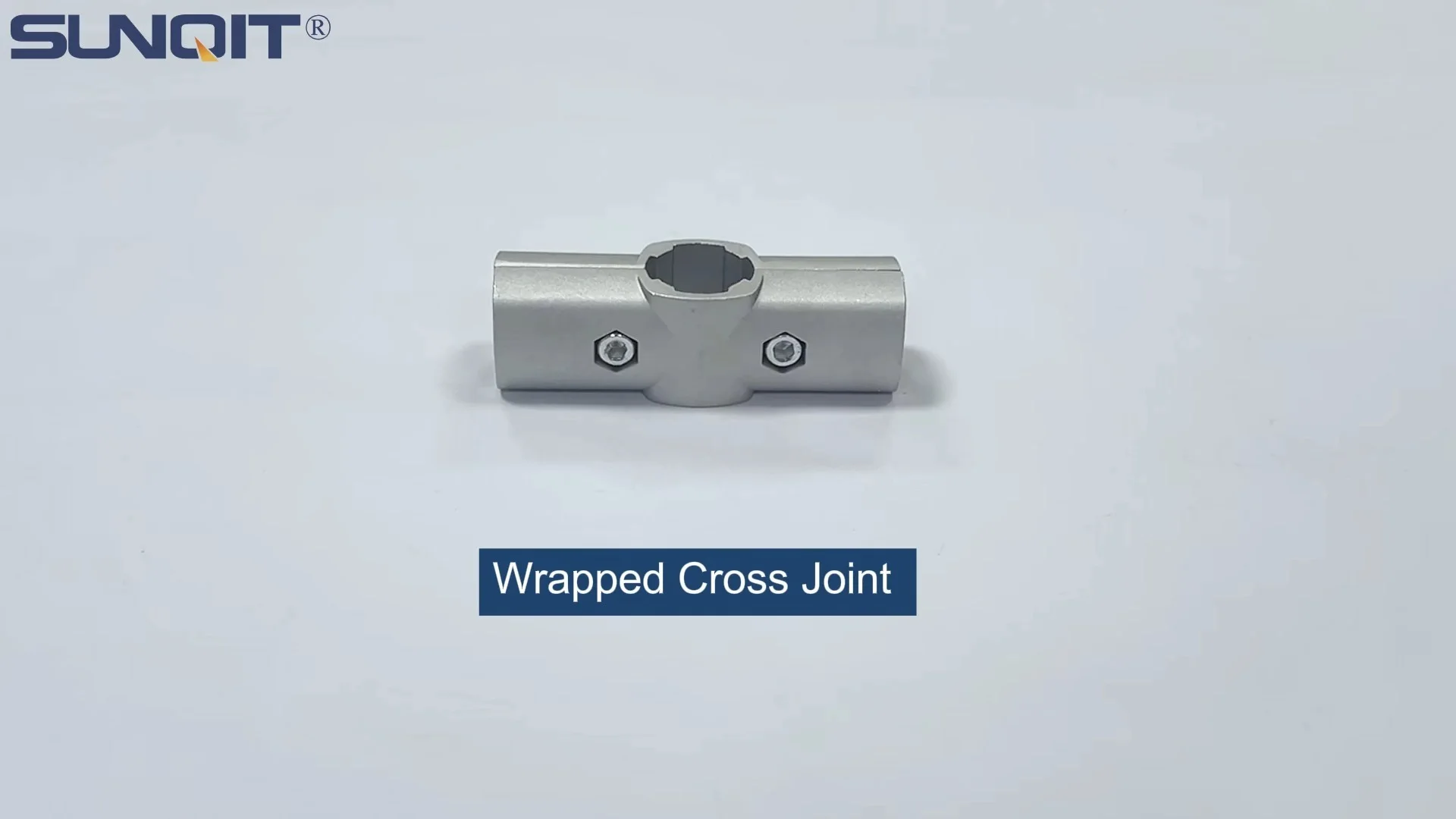
Aluminum 3 way pipe joint for 28mm aluminum pipe connection in 3 direction.
In the high-speed world of automotive manufacturing, where production lines shift between models, part sizes change overnight, and efficiency is measured in seconds, the tools that hold everything together matter more than you might think. Every workstation, material rack, and assembly line component needs to keep up with this pace—rigid enough to handle heavy parts, flexible enough to reconfigure in hours, not weeks. This is where three way aluminum pipe joints step in, quietly revolutionizing how automotive plants build, adapt, and thrive. When paired with aluminum lean pipe and aluminum profile, these small but mighty connectors turn ordinary tubing into modular systems that grow, change, and evolve with your production needs.
What Are Three Way Aluminum Pipe Joints?
At their core, three way aluminum pipe joints are the unsung heroes of modular construction. These precision-engineered connectors are designed to join three aluminum pipes (or aluminum lean pipe) at angles ranging from 30° to 90°, creating stable, customizable structures without a single weld. Made from high-grade aluminum, they're lightweight—about 40% lighter than steel alternatives—yet surprisingly strong, capable of supporting the daily wear and tear of automotive workshops, from heavy engine parts to constant reconfiguration.
What really sets them apart is their simplicity. Unlike traditional steel joints that require welding, drilling, or specialized tools, three way aluminum joints twist, lock, and secure in minutes using nothing more than a hex key. This "build-and-rebuild" design means a workstation that assembles transmission components today can be disassembled tonight and reassembled tomorrow as a material rack for brake parts. No downtime, no wasted materials, just pure adaptability.
Why Automotive Manufacturing Can't Afford to Ignore Them
Automotive plants aren't static. New models launch, electric vehicle components replace traditional engines, and customer demands shift—all requiring production lines to pivot quickly. Three way aluminum pipe joints address three critical pain points in this environment: cost, flexibility, and durability. Let's break it down:
| Feature | Traditional Steel Welded Joints | Three Way Aluminum Pipe Joints |
|---|---|---|
| Installation Time | Hours (requires welding, painting, curing) | Minutes (tool-free assembly, no special skills) |
| Flexibility | Fixed (cannot reconfigure without cutting/welding) | Modular (easily disassemble, reangle, or expand) |
| Weight | Heavy (increases strain on floor supports, harder to move) | Lightweight (easier to reposition, reduces worker fatigue) |
| Durability | Prone to rust (requires regular repainting in humid plants) | Corrosion-resistant (aluminum oxide layer prevents rust) |
| Long-Term Cost | High (replacement parts, labor for rework, downtime) | Low (reusable joints, minimal labor, quick reconfigurations) |
Real-World Applications: How Three Way Aluminum Joints Transform Automotive Floors
It's one thing to talk about benefits, but seeing these joints in action is where their value truly shines. Let's walk through four key areas of automotive manufacturing where three way aluminum pipe joints, paired with aluminum lean pipe and aluminum profile, are making a tangible difference.
1. Assembly Line Workstations: Built for the Humans Behind the Tools
Picture a typical automotive assembly line: workers standing for hours, reaching for tools, maneuvering parts, and repeating precise motions thousands of times. The ergonomics of their workbench directly impact productivity and safety. Three way aluminum pipe joints let plants design workstations that fit people , not the other way around.
Take a dashboard assembly workstation, for example. Using aluminum lean pipe and three way joints, you can build a custom workbench with adjustable height (to suit workers of different statures), angled shelves for tool placement (reducing shoulder strain), and integrated roller track sections (so parts glide into place instead of being lifted). Need to add a new shelf for electric vehicle wiring harnesses? Simply loosen the joint, add a section of aluminum profile, and lock it back down—done in 10 minutes. No more waiting for the maintenance team to weld on a steel bracket, and no more workers compensating with awkward postures that lead to injuries.
One automotive plant in Michigan reported a 22% reduction in worker fatigue after reconfiguring their workstations with these joints, along with a 15% faster assembly time for door panels. When your tools adapt to your team, your team performs better.
2. Material Racks: From Chaos to Controlled Flow
In automotive manufacturing, time wasted hunting for parts is money lost. A single misplaced bracket or bolt can bring an entire assembly line to a halt. Material racks built with three way aluminum pipe joints solve this by turning disorganized storage into a streamlined "part-to-line" system.
Consider a material rack for suspension components—heavy, bulky, and available in dozens of sizes for different vehicle models. Using three way joints, you can build a multi-tiered rack (like the "material rack b (3 row and 3 floor)" design, but customized to your parts) where each shelf is adjustable by height and width. Smaller parts go on upper shelves with dividers (secured via the joints), while larger shock absorbers rest on lower levels with roller track sections (yes, roller track integrates seamlessly!) to slide parts out without lifting. Color-code the aluminum lean pipe (using colored end caps) to match vehicle models, and suddenly, workers don't "search"—they grab the right part on the first try.
A plant in Ohio used this approach to cut part retrieval time by 35%, eliminating 12 "walk-and-search" trips per worker per day. When your material rack adapts to your parts, your line stays moving.
3. Roller Track Systems: Smoothing the Path from Storage to Assembly
Roller track is the backbone of material flow in automotive plants, carrying everything from small screws to entire engine blocks across the factory floor. But traditional roller track systems are rigid—once installed, their paths are fixed, limiting how you adapt to new production layouts. Three way aluminum pipe joints change that by turning roller track into a modular, reconfigurable network.
Here's how it works: roller track sections are mounted to aluminum profile frames, connected by three way joints. Need to reroute parts around a new robot arm? Loosen the joints, pivot the track 45°, and lock it down. Want to add a side branch for transmission parts? Attach a new section of roller track to the existing joint—no cutting, no welding, just a few twists of a hex key. Even better, the lightweight aluminum design means you can move entire roller track segments by hand, no forklift required.
A European automotive supplier specializing in electric vehicle batteries used this setup to reduce bottlenecks in their cell assembly line. By reconfiguring their roller track layout monthly to match changing battery sizes, they cut line downtime by 30% and increased on-time deliveries by 25%. When your roller track flows with your production, your deadlines are easier to hit.
4. Maintenance Stations: Ready for the Unexpected
Automotive plants don't just build cars—they fix them, too. Maintenance stations need to handle everything from minor tool repairs to overhauling conveyor belts, requiring a workspace that's as versatile as the problems it solves. Three way aluminum pipe joints shine here, turning a basic workbench into a mobile repair hub.
Imagine a maintenance cart built with aluminum lean pipe and three way joints: fold-down shelves for tools, a built-in roller track for parts, and locking casters for easy movement. Need to fix a jammed assembly line? Roll the cart to the spot, unfold the shelves, and get to work. Later, reconfigure it as a parts washer stand by adding a basin holder (secured via the joints) or as a storage unit for replacement bearings. It's not just a cart—it's a Swiss Army knife for your maintenance team.

The Secret Sauce: Aluminum Lean Pipe and Profile
Three way aluminum pipe joints are powerful on their own, but their true potential is unlocked when paired with aluminum lean pipe and aluminum profile. Aluminum lean pipe is lightweight, corrosion-resistant, and compatible with all standard joint sizes, while aluminum profile adds rigidity for heavier loads. Together, they create a system where the whole is greater than the sum of its parts.
Aluminum lean pipe, for instance, comes in various diameters (16mm to 30mm) to match your needs—thinner for tool holders, thicker for material racks. Its smooth, anodized finish resists oil, grease, and chemicals, making it ideal for automotive environments where spills are inevitable. Aluminum profile, with its T-slot design, lets you attach accessories like hooks, bins, and even LED work lights directly to the frame, turning a basic structure into a fully functional workstation.

Why This Isn't Just a Fad
In an industry where change is constant, three way aluminum pipe joints aren't just a trend—they're a long-term investment. Their durability ensures they'll outlast multiple production cycles (aluminum doesn't rust, and the joints are designed to withstand 10,000+ reconfigurations). Their reusability means you'll never throw away a perfectly good rack or workstation again—just disassemble and rebuild. And their cost-effectiveness? One plant calculated that switching to these joints saved them $45,000 in the first year alone by reducing downtime and material waste.
Final Thoughts: Building for the Future
Automotive manufacturing is at a crossroads—electric vehicles, autonomous tech, and global supply chain shifts demand more adaptability than ever. Three way aluminum pipe joints, paired with aluminum lean pipe and aluminum profile, aren't just tools for today's challenges; they're tools for tomorrow's opportunities. They let you build a factory that doesn't just keep up with change—it leads it.
So the next time you walk through an automotive plant, take a closer look at the workstations, racks, and roller tracks. Chances are, if they're lightweight, modular, and built to last, there's a three way aluminum pipe joint holding it all together. Quiet, unassuming, and indispensable—this is how the future of manufacturing is built, one joint at a time.