- Company Articles
- Products and Technology
- Application Cases
- Applications of Three Way Lean Pipe Joint Chrome in 3C Assembly Workstations

Applications of Three Way Lean Pipe Joint Chrome in 3C Assembly Workstations
Related Product
Three Way Lean Pipe Joint Chrome
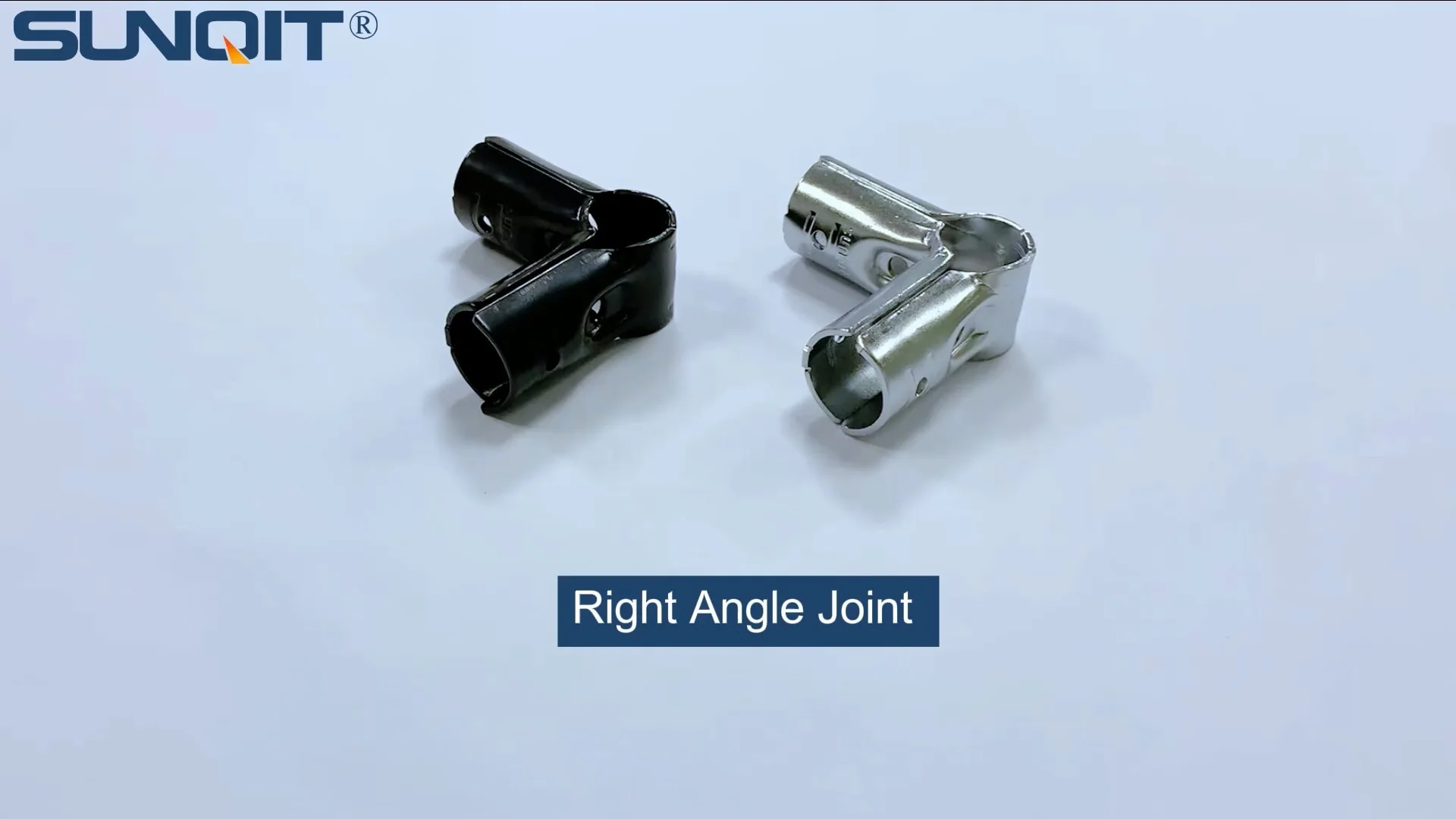
Three way lean pipe joint for 3 pcs 28MM lean pipe connection in straight angle, which used widely in workbench, flow rack, hand trolley frame connection.
In the bustling world of manufacturing, few sectors demand as much precision, flexibility, and speed as the 3C industry—short for computer, communication, and consumer electronics. From sleek smartphones and lightweight laptops to intricate smartwatches and high-performance routers, 3C products are defined by their small size, complex internal components, and rapid lifecycle changes. For assembly line managers and workers, this means one constant challenge: keeping up. Production lines must pivot quickly between product models, maximize limited floor space, protect sensitive electronics from static damage, and maintain consistent efficiency—all while keeping costs in check. Enter lean manufacturing, and more specifically, the unsung heroes of lean systems: components like the three way lean pipe joint chrome. These unassuming connectors play a pivotal role in building the adaptable, durable, and efficient workstations that keep 3C assembly lines running smoothly. Let's dive into how this simple yet innovative component is transforming 3C assembly floors.
Meet the Workhorse: What is a Three Way Lean Pipe Joint Chrome?
Before we explore its applications, let's get to know the star of the show: the three way lean pipe joint chrome. At its core, this component is a connector designed to join lean pipes—hollow metal tubes commonly used in lean manufacturing setups—to create structures like workbenches, racks, and material flow systems. What sets the three way variant apart is its ability to connect three pipes at once, allowing for branching configurations (think of a T-junction or a Y-shape in your assembly structure). But it's the "chrome" in its name that adds another layer of value: the joint is coated in a thin layer of chromium, a process that enhances its durability, corrosion resistance, and overall lifespan.
Most three way lean pipe joints chrome are made from high-quality steel, with the chrome plating applied via electroplating to ensure a smooth, even finish. This plating isn't just for looks; it forms a protective barrier against moisture, oils, and chemicals commonly found in factory environments—critical for 3C plants where spills, humidity, or cleaning agents might otherwise damage uncoated metal. The joint's design is equally practical: it typically features threaded holes or clamping mechanisms that allow for tool-free assembly (or minimal tools, like a hex key), making it easy for workers to build, adjust, or disassemble structures without specialized training. And unlike welded or glued joints, these connectors are reusable—meaning if a workstation needs to be reconfigured for a new product model, the joints can be loosened, pipes repositioned, and the system rebuilt in hours, not days.
Why It Matters: Core Benefits of Three Way Lean Pipe Joint Chrome in 3C Assembly
So, what makes this joint a must-have for 3C assembly? Let's break down its key advantages, each tailored to the unique demands of building small, high-tech electronics:
- Unmatched Flexibility : 3C products change fast. A factory might produce a 6.7-inch smartphone one month and switch to a 7.2-inch model the next, or shift from assembling wireless earbuds to smart home sensors. Traditional fixed workstations—built with welded steel or wooden frames—can't keep up; modifying them often requires cutting, welding, or even replacing entire structures. Three way chrome joints eliminate this hassle. Their tool-free assembly means workers can adjust pipe lengths, add shelves, or reangle components in minutes, letting the line adapt to new product specs without downtime.
- Durability That Stands Up to the Factory Floor : 3C assembly lines are busy places. Workstations see constant use—tools being set down, components being moved, workers leaning on surfaces—and they're exposed to everything from static electricity to occasional spills of cleaning fluids. Chrome-plated steel joints are built to withstand this. The chrome layer resists rust and scratches, while the steel core ensures the joint won't bend or break under the weight of tools, materials, or even heavy workbench tops. Unlike plastic joints (which can crack in cold or warp in heat), these metal connectors maintain their integrity, reducing the need for frequent replacements.
- Cost-Effective in the Long Run : Lean manufacturing is all about eliminating waste, and that includes wasteful spending. While three way chrome joints might cost slightly more upfront than basic plastic connectors, their reusability and longevity make them far cheaper over time. A single joint can be reused across dozens of workstation configurations, cutting down on the need to buy new parts for every product change. Plus, their durability reduces maintenance costs—no more replacing cracked plastic or rusted steel joints every few months.
- Seamless Compatibility : 3C assembly workstations aren't just pipes and joints; they're integrated systems. They need to work with esd workstations (to protect sensitive chips from static), flow racks (to organize tiny components like resistors or capacitors), and roller tracks (to move PCBs between stations). Three way lean pipe joint chrome plays well with all these. They connect easily to standard lean pipes (often 28mm or 30mm in diameter), as well as accessories like ESD-safe workbench tops, roller track guides, and caster wheels for mobile workstations. This compatibility means factories can mix and match components to build exactly the system they need, without worrying about part incompatibility.

Putting It to Work: Real-World Applications in 3C Assembly
Now, let's get specific. How do these joints actually transform day-to-day operations on a 3C assembly floor? Let's explore four key applications, each highlighting how the three way lean pipe joint chrome solves a common challenge in building electronics.
1. Building Custom Lean Pipe Workbenches: Where Precision Meets Adaptability
At the heart of any 3C assembly line is the workbench—the spot where workers spend hours soldering microchips, attaching screens, or testing circuit boards. These workbenches can't be one-size-fits-all. A worker assembling a smartwatch needs a smaller, more intimate workspace than someone building a laptop; a station for PCB soldering might require heat-resistant surfaces, while one for quality control needs bright lighting and magnification tools. This is where three way lean pipe joint chrome shines.
Consider a typical smartphone assembly workbench. Using lean pipes and three way chrome joints, the frame can be built to a custom height (say, 800mm for seated workers) with a main tabletop (often ESD-safe, to prevent static damage to the phone's motherboard). But the magic is in the add-ons: a side shelf for tools (screwdrivers, tweezers, anti-static wristbands) can be attached using a three way joint, branching off the main frame at a 90-degree angle. Above the tabletop, a overhead shelf for instruction manuals or digital displays can be mounted with another set of three way joints, ensuring workers don't have to crane their necks to check assembly steps. Need to add a bin for discarded packaging? A small hanging rack can be connected via a downward-branching three way joint. And if the next product model requires a taller workbench (for larger screens), the joints are simply loosened, pipes adjusted, and the structure resecured—no new materials needed.
What's more, these workbenches can be made mobile by adding caster wheels (connected, of course, via joints) for easy repositioning. In a factory with limited space, this means workstations can be rolled out of the way during deep cleaning or reorganized to create a U-shaped assembly line for faster material flow. And because the joints are chrome-plated, they hold up to the daily wear and tear of workers leaning on the bench, tools being set down, or occasional spills of isopropyl alcohol (used to clean PCBs).
2. Streamlining Material Flow with Flow Racks: Keeping Components at Fingertips
3C assembly relies on thousands of tiny components: capacitors the size of a grain of rice, resistors in a dozen colors, screws smaller than a pencil lead. If these parts aren't organized, workers waste precious time hunting for the right component, slowing down production. Enter flow racks—tilted shelves or tracks where component bins slide forward as the front bin is emptied, ensuring the next one is always within reach. Three way lean pipe joint chrome is the backbone of these racks, providing the flexibility to customize their size, shape, and capacity.
Imagine a flow rack for smartphone camera modules. Each module requires a lens, a sensor, and a flex cable—three components that need to be within arm's reach of the assembly worker. Using lean pipes and three way chrome joints, the rack can be built with three vertical supports (connected via horizontal pipes at the top, middle, and bottom) and three inclined levels (one for each component type). Each level is fitted with roller track (another key component in lean systems) to let bins glide forward. The three way joints allow for easy adjustment of the incline angle—too steep, and bins might slide out on their own; too shallow, and workers have to pull them forward. With a quick twist of the joint's clamping mechanism, the angle can be tweaked to perfection.
But flow racks aren't static. If the factory switches to a new camera module with larger bins, the three way joints make it easy to adjust the shelf height or add extra support pipes. Need to add a fourth level for a new component? Just attach a new horizontal pipe to the vertical supports using three way joints, add roller track, and the rack is ready. This adaptability ensures that even as component sizes or types change, the flow rack evolves with them—no need to buy a brand-new rack.
3. Ensuring Safety with ESD Workstations: Protecting Sensitive Electronics
One of the biggest risks in 3C assembly is electrostatic discharge (ESD)—a sudden flow of electricity between two objects that can fry delicate microchips, render a circuit board useless, or even damage components without any visible signs (leading to product failures later). To prevent this, factories use esd workstations: surfaces, tools, and even flooring designed to (ground) static charges, redirecting them safely away from products. Here, the three way lean pipe joint chrome plays a critical, often overlooked role: conductivity.
Unlike plastic joints, which insulate static charges, chrome-plated steel joints are conductive. When integrated into an ESD workstation frame, they create a continuous path for static electricity to flow from the workbench surface down to the ground (via a grounding wire connected to the frame). This ensures that any static buildup on the worker (from moving around) or the tools is immediately dissipated, rather than jumping to the PCB or chip being assembled. For example, a worker wearing an anti-static wristband (connected to the workstation frame) will have their static charge flow through the lean pipes, through the three way joints, and into the ground—keeping the product safe.
This conductivity is especially important in environments where humidity is low (static thrives in dry air), common in many factories. Without conductive joints, even an ESD-safe workbench top might not provide full protection, as static could get trapped in non-conductive frame components. The three way chrome joint eliminates this gap, ensuring the entire workstation—from the tabletop to the floor—is part of a unified grounding system.
4. Optimizing Material Handling with Roller Tracks: Smooth Moves for Delicate Components
In high-volume 3C assembly, moving partially built products between workstations efficiently is key to meeting production targets. Dropping a PCB or scratching a phone screen during transport can ruin hours of work. Roller tracks—series of small wheels mounted on a frame—solve this by allowing products to glide smoothly from one station to the next, often via gravity or gentle pushes. Three way lean pipe joint chrome makes these tracks versatile, letting factories design custom paths that fit their floor layout.
Consider a laptop assembly line where PCBs need to move from the soldering station to the component mounting station, then to testing. A straight roller track might work for a linear line, but if space is tight, the line might need to turn a corner or split into two paths (one for passing units, one for rework). Three way joints make this possible. For a corner, two tracks can be connected at a 90-degree angle using a three way joint as the pivot, with roller track guide rails (often plastic or aluminum) to keep the PCB aligned. For a split, a single track can branch into two using a Y-shaped configuration of three way joints, sending good units to the next station and faulty ones to a rework bench.
These joints also make it easy to adjust the track height. A soldering station might be higher (to accommodate a fume extractor), while the testing station is lower (for ergonomics). Using three way joints, the roller track can be gradually inclined or declined between stations, ensuring PCBs move at a steady, controlled speed—no more worrying about products sliding too fast and crashing at the end of the track.

Traditional vs. Three Way Chrome Joints: A Quick Comparison
| Feature | Traditional Two-Way Plastic Joints | Three Way Lean Pipe Joint Chrome |
|---|---|---|
| Configuration Flexibility | Limited to straight or 90-degree connections; no branching. | Three-way branching (T/Y-shapes) allows for complex, multi-level structures. |
| Durability | Prone to cracking in high-impact areas; degrades in moisture/chemicals. | Chrome-plated steel resists rust, scratches, and corrosion; withstands heavy use. |
| Assembly Time | Often requires glue or specialized tools; difficult to reposition. | Tool-free (or hex key) assembly; reconfigurable in minutes. |
| ESD Compatibility | Non-conductive; cannot contribute to grounding systems. | Conductive; integrates with ESD workstations to dissipate static. |
| Cost Over Time | Low upfront cost, but frequent replacements drive long-term expenses. | Higher upfront cost, but reusable and durable—lower total cost of ownership. |
Case Study: How One 3C Factory Cut Downtime by 40% with Three Way Chrome Joints
To see these benefits in action, let's look at a real-world example. A mid-sized electronics manufacturer in Shenzhen, China, specializes in assembling wireless earbuds and smartwatches—two product lines with frequent model updates. Before adopting lean systems, their assembly line relied on fixed wooden workbenches and welded steel racks. When a new earbud model was introduced (with a different battery size and charging port), reconfiguring the line took 12 hours: workers had to disassemble the old wooden benches, saw new pieces to size, and rebuild from scratch. ESD incidents were also common, with 5-10% of PCBs damaged by static, costing the factory thousands in wasted components.
In 2023, the factory switched to lean pipe workbenches and flow racks using three way lean pipe joint chrome. The results were dramatic. For starters, reconfiguring the line for a new model dropped from 12 hours to just 3 hours: workers loosened the joints, adjusted the pipe lengths to fit the new battery compartments, and added extra shelves for the new charging port components using three way branching. ESD incidents fell to less than 1% because the conductive chrome joints grounded the entire workstation frame, eliminating static buildup.
Material handling also improved. By adding roller tracks connected with three way joints, the factory created a "U-shaped" flow where partially assembled earbuds glided from the soldering station to the battery installation station, then to testing—reducing worker movement by 20% and cutting down on fatigue. The flow racks, built with adjustable levels via three way joints, kept components organized, slashing the time workers spent searching for parts by 30%.
"We used to dread product launches because of the downtime," said the factory's production manager. "Now, with these chrome joints, we can switch models over a lunch break and be back to full production by afternoon. And the ESD protection alone has saved us enough money to pay for the entire lean system in six months."
Looking Ahead: The Future of 3C Assembly and Lean Components
As 3C products continue to shrink in size and grow in complexity—think foldable phones, AR glasses, and IoT sensors—assembly lines will only become more demanding. Factories will need to build systems that are not just flexible, but intelligent, with integration for automation (like collaborative robots) and data tracking (to monitor production bottlenecks). In this context, components like the three way lean pipe joint chrome will remain essential. Their compatibility with smart accessories (e.g., sensor-equipped roller tracks that alert managers when bins are low) and their ability to support lightweight automation tools (like small conveyor belts for PCB transport) make them a foundation for the "smart factories" of tomorrow.
Moreover, as sustainability becomes a bigger priority in manufacturing, the reusability of these joints will play a key role. Unlike disposable plastic connectors or one-time welded frames, three way lean pipe joint chrome can be reused for years, reducing waste and lowering a factory's carbon footprint. This aligns with the lean philosophy of "reduce, reuse, recycle"—a win for both the bottom line and the planet.
Conclusion: Small Joints, Big Impact
In the fast-paced world of 3C assembly, success hinges on the details—the small components that make big systems work. The three way lean pipe joint chrome may not grab headlines, but it's a workhorse that solves some of the industry's toughest challenges: flexibility for frequent product changes, durability for harsh factory environments, safety for sensitive electronics, and cost-effectiveness for long-term sustainability. Whether it's building a custom workbench for soldering, organizing components in a flow rack, grounding an ESD workstation, or guiding PCBs along a roller track, this unassuming connector proves that innovation often lies in the tools we use to build, adapt, and grow.
For 3C manufacturers looking to stay competitive, the message is clear: invest in components that grow with you. And when it comes to building the adaptable, efficient assembly lines of the future, the three way lean pipe joint chrome is a cornerstone worth relying on.