- Company Articles
- Products and Technology
- Application Cases
- Applications of Two Way Aluminum Pipe Joints in 3C Assembly Lines: A Case Study

Applications of Two Way Aluminum Pipe Joints in 3C Assembly Lines: A Case Study
Related Product
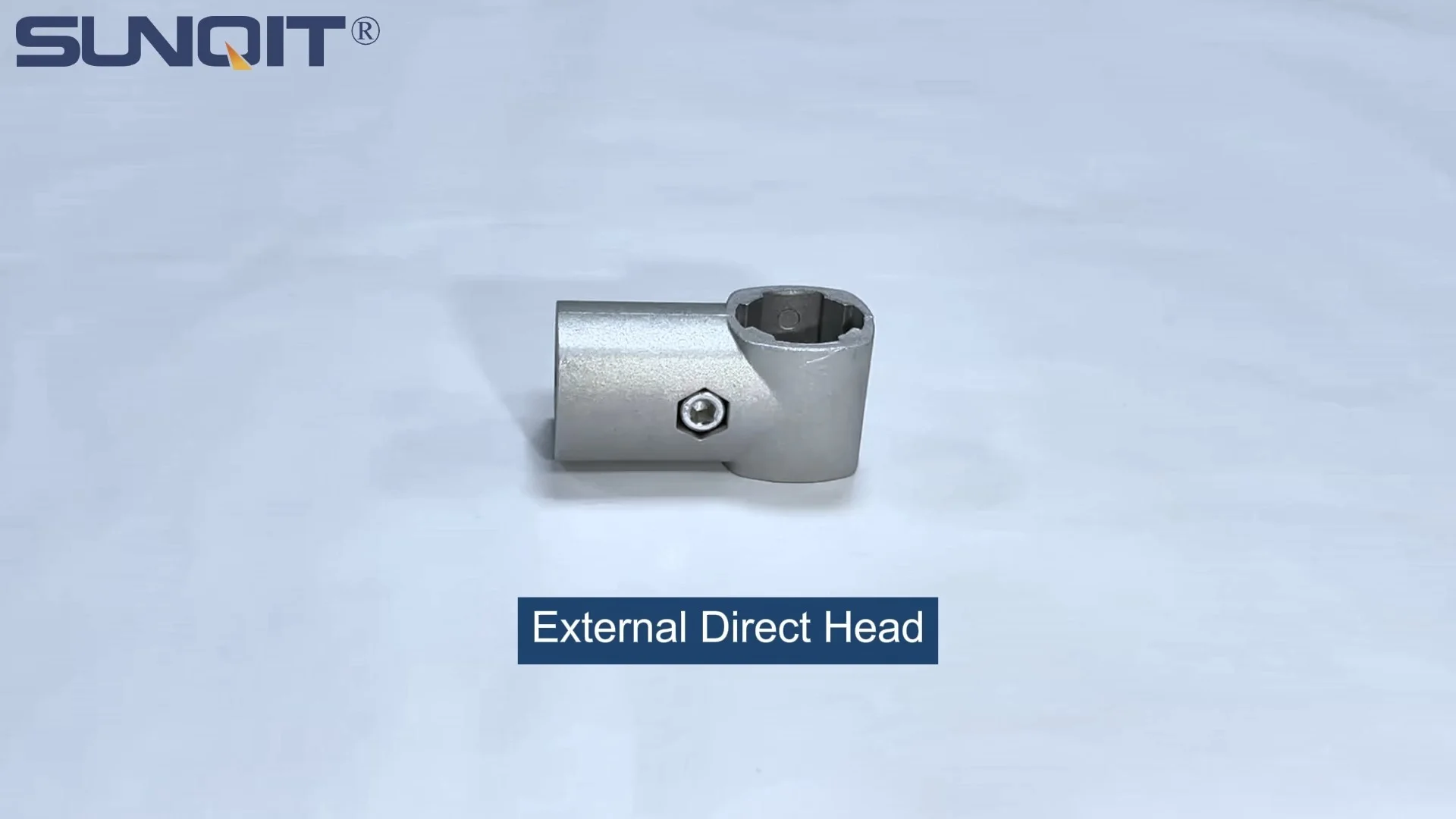
Two Way Aluminum Pipe Joint
Aluminum 2 way pipe joint for 28mm aluminum pipe connection in 2 direction.
Introduction: The Pulse of 3C Manufacturing
Walk into any modern 3C (Computer, Communication, Consumer Electronics) factory, and you'll feel the hum of innovation in the air. From sleek smartphones to lightweight laptops, these products demand precision, speed, and adaptability—traits that trickle down to every aspect of the assembly line. Yet, for years, many manufacturers grappled with a hidden bottleneck: rigid, one-size-fits-all production setups. Traditional steel workbenches, fixed conveyor belts, and immovable material racks worked well for long production runs, but in an industry where new models launch every few months, flexibility isn't just a luxury—it's survival.
This is where modular solutions step in, and at the heart of this revolution lies a small but mighty component: the two way aluminum pipe joint. Paired with aluminum profiles, these joints have quietly transformed how 3C assembly lines are built, reconfigured, and optimized. In this article, we'll dive into a real-world case study of how one electronics manufacturer leveraged two way aluminum pipe joints to overcome production challenges, and explore why these unassuming connectors have become indispensable in the fast-paced world of 3C manufacturing.
The 3C Industry's Quiet Crisis: Rigidity in a World of Change
To understand the impact of two way aluminum pipe joints, let's first unpack the unique pressures facing 3C assembly lines. Unlike automotive or appliance manufacturing, where product cycles span years, 3C products evolve at breakneck speed. A smartphone model might be redesigned within 12 months, requiring assembly lines to adapt to new component sizes, assembly steps, or testing protocols. Add to this the rise of customization—think limited-edition colors or region-specific features—and suddenly, the "set it and forget it" approach to production setups crumbles.
Consider the scenario at TechPro Electronics, a mid-sized manufacturer specializing in smartwatch components. In 2023, TechPro faced a dilemma: their existing assembly line relied on welded steel workbenches and bolted-down flow racks. When a new smartwatch model required a 15% narrower workspace to accommodate a slimmer battery module, reconfiguring the line meant hiring welders, purchasing new steel beams, and halting production for 48 hours. The cost? Over $15,000 in labor and downtime, not to mention delayed product launches. "We were stuck in a cycle of reacting instead of adapting," recalls Maria Gonzalez, TechPro's Production Manager. "Every time the design team changed a part, we'd have to rebuild half the line from scratch."
This rigidity wasn't just costly—it stifled innovation. Engineers hesitated to propose design tweaks for fear of disrupting production, and floor managers dreaded the logistical nightmare of retooling. It was clear: TechPro needed a solution that could keep up with their product's pace.
Enter Two Way Aluminum Pipe Joints: Small Parts, Big Flexibility
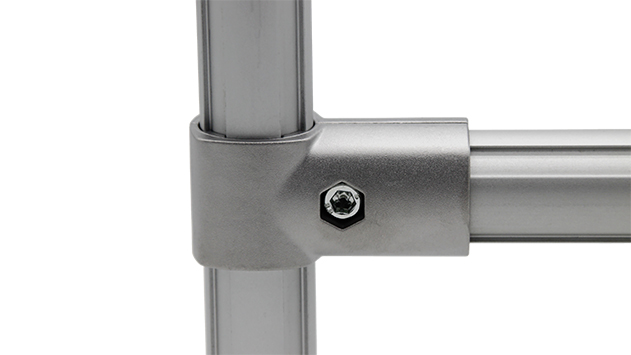
Two way aluminum pipe joints are deceptively simple: they're lightweight, corrosion-resistant connectors designed to join two aluminum profiles at a 90-degree angle (though some models allow for adjustable angles). What makes them game-changing is their modularity. Unlike welded steel joints or permanent bolts, these connectors use friction-fit or bolt-on mechanisms, meaning they can be assembled, disassembled, and reassembled in minutes—no welding, no heavy tools, no specialized labor required.
Pair them with aluminum profiles—hollow, T-slot extrusions that come in various lengths and widths—and you get a building system that's as versatile as a set of adult Legos. Need a taller workbench? Swap out the vertical profiles. Want to add a shelf to a flow rack? Slide a connector into the T-slot and secure it with a hand screw. "It's like building with building blocks, but for grown-ups," jokes Carlos Mendez, TechPro's Lead Maintenance Engineer, who first proposed the switch to aluminum solutions.
But why aluminum? For 3C assembly lines, weight matters. Aluminum profiles are 30% lighter than steel, making them easier to maneuver during reconfigurations. They're also resistant to the oils, coolants, and static electricity common in electronics manufacturing—critical for protecting sensitive components like circuit boards. And unlike steel, aluminum doesn't rust, ensuring longevity even in busy, high-moisture environments.
The two way joint, in particular, shines in applications where simplicity and strength are equally important. Whether connecting the legs of a workbench, the rails of a flow rack, or the sides of a material trolley, these joints distribute weight evenly, supporting loads up to 200kg per connection—more than enough for most 3C components, which rarely exceed 50kg per unit.

Case Study: TechPro's Transformation with Aluminum Profiles and Two Way Joints
In early 2024, TechPro decided to pilot a modular assembly line using two way aluminum pipe joints and aluminum profiles. They targeted their smartwatch battery assembly station—a high-traffic area prone to frequent reconfigurations—to test the solution. Here's how the transformation unfolded.
Before: The Steel Status Quo
The original battery assembly station consisted of three 6-foot steel workbenches, each welded to a steel frame. Above the workbenches, a fixed steel shelf held tools and testing equipment. Material was transported via a bolted steel flow rack with fixed dividers, designed to hold only the current battery size. "If a battery was 2mm thicker, we'd have to take a grinder to the dividers," says Gonzalez. "It was, imprecise, and damaged the rack over time."
Reconfiguring this setup for a new battery model took 12 hours (including 4 hours of welding) and required a team of 3 workers. The cost per reconfiguration? Approximately $3,500 in labor and materials.
After: The Aluminum Makeover
TechPro replaced the steel workbenches with custom-built units using 4040 aluminum profiles (40mm x 40mm) and two way aluminum pipe joints. The workbench tops were made of lightweight aluminum honeycomb panels, chosen for their durability and static-dissipative properties (critical for battery safety). Adjustable feet—another aluminum accessory—allowed the team to level the benches on TechPro's slightly uneven factory floor, eliminating the wobble that had plagued precision work.
The fixed steel flow rack was swapped for a modular version, also built with aluminum profiles and two way joints. Instead of welded dividers, the new rack used sliding aluminum guide rails, which could be adjusted by loosening a few bolts and shifting the rails to fit different battery sizes. "The first time we reconfigured it, I thought I was missing something," laughs Mendez. "I expected to spend hours, but it took 20 minutes. Just me, a hex key, and a helper to hold the rails. No welders, no sparks, no mess."
Even the overhead tool shelf got an upgrade: using T-slot aluminum profiles and two way joints, the team added adjustable hooks and bins that could be moved to accommodate new tools or testing devices. "Our assemblers used to waste 10 minutes a day searching for misplaced tools," Gonzalez notes. "Now, everything has a dedicated spot, and if we add a new tool, we just slide a hook into the T-slot. It's like having a custom tool belt for the entire line."
The Results: Numbers That Speak for Themselves
Six months after implementing the aluminum modular setup, TechPro saw dramatic improvements. Let's break down the metrics:
| Metric | Steel Setup (Before) | Aluminum Modular Setup (After) | Improvement |
|---|---|---|---|
| Reconfiguration Time per Line Change | 12 hours | 1.5 hours | 87.5% reduction |
| Cost per Reconfiguration | $3,500 | $200 (labor + minimal parts) | 94% reduction |
| Production Downtime for Changes | 48 hours | 4 hours | 92% reduction |
| Worker Satisfaction (Survey Score) | 6/10 | 9/10 | 50% improvement |
| Number of Product Iterations Supported Annually | 3 | 8 | 167% increase |
"The biggest win wasn't just the cost savings—it was the freedom to innovate," Gonzalez emphasizes. "Our design team now feels empowered to suggest improvements, knowing we can adjust the line without derailing production. Last quarter, we launched two new battery designs that would have been impossible with the old setup. That's the difference between keeping up and leading the market."

Beyond Workbenches: Other Star Applications in 3C Lines
While workbenches and flow racks are the most obvious uses for two way aluminum pipe joints, their versatility extends far beyond these basics. Let's explore a few other key applications where these joints have made a mark at TechPro and beyond.
1. Material Handling Trolleys: From Clunky to Nimble
Moving components between stations is a daily chore in 3C factories, and traditional steel trolleys are often overkill—heavy, hard to maneuver, and impossible to customize. TechPro replaced their steel trolleys with aluminum versions built using two way joints and lightweight aluminum profiles. The result? Trolleys that weigh 40% less, feature adjustable shelves (to fit different component bins), and even include swivel casters with brakes for easy positioning.
"Our workers used to strain their backs pushing those old steel trolleys," says Gonzalez. "Now, even our smallest assemblers can move a loaded trolley with one hand. And when we need to transport a larger component, we just add an extra shelf using two way joints—no need to buy a whole new trolley."
2. Testing Fixtures: Precision Without the Price Tag
Testing 3C components often requires custom fixtures to hold parts steady during quality checks. Traditionally, these fixtures were machined from solid steel, costing thousands of dollars and taking weeks to produce. With aluminum profiles and two way joints, TechPro's engineers now build custom fixtures in hours. "For a recent camera module test, we needed a fixture that could tilt 30 degrees," explains Mendez. "Instead of waiting 3 weeks for a steel fixture, we built one in 2 hours using aluminum profiles, two way joints, and a simple hinge. It worked perfectly, and when the test was done, we disassembled it and reused the parts for another project."
3. Ergonomic Workstations: Putting Workers First
Ergonomics is a growing priority in manufacturing, and two way aluminum pipe joints make it easy to build workstations tailored to individual workers. TechPro's assembly line now includes height-adjustable workbenches (using telescoping aluminum profiles and locking joints) and angled component holders, reducing wrist strain during repetitive tasks. "We had a few workers with carpal tunnel issues before," Gonzalez notes. "Since switching to adjustable workstations, those complaints have dropped by 70%. Happy workers are productive workers."
Why Two Way Joints? Comparing Modular Solutions
Two way aluminum pipe joints aren't the only modular option on the market. So why did TechPro choose them over alternatives like three way joints, plastic connectors, or magnetic systems? Let's break down the pros and cons:
Three Way Joints: These connect three profiles at once (e.g., two horizontal, one vertical) and are great for complex structures like multi-tiered racks. However, they're bulkier than two way joints and overkill for simpler setups like workbenches. TechPro uses three way joints sparingly, primarily for heavy-duty material racks.
Plastic Connectors: Lightweight and cheap, but less durable. In high-traffic areas, plastic can crack or warp under repeated use. "We tried plastic joints first," admits Mendez. "They lasted about 6 months before the threads stripped. Aluminum has held up for over a year with zero issues."
Magnetic Systems: Innovative but expensive and less stable for heavy loads. "Magnetic joints sound cool, but a sudden power surge or bump could dislodge them," Gonzalez explains. "With batteries and sensitive electronics, we can't risk that."
Two way aluminum pipe joints strike the sweet spot: affordable, durable, and simple enough for everyday use. They're the workhorses of modular assembly, handling 80% of TechPro's setup needs with ease.
The Future: Where Aluminum Modularity Goes Next
As 3C manufacturing continues to evolve—with trends like AI-driven automation and IoT-enabled production—modular solutions will only grow more critical. For TechPro, the next step is integrating smart features into their aluminum setups. "We're testing aluminum profiles with built-in sensors that track vibration, temperature, and even worker movement," says Mendez. "Imagine a workbench that alerts you if it's becoming unlevel, or a flow rack that counts components as they pass through. The T-slot design makes it easy to add these sensors—just slide them into the slot and connect to our factory IoT system."
Another trend is sustainability. Aluminum is 100% recyclable, and modular setups reduce waste by eliminating the need to scrap entire workbenches or racks when reconfiguring. "We've recycled all our old steel workbenches, and the aluminum we use is 30% recycled content," Gonzalez adds. "It's not just good for the bottom line—it's good for the planet, which matters to our customers and our team."
Conclusion: Small Joints, Big Impact
In the high-stakes world of 3C manufacturing, success hinges on the ability to adapt. Two way aluminum pipe joints may seem like small players, but their impact is transformative. At TechPro, they've turned rigid assembly lines into flexible, worker-friendly spaces that keep pace with innovation. What once took days now takes hours; what once cost thousands now costs hundreds; and what once stifled creativity now fuels it.
For manufacturers still clinging to steel and welding, the message is clear: the future of assembly lines isn't about permanence—it's about possibility. And with two way aluminum pipe joints and aluminum profiles, that possibility is within reach.
As Maria Gonzalez puts it: "We don't just build products anymore. We build systems that build products. And with aluminum modular solutions, those systems are finally as smart, fast, and adaptable as the 3C devices we make."