- Company Articles
- Products and Technology
- Application Cases
- Applications of Two Way Lean Pipe Joint in Consumer Electronics Production

Applications of Two Way Lean Pipe Joint in Consumer Electronics Production
Related Product
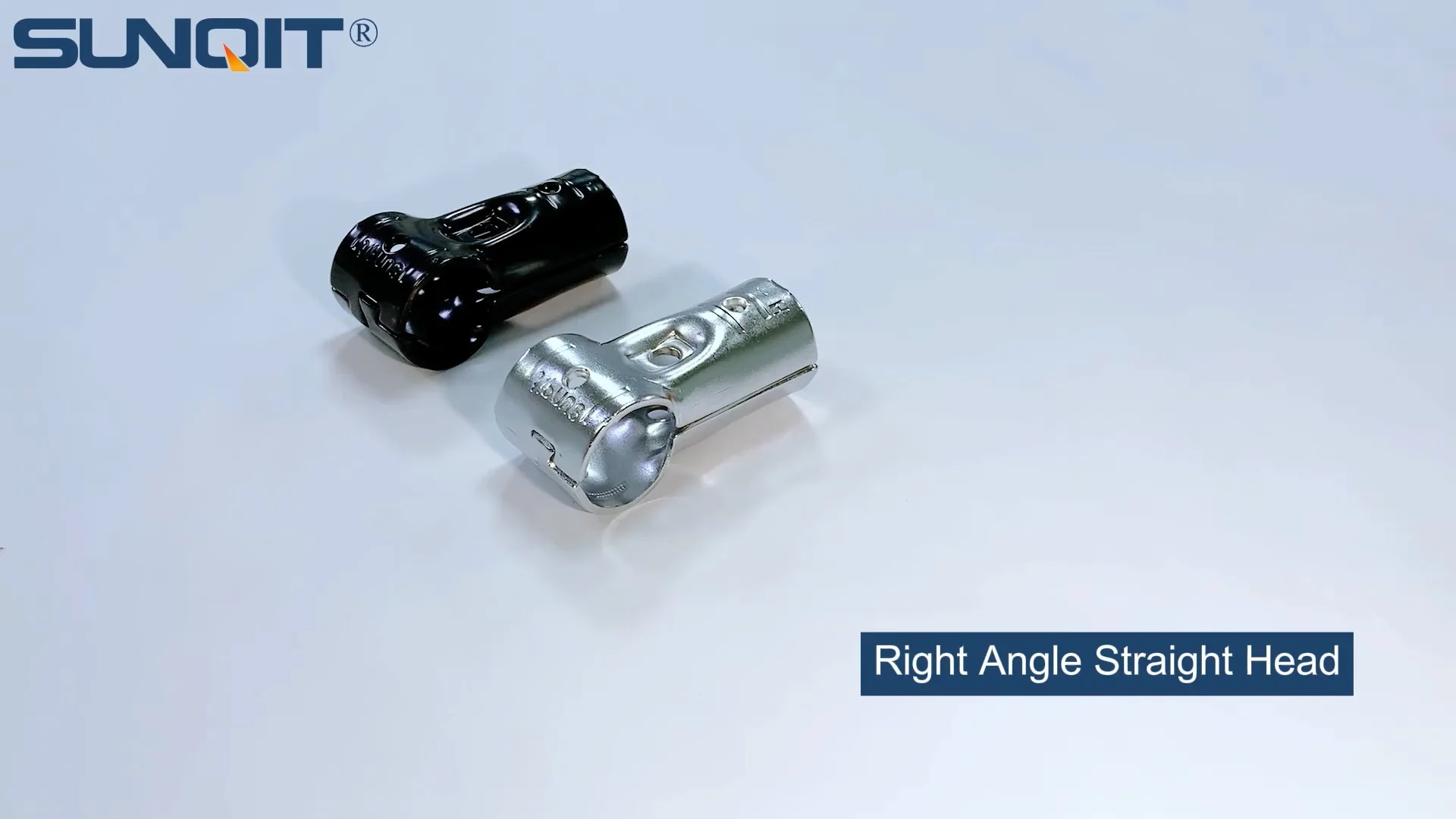
Two Way Lean Pipe Joint
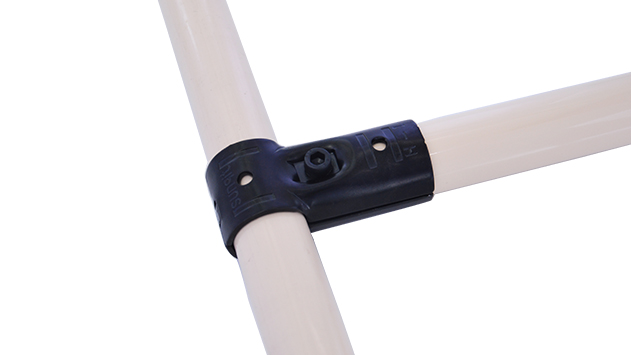
Two way lean pipe joint for 2 pcs 28MM lean pipe connection in straight angle, which used widely in workbench, flow rack, hand trolley frame connection.
Walk into any consumer electronics factory today, and you'll feel the buzz of a world that never stands still. Phones, tablets, smartwatches—each new model arrives with sleeker designs, faster chips, and tighter production timelines. For the teams on the floor, this pace means one constant challenge: keeping up. Imagine a technician staring at a workbench built for last year's smartphone, now too narrow for the larger battery modules of the latest model. Or a supervisor scrambling to rearrange a material rack because a sudden surge in demand for wireless earbuds has thrown the entire line out of sync. These aren't just logistical headaches—they're daily realities in an industry where flexibility isn't a luxury; it's survival .
This is where the humble two way lean pipe joint steps in. It's not flashy, and you might not notice it at first glance, but this small, unassuming component is quietly transforming how consumer electronics get made. Think of it as the "Swiss Army knife" of production tools: simple, adaptable, and ready to solve a dozen problems at once. By connecting lengths of lean pipe (or aluminum, stainless steel, depending on the need), these joints let factories build, break down, and rebuild workbenches, racks, and conveyors in hours—not weeks. For a sector where product cycles shrink from months to weeks, that kind of agility changes everything.
What Even Is a Two Way Lean Pipe Joint?
Let's start with the basics. A two way lean pipe joint is exactly what it sounds like: a connector designed to join two pipes at a fixed angle (usually 90 degrees, though some are adjustable). Made from materials like zinc-plated steel, aluminum, or even high-strength plastic, it's engineered to be both strong and simple. Most feature a clamp-style design—you slide the pipe into the joint, tighten a screw or bolt, and it locks in place. No welding, no drilling, no specialized tools. A regular wrench or even a hand screwdriver is all you need.
But why does this matter? In traditional production setups, workbenches and racks are built to last "forever." They're bolted to the floor, welded together, and about as easy to reconfigure as a brick wall. If your factory switches from assembling 5-inch phones to 6.7-inch ones, you'd likely need to order new equipment, wait for installation, and lose valuable production days. With two way joints, though, that same workbench can be widened, shortened, or even repurposed as a material cart by loosening a few screws and adding new pipes. It's like building with giant, industrial Legos—only sturdier, and designed for the chaos of a factory floor.
Take Maria, a line supervisor at a mid-sized electronics plant in Vietnam. Last quarter, her team was tasked with ramping up production of a new tablet. The existing lean pipe workbench stations were 1.2 meters wide, but the new tablet's motherboard required 1.5 meters of workspace. "We used to panic when this happened," she recalls. "Ordering new workbenches would take 3 weeks, and we couldn't afford the delay." Instead, her team grabbed extra lean pipes and two way joints from the storage closet. "Two hours later, every workbench was widened. The techs even added a second shelf for tools—no extra cost, no downtime. That's the power of these joints."
Building the Backbone: Lean Pipe Workbenches
If there's one place where two way lean pipe joints shine brightest, it's in the heart of the action: the lean pipe workbench . These aren't your average tables. They're custom-built ecosystems where every inch is optimized for the task at hand—whether that's soldering tiny circuit boards or testing touchscreen responsiveness. And the two way joint is the unsung hero that makes this customization possible.
Consider the ergonomics of a typical assembly station. A technician might need a shelf for their soldering iron at waist height, a bin for screws at elbow level, and a (ESD) mat on the main surface to protect sensitive components. With traditional workbenches, these features are fixed. If a taller technician joins the team, they're stuck hunching over, risking fatigue and mistakes. With two way joints, though, adjusting the height of a shelf is as easy as loosening a joint, sliding the pipe up, and tightening it again. "I had a new hire last month who's 6'2", " says Raj, a production lead in India. "His first day, we raised his tool shelf by 15cm in 5 minutes. He smiled and said, 'Finally, a workbench that fits me .' That's the difference between a setup that works for your team and one that works against them."
But it's not just about people—it's about products, too. Consumer electronics come in all shapes and sizes, and a workbench needs to adapt. When a factory shifts from assembling smart speakers (bulky, square) to fitness trackers (small, lightweight), the workbench must shrink, add dividers, or even tilt to reduce strain. Two way joints make this possible without replacing the entire structure. A few adjustments, maybe a new crossbar here or a shortened leg there, and the workbench is ready for the next product. It's this ability to "morph" that turns a static production line into a dynamic, responsive system.
Keeping Materials Moving: Flow Racks and Conveyors
In electronics production, time lost hunting for parts is time lost forever. That's why flow racks —those gravity-fed shelves that let materials glide smoothly from storage to assembly—are a lifeline. And two way lean pipe joints are the secret to making these racks not just functional, but adaptable .
Imagine a flow rack in a component warehouse, loaded with boxes of microchips. Each box is labeled for a specific production line: left lane for phones, middle for tablets, right for smartwatches. But when a sudden order for 50,000 tablets comes in, the middle lane is overwhelmed, and boxes start piling up on the floor. With a traditional rack, you'd need to call in maintenance to add more lanes—a process that could take days. With two way joints? You grab a few extra pipes, attach them to the existing frame using two way joints, and add new roller tracks (another key component, often paired with these joints). By the end of the shift, the rack has a fourth lane, and the bottleneck is gone.
Conveyors, too, benefit from this flexibility. In many factories, conveyors are fixed, one-size-fits-all systems. But in electronics, where some components are as small as a fingernail and others as large as a laptop screen, a "one size" approach fails. Two way joints let factories build modular conveyors that can bend, split, or shorten as needed. For example, when moving circuit boards from the soldering station to testing, a straight conveyor works fine. But when adding a quality check step midway, you can use two way joints to split the conveyor into a Y-shape—sending some boards to QA and others straight to assembly. No need for expensive custom conveyor systems; just pipes, joints, and a little creativity.
Lina, who manages material flow at a factory in Mexico, puts it this way: "Our conveyors used to be like rivers—fixed paths, no detours. Now, with two way joints, they're more like streams that can change course when it rains. Last month, we had a batch of defective screens come in, and we needed to reroute them to a repair station. Instead of stopping the entire line, we added a small branch conveyor in 20 minutes. The operators couldn't believe how easy it was. That's the difference between fighting the process and working with it."

Why Lean Systems Depend on These Joints
At its core, lean system thinking is about cutting waste—whether that's time, space, or money. Two way lean pipe joints embody this philosophy perfectly. Traditional production setups are full of waste: workbenches that sit idle during retooling, racks that take up space but hold half-empty boxes, conveyors that can't adapt to new products. These joints turn that waste into opportunity.
Consider cost. A single two way joint costs a fraction of what you'd pay for a custom metal bracket or a welded frame. And because they're reusable, you don't throw them away when you reconfigure a setup—you just move them to the next project. Over time, this adds up. A factory that switches to lean pipe systems with two way joints can cut equipment costs by 30% or more, according to industry estimates. For small and medium-sized manufacturers, that's not just savings—it's the difference between staying competitive and falling behind.
Space is another area where these joints shine. Consumer electronics factories are often packed tight, with every square meter valuable. Fixed racks and workbenches take up permanent real estate, even when they're not in use. Lean pipe setups, built with two way joints, can be disassembled and stored when not needed. During peak production, you might have a dozen flow racks on the floor; during slower periods, you take them apart, stack the pipes, and free up space for other tasks. It's like having a factory that can "breathe" with demand.
Perhaps the biggest impact, though, is on the people. Lean systems aren't just about tools—they're about empowering workers to improve their own processes. When a technician can adjust their workbench height without waiting for maintenance, or a team can rearrange a flow rack to reduce walking distance, they feel ownership over their work. This isn't just good for morale; it's good for productivity. Workers who feel in control are more likely to spot inefficiencies and suggest improvements—turning the entire factory into a engine of continuous improvement.

Traditional vs. Lean: A Side-by-Side Look
| Feature | Traditional Production Setups | Lean Pipe Systems with Two Way Joints |
|---|---|---|
| Setup Time | Weeks (custom welding, fixed installation) | Hours (tool-free assembly with joints) |
| Adaptability | Low (fixed design; hard to modify) | High (reconfigurable for new products/tasks) |
| Cost Over Time | High (replacement needed for new setups) | Low (reusable joints and pipes; minimal new purchases) |
| Space Efficiency | Poor (permanent structures take up fixed space) | Excellent (disassembled when not in use; space-saving) |
| Worker Empowerment | Low (changes require external maintenance) | High (teams can adjust setups independently) |
Real-World Impact: A Factory's Transformation
Let's step into the shoes of a real factory to see how this plays out. Three years ago, a mid-sized electronics manufacturer in Malaysia was struggling. Their production line for wireless headphones was efficient, but when they tried to add a new model with a longer battery life, everything fell apart. The workbenches were too small, the flow racks couldn't handle the larger battery boxes, and the conveyor system kept jamming. Retooling would take six weeks—time they didn't have, as their competitors were already shipping similar models.
That's when they switched to lean pipe systems with two way joints. The results were dramatic. First, they rebuilt their workbenches in a day, widening them by 30cm using extra pipes and two way joints. Next, they reconfigured their flow racks to add deeper lanes for the battery boxes—again, using existing components and a few new joints. Finally, they adjusted their conveyor by adding a small incline (using two way joints to angle the pipes) to prevent jamming. Total time invested? Three days. Total cost? Less than 10% of what new equipment would have cost.
Today, that factory can reconfigure any part of their line in hours. When a new headphone model launches, the team meets in the morning, sketches the new setup, and has it ready by lunch. "Our technicians used to dread product launches," says the plant manager. "Now, they get excited. They'll say, 'Let's try this new layout—maybe it'll make the line faster.' That kind of energy is priceless."
Looking Ahead: The Future of Flexible Production
Consumer electronics will only get more complex. Foldable screens, AI-powered devices, IoT sensors—each new innovation will demand more from production lines. In this world, rigid systems will fail. What will thrive are systems built on adaptability, and at the heart of that adaptability will be components like the two way lean pipe joint.
These joints aren't just tools—they're a mindset. They represent a shift from "build it once and forget it" to "build it to change." They remind us that in manufacturing, the most powerful solutions are often the simplest: a connector that locks tight, loosens easy, and lets people do their best work. For the technician adjusting a workbench, the supervisor reconfiguring a flow rack, or the entire team racing to meet a deadline, that simplicity is nothing short of revolutionary.
So the next time you pick up your smartphone or slip on wireless earbuds, take a moment to appreciate the unseen heroes behind it. Not just the engineers who designed it, but the workers on the floor—and the small, unassuming two way lean pipe joints that helped bring it to life. In a world of constant change, they're the quiet force keeping us all moving forward.