- Company Articles
- Products and Technology
- Product knowledge
- Are 3060 Aluminum Angle Yards Suitable for Outdoor Warehousing?

Are 3060 Aluminum Angle Yards Suitable for Outdoor Warehousing?
Related Product
3060 Aluminum Angle Yards
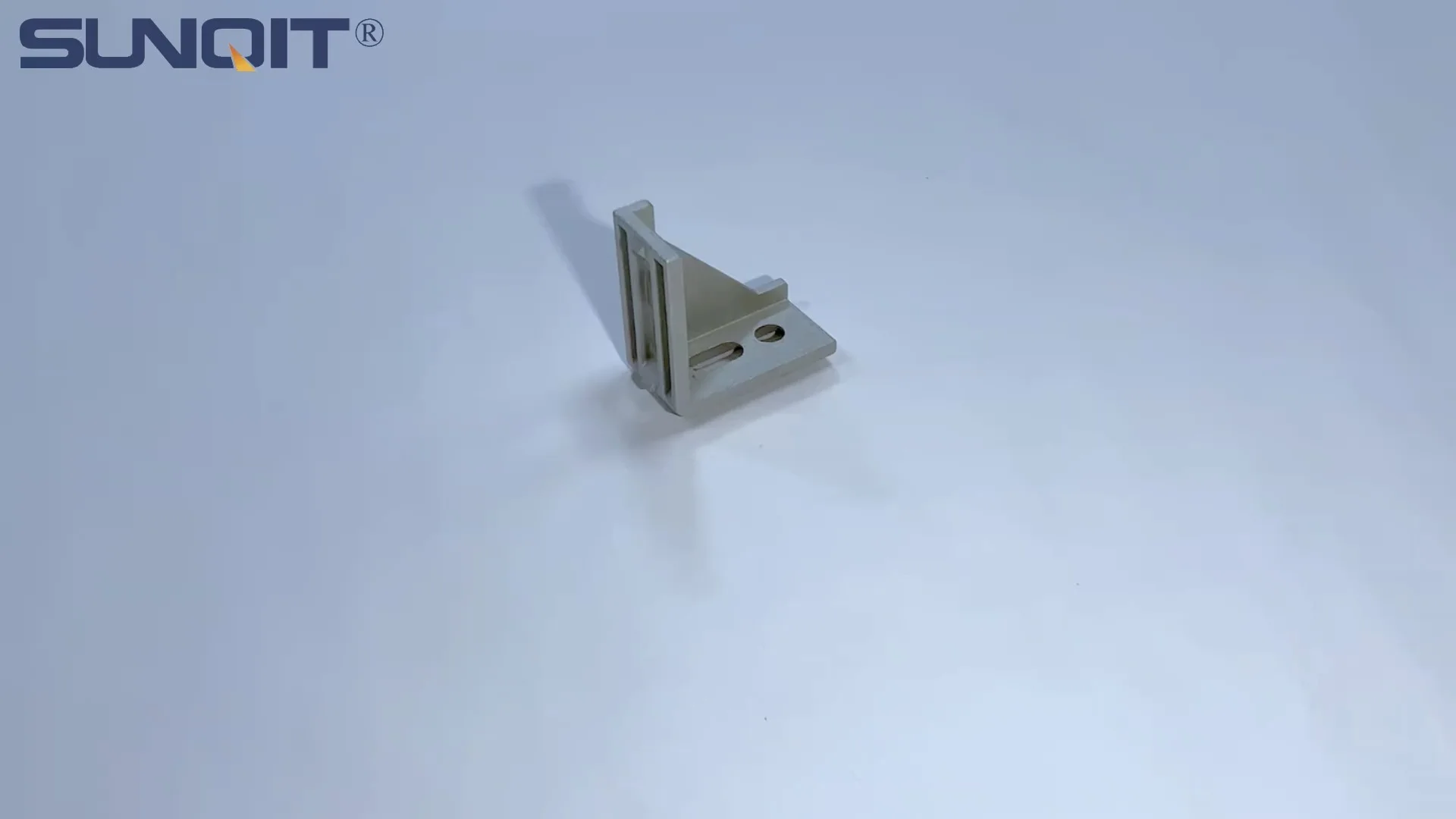
It used for 90° flat connection for 20 series aluminum profile.
If you've ever stepped into an outdoor warehouse—whether it's a bustling logistics hub near a port, a manufacturing facility with open-air storage, or a distribution center expanding into yard space—you know the environment is unforgiving. Rain, snow, scorching sun, humidity, and even salt spray (for coastal locations) beat down on every shelf, rack, and structural component. In such settings, the materials you choose can make or break operational efficiency, safety, and long-term costs. Today, we're diving into a question that's been on the minds of many warehouse managers and facility planners: Are 3060 aluminum angle yards the right fit for outdoor warehousing? Let's unpack this, from what these angle yards are made of to how they stand up to the elements, and why they might just be the unsung hero your outdoor storage needs.
First Things First: What Are 3060 Aluminum Angle Yards?
Before we judge their suitability, let's get clear on what 3060 aluminum angle yards actually are. At their core, they're structural components made from aluminum extrusion profile —a process where molten aluminum is forced through a die to create consistent, precise shapes. The "3060" refers to their dimensions: typically 30mm in one leg and 60mm in the other, forming an L-shape (the "angle" in "angle yards"). These aren't just generic pieces of metal, though; they're part of a broader system of aluminum profile solutions, often paired with aluminum profile accessories like brackets, connectors, and fasteners to build everything from shelving units and material racks to workbenches and support frames.
What sets them apart? Aluminum, by nature, is a lightweight yet surprisingly strong material. When extruded into the 3060 angle shape, it gains rigidity—making it ideal for load-bearing applications. But what really makes them interesting for outdoor use is how they're engineered: most 3060 aluminum angle yards are made from alloys like 6061 or 6063, which offer a balance of strength, corrosion resistance, and workability. This isn't your average aluminum foil; it's industrial-grade material built to take a beating.
The Outdoor Warehouse Challenge: What Materials Need to Withstand
Outdoor warehousing isn't just "warehousing with a roof missing." The elements add layers of complexity that indoor spaces rarely face. Let's list the biggest hurdles a material must overcome to thrive outdoors:
- Moisture and Corrosion: Rain, dew, and humidity can seep into cracks, leading to rust (for steel) or rot (for wood). Near coasts, salt spray accelerates this process, turning metal components into flaky, weakened versions of themselves.
- Extreme Temperatures: From freezing winters that cause materials to contract to scorching summers that make them expand, temperature swings stress structural joints and can warp or weaken components over time.
- UV Exposure: Sunlight's ultraviolet rays break down organic materials (like wood or plastic coatings) and can fade or embrittle even some metals, making them prone to cracking.
- Physical Wear and Tear: Forklifts, pallet jacks, and workers moving goods can bump into racks, while wind and storms might put unexpected lateral stress on structures. The material needs to absorb impacts without bending or breaking.
- Load Capacity: Outdoor storage often involves heavy items—pallets of goods, machinery parts, or bulk materials. The material must support these weights consistently, even as environmental factors take their toll.
Against this backdrop, how do 3060 aluminum angle yards measure up? Let's break it down.

Why 3060 Aluminum Angle Yards Shine in Outdoor Settings
1. Corrosion Resistance: A Game-Changer for the Elements
Let's start with the biggest outdoor enemy: corrosion. Steel, the traditional workhorse of warehousing, is strong but prone to rust. Even galvanized steel, which has a zinc coating, can corrode over time if the coating is scratched or damaged—especially in humid or salty environments. Wood, meanwhile, absorbs moisture like a sponge, leading to rot, mold, and pest infestations (termites love untreated wood). Aluminum angle yards? They're a different story.
Aluminum naturally forms a thin, protective oxide layer when exposed to air. This layer is self-healing: if it's scratched, the aluminum beneath reacts with oxygen to form a new oxide barrier, preventing further corrosion. For 3060 aluminum angle yards, this means they can stand up to rain, snow, and even salt spray without rusting or degrading. In coastal warehouses, where salt-laden air eats away at steel, aluminum angle yards remain smooth and structurally sound year after year. You won't find flaky red residue on their surfaces or weakened joints from internal corrosion—just consistent performance.
And if extra protection is needed? Many manufacturers offer anodized or powder-coated aluminum angle yards. Anodizing thickens the oxide layer, making it even more resistant to corrosion and wear, while powder coating adds a colored, durable finish that resists chipping and fading. Either way, the aluminum itself isn't going to rust—unlike steel, which requires constant repainting or coating to stay protected.
2. Lightweight Strength: Easy to Install, Tough to Beat
Aluminum is about one-third the weight of steel, which might sound like a weakness—until you realize that 3060 aluminum angle yards are engineered for strength. Thanks to their extrusion design and alloy composition, they offer an impressive strength-to-weight ratio. This means you can build sturdy, load-bearing structures without the hassle of heavy lifting or specialized equipment during installation.
Why does this matter outdoors? For one, installing steel racks often requires cranes or multiple workers to maneuver heavy beams, which is time-consuming and risky in uneven outdoor terrain. Aluminum angle yards, by contrast, can be carried by two people and assembled with basic tools, cutting down on installation time and labor costs. And once installed, their lightweight nature doesn't compromise strength: a well-designed 3060 aluminum angle yard frame can support hundreds of kilograms per linear meter, easily handling pallets, crates, or even small machinery.
Take, for example, a material rack built with 3060 aluminum angle yards. Each horizontal beam, reinforced by vertical supports and braced with aluminum profile accessories like corner brackets, can hold stacked pallets without bending. And because aluminum doesn't fatigue under repeated loading (unlike some plastics), the rack maintains its integrity over years of use.
3. Modularity and Flexibility: Adapting to Outdoor Storage Needs
Outdoor warehouses rarely have static storage needs. Seasonal fluctuations, new product lines, or changes in shipping schedules might require you to reconfigure racks, add shelves, or extend a storage area. This is where aluminum's modularity—powered by aluminum profile accessories —becomes a huge advantage.
3060 aluminum angle yards are designed to work with a range of connectors: T-joints, L-brackets, corner clamps, and even sliding brackets that let you adjust shelf heights on the fly. Unlike welded steel structures (which are fixed once built) or wooden frames (which can crack if you try to drill new holes), aluminum angle yards let you disassemble and reassemble components with minimal effort. Need to add a second level to a rack? Swap out shorter supports for longer ones. Want to reposition a workbench to better shield it from rain? Unbolt the feet and move it. This flexibility aligns perfectly with lean system principles—reducing waste by making the most of available space and adapting to changing needs without rebuilding from scratch.
Consider a scenario: A warehouse near a busy port suddenly needs to store more oversized cargo during peak shipping season. With steel racks, this might mean buying new, custom-built units. With 3060 aluminum angle yards, they could reconfigure existing components—using longer beams, adding cross-braces, and adjusting shelf spacing—to create the extra space. No wasted materials, no long lead times, just quick adaptation.
4. Weather Resistance: Standing Strong Through Sun, Snow, and Storms
Aluminum's properties make it surprisingly resilient to extreme weather. Let's tackle each element:
- Extreme Temperatures: Aluminum has a lower coefficient of thermal expansion than steel, meaning it expands and contracts less with temperature changes. This reduces stress on joints and fasteners, which is crucial in regions with hot summers and cold winters. In Minnesota, where winter temps can drop to -30°C, or in Arizona, where summer highs hit 45°C, aluminum angle yards maintain their shape and structural integrity better than materials that warp or crack under thermal stress.
- UV Rays: Unlike wood, which can dry out and splinter, or plastic, which can become brittle, aluminum doesn't degrade under UV exposure. Even uncoated aluminum angle yards will develop a slightly duller finish over time, but this is purely cosmetic—the underlying structure remains strong. Powder-coated or anodized versions fare even better, retaining their color and sheen for years.
- Wind and Impact: Aluminum's ductility (ability to bend without breaking) helps it absorb sudden impacts from wind gusts or accidental forklift bumps. While a direct hit might dent a beam, it's less likely to snap or collapse compared to brittle materials like cast iron. And because the angle shape (L-profile) provides inherent rigidity, the structure resists twisting, even in windy conditions.
5. Low Maintenance: More Time for Operations, Less for Upkeep
Outdoor maintenance is a chore. Steel racks need repainting every few years to prevent rust; wooden structures require sealing, termite treatments, and occasional replacement of rotted boards. Aluminum angle yards? They're practically maintenance-free.
A simple hose-down with water (or mild soap for stubborn dirt) is usually enough to keep them clean. The oxide layer handles corrosion, so there's no need for protective coatings unless you want a specific color. Aluminum profile accessories like connectors and brackets, often made from the same corrosion-resistant alloys, don't rust or seize up, making adjustments or repairs easy even years after installation. For busy warehouse managers, this translates to lower labor costs, less downtime, and more focus on keeping goods moving rather than fixing infrastructure.

How Do They Compare to Other Materials? A Side-by-Side Look
To really understand if 3060 aluminum angle yards are suitable, let's compare them to two common alternatives: steel angle yards and wooden framing. The table below breaks down key factors for outdoor warehousing:
| Factor | 3060 Aluminum Angle Yards | Steel Angle Yards | Wooden Framing |
|---|---|---|---|
| Corrosion Resistance | Excellent (natural oxide layer; anodized/powder-coated options) | Poor (rusts without coating; requires regular repainting) | Poor (rots, swells, or attracts pests; needs sealing) |
| Weight | Light (1/3 the weight of steel) | Heavy (requires machinery for installation) | Moderate to heavy (varies by wood type) |
| Load Capacity | High (strong strength-to-weight ratio; 3060 size supports heavy loads) | Very High (dense, rigid; higher max load but overkill for many uses) | Moderate (weaker over time; prone to warping under heavy loads) |
| Modularity | Excellent (works with aluminum profile accessories; easy to reconfigure) | Low (often welded; hard to modify without cutting/welding) | Low (nails/screws weaken wood; reconfiguration risks splitting) |
| Weather Resistance | High (resists UV, temperature swings, and impacts) | Moderate (can warp in heat; cold makes it brittle) | Low (swells in rain, dries and cracks in sun; rots in humidity) |
| Maintenance Cost | Low (occasional cleaning; no coatings needed) | High (repainting, rust removal, part replacements) | High (sealing, termite treatments, board replacements) |
| Initial Cost | Higher than wood/steel | Lower than aluminum | Lowest initial cost |
| Long-Term Cost (10+ Years) | Lowest (minimal maintenance, no replacements) | High (maintenance + potential replacement of rusted parts) | Highest (frequent replacements, ongoing treatments) |
The table tells a clear story: while aluminum has a higher upfront cost, its long-term benefits—corrosion resistance, low maintenance, and flexibility—make it the most cost-effective choice for outdoor warehousing. Steel might seem cheaper at first, but the endless cycle of repainting and repairs adds up. Wood is budget-friendly initially, but it won't last a fraction as long outdoors.

Real-World Applications: Where 3060 Aluminum Angle Yards Excel
To ground this in reality, let's look at a few scenarios where 3060 aluminum angle yards have proven their worth in outdoor settings:
Case Study 1: Coastal Distribution Center in Savannah, Georgia
A large logistics company in Savannah needed to expand outdoor storage to handle increased port traffic. The challenge? The warehouse is just 2 miles from the Atlantic Ocean, meaning salt spray was a constant threat. Their existing steel racks were rusting within 2–3 years, requiring expensive replacements. They switched to 3060 aluminum angle yards with anodized finishes and aluminum profile accessories (stainless steel fasteners for extra protection). Five years later, the racks show no signs of corrosion, and maintenance costs have dropped by 70%. Workers also note that the lighter aluminum racks were easier to reconfigure when seasonal shipments (like holiday goods) increased storage needs.
Case Study 2: Manufacturing Plant in Denver, Colorado
A manufacturer of heavy machinery needed outdoor racks to store large metal components. Denver's climate—hot, dry summers and cold, snowy winters—tests materials with extreme temperature swings. They chose 3060 aluminum angle yards for their material racks, citing the material's thermal stability and lightweight strength. Even after multiple winters with sub-zero temps and summers above 35°C, the racks haven't warped, and the aluminum's ductility has prevented cracking from ice expansion. The modular design also let them add a second level to the racks when production increased, avoiding the need to buy new storage units.
Case Study 3: Agricultural Supply Warehouse in Iowa
An agricultural supplier stores bulk seeds, fertilizers, and equipment parts outdoors. They needed racks that could handle heavy bags of fertilizer (up to 50kg each) and resist the humidity of Iowa's summers. After trying wooden pallets (which rotted) and steel racks (which rusted despite painting), they installed 3060 aluminum angle yard shelving with powder-coated finishes. The aluminum's corrosion resistance stands up to fertilizer spills (which are highly acidic), and the modular design lets them adjust shelf heights to fit different bag sizes. Three years in, the only maintenance has been hosing down the racks to remove dust—no repainting, no replacements.
Potential Drawbacks: When Aluminum Angle Yards Might Not Be the Best Fit
No material is perfect, and 3060 aluminum angle yards are no exception. While they excel in most outdoor warehousing scenarios, there are a few cases where they might not be the ideal choice:
- Extremely Heavy Loads: If you're storing industrial equipment weighing several tons per unit, steel might still be better. While aluminum has a high strength-to-weight ratio, steel's raw density gives it a higher absolute load capacity. That said, many outdoor warehouses don't need this level of strength, making aluminum a smarter, lighter alternative.
- Budget Constraints (Short-Term Only): If you're operating on a tight budget and need storage for just 1–2 years, wood or steel might be cheaper upfront. But if you plan to use the space long-term, aluminum's lower maintenance costs will quickly offset the initial investment.
- Highly Abrasive Environments: In settings with constant sandblasting (like near a desert) or heavy industrial debris, aluminum's surface can scratch, though this is cosmetic and doesn't affect structural integrity. Adding a powder coating can mitigate this.
Tips for Getting the Most Out of 3060 Aluminum Angle Yards Outdoors
If you decide to go with 3060 aluminum angle yards, here are a few tips to ensure they perform optimally:
- Choose the Right Alloy: Look for 6061-T6 or 6063-T5 alloys—these offer the best balance of strength and corrosion resistance for outdoor use.
- Invest in Quality Accessories: Use aluminum profile accessories (connectors, brackets, fasteners) made from the same or compatible alloys to avoid galvanic corrosion (when dissimilar metals react). Stainless steel fasteners are also a safe bet.
- Consider Finishes for Aesthetics: While not necessary for performance, anodized or powder-coated finishes can enhance appearance and make cleaning easier (fingerprints show less on matte finishes).
- Anchor Properly: Even lightweight aluminum structures need secure anchoring to concrete or gravel to resist wind. Use heavy-duty foot brackets designed for outdoor use.
- Inspect Joints Annually: While maintenance is low, check connectors and fasteners once a year for tightness—temperature changes can cause them to loosen slightly over time.
Conclusion: 3060 Aluminum Angle Yards—A Smart Investment for Outdoor Warehousing
Outdoor warehousing demands materials that can stand up to the elements, adapt to changing needs, and keep maintenance to a minimum. 3060 aluminum angle yards, with their corrosion resistance, lightweight strength, modularity (thanks to aluminum profile accessories ), and weather resilience, check all these boxes. They may cost more upfront than steel or wood, but their long-term durability and low upkeep make them a cost-effective choice for any facility planning to use outdoor space for years to come.
Whether you're storing pallets near the coast, heavy machinery in a snowy climate, or agricultural supplies in a humid region, 3060 aluminum angle yards offer the reliability and flexibility outdoor warehousing needs. They're not just structural components—they're an investment in smoother operations, lower costs, and peace of mind, even when the weather doesn't cooperate.
So, are 3060 aluminum angle yards suitable for outdoor warehousing? In most cases, the answer is a resounding yes. They're built for the elements, designed for adaptability, and engineered to last—making them a standout choice for modern outdoor storage solutions.