- Company Articles
- Products and Technology
- Product knowledge
- Are 4040 Aluminum Profile End Caps Reusable? Sustainability in Lean Manufacturing

Are 4040 Aluminum Profile End Caps Reusable? Sustainability in Lean Manufacturing
Related Product
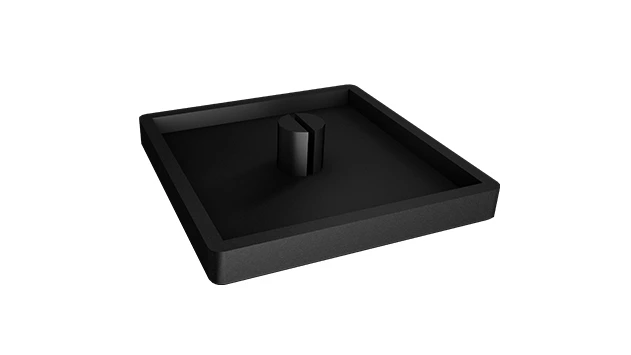
4040 Aluminum Profile End Cap
The aluminum profile end cap adds a finishing touch to your project and closes off profile ends to limit dust and debris buildup, also it can avaid some scratch for material and labor during the assemble work.
The Unsung Heroes of the Factory Floor
Walk into any modern manufacturing facility—whether it's churning out electronics, automotive parts, or medical devices—and you'll likely spot a familiar sight: sleek, modular workbenches, material racks, and conveyor systems built from silver or black metal frames. These structures, often assembled from aluminum profiles, are the backbone of efficient production lines. But if you lean in closer, you'll notice something small yet crucial: the
Lately, though, there's a new question buzzing around factory break rooms and sustainability meetings: What happens to these end caps when a workbench is disassembled or a production line is reconfigured? Are they tossed in the trash, or can they be reused? In an era where "sustainability" has shifted from a buzzword to a business imperative, even the smallest parts are under scrutiny. Let's dive into this seemingly niche topic and uncover why the reusability of 4040 aluminum profile end caps matters—for your bottom line, your team's morale, and the planet.
Lean Manufacturing: More Than Just "Cutting Costs"
To understand why end caps matter, we first need to talk about
Take Maria, for example. She's a production supervisor at a mid-sized electronics plant in Ohio. A few years ago, her team adopted lean principles to reduce bottlenecks on the assembly line. They rearranged workstations, optimized material flow, and started tracking "muda"—the Japanese term for waste. What surprised Maria most? How much waste came from small, seemingly insignificant parts. "We were constantly replacing workbenches and racks to adapt to new product lines," she told me. "And every time we took a structure apart, the end caps on the aluminum profiles ended up in the trash. We didn't think twice about it—until we started counting."
That's the lean awakening: realizing that sustainability and efficiency are two sides of the same coin. When you reduce waste, you cut costs and shrink your environmental footprint. And that brings us back to those 4040 aluminum profile end caps.

Aluminum Profiles: The Backbone of Modern Factories
Before we get into end caps, let's talk about the stars of the show:
The 4040 profile, in particular, is a workhorse. Measuring 40mm by 40mm, it's versatile enough for everything from small workbenches to heavy-duty material racks. You'll find it in automotive plants holding tool organizers, in tech facilities supporting circuit board assembly lines, and in warehouses as part of pick-and-pack stations. Its popularity comes down to balance: it's sturdy enough to support weight but not so bulky that it wastes space.
But here's the catch: aluminum profiles have open ends. Without protection, those ends can collect dust, debris, or moisture, which can damage the profile over time. They can also be sharp, posing a safety risk to workers handling the profiles during assembly or reconfiguration. That's where end caps come in.

What Are 4040 Aluminum Profile End Caps, Anyway?
Think of 4040 aluminum profile end caps as the "shoe" for an aluminum profile's "foot." They're small, usually plastic or aluminum covers that snap or press into the open ends of the profile. Their job is simple but critical:
- Safety first: They smooth out sharp edges, preventing cuts when workers handle the profiles.
- Debris defense: They keep dust, dirt, and liquids from getting inside the profile's T-slots, which could jam accessories like brackets or shelves.
- Aesthetics: Let's be honest—open profile ends look unfinished. End caps give structures a clean, professional look.
- Structural support: In some cases, end caps add a tiny bit of rigidity, though that's more of a bonus than their main job.
Most end caps are made of plastic (like polypropylene) or aluminum. Plastic end caps are cheaper and lighter, while aluminum ones are more durable and blend seamlessly with aluminum profiles. Both types are designed to fit snugly into the profile's end—no screws or adhesives needed in most cases. You just push them in, and they stay put until you pull them out.
To Reuse or Not to Reuse: The Core Question
So, back to Maria's dilemma: when her team disassembles a workstation built with 4040 aluminum profiles, can they reuse the end caps? The short answer is… it depends. Let's break down the factors that determine reusability.
1. Material Matters
First, what are the end caps made of? Plastic end caps are more affordable, but they're also more prone to damage. If you yank them out too roughly, they can crack. If they're exposed to high temperatures (like near a welding station) or harsh chemicals, they might warp or degrade. Aluminum end caps, on the other hand, are tough. They can handle being pulled, pushed, and dropped without breaking. "We switched to aluminum end caps last year," Maria told me. "The plastic ones would crack when we pried them off, but the aluminum ones? We've reused some of them three or four times now."
2. How They're Attached
Most end caps are "press-fit"—meaning they're held in place by friction. You push them into the profile, and the tension keeps them secure. This is great for reusability because there's no adhesive or screws to damage the end cap or the profile. But some end caps use a tighter fit or even a small screw to stay in place. If you have to drill or use glue, reusability drops significantly. "Avoid glued end caps if you want to reuse," advises Tom, an engineer at an
3. Wear and Tear
Even the sturdiest end caps can wear out. If an end cap is bent, cracked, or missing a piece, it won't seal the profile properly. That means dust gets in, edges stay sharp, and safety is compromised. But here's the good news: most end caps only need a quick inspection to check if they're reusable. "We have a bin in the workshop labeled 'Reusable End Caps,'" Maria explained. "When we take apart a structure, the team tosses the end caps in there. Once a week, a couple of interns sort through them—tossing the cracked ones and wiping down the good ones. It takes 10 minutes, and we save hundreds of dollars a month."
4. Compatibility
Not all 4040 profiles are identical. Some have slightly different internal dimensions, depending on the manufacturer or the profile's wall thickness. If you mix end caps from different suppliers, they might not fit snugly. That's why it's smart to stick with end caps from the same supplier as your profiles—or at least check compatibility before reusing. "We had a batch of end caps that didn't fit our new profiles," Tom recalled. "Turns out, the new profiles had a slightly thicker wall, so the old end caps were too loose. We ended up donating them to a local makerspace—they worked great for their smaller projects!"
The Case for Reusability: More Than Just "Going Green"
Okay, so some end caps can be reused. But why bother? Isn't it easier to just buy new ones? Let's crunch the numbers—and the environmental impact.
Cost Savings
End caps aren't expensive—usually a dollar or two each. But multiply that by hundreds (or thousands) of profiles in a factory, and it adds up. Maria's plant has about 500 workstations and racks, each with an average of 8 end caps. That's 4,000 end caps. If they replace them all twice a year at $1.50 each, that's $12,000 annually. By reusing 70% of them, they save $8,400. "That's not chump change," Maria. "We used the savings to buy ergonomic chairs for the assembly line. The team noticed—and morale went up."
Environmental Impact
Let's talk carbon footprint. Producing a single plastic end cap generates about 0.05kg of CO2 emissions (source: EPA estimates for plastic manufacturing). Aluminum end caps are a bit higher—around 0.1kg per unit—because aluminum production requires more energy. If Maria's plant reuses 2,800 end caps a year, they avoid emitting 140kg (for plastic) or 280kg (for aluminum) of CO2. That's the equivalent of driving a car 350–700 miles. It might not sound like much, but it's part of a bigger picture. "Our company has a goal to cut emissions by 20% by 2030," Maria said. "Every little bit helps—and reusing end caps is one of the easiest wins."
Operational Efficiency
Reusing end caps also saves time. Instead of waiting for new end caps to ship, you have a ready supply on hand. "Last month, we had to reconfigure a production line overnight for a rush order," Maria said. "If we'd needed to order new end caps, we would have missed the deadline. But we had a bin of reusable ones, so we were up and running by morning."
Team Engagement
Here's an unexpected benefit: reusability boosts team pride. When workers see the company making an effort to reduce waste, they feel more invested in the process. "Our interns love sorting the end caps," Maria laughed. "They even made a game of it—who can find the most reusable ones in 5 minutes. It sounds silly, but it gets everyone thinking about waste. Now, I catch them saving other parts too—like screws and brackets. It's become a culture thing."
Reusable vs. Single-Use End Caps: A Quick Comparison
| Aspect | Reusable End Caps (Aluminum/High-Quality Plastic) | Single-Use End Caps (Low-Cost Plastic) |
|---|---|---|
| Initial Cost | Higher ($1.50–$3 each) | Lower ($0.50–$1 each) |
| Expected Lifespan | 5–10+ reuses | 1 use |
| Total Cost Over Time | Lower (e.g., $0.30 per use for 5 reuses) | Higher (e.g., $1 per use) |
| Environmental Impact | Low (reduced production and waste) | High (constant production and landfill waste) |
| Maintenance Required | Minimal (occasional cleaning/inspection) | None (tossed after use) |
| Best For | Lean factories with frequent reconfigurations | One-time builds or low-budget projects |
Challenges to Reusability: When It's Not Worth It
Reusability isn't a silver bullet. There are times when reusing end caps just doesn't make sense. For example:
- Damaged beyond repair: If an end cap is cracked, bent, or missing pieces, it won't protect the profile or workers. Toss it.
- Contamination: End caps used in cleanrooms or medical facilities might absorb chemicals or pathogens. It's safer to dispose of them than risk cross-contamination.
- Time constraints: If you're in the middle of a reconfiguration and don't have time to sort end caps, it might be faster to use new ones. Just save the old ones for later!
- Incompatibility: As Tom mentioned, end caps that don't fit properly are worse than no end caps. Donate them or recycle them instead of forcing them to fit.
The key is to be realistic. Reusability should save time and money, not create headaches. "We don't stress if we can't reuse every end cap," Maria said. "If it's damaged or doesn't fit, we toss it. The goal is progress, not perfection."
The Future of Sustainable Manufacturing: End Caps and Beyond
As factories embrace circular economy models—where waste is minimized and resources are reused—end caps are just the beginning. Suppliers are already innovating to make reusability easier. Some are designing modular end caps that can fit multiple profile sizes. Others are using recycled materials to make end caps, further reducing their environmental impact. And
Tom's company is even experimenting with "smart" end caps—small RFID tags that track how many times an end cap has been reused. "Imagine scanning an end cap and knowing its history: when it was made, how many times it's been installed, even which workstation it was on," he said. "It sounds futuristic, but it could help factories track waste and optimize reuse."
But perhaps the biggest shift is cultural. As more manufacturers like Maria's plant prove that reusing small parts can boost morale, save money, and cut emissions, others are taking notice. "I presented our end cap reuse program at a lean conference last year," Maria told me. "I was nervous—talking about end caps to a room full of executives seemed silly. But after the talk, half a dozen people came up to ask how we did it. Now, we share our process with other plants in our network. It's inspiring to see how a tiny change can spread."
Final Thoughts: Small Parts, Big Impact
So, are 4040 aluminum profile end caps reusable? The answer is a resounding yes —if you choose the right material, check for damage, and prioritize compatibility. But more than that, they're a reminder that sustainability in manufacturing isn't about grand gestures. It's about the small, everyday choices: reusing an end cap, saving a screw, or donating old parts instead of tossing them.
For Maria and her team, those small choices add up to a factory that's not just more efficient, but more human. "We're not just building products here," she said. "We're building a place where people care—about their work, about each other, and about the planet. And if reusing end caps is part of that? I'll take it."
So the next time you walk through a factory, take a second look at those end caps. They might just be the quietest champions of lean, sustainable manufacturing.