- Company Articles
- Products and Technology
- Product knowledge
- Are M10*56 Rubber Leveling Feet Suitable for Outdoor Use?

Are M10*56 Rubber Leveling Feet Suitable for Outdoor Use?
Related Product
M10*56 Rubber Leveling Feet
Adjustable leveling feet are designed to keep machines level when placed on uneven or sloped ground. Otherwise known as adjustable equipment feet, they are available to order in a wide variety of size and load capacity combinations.
If you've ever set up a workbench in your backyard, built a lean pipe workstation for an outdoor workshop, or even tried to stabilize a shelf on a sloped patio, you know the importance of a solid foundation. Wobbly furniture isn't just annoying—it's a safety hazard. Tools slide off, projects get misaligned, and in the worst cases, unstable setups can tip over. That's where leveling feet come in: those small but critical components that adjust height, absorb vibrations, and keep things steady. But when your project moves outdoors, the rules change. Rain, sun, mud, and temperature swings turn a simple "leveling job" into a battle against the elements. So, if you're eyeing M10*56 rubber leveling feet for your outdoor setup, you're probably asking: Are they tough enough to handle the great outdoors?
First Things First: What Are M10*56 Rubber Leveling Feet?
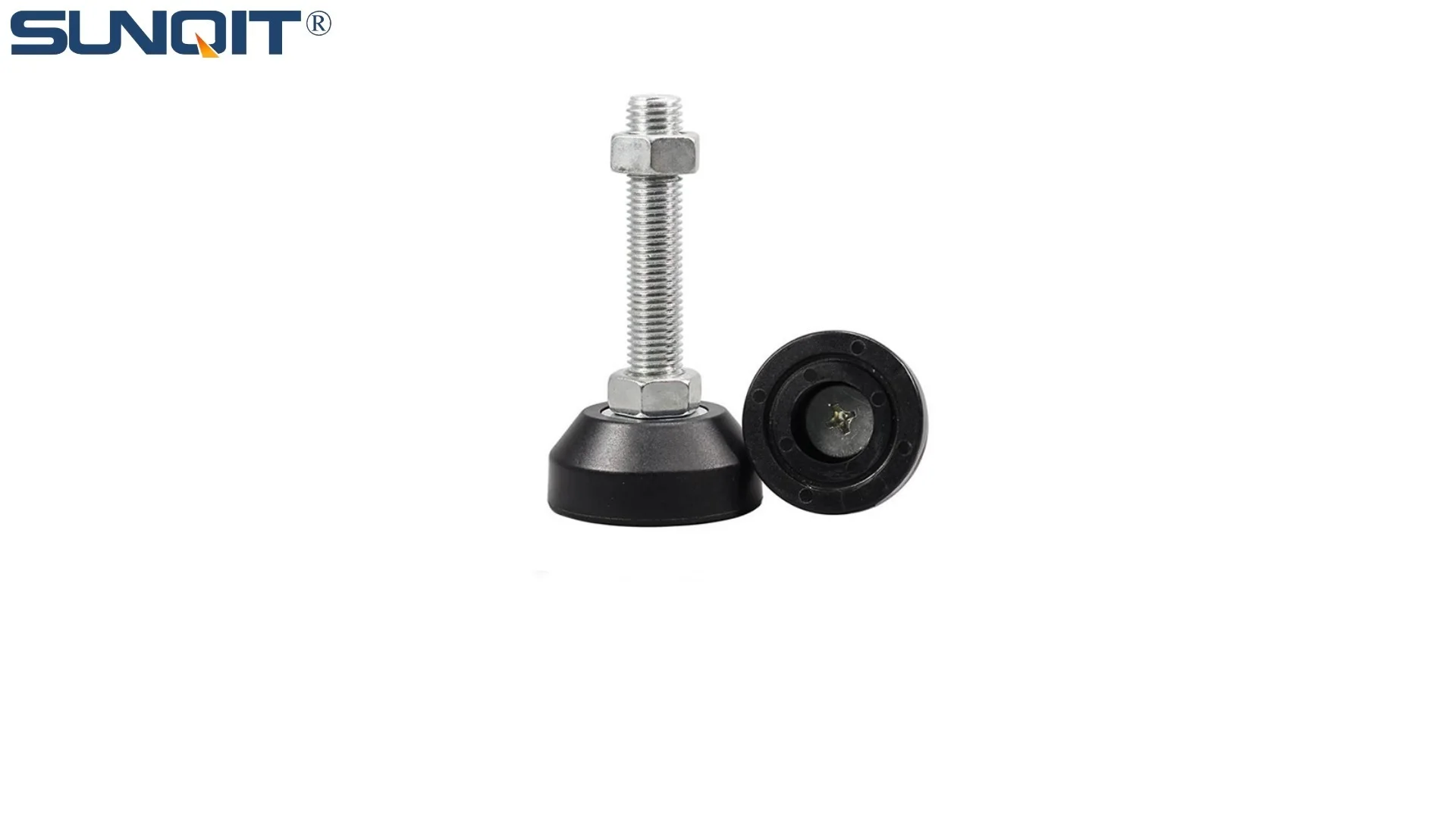
Before we dive into outdoor suitability, let's make sure we're on the same page about what M10*56 rubber leveling feet actually are. At their core, they're adjustable feet designed to screw into the bottom of furniture, workbenches, or equipment to level them on uneven surfaces. The "M10*56" part refers to their specifications: "M10" is the metric thread size (meaning the screw stem is 10mm in diameter), and "56" is the length of the threaded stem (56mm). The "rubber" part is the base—a soft, grippy pad that sits between the metal stem and the ground.
Most M10*56 rubber leveling feet have a simple design: a metal stem (usually steel or galvanized steel) with external threads, a hexagonal or round head for easy adjustment, and a rubber base bonded to the bottom. Some might have a swivel base, allowing the rubber pad to pivot slightly to match uneven surfaces, but many are fixed. They're common in industrial settings, workshops, and even home furniture, thanks to their affordability and ease of use.
But here's the thing: indoor leveling feet don't face the same stressors as outdoor ones. Indoors, you might deal with occasional spills or humidity, but outdoors? It's a whole different ballgame.
The Outdoor Challenge: What Your Leveling Feet Are Up Against
Let's paint a picture of outdoor life for a leveling foot. Imagine your M10*56 rubber foot is installed on a lean pipe workbench in your backyard. What does it encounter day in and day out?
Water, water everywhere: Rain, dew, sprinklers, or even a passing storm—outdoor feet can't escape moisture. If water seeps into the threads or between the rubber and metal stem, it can cause rust, loosen the bond between materials, or even freeze and crack components in cold climates.
UV rays: The sun's ultraviolet (UV) radiation is great for plants, but it's brutal on materials. Over time, UV rays break down rubber, making it brittle, cracked, or discolored. Plastics fade, and even some metals can degrade if their protective coatings are compromised.
Temperature extremes: From scorching summer days (where metal stems can get hot enough to burn skin) to freezing winter nights, outdoor temperatures swing wildly. Rubber and metal expand and contract at different rates, which can weaken bonds or cause the foot to loosen over time.
Uneven, rough surfaces: Unlike indoor concrete floors, outdoor ground is rarely flat. Grass, gravel, dirt, or cracked concrete mean your leveling feet need to adjust easily and grip securely—no slipping, even when the surface is wet or muddy.
Corrosion: If your metal stem isn't protected, rainwater (which often has minerals or even salt in coastal areas) can cause rust. Rust doesn't just look bad; it weakens the metal, making the foot less stable and harder to adjust.
So, the question isn't just "Can M10*56 rubber leveling feet work outdoors?" It's "Can they stand up to all of this?"

Breaking Down the M10*56 Rubber Leveling Foot: Pros and Cons for Outdoor Use
To answer that, let's dissect the M10*56 rubber leveling foot into its two main parts: the rubber base and the metal stem. Each plays a role in outdoor durability.
The Rubber Base: Grip, Flexibility, and Weather Resistance
The rubber pad is the foot's "shoe"—it's what touches the ground, provides grip, and absorbs minor shocks. But not all rubber is created equal. The best M10*56 feet use high-quality rubber compounds like EPDM (ethylene propylene diene monomer) or neoprene. Here's why that matters:
Water resistance: EPDM and neoprene are inherently water-resistant. They don't absorb moisture, so they won't swell, rot, or grow mold when wet. That's a huge plus for rainy climates.
UV resistance: EPDM, in particular, is known for its excellent UV stability. It can withstand years of sun exposure without cracking or becoming brittle. Cheaper rubbers (like natural rubber) might start to degrade after just a few months outdoors.
Temperature tolerance: Neoprene handles extreme temperatures well, staying flexible in cold weather and resisting melting in heat. EPDM also holds up in a wide range of temps, though it might stiffen slightly in freezing conditions (but not enough to lose grip).
Grip: Rubber's natural tackiness is a lifesaver on uneven or wet surfaces. Unlike plastic feet, which can slide on damp concrete, rubber bases grip better—reducing the risk of your workbench or lean pipe setup shifting.
The downside? Even the best rubber will wear down over time, especially if it's constantly rubbing against rough surfaces like gravel. And if the rubber is poorly bonded to the metal stem, water can seep in and weaken the connection, causing the pad to separate.
The Metal Stem: Strength, Adjustability, and Corrosion
The metal stem is the "backbone" of the leveling foot. It's what you screw into your furniture leg, adjust for height, and rely on to support weight. Most M10*56 stems are made of steel, but the key is how they're treated to resist corrosion.
Galvanized steel: Many budget-friendly M10*56 feet use galvanized steel stems. Galvanization coats the steel in zinc, which acts as a barrier against rust. It's effective in mild outdoor conditions (like covered patios or sheltered workshops) but can wear off over time, especially if the stem is scratched or exposed to saltwater (hello, coastal areas).
Stainless steel: Higher-end models might use stainless steel stems. Stainless steel contains chromium, which forms a protective oxide layer that resists rust, even in wet or salty environments. It's more expensive but worth it for long-term outdoor use.
Adjustability: The M10*56's 56mm stem length is a sweet spot for outdoor use. It's long enough to adjust for moderately uneven ground (like a patio with a slight slope) but not so long that it becomes wobbly under heavy loads. The M10 thread size is also standard, so replacement stems or feet are easy to find if needed.
The risk? If the stem is uncoated steel (common in very cheap feet), it will rust quickly outdoors. Even galvanized steel can corrode if the zinc layer is damaged—say, from a stray rock hitting the stem or repeated adjustment wearing off the coating.

How Do M10*56 Rubber Leveling Feet Compare to Other Outdoor Options?
To get a clearer picture, let's compare M10*56 rubber leveling feet to two other common outdoor leveling options: stainless steel feet and plastic feet. This table breaks down their outdoor suitability across key factors:
| Feature | M10*56 Rubber Leveling Feet (EPDM/Neoprene) | Stainless Steel Leveling Feet | Plastic Leveling Feet |
|---|---|---|---|
| Water Resistance | Excellent (rubber doesn't absorb water) | Excellent (stainless steel resists rust) | Good (plastic is water-resistant, but may crack if frozen) |
| UV Resistance | Very Good (EPDM/neoprene resists sun damage) | Excellent (no UV degradation) | Poor (plastic fades and becomes brittle over time) |
| Temperature Range | Wide (-40°C to 120°C for EPDM) | Very Wide (no issues in extreme temps) | Limited (can melt in high heat, crack in cold) |
| Corrosion Resistance | Depends on stem (galvanized = good; stainless = excellent) | Excellent (no rust) | Excellent (no rust, but may degrade chemically) |
| Grip on Wet Surfaces | Excellent (rubber's natural tackiness) | Poor (metal is slippery when wet) | Good (but less than rubber) |
| Load Capacity | High (up to 500kg per foot with steel stem) | Very High (up to 1000kg+ per foot) | Low (best for light furniture only) |
| Cost | Moderate ($3–$8 per foot) | High ($8–$15 per foot) | Low ($1–$3 per foot) |
As you can see, M10*56 rubber feet strike a balance between performance and cost. They outperform plastic feet in UV resistance and grip, and they're more affordable than stainless steel—without sacrificing too much in durability. The main tradeoff? They may not last as long as stainless steel in harsh coastal or industrial environments, but for most home or small workshop outdoor setups, they're more than capable.

Real-World Outdoor Uses: When M10*56 Rubber Leveling Feet Shine
Let's get practical. Where would M10*56 rubber leveling feet actually work well outdoors? Here are a few scenarios:
1. Outdoor Workbenches and Lean Pipe Workstations
If you've built a lean pipe workbench for your backyard workshop or a garage that opens to the outdoors, M10*56 feet are a great fit. Lean pipe systems are lightweight but sturdy, and they often need to be moved or adjusted to accommodate different projects. The rubber feet will keep the workbench steady on concrete, asphalt, or even packed dirt, and their adjustability means you can level it even if the ground isn't perfect. Just make sure to choose feet with galvanized or stainless steel stems—you don't want rust staining your workbench legs!
2. Garden Tool Storage Racks
Garden tool racks (think shovels, rakes, hedge trimmers) need to stay upright, even in windy conditions. Wobbly racks can tip over, damaging tools or injuring someone. M10*56 feet add stability, and their rubber bases won't scratch patio tiles or decking. Plus, if you store the rack under a covered porch (sheltered from direct rain), the feet will last even longer.
3. Outdoor Kitchen Islands or Prep Tables
Outdoor kitchens are becoming more popular, and a stable prep table is a must. M10*56 feet can handle the weight of cutting boards, appliances, and food, while their water resistance means you don't have to panic if it rains mid-prep. Just wipe them down afterward to prevent dirt buildup in the threads.
When to Think Twice
There are cases where M10*56 rubber feet might not be the best choice. Avoid them if: You're in a coastal area with heavy salt spray (stainless steel would be better here to prevent stem corrosion). Your setup is fully exposed to extreme weather (like a workbench on a construction site with no shelter). You need to support extremely heavy loads (over 500kg per foot—stainless steel or cast iron feet would be more reliable).
5 Maintenance Tips to Extend Your M10*56 Rubber Leveling Feet's Outdoor Life
Even the best leveling feet need a little care to thrive outdoors. Here's how to keep your M10*56 rubber feet in top shape:
1. Clean them regularly: Dirt, leaves, and debris can get stuck in the threads or under the rubber pad, making adjustment harder and trapping moisture. Wipe the stems with a damp cloth every few weeks, and use a soft brush to clean out the threads. For the rubber base, mild soap and water will remove grime without damaging the material.
2. Check for wear and tear: Inspect the rubber pad for cracks, splits, or hardening (signs of UV damage). If the pad is coming loose from the stem, or if the metal is rusting, replace the foot immediately—don't wait for it to fail.
3. Lubricate the threads: A little silicone spray or anti-seize lubricant on the threads will make adjustment smoother and prevent rust from locking them up. Just wipe off excess lubricant to avoid attracting dirt.
4. Protect from extreme cold: If you live in an area with freezing winters, consider lifting your furniture or workbench off the ground during the off-season, or cover the feet with plastic caps to prevent water from freezing inside the threads.
5. Choose quality from the start: It's tempting to buy the cheapest M10*56 feet, but they often skimp on rubber quality and stem coating. Spend a little more on EPDM/neoprene rubber and galvanized/stainless steel stems—you'll save money in the long run by not replacing them every year.
Final Verdict: Are M10*56 Rubber Leveling Feet Suitable for Outdoor Use?
After weighing the pros, cons, and real-world uses, the answer is: Yes, M10*56 rubber leveling feet are suitable for outdoor use—with the right conditions and care.
They excel in sheltered or moderately exposed outdoor spaces: backyard workshops, covered patios, garden tool storage, and outdoor kitchens. Their rubber bases provide unbeatable grip on wet surfaces, their adjustability handles uneven ground, and high-quality versions (with EPDM/neoprene rubber and galvanized/stainless stems) can withstand years of sun and rain.
They're not perfect for every outdoor scenario—coastal salt spray or extreme industrial environments might call for stainless steel—but for most home and small business outdoor setups, they're a reliable, affordable choice. Just remember: like any outdoor tool, they need a little love (regular cleaning, checking for wear) to keep performing their best.
So, if you're building that lean pipe workbench for your backyard or setting up a garden tool rack, go ahead and grab those M10*56 rubber leveling feet. With a little maintenance, they'll keep your setup steady, safe, and ready for whatever the outdoors throws at them.