- Company Articles
- Products and Technology
- Product knowledge
- Are Suction Cup Anti-Slip Foot Adjusters Worth the Investment? Cost-Benefit Analysis

Are Suction Cup Anti-Slip Foot Adjusters Worth the Investment? Cost-Benefit Analysis
Related Product
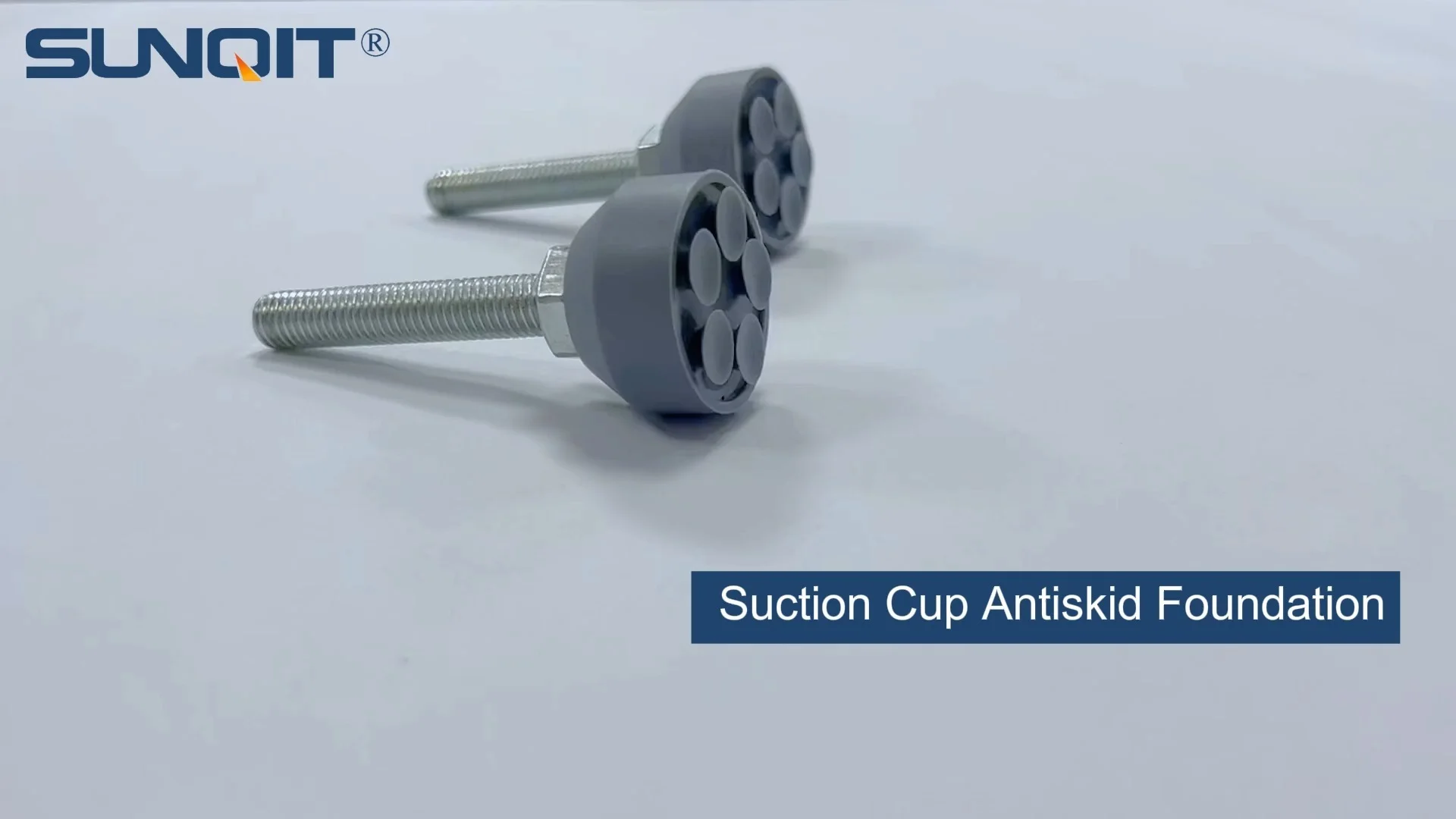
Suction Cup Anti-slip Foot Adjuster
D=35mm suction cup anti-slip foot adjusterï¼screw M10*55ï¼with a blot, used for workbench, flowrack pipe contact with groud.
Walk into any busy workshop, manufacturing plant, or assembly line, and you'll notice one thing right away: the workbenches, racks, and equipment are the unsung heroes keeping operations moving. But here's a question that often gets overlooked: Are those workbenches as stable as they could be? For many businesses, especially those relying on lean pipe workbenches or aluminum profile workstations, the answer might be a quiet "no." And that "no" could be costing more than you think—from minor tool slips to major safety incidents, unstable equipment is a hidden drain on productivity, morale, and bottom lines. Today, we're diving into one small but mighty solution: suction cup anti-slip foot adjusters. Are they worth the investment? Let's break it down.
First Things First: What Even Are Suction Cup Anti-Slip Foot Adjusters?
If you're not familiar with them, let's start with the basics. Suction cup anti-slip foot adjusters are exactly what they sound like—small, often metal-and-rubber components designed to replace or upgrade the standard feet on equipment like workbenches, material racks, or assembly stations. At first glance, they might seem unremarkable: a threaded metal rod (for height adjustment) topped with a base that has a suction cup-like rubber pad. But don't let their simplicity fool you. These little tools pack a punch when it comes to solving a big problem: keeping heavy, vibrating, or frequently used equipment firmly planted on the floor.
Here's how they work: The rubber suction cup base creates a tight seal with the floor, using friction and, in some cases, a mild vacuum effect to resist slipping. The threaded rod lets you adjust the height of each foot individually, which is a game-changer for uneven floors—a common issue in older warehouses or shops with concrete that's seen better days. Tighten the rod, and the foot lifts slightly; loosen it, and it lowers. This adjustability ensures the entire workbench (or rack, or trolley) sits level, even if the floor isn't. And the anti-slip rubber? It adds an extra layer of grip, so even if there's a spill or a little oil on the floor, the equipment stays put.
Where Do These Foot Adjusters Actually Fit In?
You might be thinking, "Sure, they sound useful, but when would I really need them?" Let's talk about the environments where stability isn't just a nice-to-have—it's a must. Take lean pipe workbenches, for example. These are the workhorses of many assembly lines, designed for flexibility and efficiency. They're often loaded with tools, parts bins, and sometimes even small machinery. Now, imagine that workbench shifting an inch or two every time someone leans on it, or when a heavy part is placed on it. Over time, that movement can throw off assembly precision, damage delicate components, or worse, cause tools to slide off the edge. Not exactly "lean" or efficient, right?
Then there are aluminum profile workstations. These sleek, modular setups are popular in industries like electronics manufacturing, where precision is key. Aluminum profiles are lightweight but strong, making them ideal for custom workbenches. But even the sturdiest aluminum frame is only as stable as its feet. If the floor is uneven (and let's be real, most floors are), the workstation might wobble. That wobble? It's a disaster when you're soldering tiny circuit boards or assembling intricate parts. A single slip could ruin hours of work—or injure a worker.
And let's not forget material racks and turnover trolleys. These often hold heavy loads—boxes of parts, raw materials, finished products. If a rack shifts while someone is loading it, the whole thing could tip. That's not just a safety hazard; it's a costly one. Damaged inventory, broken equipment, and worker injuries add up fast. Suction cup anti-slip foot adjusters aren't just for workbenches—they're for any piece of equipment that needs to stay put, no matter what.

The Hidden Cost of "Good Enough" Feet
Let's get real: Many businesses opt for the cheapest foot options when setting up workbenches or racks. Basic rubber feet, plastic glides, or even just metal tabs—they're affordable, and they "work" in the sense that the equipment doesn't immediately fall over. But "working" and "working well" are two very different things. What's the true cost of cutting corners here?
First, there's safety. According to the Occupational Safety and Health Administration (OSHA), slips, trips, and falls are among the most common workplace injuries, costing businesses billions annually in medical bills, workers' compensation, and lost productivity. A wobbly workbench might not seem like a slip hazard at first, but if a worker has to overcompensate to steady themselves while using it, they're at risk of strains or falls. Even a small spill near an unstable workbench can turn into a major incident if the bench slides when someone steps near it.
Then there's productivity. Ever tried to work on a wobbly table? It's frustrating. Your hands shake, you make mistakes, and you end up taking longer to finish tasks. Multiply that by dozens of workers across a shift, and you're looking at hours of lost productivity every week. For lean manufacturing setups, where efficiency is everything, that waste is a direct hit to your bottom line. And if parts or tools slide off the workbench? Now you're dealing with damaged inventory, missed deadlines, and extra costs to replace what's broken.
There's also the cost of downtime. If a workbench shifts and damages a machine or causes an injury, production stops. Even a short pause can ripple through your schedule, delaying orders and frustrating customers. And let's not forget the intangible cost: employee morale. When workers see that their safety and efficiency aren't prioritized, it erodes trust and engagement. Happy, confident workers are productive workers—and unstable equipment doesn't exactly inspire confidence.

Breaking Down the Investment: What Are We Really Paying For?
Okay, so the risks of not investing in good foot adjusters are clear. But what does investing actually look like? Let's talk numbers. Suction cup anti-slip foot adjusters aren't the cheapest option on the market—you'll pay more for them than you would for basic rubber feet or plastic glides. Depending on the size, material (steel vs. aluminum), and brand, you might spend anywhere from $15 to $50 per adjuster. A typical lean pipe workbench might need 4 to 6 feet, so that's $60 to $300 per workbench. For a factory with 20 workbenches, that's $1,200 to $6,000 upfront.
That might seem steep at first, especially if you're used to buying $5 plastic feet. But let's put it in perspective. The average cost of a workplace injury related to slips or falls is around $40,000, according to the National Safety Council. That includes medical expenses, workers' comp, and lost wages. Even a minor incident—like a tool falling off a wobbly bench and breaking—could cost $500 to replace. If a single incident is avoided, the foot adjusters have already paid for themselves.
Installation is another factor, but it's minimal. Most suction cup anti-slip foot adjusters screw into pre-drilled holes on the bottom of workbenches or racks—no special tools required. A maintenance worker or even a skilled employee could install them in 10 to 15 minutes per workbench. Compare that to the time lost dealing with an injury or equipment damage, and the installation cost (in both time and labor) is negligible.
Then there's durability. Basic rubber feet wear out over time—they crack, lose their grip, and need replacing every 6 to 12 months. Suction cup anti-slip adjusters, though? They're built to last. The rubber suction cups are often made from industrial-grade, oil-resistant material that holds up to spills, heavy loads, and daily wear. The metal rods are coated to prevent rust, even in damp or humid environments. You might replace them every 3 to 5 years instead of every few months. Over time, that means less frequent purchases and less downtime for replacements.

The Benefits: More Than Just "Not Slipping"
So, what exactly do you get for that investment? Let's break down the benefits beyond just "the equipment stays still."
1. Safety First (and Always)
This is the big one. Suction cup anti-slip foot adjusters drastically reduce the risk of equipment sliding or tipping. The suction cup base creates a strong bond with the floor, even on slightly uneven surfaces. The anti-slip rubber adds friction, so even if there's a little moisture or oil, the feet don't lose grip. For workers, that means peace of mind. They can focus on their tasks without worrying about the workbench shifting, and you can breathe easier knowing you've taken a concrete step to protect your team.
2. Precision That Pays Off
In industries where precision matters—electronics, medical device manufacturing, aerospace—even a fraction of an inch of wobble can ruin a product. Suction cup adjusters let you level a workbench with pinpoint accuracy. The threaded rod allows for micro-adjustments, so you can tweak each foot by 1/16 of an inch or more. That level surface ensures tools stay where they're placed, measurements are accurate, and assemblies are precise. Over time, that translates to fewer defects, less rework, and higher-quality products.
3. Adaptability to Imperfect Floors
Let's face it: No floor is perfect. Concrete floors crack, warehouse floors have high spots and low spots, and even brand-new facilities settle over time. Suction cup anti-slip foot adjusters aren't just for stability—they're for adaptability. If the floor under a workbench has a dip, you can lower that foot to compensate. If there's a bump, you can raise the adjacent foot. This adaptability means you don't have to spend thousands on floor repairs to have stable equipment.
4. Durability That Saves Long-Term
As we mentioned earlier, these adjusters are built to last. The combination of metal hardware and industrial rubber means they can handle heavy loads (some models support up to 500 pounds per foot) and harsh environments. They're resistant to chemicals, oils, and UV light, so they won't degrade in factories with lubricants or outdoor storage areas. When you invest in suction cup anti-slip foot adjusters, you're not just buying a product—you're buying years of reliable performance.
Are There Any Drawbacks? Let's Be Honest
No product is perfect, and suction cup anti-slip foot adjusters are no exception. There are a few scenarios where they might not be the best fit.
First, they're not ideal for highly mobile equipment. If you need to move a workbench or trolley around the factory daily, caster wheels are still the way to go. Suction cup adjusters are designed for stationary setups—once they're screwed in and adjusted, you don't want to move them often. That said, some manufacturers make hybrid options: foot adjusters with retractable casters, so you can lower the adjusters for stability when stationary and raise them to roll the equipment when needed. Those are pricier, but they offer the best of both worlds.
Second, the initial cost is higher. If you're running a startup or a small business with extremely tight margins, dropping $300 per workbench might feel like a stretch. In that case, you might prioritize adjusters for high-risk areas first—like assembly lines with heavy equipment or workbenches near walkways—before rolling them out everywhere. It's not an all-or-nothing investment.
Third, they need a relatively smooth surface to work best. The suction cup design relies on making contact with the floor—if the floor is extremely rough (think gravel, cracked concrete with large gaps), the suction cup might not seal properly. In those cases, you might need to pair them with floor mats or repair the floor first. But for most industrial and warehouse floors, which are smooth or moderately rough, they work just fine.
Real-World Impact: Two Factories, Two Success Stories
Still on the fence? Let's look at two real-world examples of businesses that invested in suction cup anti-slip foot adjusters and saw tangible results.
Case Study 1: Small Electronics Manufacturer
A small electronics company in Ohio with 15 lean pipe workbenches was struggling with consistency. Workers on the assembly line reported that their workbenches wobbled, especially during peak hours when the floor vibrated from nearby machinery. Tools would slide off, and delicate circuit boards were occasionally damaged. The company had already replaced basic rubber feet twice in a year, but the problem persisted. They decided to try suction cup anti-slip foot adjusters, spending about $25 per adjuster (4 per workbench) for a total of $1,500.
Six months later, the results were clear: Damaged circuit boards dropped by 75%, and tool-related incidents (slips, falls) went from 2-3 per month to zero. The production manager estimated they saved around $8,000 in replacement parts and avoided at least one potential injury (which could have cost $40,000+). The adjusters were still in perfect condition, with no signs of wear. "It was a no-brainer," the manager said. "We should have done this years ago."
Case Study 2: Automotive Parts Warehouse
A large automotive parts warehouse in Texas had 30 material racks, each holding boxes of heavy metal components. The concrete floor had settled over time, creating uneven spots. Several racks had tipped slightly when loaded, causing boxes to fall and inventory to break. The warehouse manager was hesitant to spend on new feet—after all, the racks "mostly" stayed up. But after a near-miss where a rack shifted and almost hit a worker, they decided to invest in suction cup anti-slip adjusters for all 30 racks (6 feet per rack, $30 per adjuster: total $5,400).
In the first year, there were zero tipped racks and zero damaged inventory. The warehouse also noticed that workers were loading racks faster—they no longer hesitated or took extra time to stabilize the racks. The manager calculated that the faster loading alone saved about 2 hours per day, adding up to 500+ hours of productivity annually. At an average labor cost of $20 per hour, that's $10,000 in saved labor. Combined with the $15,000 in avoided inventory damage, the ROI was well over 300% in the first year.
How Do They Stack Up? A Comparison
Still wondering how suction cup anti-slip foot adjusters compare to other options? Let's break it down with a quick comparison:
| Foot Type | Cost Per Unit | Slip Resistance | Adjustability | Durability | Best For |
|---|---|---|---|---|---|
| Basic Rubber Feet | $3–$8 | Low (wears quickly) | None (fixed height) | 6–12 months | Light, stationary loads; smooth floors; tight budgets |
| Plastic Glides | $5–$12 | Very Low (slippery on smooth floors) | None | 12–18 months | Light furniture; rarely moved; dry environments |
| Caster Wheels | $10–$40 | Low (roll easily) | Height-adjustable (some models) | 2–3 years | Mobile equipment; frequent movement |
| Suction Cup Anti-Slip Foot Adjusters | $15–$50 | High (suction + anti-slip rubber) | Yes (threaded height adjustment) | 3–5 years | Stationary workbenches/racks; uneven floors; heavy loads; safety priorities |
Who Should Invest? It's Not Just for Big Factories
Suction cup anti-slip foot adjusters aren't only for large manufacturing plants with hundreds of workbenches. They're a smart investment for any business that values safety, productivity, and long-term savings. Here are a few scenarios where they make sense:
- Small to medium-sized manufacturers: With limited resources, every incident hurts more. Avoiding even one injury or major equipment failure can protect your bottom line.
- Workshops and garages: Oil, grease, and uneven concrete are par for the course. Suction cup adjusters keep tool benches and storage racks stable, even in messy environments.
- Electronics or precision assembly lines: Wobble-free workbenches are critical for quality control. A steady surface means fewer defects and happier customers.
- Warehouses with material racks: Heavy loads + uneven floors = disaster waiting to happen. Adjusters add a layer of security for both inventory and workers.
- Food and beverage facilities: Slippery floors from spills are common. Anti-slip adjusters reduce the risk of equipment sliding during cleanup or production.
Final Thoughts: Worth the Investment?
At the end of the day, the question isn't "Can we afford suction cup anti-slip foot adjusters?" It's "Can we afford not to?" The initial cost is a drop in the bucket compared to the potential costs of injuries, damaged equipment, or lost productivity. For businesses that rely on stable, safe workbenches and racks—especially lean pipe workbenches and aluminum profile workstations—these adjusters aren't just an upgrade. They're a necessity.
Think of it this way: Every time a worker steps up to a stable workbench, they're not just getting the job done—they're doing it with confidence. They're focused on quality, not on whether the bench will shift. They're productive, not frustrated. And that confidence? It translates to better work, happier employees, and a stronger bottom line.
So, are suction cup anti-slip foot adjusters worth the investment? For most businesses, the answer is a resounding yes. They're a small change that makes a big difference—one that pays for itself in safety, savings, and peace of mind.