- Company Articles
- Products and Technology
- Solution
- Assembling 3060 Aluminum Angle Yards into Modular Production Systems

Assembling 3060 Aluminum Angle Yards into Modular Production Systems
Related Product
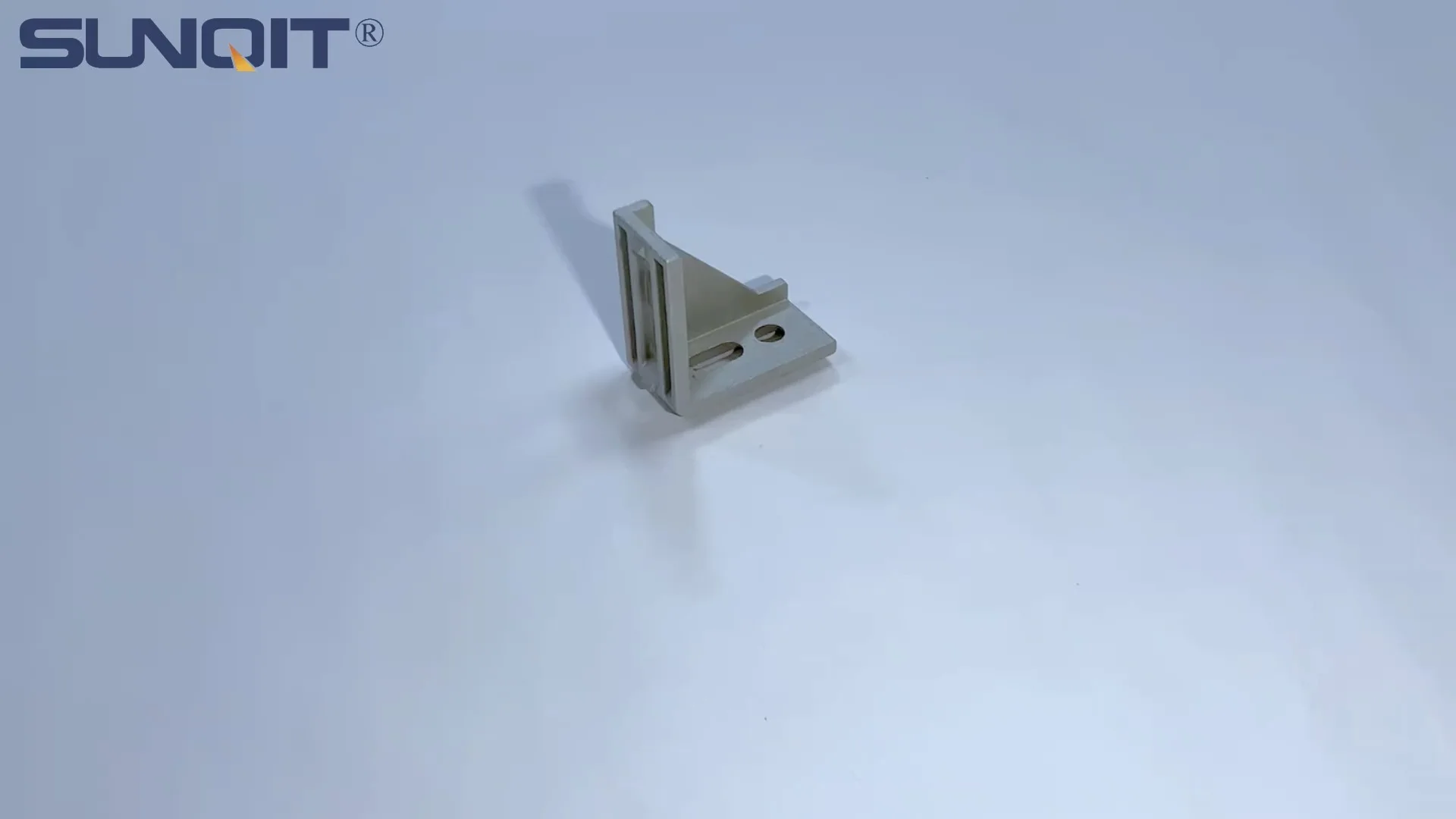
3060 Aluminum Angle Yards
It used for 90° flat connection for 20 series aluminum profile.
The Shift to Modular Manufacturing: Why Flexibility Matters
In today's fast-paced manufacturing landscape, the ability to adapt is no longer a luxury—it's a necessity. Production lines that once relied on rigid, fixed structures are giving way to modular systems, designed to evolve with changing demands, product lines, and workflows. At the heart of this transformation lies a quiet hero: 3060 aluminum angle yards . These unassuming components, often overlooked in favor of flashier machinery, are the building blocks of flexible, efficient, and scalable production environments. Whether you're assembling a simple workbench or a complex material handling system, 3060 aluminum angle yards bridge the gap between stability and adaptability, making them indispensable for modern manufacturers.
Modular production systems thrive on the idea that "one size fits none." A electronics manufacturer producing smartphones today might need to retool for wearables tomorrow; a automotive parts supplier might scale up a niche component line or downsize a legacy product. Traditional welded steel frames or custom-built workstations can't keep up—they're time-consuming to modify, expensive to replace, and often lock businesses into inefficient workflows. Modular systems, by contrast, are designed to be reconfigured, extended, or repurposed with minimal effort. And at the core of these systems are aluminum profiles and their accessories, with 3060 aluminum angle yards playing a critical role in joining, reinforcing, and stabilizing these structures.
Understanding 3060 Aluminum Angle Yards: More Than Just a Connector
Before diving into assembly, let's demystify what 3060 aluminum angle yards are and why they matter. These components are part of the broader family of aluminum profile accessories , specifically engineered to work with 30mm x 60mm aluminum extrusion profiles—the workhorses of modular construction. Made from high-grade aluminum alloy, 3060 angle yards are lightweight yet surprisingly strong, offering the perfect balance of durability and maneuverability. Their "L" shape (hence "angle yards") allows them to connect two perpendicular aluminum profiles at 90-degree angles, but their utility extends far beyond simple corner joints.
What sets 3060 aluminum angle yards apart from generic metal brackets? Precision. Unlike off-the-shelf hardware, these angle yards are designed to integrate seamlessly with 3060 aluminum profiles, which feature T-slot grooves along their length. This compatibility means they can be fastened using T-slot nuts, bolts, and screws—no welding or drilling required. This not only speeds up assembly but also allows for easy disassembly and reconfiguration later. Imagine needing to adjust the height of a workbench or widen a material rack: with 3060 angle yards, you simply loosen the fasteners, reposition the angle yards, and retighten. It's that straightforward.
Another key advantage is versatility. 3060 aluminum angle yards aren't limited to 90-degree joints. When paired with other aluminum profile accessories—like swivel joints, gussets, or 45-degree reinforce aluminum pipe joints—they can create complex angles, reinforce load-bearing sections, or even serve as mounting points for accessories like roller tracks, conveyor belts, or tool holders. This flexibility makes them ideal for everything from simple workbenches to intricate production cells.

From Parts to Production: Step-by-Step Assembly of a Modular System
Assembling a modular production system with 3060 aluminum angle yards might sound intimidating, but it's more like building with advanced erector sets—no specialized training required. Below is a step-by-step guide to creating a basic modular workbench, using Workbench E (single deck-without caster) as a template. This example highlights how 3060 angle yards, aluminum profiles, and a few key accessories come together to form a functional, customizable workspace.
Step 1: Plan Your Design and Gather Components
Start with a clear vision. What will the workbench be used for? Light assembly? Material storage? ESD-sensitive electronics work? This determines the dimensions, load capacity, and accessories needed. For Workbench E (single deck-without caster), a common configuration is 1200mm (length) x 600mm (width) x 800mm (height), designed to support up to 200kg. To build this, you'll need:
- 3060 aluminum profiles (4 pieces for legs, 4 pieces for the frame: 2 x 1200mm, 2 x 600mm)
- 3060 aluminum angle yards (8 pieces, one for each corner joint)
- T-slot nuts and M6 bolts (16 sets, 2 per angle yard)
- Aluminum honeycomb panel (1200mm x 600mm, for the workbench top)
- Gusset ALP 3030 (4 pieces, to reinforce leg joints)
- End caps for 3060 profiles (to cover sharp edges)
- Hex key set (for tightening bolts)
Pro tip: Source these components from a reputable lean system supplier . A reliable supplier will ensure all parts are compatible, reducing the risk of mismatched hardware or poor fit—common headaches when piecing together components from multiple vendors.
Step 2: Build the Frame – The Foundation of Stability
Begin by assembling the upper and lower frames of the workbench. Take two 1200mm and two 600mm 3060 profiles to form a rectangle. Lay them flat on a clean, level surface. At each corner, attach a 3060 aluminum angle yard: slide a T-slot nut into the groove of one profile, align the angle yard over the nut, and secure it with an M6 bolt. Repeat for the opposite end, then connect the remaining two profiles to form a square frame. Tighten the bolts just enough to hold the frame together—you'll fully torque them later.
Once the upper and lower frames are assembled, attach the legs. Stand one 800mm profile upright at each corner of the lower frame, aligning the T-slot grooves with the frame's edges. Use a 3060 angle yard to connect the leg to the frame, again using T-slot nuts and bolts. For added stability, reinforce each leg joint with a gusset ALP 3030—a triangular bracket that distributes weight and prevents wobbling. Slide the gusset into place, aligning its holes with the T-slots, and secure with additional bolts.
With the legs attached, place the upper frame on top of the legs and repeat the connection process. Now you have a basic cube frame: four legs, connected by upper and lower frames. Give the frame a gentle shake—if it wobbles, check that all angle yards are aligned and bolts are snug (but not over-tightened, as this can strip the threads).
Step 3: Add the Workbench Top – From Frame to Functional Surface
With the frame stable, it's time to add the workbench top. The aluminum honeycomb panel is an excellent choice here: it's lightweight, rigid, and resistant to scratches and impact. To mount it, first attach angle brackets (another type of aluminum profile accessory) to the upper frame. These brackets will support the panel from below. Space them evenly—every 300mm or so—to ensure the panel doesn't sag under load.
Once the brackets are in place, carefully lower the honeycomb panel onto the frame. Center it, then secure it to the brackets using self-tapping screws (pre-drill small pilot holes to avoid cracking the panel). For ESD-sensitive environments (common in electronics manufacturing), opt for an ESD-rated honeycomb panel and ensure all metal components are grounded via the aluminum profiles—a simple modification that can prevent costly static damage to sensitive components.
Step 4: Customize – Tailoring the Workbench to Your Needs
The beauty of modular systems is customization, and 3060 aluminum angle yards make it easy to add features. Need a tool rail along the back? Attach a 3060 profile horizontally using angle yards, then add hooks or tool holders. Want to integrate a roller track for moving parts? Mount a plastic roller track guide rail (yellow or grey, depending on your preference) to the side of the workbench using L-brackets and 3060 angle yards. Even something as simple as adding a shelf below the workbench top is straightforward: use angle yards to mount shorter 3060 profiles between the legs, then lay a second honeycomb panel across them.
For a more advanced setup, consider adding casters (though Workbench E is designed without them, you could upgrade later) or integrating it with a material rack. For example, Material Rack B (3 row and 3 floor) uses similar 3060 profiles and angle yards, making it easy to align the workbench with the rack for seamless material flow—no more stretching or walking to retrieve parts.

Traditional vs. Modular: A Comparison of Production Systems
Still on the fence about modular systems? Let's compare them to traditional welded steel setups, the previous standard in manufacturing. The table below highlights key differences in assembly time, cost, flexibility, and longevity—factors that directly impact your bottom line.
| Feature | Traditional Welded Steel Systems | Modular Systems (3060 Aluminum Angle Yards + Aluminum Profiles) |
|---|---|---|
| Assembly Time | 2–3 days (requires welding, painting, curing) | 2–4 hours (no welding; bolt-together assembly) |
| Cost (Initial) | Lower upfront (steel is cheaper than aluminum) | Higher upfront (premium for aluminum and precision accessories) |
| Cost (Long-Term) | Higher (expensive to modify; often replaced entirely) | Lower (easily reconfigured; components reused) |
| Flexibility | Fixed; cannot be modified without cutting/welding | Highly flexible; reconfigurable in minutes/hours |
| Weight | Heavy (hard to move; requires heavy equipment) | Lightweight (can be moved by 2–3 people; easy to relocate) |
| Durability | High (but prone to rust if not painted regularly) | High (aluminum resists corrosion; no paint needed) |
| Sustainability | Low (difficult to recycle; often ends up in landfill) | High (aluminum is 100% recyclable; components reused) |
The data speaks for itself: while modular systems have a higher initial cost, their long-term savings—from reduced downtime, lower modification costs, and extended lifespan—make them a smarter investment for most manufacturers. And when you factor in the agility to adapt to market changes, the value becomes even clearer.

Real-World Impact: A Case Study in Modular Transformation
Case Study: Precision Electronics Inc. – Doubling Output with Modular Workbenches
Background: Precision Electronics Inc. (PEI) is a mid-sized manufacturer of circuit boards for medical devices. In 2023, PEI won a contract to produce a new line of compact circuit boards, requiring them to expand production without increasing floor space. Their existing setup relied on fixed steel workbenches, which were bolted to the floor and couldn't be reconfigured to accommodate the new, smaller boards. Changeover times between product runs were slow (2–3 hours), and workers often had to walk long distances to retrieve materials from static racks.
Solution: PEI partnered with a lean system supplier to redesign their production area using modular systems. The centerpiece of the transformation was 10 custom workbenches built with 3060 aluminum profiles, 3060 aluminum angle yards, and aluminum honeycomb tops. Each workbench was paired with a Material Rack B (3 row and 3 floor), positioned directly behind the workbench for easy access. Roller tracks (plastic roller track guide rail yellow) were integrated into the racks to allow materials to slide directly to the workbench surface.
Results: Within 2 weeks of installation, PEI saw dramatic improvements:
- Changeover time: Reduced from 2–3 hours to 30 minutes, as workbenches could be quickly reconfigured with new tooling.
- Worker efficiency: 40% reduction in walking time, thanks to material racks positioned at the workbench.
- Output: Doubled production of the new circuit boards without adding floor space.
- Scalability: When PEI secured a second contract 6 months later, they added 5 more workbenches in a single day by reusing components from a retired line.
Quote from PEI's Operations Manager: "The modular workbenches were a game-changer. We used to see our steel benches as 'permanent,' but now we think of our production floor as a dynamic space. The 3060 angle yards make it so easy to adjust heights or add shelves—we even modified one bench to hold a testing station last month. It's like having a factory that can adapt as fast as our business does."
Overcoming Common Assembly Challenges: Tips for Success
While assembling modular systems with 3060 aluminum angle yards is straightforward, even experienced teams can run into hiccups. Here are practical solutions to common challenges:
Challenge 1: Misalignment of Profiles and Angle Yards
Symptom: The frame wobbles or joints feel loose, even after tightening bolts. Cause: Profiles or angle yards are misaligned, or T-slot nuts have shifted during assembly. Solution: Use a square tool to ensure 90-degree angles before tightening bolts. For longer frames, use a string line or laser level to keep profiles straight. If T-slot nuts shift, partially loosen the bolt, realign the angle yard, and retighten while holding the nut in place with a hex key.
Challenge 2: Insufficient Load Capacity
Symptom: The workbench sags under weight or legs bend slightly. Cause: Underestimating load requirements or skipping reinforcement accessories. Solution: Always over-engineer for load capacity—if you expect 100kg, design for 150kg. Add gussets (like gusset ALP 3030) at leg joints and cross-braces between legs for extra stability. For heavy loads, upgrade to thicker aluminum profiles (e.g., 4080 instead of 3060) and use reinforced angle yards.
Challenge 3: Difficulty Integrating Accessories
Symptom: Roller tracks, conveyors, or tool holders won't align with the workbench. Cause: Incompatible accessories or poor planning. Solution: Work with your lean system supplier early in the design phase to ensure accessories (like roller track placon mount for aluminum profile flat) are compatible with 3060 profiles and angle yards. Many suppliers offer CAD templates or design tools to test fit before ordering.
The Future of Manufacturing: Sustainable, Adaptable, and Built to Last
As manufacturing continues to evolve—driven by trends like small-batch production, customization, and sustainability—modular systems will only grow in importance. 3060 aluminum angle yards, though small in size, are a cornerstone of this evolution. Their ability to combine strength, flexibility, and ease of use makes them ideal for businesses looking to stay competitive in a rapidly changing market.
Sustainability is another key driver. Aluminum is 100% recyclable, and modular systems reduce waste by allowing components to be reused or repurposed instead of discarded. For companies aiming to reduce their carbon footprint, this is a significant advantage over traditional steel systems, which often end up in landfills when no longer needed.
Finally, the right partner matters. A reputable lean system supplier doesn't just sell parts—they provide expertise, design support, and after-sales service to ensure your modular system delivers long-term value. When choosing a supplier, look for one that offers a full range of components (from 3060 angle yards to aluminum profile accessories), has experience in your industry, and can provide references from similar businesses.
Conclusion: Building for Tomorrow, Today
Assembling 3060 aluminum angle yards into modular production systems isn't just about putting parts together—it's about building a manufacturing environment that can grow, adapt, and thrive. Whether you're a small workshop or a large factory, these systems offer a path to greater efficiency, lower costs, and higher productivity. By combining the precision of 3060 aluminum angle yards with the versatility of aluminum profiles and the support of a trusted lean system supplier, you're not just investing in equipment—you're investing in the future of your business.
So, the next time you look at your production floor, ask: Is this setup working for me , or am I working around it? With modular systems, the answer can be the former—today, tomorrow, and for years to come.