- Company Articles
- Products and Technology
- Application Cases
- Automated Lines: 1.2mm Stainless Steel Pipe Integrating with Robotics

Automated Lines: 1.2mm Stainless Steel Pipe Integrating with Robotics
Related Product
1.2mm Stainless Steel Pipe
Stainless steel pipe, lean pipe, diameter is 28mm, material is SS201 or SS304, SS201 is normally used in the market. It knows a KARAKURI, KAIZEN material for industrial plant to improve efficiency, save labor cost, standard management.
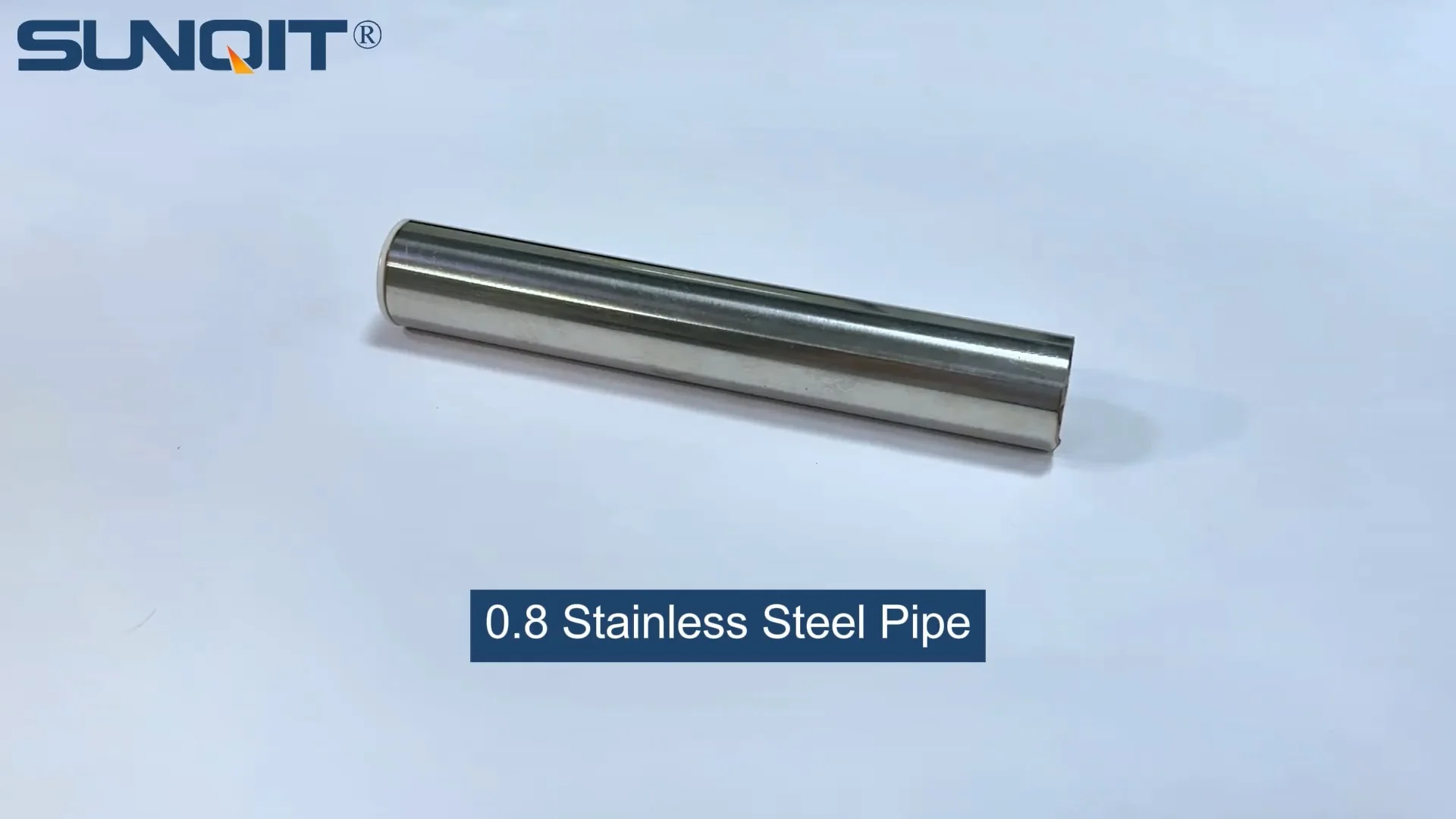
In the heart of every modern manufacturing facility, there's a silent revolution unfolding. Automated lines, once the stuff of science fiction, now hum with precision, turning raw materials into finished products at speeds unimaginable a decade ago. At the center of this revolution isn't just the flashy robotic arms or advanced AI systems—it's the unassuming components that hold everything together. Among these, the 1.2mm stainless steel pipe has emerged as a quiet workhorse, bridging the gap between mechanical stability and robotic flexibility. Let's dive into how this unpretentious material is reshaping automated lines, working hand-in-hand with robotics, roller track systems, and conveyor belts to redefine efficiency.
The Material Science Behind the Magic: Why 1.2mm Stainless Steel?
Stainless steel has long been a staple in manufacturing for its corrosion resistance and strength, but why 1.2mm specifically? To understand, let's step back and think about what automated lines demand. Robotic systems move with lightning speed—picking, placing, assembling, and packaging with micrometer precision. The framework supporting these robots needs to be three things: strong enough to handle dynamic loads, lightweight enough to avoid weighing down moving parts, and durable enough to withstand the daily grind of a factory floor.
1.2mm stainless steel pipe hits that sweet spot. Thinner than 1.5mm variants (which can add unnecessary weight) and sturdier than 1.0mm options (which might flex under heavy robotic arms), it's the Goldilocks of industrial piping. Its composition—typically 304 or 316 stainless steel—resists rust from coolant spills, oil drips, and humid factory air, ensuring longevity even in harsh environments. And because it's malleable yet rigid, it can be bent, cut, and assembled into custom shapes without compromising structural integrity—perfect for adapting to unique robotic workflows.
Consider this: A robotic arm swinging a 20kg component needs a stable base to anchor its track. A 1.2mm stainless steel frame provides that stability without adding bulk, allowing the arm to move freely without vibration or wobble. In contrast, a heavier pipe would slow down the arm's response time, while a thinner one might warp over time, throwing off precision. It's this balance that makes 1.2mm stainless steel pipe irreplaceable in high-speed automated setups.
| Pipe Thickness | Weight (per meter, 304 SS) | Max Load Capacity (Static) | Best For |
|---|---|---|---|
| 1.0mm | 0.85 kg | 150 kg | Light-duty shelving, non-moving structures |
| 1.2mm | 1.02 kg | 220 kg | Robotic tracks, conveyor frames, dynamic load support |
| 1.5mm | 1.28 kg | 300 kg | Heavy machinery bases, fixed industrial structures |
Roller Track Systems: The Unsung Conduit Between Pipes and Robotics
Automated lines aren't just about robots moving—they're about materials moving too. That's where roller track systems come in. These tracks, lined with small wheels or balls, let components glide from one workstation to the next with minimal friction. And guess what forms the backbone of most modern roller tracks? You guessed it: 1.2mm stainless steel pipe.
Imagine a electronics assembly line where circuit boards need to move from soldering stations to testing bays. A roller track framed with 1.2mm stainless steel pipes carries these boards smoothly, even as robotic arms reach down to place chips or adjust components. The pipes provide a rigid rail for the track, ensuring it stays level and aligned—critical for preventing jams or misplacements. And because the pipes are corrosion-resistant, they won't degrade from the flux residues or cleaning solvents used in electronics manufacturing.
But roller tracks aren't one-size-fits-all. Some lines use gravity-fed tracks, where products slide downhill; others use motorized rollers for precise speed control. In both cases, the 1.2mm stainless steel frame adapts. For gravity tracks, it's bent into gentle slopes that guide products without abrupt stops. For motorized tracks, it's welded or bolted to motor mounts, creating a stable platform for the drive mechanism. Even better, because the pipe is lightweight, the entire roller track system can be reconfigured quickly—say, shifting from a straight line to a 90-degree turn—to accommodate new product designs. This flexibility is key in today's fast-changing manufacturing landscape, where product cycles get shorter by the year.

Conveyors: Moving Materials, Powered by Precision Pipes
If roller tracks are the neighborhood roads of automated lines, conveyor belts are the highways. They transport bulk materials, heavy components, and finished goods across long distances, often connecting multiple robotic workstations. And again, 1.2mm stainless steel pipe plays a starring role in their construction.
Conveyor frames need to withstand constant stress: the weight of materials, the pull of the belt, and the vibration from motors. A flimsy frame would sag, causing the belt to misalign and jam—costing hours of downtime. 1.2mm stainless steel pipe solves this by providing a rigid, yet lightweight skeleton. Take a food packaging line, for example: Conveyors here move boxes of cereal from filling machines to sealing stations, with robotic arms stacking them onto pallets at the end. The conveyor's side rails, made from 1.2mm stainless steel, keep boxes centered, while cross-braces prevent the frame from twisting under the weight of 50+ boxes at a time. And because stainless steel is easy to clean, it meets strict food safety standards—no cracks or crevices for bacteria to hide.
What's more, 1.2mm stainless steel pipes integrate seamlessly with conveyor accessories like guides, guards, and sensor mounts. A proximity sensor that detects when a box reaches a robotic palletizer? It's often mounted on a stainless steel bracket bolted to the conveyor frame. A plastic guide rail that keeps bottles upright? It's clipped to a stainless steel channel. This modularity means conveyors can be customized with minimal effort, whether you need to add a side transfer for quality checks or install a metal detector midway through the line.
Let's zoom in on a real-world example: an automotive parts plant producing brake calipers. The calipers start as raw metal blanks on a conveyor belt, moving to a robotic machining station where they're drilled and milled. From there, they go to a washing station, then to an assembly station where robots add pistons and seals. The entire conveyor system—over 100 meters long—is framed with 1.2mm stainless steel pipe. Why? Because the pipe's strength supports the weight of 50 calipers at a time, its corrosion resistance stands up to the water and detergent from the washing station, and its light weight keeps the conveyor's energy use low. When the plant introduced a new, larger caliper model, workers simply adjusted the conveyor's side rails by cutting and reattaching the stainless steel pipes—no need for a full system overhaul. That's the power of adaptability.

Workbenches: Where Robots and Humans Collaborate, Supported by Steel
Not all automated line work happens on the move—some tasks require a stable, static surface where robots and humans can work side by side. Enter the workbench : a critical hub for assembly, inspection, and quality control. And yes, 1.2mm stainless steel pipe is often the material of choice for building these workbenches.
Modern workbenches aren't just tables—they're ergonomic, functional, and tech-integrated. A typical robotic workbench might have a stainless steel frame supporting a wooden or composite top, with tool hangers, LED task lights, and even built-in monitors displaying assembly instructions. The 1.2mm stainless steel pipe frame ensures the bench doesn't wobble when a robot tightens a bolt with 50Nm of torque, and it resists scratches from tools and parts. It's also easy to customize: add a shelf for bins of screws, mount a robotic arm bracket on the side, or attach a cable management tray underneath—all without weakening the structure.
In a medical device factory, for instance, workbenches are used to assemble pacemakers. Robotic tweezers place tiny components onto circuit boards, while human technicians inspect the work under microscopes. The workbench frame, made from 1.2mm stainless steel, is grounded to prevent static electricity (a must for sensitive electronics), and its smooth surface is easy to sanitize between shifts. When the factory needed to add a second robotic arm to each bench, workers simply bolted an extension bracket to the existing steel frame—no need to replace the entire bench. This kind of modularity saves time and money, two resources no manufacturer can afford to waste.
Lean Systems: Efficiency by Design, Pipe by Pipe
At the core of successful automated lines is the lean system philosophy: eliminate waste, optimize flow, and continuous improvement. 1.2mm stainless steel pipe aligns perfectly with these principles, enabling manufacturers to build systems that are efficient, adaptable, and cost-effective.
Waste elimination starts with durability. A stainless steel pipe frame lasts decades, unlike plastic or mild steel alternatives that need frequent replacement. This reduces downtime from repairs and cuts down on material waste. Then there's flow optimization: because the pipe is easy to assemble and reconfigure, manufacturers can design layouts that minimize unnecessary movement. For example, a roller track framed with 1.2mm stainless steel can be routed to bring components directly to a robotic workbench, eliminating the need for workers to carry parts across the factory. And when production needs change—say, shifting from 1000 units/day to 1500—the system can be expanded by adding more pipe sections, rather than building a whole new line.
Continuous improvement is also baked into the pipe's design. Manufacturers can experiment with small changes—adjusting a conveyor's height, repositioning a workbench, or adding a new roller track branch—and see results immediately. If a change doesn't work, it's easy to undo, thanks to the pipe's modular joints and connectors. This trial-and-error approach lets teams fine-tune workflows until they're as efficient as possible, without the risk of investing in expensive, permanent infrastructure.
The Future: Smarter Pipes for Smarter Robots
As robotics and automation advance, so too will the role of 1.2mm stainless steel pipe. Engineers are already exploring ways to integrate sensors into the pipe itself—strain gauges to monitor load, temperature sensors to detect overheating, or RFID tags to track tool locations. Imagine a conveyor frame that alerts maintenance when a section is starting to bend, or a workbench that automatically adjusts its height based on the operator's size, all thanks to smart stainless steel components.
There's also ongoing research into new alloys that make the pipe even lighter or more corrosion-resistant, without sacrificing strength. And as 3D printing technology improves, we might see custom pipe brackets and joints printed on-site, further speeding up reconfiguration. The goal? To create automated lines that are not just efficient, but self-optimizing—constantly adapting to new challenges with the help of their trusty stainless steel backbone.
Conclusion: The Quiet Hero of Automated Lines
In a world obsessed with cutting-edge tech, it's easy to overlook the basics. But 1.2mm stainless steel pipe reminds us that innovation often lies in the details. It's the material that lets robotic arms move with precision, roller tracks glide smoothly, conveyors carry heavy loads, workbenches stay stable, and lean systems thrive. It's not flashy, but it's foundational—turning disjointed machines into cohesive, efficient automated lines that power modern manufacturing.
So the next time you walk through a factory and see robots hard at work, take a moment to look down at the framework holding it all together. Chances are, you'll spot 1.2mm stainless steel pipe—quietly doing its job, proving that sometimes the most important innovations are the ones that stand the test of time (and a lot of heavy lifting).