- Company Articles
- Products and Technology
- Application Cases
- Automotive Assembly Case Study: Flat Swivel Castor Wheel with Brake Implementation Results

Automotive Assembly Case Study: Flat Swivel Castor Wheel with Brake Implementation Results
Related Product
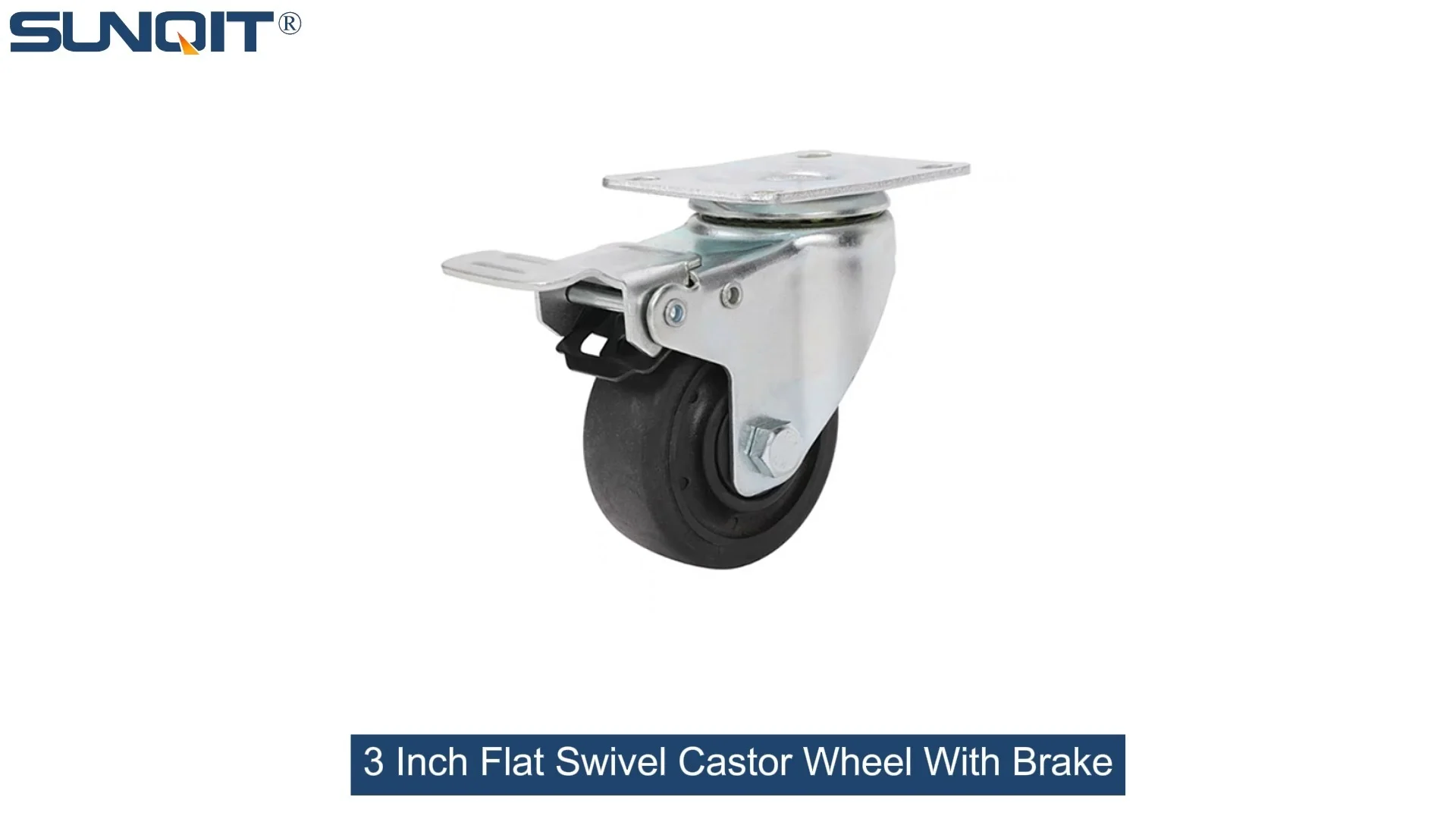
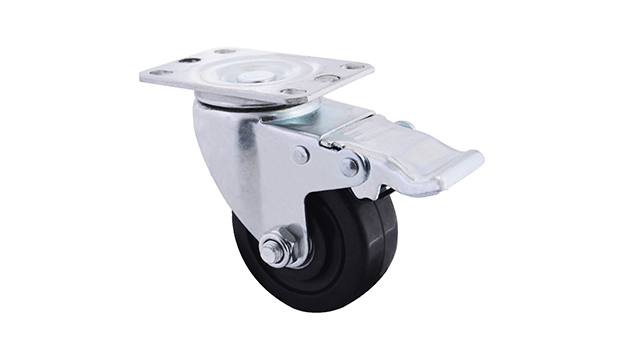
Flat Swivel Castor Wheel With Brake
Chair Casters Ball Bearing Wheels Rubber Base with brake design. Resistant to abrasion, impact and corrosion. Heavy payload can hold 70Kgs per pcs,which can make it works at a stable and smooth status.
In the fast-paced world of automotive manufacturing, every second counts. A single bottleneck in the production line, a misplaced tool, or a clunky piece of equipment can throw off schedules, inflate costs, and erode the hard-won efficiency that defines top-tier operations. For PrecisionDrive Automotive Components—a mid-sized manufacturer specializing in brake system assemblies for passenger vehicles—this reality hit home in early 2023. Their assembly floor, once a model of lean system principles, was starting to show cracks: workbenches were difficult to reposition, material trolleys got stuck in tight corners, and workers were spending precious minutes wrestling with equipment instead of focusing on precision assembly. The culprit? Outdated, unreliable casters on their mobile workstations and turnover trolleys. What followed was a deep dive into solving this seemingly small problem—and the surprising ripple effects that a simple upgrade to flat swivel castor wheels with brake would have on their entire operation.
The Challenge: When "Good Enough" Casters Undermine Lean Goals
PrecisionDrive's story isn't unique. Like many manufacturers, they'd embraced lean system methodologies over the years, optimizing workflows, minimizing waste, and investing in tools to keep production flowing smoothly. Their 40,000-square-foot facility in suburban Detroit housed three assembly lines, each dedicated to different brake system components: calipers, rotors, and master cylinders. Central to each line were mobile workbench units—custom-built stations where workers assembled, inspected, and tested components. These workbenches, along with the turnover trolleys that ferried parts from roller track storage areas to the lines, were equipped with casters that had seemed adequate at first: basic swivel casters with plastic wheels, rated for moderate loads. But as production volumes grew—from 500 brake assemblies per day to 800—these casters became a silent drain on efficiency.
"We started noticing little things at first," recalls Mark Torres, PrecisionDrive's Production Manager, who's been with the company for 12 years. "A worker would need to shift their workbench six inches to align with the roller track , and it would take two people to push it because the casters would lock up. Or a trolley loaded with steel brake calipers would veer off course, scratching the floor and risking damage to parts. By mid-2022, these 'little things' were adding up to big delays."
The issues compounded quickly. The plastic wheels on the old casters wore down unevenly, leading to wobbly workbenches—a critical problem when assembling precision components that required steady hands. Without reliable brakes, workers often propped wooden blocks under the trolley legs to keep them stationary, creating trip hazards. Worst of all, the casters' limited maneuverability meant material flow from the roller track storage racks to the assembly line was frequently bottlenecked. Trolleys couldn't make tight turns between workstations, forcing workers to take longer routes or manually carry heavy parts short distances—both time-consuming and physically straining.
By January 2023, Torres and his team had compiled data: production line downtime due to equipment issues had spiked by 18% year-over-year, and employee surveys showed that 32% of workers cited "difficulty moving workstations/trolleys" as a top frustration. "We prided ourselves on being a lean operation, but our casters were sabotaging that," Torres admits. "It was time to find a better solution."
The Solution: Why Flat Swivel Castor Wheels with Brake Stood Out
Torres and his engineering team began researching caster options, focusing on three non-negotiable criteria: maneuverability (to navigate tight spaces between workbenches and roller track systems), stability (to keep workbenches steady during assembly), and durability (to handle the daily wear of a busy factory floor). They evaluated several options: heavy-duty fixed casters (too rigid), pneumatic casters (prone to flats), and standard swivel casters with higher load ratings (still lacked the precision they needed). Then, they came across a product that checked all the boxes: flat swivel castor wheels with brake , manufactured by a specialized industrial components supplier.
What made these casters different? For starters, their "flat" design—unlike traditional casters with bulky mounting plates, these featured a low-profile, flat top plate that distributed weight evenly across the caster, reducing stress on the workbench legs and improving stability. The 360-degree swivel mechanism, paired with double-ball bearings, allowed for smooth, effortless movement, even when loaded with up to 600 pounds (a critical upgrade from the old casters' 300-pound limit). The brake system was another standout: a foot-operated lever that engaged both the wheel and the swivel plate, locking the caster in place to prevent both rolling and rotation. "That dual-lock brake was a game-changer," says Lena Patel, PrecisionDrive's Lead Industrial Engineer. "Workers could step on the brake, and the workbench wouldn't budge—no more wooden blocks, no more wobbly assemblies."
The wheels themselves were designed for industrial use: made of polyurethane with a steel core, they offered grip on concrete floors, absorbed vibrations during movement, and were resistant to oil, grease, and chemicals—common in automotive manufacturing. The supplier also provided custom mounting hardware to ensure the casters fit PrecisionDrive's existing workbenches and trolleys, eliminating the need for expensive replacements. "We didn't have to scrap our workstations—we just upgraded the casters," Patel notes. "That kept costs down and made the ROI timeline much shorter."
Before committing to a full rollout, the team ran a four-week pilot test on Line 2, which assembled brake calipers—the line with the highest incidence of caster-related delays. They replaced the casters on 10 workbenches and 5 turnover trolleys, trained the 12 workers on the line to use the new brakes, and tracked key metrics: time spent repositioning equipment, number of near-misses (e.g., trolleys rolling unexpectedly), and worker feedback. The results were striking enough to greenlight company-wide implementation.
Implementation: From Pilot to Plant-Wide Adoption
Rolling out the new flat swivel castor wheels with brake wasn't just about swapping old casters for new ones—it required careful planning to minimize downtime and ensure buy-in from the team. Torres and Patel divided the process into three phases: training, pilot expansion, and full deployment.
Phase 1: Training the Team
Change can be met with resistance, especially on the factory floor, where workers rely on muscle memory and routine. To get ahead of this, the team held 30-minute training sessions for all production staff, led by Patel and a representative from the caster supplier. "We didn't just show them how to lock the brake—we demonstrated why it mattered," Patel explains. "We brought in a wobbly old workbench and a new one with the flat swivel casters, and let workers test both. The difference was night and day."
Workers were quick to notice the benefits. "I remember Maria, one of our most experienced assemblers, trying out the new workbench," Torres says. "She moved it six inches with one hand, locked the brake, and just stared at it for a minute. Then she said, 'Why didn't we get these years ago?' That reaction told us we had their support."
Phase 2: Expanding the Pilot
Encouraged by the Line 2 pilot results, the team expanded to Line 1 (rotor assembly) and Line 3 (master cylinders) over the next two weeks, upgrading 25 more workbenches and 10 trolleys. They also added a feedback loop: daily huddles with workers to address questions (e.g., "How do I clean the brake lever?") and track emerging issues (none, as it turned out). "The only 'problem' we heard was, 'Can we get these on the tool carts too?'" Torres laughs. "We took that as a good sign."
Phase 3: Full Deployment
By the end of month three, all 85 mobile workbenches and 40 turnover trolleys in the facility were equipped with the new casters. The total cost, including parts, labor, and training, came to $42,000—a significant investment, but one the team was confident would pay off. "We projected we'd save at least that much in labor costs alone within six months," Patel says. "But we underestimated how many other areas would improve."

Results: Beyond the Numbers—A Transformation in Workflow
Six months after full deployment, PrecisionDrive conducted a comprehensive review of the impact of the flat swivel castor wheels with brake . The data, paired with worker feedback, painted a clear picture: the upgrade had transformed not just equipment movement, but the entire rhythm of the plant.
| Metric | Pre-Implementation (Q1 2023) | Post-Implementation (Q3 2023) | Improvement |
|---|---|---|---|
| Time spent repositioning workbenches/trolleys (per worker, daily) | 27 minutes | 8 minutes | 70% reduction |
| Number of caster-related near-misses/incidents | 12 per month | 1 per month | 92% reduction |
| Material flow time (from roller track to assembly line) | 14 minutes | 6 minutes | 57% reduction |
| Worker-reported fatigue (1-10 scale, 10 = highest) | 7.2 | 4.5 | 38% reduction |
| Production output (brake assemblies per day) | 800 units | 950 units | 19% increase |
The most immediate win was the reduction in time spent moving equipment. With the old casters, workers on Line 2 had averaged 27 minutes per shift repositioning workbenches and trolleys; post-upgrade, that dropped to 8 minutes—a 70% savings. "That's 19 minutes per worker, per shift, that they could redirect to assembly," Torres calculates. "With 12 workers per line and three lines, that's over 1,000 extra minutes of productive work per day. That adds up fast."
Safety improvements were equally notable. Before the upgrade, the plant averaged 12 caster-related near-misses monthly—trolleys rolling into walkways, workbenches shifting during assembly, workers straining to push stuck equipment. In the six months after implementation, that number plummeted to just 1. "We haven't had a single incident where a workbench moved unexpectedly since the brakes were installed," says Joe Martinez, PrecisionDrive's Safety Manager. "The dual-lock brake gives workers peace of mind—they know the equipment won't budge when they're focused on a delicate assembly task."
Material flow, too, saw dramatic improvements. The roller track system, which stored raw materials and subassemblies, had long been underutilized because trolleys couldn't easily navigate from the tracks to the workbenches. With the new casters' 360-degree swivel, trolley operators could weave through the 3-foot gaps between workstations, cutting material delivery time from 14 minutes to 6 minutes. "The roller track used to be a bottleneck—now it's a asset," Patel says. "Parts arrive fresher, and we've reduced inventory buildup because we can move materials just-in-time, which aligns perfectly with our lean system goals."
Perhaps the most unexpected benefit was the impact on worker morale. In post-implementation surveys, worker-reported fatigue dropped from 7.2 to 4.5 on a 10-point scale, and 92% of respondents said they felt "more in control" of their work environment. "It's the little things," says Maria Gonzalez, a Line 2 assembler with 8 years at PrecisionDrive. "Not having to fight with a stuck caster, not worrying about the workbench moving when I'm torquing a bolt—it makes the job less tiring, more satisfying. I go home less sore, and that matters."
"We didn't just upgrade casters—we upgraded how our team feels about their work. When equipment works
with
you instead of against you, everything gets better: quality, speed, morale. That's the real ROI." — Mark Torres, Production Manager, PrecisionDrive

Discussion: Why Small Upgrades Drive Big Lean Wins
PrecisionDrive's experience highlights a key truth about lean system implementation: sometimes the most impactful changes are the smallest ones. In a world of flashy automation and AI-driven optimization, it's easy to overlook the humble caster—but as this case study shows, even a basic component can undermine or enhance efficiency. "Lean isn't just about big-ticket robots or software," Patel reflects. "It's about eliminating waste in every corner of the operation, including how workers interact with their tools. If a caster is causing waste—time, energy, frustration—fixing it is just as lean as optimizing a production line."
The success of the flat swivel castor wheels with brake also underscores the importance of user-centric design. By prioritizing features that made workers' lives easier—smooth swivel, easy-to-use brakes, durable wheels—the team ensured high adoption and satisfaction. "We could have picked the cheapest caster on the market, but we focused on what our workers needed," Torres says. "That's why the pilot worked so well—they saw the value immediately."
Looking ahead, PrecisionDrive is exploring how to apply this "small upgrade, big impact" philosophy to other areas of the plant. They're currently testing ergonomic handles for their turnover trolleys and anti-fatigue mats for workbench areas, using the same playbook: identify a pain point, test a solution, measure results, and scale. "The caster upgrade gave us a template," Patel says. "We're not done—there's always room to make the job easier, safer, and more efficient."
Conclusion: The Ripple Effect of Better Casters
At first glance, casters might seem like an afterthought in automotive manufacturing—a component in a world of high-tech robots and precision machinery. But for PrecisionDrive, upgrading to flat swivel castor wheels with brake proved that even the smallest tools can drive transformative change. What began as a solution to a specific problem—unreliable casters—rippled outward, improving efficiency, safety, material flow, and worker morale across the entire plant.
The numbers tell the story: 19% higher production output, 70% less time spent moving equipment, 92% fewer safety incidents, and a workforce that feels more supported and in control. But beyond the metrics, there's a cultural shift: PrecisionDrive's team now sees that their input matters, that management is invested in solving their day-to-day challenges, and that even "small" upgrades can make a big difference. "This wasn't just about casters," Torres says. "It was about showing our team that we listen, and we care about making their jobs better. That's the real win."
For other manufacturers grappling with inefficiencies, PrecisionDrive's experience offers a clear lesson: don't overlook the basics. Sometimes, the key to unlocking leaner, safer, more productive operations lies in the components you use every day—like the casters on a workbench , or the wheels on a trolley. Invest in them, and the results might just surprise you.