- Company Articles
- Products and Technology
- Application Cases
- Automotive Assembly Lines: 60 Steel Roller Track Yellow Applications

Automotive Assembly Lines: 60 Steel Roller Track Yellow Applications
Related Product
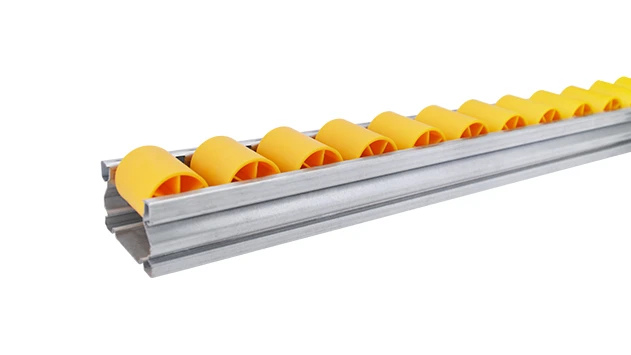
60 Steel Roller Track Yellow
The roller track can be installed with multiple accessories to create different slopes and configurations of flow racks.All steel conveyor 60 roller track accessories are engineered to perfectly fit the sliding rail.
Walk into any busy automotive assembly line, and you'll see a symphony of moving parts—engine blocks sliding, dashboards gliding, and chassis components rolling from station to station. Every second counts here; a single delay can throw off the entire production schedule. That's where the 60 steel roller track yellow comes in. It's not just a piece of metal with wheels—it's the unsung hero that keeps the line flowing smoothly, day in and day out.
1. What Exactly Is 60 Steel Roller Track Yellow?
Let's break it down simply: this track is a heavy-duty solution for moving medium to large automotive parts. The "60" refers to its 60mm width, which gives it the stability to handle heavier loads (we're talking up to 300kg per meter—perfect for engine blocks or chassis frames). The bright yellow coating isn't just for looks; it's a corrosion-resistant layer that protects the steel from oil, grease, and moisture common in assembly lines, plus it makes the track highly visible so workers can spot incoming parts easily.
Key features you'll love:
- Smooth-rolling steel wheels that reduce friction, so parts slide without effort.
- Easy installation—you can cut it to length and attach it to frames using basic tools.
- Compatibility with other lean components like conveyors, lean pipe systems, and aluminum profile accessories.
- Long lifespan—with proper maintenance, these tracks can last for years, even in high-use environments.
2. Where Does It Shine in Automotive Assembly Lines?
a. Engine Component Transfer
Engine blocks are some of the heaviest parts in a car—they need a track that can handle their weight without bending or breaking. The 60 steel roller track yellow is ideal here. Imagine this: after machining, an engine block is placed on a wooden pallet. The pallet slides onto the yellow track, which connects to a conveyor system. The conveyor moves the pallet to the assembly station, where workers can easily slide it off the track onto their lean pipe workstation. No more lifting heavy blocks or struggling with stuck parts—just smooth, efficient movement.
The bright yellow color plays a big role here too. Workers at the assembly station can see the pallet coming from a distance, so they can grab their tools and prepare to start working as soon as it arrives. This small detail saves precious seconds every time.
b. Dashboard & Interior Assembly
Dashboards are bulky but not as heavy as engines—still, they need a track that's stable enough to prevent wobbling. The 60mm width gives the dashboard enough support to glide from the interior parts station to the final assembly line. Workers can slide the dashboard off the track directly into the car's frame, reducing the need to carry it across the station (which cuts down on worker fatigue and potential injuries).
Plus, if you add aluminum profile accessories like side guides to the track, you can prevent the dashboard from sliding off the edges—no more damaged parts or rework!
c. Chassis Part Handling
Chassis frames are long and heavy, so they need a track that can support their length and weight. The 60 steel roller track yellow is perfect for this. You can lay multiple tracks side by side to create a wider surface for the frame to rest on. Connect these tracks to a conveyor system, and the frame moves seamlessly from the welding station to the painting line, then to the final assembly. No more using cranes or forklifts to move frames—saving time and reducing the risk of accidents.
d. Quality Control (QC) Stations
After assembly, parts go to QC for inspection. The 60 steel track makes this process easier: parts like brake systems or transmission components slide onto the track from the assembly line, then into the QC station. Workers can adjust the track's angle to tilt parts for better inspection, or use aluminum profile accessories like end caps to stop parts at the right spot. The smooth movement means workers can focus on checking for defects instead of struggling to move parts around.
e. Material Storage & Retrieval
Near the assembly line, you'll find flow racks stocked with parts like bolts, nuts, and wiring harnesses. The 60 steel roller track yellow is often used in these racks to keep parts organized and easy to access. When a worker needs a part, they can slide it off the rack onto the track, which leads directly to their workstation. This reduces the time workers spend walking to get parts—more time spent assembling cars!

3. Synergy with Other Lean Components
The 60 steel roller track yellow isn't a standalone solution—it works best when paired with other lean tools to create a seamless workflow. Let's see how:
a. Conveyors
Connect the track to a conveyor system, and you get a continuous flow line. For example, engine blocks move from the machining station via conveyor to the 60 steel track, then slide onto the assembly workstation. This eliminates gaps in the production process and keeps parts moving without stops.
b. Lean Pipe Systems
Lean pipe systems are used to build custom workstations and frames. You can attach the 60 steel track to a lean pipe frame to create a custom part feeder for your workstation. Workers no longer have to reach for parts—they slide right into place on the track. This is a key part of any lean solution, as it reduces waste (like unnecessary movement) and improves efficiency.
c. Aluminum Profile Accessories
Want to add side guides to prevent parts from falling off? Or end caps to stop parts at the right spot? Aluminum profile accessories like clamps, brackets, and end caps are perfect for customizing your track. They're easy to attach and durable, so you can modify your track as your production needs change.
| Track Type | Load Capacity (kg/m) | Best For | Key Advantage |
|---|---|---|---|
| 60 Steel Roller Track Yellow | Up to 300 | Engine blocks, chassis frames, heavy parts | High load capacity + corrosion resistance + visibility |
| 40 Steel Roller Track Green | Up to150 | Interior parts (dashboards, seats) | Cost-effective for light to medium loads |
| 38 Aluminum Roller Track Black ESD | Up to200 | Electrical parts (wiring harnesses, batteries) | Anti-static protection to prevent damage to sensitive components |

4. Real-World Case Study: How One Plant Boosted Efficiency with 60 Steel Track
Let's take a look at a mid-sized automotive plant in southern China that upgraded their engine assembly line with 60 steel roller track yellow:
Before the Upgrade:
- Engine blocks were moved using old, narrow tracks that bent easily—5 breakdowns per week.
- Workers spent 10 minutes per hour carrying parts from the track to their workstation.
- Downtime due to track issues: 10% of production time.
- Throughput: 120 engines per day.
The Solution:
The plant switched to 60 steel roller track yellow, paired with a conveyor system and lean pipe workstations as part of a custom lean solution. They also added aluminum profile accessories like side guides to prevent parts from sliding off.
After the Upgrade:
- Zero breakdowns per week—no more bent tracks!
- Workers now slide parts directly from the track to their workstation—no more carrying.
- Downtime reduced to just 2%.
- Throughput increased to 140 engines per day (a 16% boost!).
- Worker satisfaction improved—fewer complaints about fatigue.
5. Why Choose a Reliable Supplier for Your 60 Steel Roller Track Yellow?
Not all 60 steel tracks are created equal. Cheap, low-quality tracks can bend, rust, or have rough rollers that slow down parts. That's why it's crucial to pick a supplier you can trust—one that offers:
- Wholesale options: If you need to upgrade an entire line, wholesale pricing saves you money.
- Customization: Cut to length, add side guides, or integrate with other components (like aluminum profile accessories) to fit your exact needs.
- Quality assurance: Tracks made from high-grade steel with strict quality checks.
- After-sales support: Help with installation, maintenance, and replacement parts if needed.
- Compatibility: Tracks that work seamlessly with your existing conveyors, lean pipe systems, and other lean components.
6. Conclusion: Is 60 Steel Roller Track Yellow Right for Your Line?
If you're looking to boost efficiency, reduce downtime, and make your workers' lives easier, the answer is yes. The 60 steel roller track yellow is a versatile, durable solution that handles heavy automotive parts with ease. It works with other lean components to create a smooth, waste-free flow—key to any successful assembly line.
Whether you're building a new line or upgrading an old one, this track should be at the top of your list. And when you choose a reliable supplier, you're not just buying a product—you're investing in a solution that will help your plant run better for years to come.