- Company Articles
- Products and Technology
- Product knowledge
- Automotive Custom Fixtures: Gusset Alp 3030 for Specialized Assembly Tools

Automotive Custom Fixtures: Gusset Alp 3030 for Specialized Assembly Tools
Related Product
Gusset ALP 3030
The 3030 bracket/Gusset is an external fastening method that creates a 90 degree connection. 3030 means this size is used for 30 series aluminum profile with a quick connection by bolt and nut.
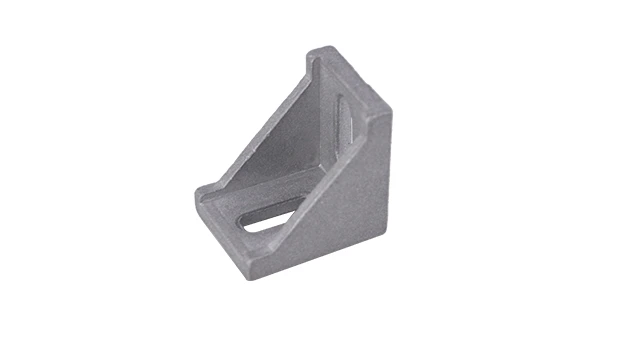
How a small but mighty component is transforming precision and efficiency on the factory floor
The Hidden Hero of Automotive Assembly Lines
Walk into any automotive manufacturing plant, and your eyes are immediately drawn to the big players: the robotic arms whirring with precision, the conveyor belts snaking through the facility, the workers in crisp uniforms huddled over half-assembled car frames. But if you look closer—past the flashy machinery and the hum of production—you'll notice something quieter, yet infinitely more critical: the fixtures. These unassuming tools, often custom-built for specific tasks, are the unsung heroes holding the entire assembly process together.
Imagine trying to assemble a car door hinge without a fixture to hold the parts steady. Or aligning a dashboard frame with the chassis while balancing it in mid-air. It sounds chaotic, right? That's because automotive assembly isn't just about speed—it's about microscopic precision. A misalignment of just a few millimeters can lead to a door that doesn't close properly, a dashboard that rattles, or worse, a safety hazard. Custom fixtures eliminate that chaos by stabilizing parts, guiding tools, and ensuring every component fits exactly where it should, every single time.
But not all fixtures are created equal. In an industry where (vehicle models) change yearly, production lines reconfigure overnight, and efficiency is measured in seconds, the "one-size-fits-all" fixture is a relic of the past. Today's manufacturers need fixtures that are durable enough to withstand 24/7 use, flexible enough to adapt to new parts, and lightweight enough to move when production needs shift. Enter the Gusset Alp 3030—a small but revolutionary component that's redefining what custom fixtures can do.
What Even Is a Gusset Alp 3030?
Let's start with the basics. If you're not deep in the world of manufacturing hardware, terms like "gusset" or "aluminum profile" might sound like jargon. But break it down, and it's surprisingly simple. A gusset is a support bracket, typically triangular, designed to strengthen connections between two parts—think of it as the "cornerstone" of a structure. The "Alp 3030" refers to its size and material: it's part of the 3030 aluminum profile family, meaning it's built to work with standard 30mm x 30mm aluminum extrusion profiles—the same lightweight, modular rails you'll find in everything from workbenches to material racks.
So, the Gusset Alp 3030 is a specialized bracket that bolts onto 3030 aluminum profiles, reinforcing joints and adding stability to custom fixtures. But why does that matter for automotive assembly? Because when you're building a fixture to hold a 50-pound engine component or align a delicate sensor array, the strength of the connections isn't just important—it's everything. A weak joint can lead to wobbling parts, inaccurate measurements, or even tool failure, bringing production to a grinding halt.
Traditional fixtures often rely on heavy steel brackets or welded joints. They're strong, sure, but they're also rigid. If a new vehicle model requires a slightly wider fixture, you can't just "adjust" a welded steel bracket—you have to build a whole new one. Aluminum profiles, on the other hand, are modular. They connect with bolts and brackets (like the Gusset Alp 3030), so you can disassemble, reconfigure, and reuse them. It's like building with high-tech Legos, but for grown-ups who make cars.

Why Aluminum Profiles Are Taking Over the Factory Floor
To understand the Gusset Alp 3030's role, we first need to talk about its partner in crime: the aluminum profile. For decades, steel was the go-to material for industrial fixtures. It's strong, durable, and cheap—but it's also heavy, prone to rust, and a nightmare to modify. Then aluminum extrusion profiles arrived, and everything changed.
Aluminum profiles are lightweight (about 1/3 the weight of steel), which makes fixtures easier to move and reposition. They're corrosion-resistant, so they hold up in the dusty, sometimes humid environment of a factory. And most importantly, they're modular. The T-slots running along their length let you attach brackets, shelves, or tools anywhere—no drilling or welding required. Need to add a sensor mount to a workbench? Slide a bolt into the T-slot, tighten, and you're done. Want to shorten a material rack? Loosen the brackets, cut the profile (with a standard saw), and reassemble. It's that simple.
But even the best aluminum profile needs strong connections. That's where the Gusset Alp 3030 comes in. When you connect two aluminum profiles at a 90-degree angle—say, building the frame of a workbench—the joint is only as strong as the brackets holding it. A basic corner bracket might work for light-duty tasks, but in automotive assembly, where fixtures endure constant vibration and heavy loads, you need something beefier. The Gusset Alp 3030 adds a diagonal support to that joint, distributing weight evenly and preventing the profiles from flexing or bending over time.
Think of it like building a bookshelf. If you just screw the sides to the top and bottom, it might hold a few paperbacks, but load it with encyclopedias, and the corners will start to bow. Add a diagonal brace (a gusset), and suddenly it can handle the weight. Now, replace that bookshelf with a fixture holding a car's suspension component, and you see why the Gusset Alp 3030 isn't just a "nice-to-have"—it's a necessity.

From Chaos to Lean: How Gusset Alp 3030 Supports Lean Systems
Automotive manufacturing isn't just about building cars—it's about building cars efficiently . That's where lean systems come in. Lean manufacturing, with its focus on reducing waste, streamlining workflows, and continuous improvement, has become the gold standard for modern factories. And custom fixtures, built with components like the Gusset Alp 3030, are the backbone of that lean philosophy.
Here's how it works: In a lean system, every tool, every workbench, every material rack should serve a specific purpose—and if it doesn't, it's waste. Traditional fixtures, often heavy and fixed in place, are the opposite of lean. They take up valuable floor space, can't adapt to new tasks, and end up collecting dust when production needs change. But fixtures built with aluminum profiles and Gusset Alp 3030 brackets? They're lean by design.
Take, for example, a workbench used to assemble car door handles. Six months later, the factory switches to a new door design with a different handle shape. A traditional wooden or steel workbench would need to be replaced entirely. But with an aluminum profile workbench, you can simply loosen the Gusset Alp 3030 brackets, reconfigure the frame, add new tool mounts, and have a brand-new fixture in an hour. No waste, no downtime, no extra cost.
Or consider material flow. In a lean system, parts should move smoothly from one workstation to the next, with minimal handling. Roller tracks, which use gravity or gentle inclines to slide parts along, are a key tool for this. But roller tracks need sturdy frames to support the weight of parts (like engine blocks or transmission housings). Again, the Gusset Alp 3030 plays a role here. By reinforcing the joints of the roller track's aluminum frame, it ensures the track stays level and stable, preventing jams or misaligned parts that would slow down production.
Waste in manufacturing isn't just about physical materials—it's about time. A worker who spends 10 minutes adjusting a wobbly fixture, or searching for a tool that doesn't have a dedicated mount, is wasting time that could be spent assembling cars. Gusset Alp 3030 fixtures eliminate that waste by keeping tools organized, parts stable, and workflows predictable. When every fixture is built to last, easy to adjust, and tailored to the task, workers can focus on what they do best: building high-quality vehicles.
Beyond the Basics: Real-World Applications of Gusset Alp 3030 Fixtures
Enough theory—let's talk about how the Gusset Alp 3030 actually gets used on the factory floor. Here are three common scenarios where this small bracket makes a big difference:
1. Precision Workbenches for Component Assembly
Workbenches are the heart of any assembly station, and in automotive manufacturing, they need to do more than just hold tools. They need to position parts at the perfect height and angle for workers, integrate with power tools, and sometimes even include built-in scales or sensors for quality checks. A typical workbench frame, built with 3030 aluminum profiles, uses Gusset Alp 3030 brackets at every corner to ensure stability. Without those gussets, the bench might wobble when a worker tightens a bolt, leading to imprecise torque application or even tool slippage. With gussets, the bench stays rock-solid, even during heavy use.
2. Heavy-Duty Material Racks
Cars are made of heavy parts—steel frames, aluminum engine blocks, glass windshields. Storing these parts safely requires racks that can handle hundreds of pounds without bending. Material racks built with aluminum profiles and Gusset Alp 3030 brackets are up to the task. The gussets reinforce the vertical posts where they meet the horizontal shelves, preventing the shelves from sagging under the weight of parts. This not only extends the life of the rack but also reduces the risk of parts falling and causing injuries or damage.
3. Custom Jigs for Welding and Painting
Welding car frames or painting body panels requires parts to be held in exact positions. A jig is a fixture that locks parts into place during these processes, ensuring consistency. For example, a welding jig for a car's rear axle needs to hold the axle housing, control arms, and mounting brackets in perfect alignment while the welder works. The Gusset Alp 3030 reinforces the jig's frame, preventing it from warping under the heat of the weld or the pressure of clamping. This ensures every axle comes out identical, reducing rework and improving quality control.
Traditional Fixtures vs. Gusset Alp 3030-Based Fixtures: A Head-to-Head Comparison
Still not convinced that the Gusset Alp 3030 is worth the investment? Let's put it to the test. Below is a comparison of traditional steel fixtures and modern aluminum profile fixtures built with Gusset Alp 3030 brackets. The results might surprise you.
| Feature | Traditional Steel Fixtures | Gusset Alp 3030 Aluminum Profile Fixtures |
|---|---|---|
| Weight | Heavy (50-200 lbs for a typical workbench) | Lightweight (15-50 lbs for the same workbench) |
| Assembly Time | 4-8 hours (requires welding or drilling) | 1-2 hours (bolt-together with T-slot fasteners) |
| Flexibility | Fixed design; cannot be modified without cutting/welding | Modular; reconfigurable in minutes with basic tools |
| Durability | Prone to rust; welds can crack under stress | Corrosion-resistant; Gusset Alp 3030 prevents joint failure |
| Cost Over Time | High (needs replacement every 1-2 years for new models) | Low (reusable for multiple models; only new brackets needed) |
| Safety | Heavy, fixed position increases injury risk during reconfiguration | Lightweight and mobile; reduces strain on workers |
The data speaks for itself. While traditional steel fixtures might seem cheaper upfront, their lack of flexibility and high replacement costs make them a poor long-term investment. Gusset Alp 3030-based fixtures, on the other hand, pay for themselves in reduced downtime, lower maintenance, and adaptability to changing production needs.
Case Study: How a Mid-Size Auto Parts Manufacturer Cut Costs by 35% with Gusset Alp 3030
Let's take a look at a real-world example. ABC Automotive Components, a manufacturer of brake systems for passenger cars, was struggling with inefficiency. Their production line relied on 10-year-old steel fixtures that were heavy, hard to adjust, and prone to rust. When a new client required a custom brake caliper design, ABC's team spent 2 weeks building new steel fixtures—only to find they didn't fit the updated part design a month later. Rework cost them $15,000 and delayed delivery.
Frustrated, ABC turned to aluminum profile fixtures with Gusset Alp 3030 brackets. They replaced 80% of their steel fixtures with modular workbenches and material racks. The results? Assembly time for brake calipers dropped by 20%, rework decreased by 45%, and when the next part design came in, the team reconfigured the fixtures in 2 hours instead of 2 weeks. Over the first year, ABC saved $85,000 in labor and material costs—all thanks to the flexibility and durability of Gusset Alp 3030-based fixtures.
The Future of Automotive Fixtures: What's Next for Gusset Alp 3030?
As automotive manufacturing evolves—with electric vehicles, autonomous driving, and Industry 4.0 technologies—so too will the demand for smarter, more adaptable fixtures. And the Gusset Alp 3030 is poised to play a key role in that future.
One trend gaining traction is "smart fixtures"—fixtures embedded with sensors that monitor part alignment, tool usage, or even worker ergonomics. For example, a workbench with built-in pressure sensors could alert a supervisor if a part is placed incorrectly, preventing errors before they happen. Aluminum profiles, with their T-slots, make it easy to integrate these sensors—no drilling or welding required. And the Gusset Alp 3030 ensures the fixture remains stable enough to support the added electronics without interference.
Another trend is sustainability. As manufacturers aim to reduce their carbon footprints, aluminum's recyclability becomes a major advantage. Unlike steel, which requires high energy to recycle, aluminum can be melted down and reused with minimal environmental impact. Gusset Alp 3030 brackets, made from recycled aluminum, align with this goal, letting factories build fixtures that are both efficient and eco-friendly.
Finally, customization will only become more important. With consumers demanding personalized vehicles (different colors, features, even body styles), factories need fixtures that can switch between tasks in minutes. The modularity of Gusset Alp 3030-based fixtures makes this possible, turning rigid production lines into flexible "factories of one" that can build custom cars without sacrificing speed or quality.
Why Every Automotive Manufacturer Needs Gusset Alp 3030 in Their Toolkit
At the end of the day, automotive manufacturing is a game of margins. Every second saved, every dollar cut, every error prevented adds up to a more competitive, profitable business. Custom fixtures built with Gusset Alp 3030 brackets aren't just tools—they're investments in that margin.
They're investments in precision: ensuring every part fits exactly as designed, reducing rework and warranty claims. They're investments in flexibility: letting factories adapt to new models, new technologies, and new customer demands without starting from scratch. They're investments in safety: keeping workers and parts secure, reducing injuries and downtime. And they're investments in the future: building a production line that can grow and evolve with the industry.
So the next time you walk through an automotive plant, take a moment to look beyond the robots and conveyor belts. Look at the fixtures—the workbenches, the material racks, the jigs. Chances are, if they're built with aluminum profiles and Gusset Alp 3030 brackets, you're looking at a factory that's not just keeping up with the times, but leading the way.
Because in automotive manufacturing, the difference between good and great often comes down to the smallest components. And the Gusset Alp 3030? It's proof that even the smallest components can make the biggest impact.