- Company Articles
- Products and Technology
- Application Cases
- Automotive Industry Uses: Gusset Alp 3030 in Assembly Line Fixtures

Automotive Industry Uses: Gusset Alp 3030 in Assembly Line Fixtures
Related Product
Gusset ALP 3030
The 3030 bracket/Gusset is an external fastening method that creates a 90 degree connection. 3030 means this size is used for 30 series aluminum profile with a quick connection by bolt and nut.
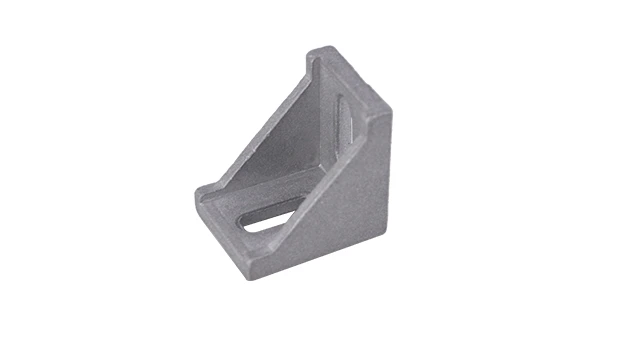
The Unsung Hero in the Heart of Car Manufacturing
Walk into any automotive manufacturing plant, and you'll be hit by a symphony of sounds: the rhythmic clink of metal, the low hum of conveyor belts, and the focused chatter of workers piecing together the next generation of vehicles. Everywhere you look, precision is king. A single misaligned part can throw off an entire assembly, delaying production and compromising quality. In this high-stakes environment, it's easy to focus on the "big players"—robotic arms, advanced welding machines, or high-tech sensors. But today, we're shining a light on a smaller, quieter component that plays a critical role in keeping the lines moving: the Gusset Alp 3030.
You might not recognize the name, but if you've ever stood near an assembly line workbench, leaned on a material rack, or watched parts glide along a roller track, chances are you've seen (or at least felt the effects of) a Gusset Alp 3030. This unassuming aluminum profile accessory is the backbone of stability in countless fixtures, quietly reinforcing connections, reducing vibration, and ensuring that the structures holding car parts together stay strong—even when production speeds ramp up and deadlines loom.
Why Fixtures Are the Backbone of Automotive Assembly Lines
Before diving into the specifics of Gusset Alp 3030, let's take a step back and talk about why assembly line fixtures matter in the first place. Imagine trying to assemble a car door: you need to attach hinges, window regulators, wiring harnesses, and weatherstripping—all with millimeter-level precision. If the door isn't held steady, even by a fraction of an inch, the hinges won't align, the window might jam, or the seal could leak. That's where fixtures come in.
Fixtures are specialized tools or structures designed to hold, support, or position parts during assembly. They're the reason workers can focus on installing components instead of worrying about keeping parts stable. From workbenches where technicians assemble dashboards to material racks that store heavy engine blocks, fixtures are everywhere in automotive plants. And here's the thing: a fixture is only as good as its weakest link. If the frame of a workbench wobbles, or a material rack bends under the weight of parts, the entire assembly process grinds to a halt.
This is where reinforcement components like gussets enter the picture. Gussets are triangular or angular pieces of material used to strengthen joints between two structural members—think of them as the "glue" that holds a fixture's frame together. In automotive manufacturing, where fixtures are subjected to constant vibration, heavy loads, and frequent adjustments (thanks to the need to switch between car models), a reliable gusset isn't just a nice-to-have; it's a necessity.

Meet Gusset Alp 3030: What It Is and Why It Stands Out
So, what exactly is Gusset Alp 3030? At its core, it's a type of aluminum profile accessory specifically designed to work with 3030 aluminum profiles—a common structural component in lean manufacturing systems. Made from high-grade aluminum extrusion (a process that shapes aluminum into consistent, strong profiles), Gusset Alp 3030 is engineered to reinforce right-angle joints between 30mm x 30mm aluminum profiles. Its compact, angular design allows it to fit snugly at the corners of frames, adding rigidity without adding unnecessary bulk.
Let's break down the "3030" in its name: it refers to the size of the aluminum profiles it pairs with. 3030 aluminum profiles are widely used in industrial settings because they strike a perfect balance between strength and versatility—they're sturdy enough to support heavy loads but lightweight enough to be easily reconfigured (a key feature in today's fast-paced, lean manufacturing environments). Gusset Alp 3030 is purpose-built for these profiles, with pre-drilled holes that align with the T-slots on 3030 aluminum, making installation a breeze.
But what really sets Gusset Alp 3030 apart from other gussets (like steel or plastic alternatives) is its material: aluminum. Aluminum brings a host of benefits to the table that are tailor-made for automotive assembly lines:
- Lightweight yet surprisingly strong: Aluminum is about one-third the weight of steel, which means fixtures reinforced with Gusset Alp 3030 are easier to move, adjust, or reconfigure—critical for plants that need to switch between producing sedans, SUVs, and electric vehicles on the same line.
- Corrosion-resistant: Automotive plants are tough environments. Oils, coolants, and even humidity can take a toll on metal components. Aluminum's natural resistance to rust and corrosion means Gusset Alp 3030 lasts longer, reducing the need for frequent replacements.
- Cost-effective in the long run: While aluminum gussets might have a slightly higher upfront cost than plastic alternatives, their durability and low maintenance needs make them a smarter investment. A single Gusset Alp 3030 can outlast multiple plastic gussets, saving plants money on replacements and downtime.

How Gusset Alp 3030 Powers Key Assembly Line Fixtures
Now that we know what Gusset Alp 3030 is, let's look at how it's actually used in automotive assembly lines. From workbenches to material racks, this small component plays a big role in keeping critical fixtures stable and reliable.
1. Workbenches: The Technician's Second Home
Walk through any automotive plant, and you'll find workbenches scattered across the floor—each one a hub of activity where technicians assemble everything from steering wheels to engine control units. These workbenches need to be rock-solid: a wobbly surface could lead to misaligned parts, which in turn leads to faulty assemblies and costly rework.
Gusset Alp 3030 is often used to reinforce the corners of workbench frames. For example, a typical aluminum workbench might consist of 3030 aluminum profiles forming the legs, front/back rails, and side rails. Without reinforcement, the joints where the legs meet the rails can loosen over time, especially when technicians lean on the bench or set heavy tools down. By adding Gusset Alp 3030 at these joints, the bench gains extra rigidity, ensuring it stays stable even during long shifts.
Take the "Workbench E (Single Deck-Without Caster)" from many lean system suppliers—a popular choice for automotive plants. Its frame, built from 3030 aluminum profiles, relies on Gusset Alp 3030 at each corner to support the weight of the deck (which might hold 50+ pounds of tools and parts) and resist the constant movement of workers leaning, reaching, and placing items. Without these gussets, the bench might flex or twist, making precise assembly nearly impossible.
2. Material Racks: Storing Heavy Parts Safely
Automotive manufacturing involves moving and storing a lot of heavy parts—engine blocks, transmissions, suspension components, to name a few. Material racks, like the "Material Rack B (3 Row and 3 Floor)" commonly used in plants, need to handle these loads without bending or collapsing. Again, Gusset Alp 3030 steps in to reinforce the structure.
Material Rack B typically features vertical 3030 aluminum posts connected by horizontal rails that support the shelves. The joints between the posts and rails are under constant stress, especially when a shelf is fully loaded with 200+ pound engine parts. Gusset Alp 3030 is installed at these joints to distribute the weight evenly across the frame, preventing the rails from pulling away from the posts. This not only keeps the rack stable but also extends its lifespan—critical for plants looking to reduce waste and follow lean principles.
3. Roller Tracks: Keeping Parts Flowing Smoothly
Roller tracks are the arteries of automotive assembly lines, carrying parts from one station to the next. Whether it's a plastic roller track guide rail (yellow or grey, depending on the plant's color-coding) or a steel roller track, the frames supporting these tracks need to be perfectly straight and stable. Even a slight bend can cause parts to jam, slowing down production.
Many roller tracks are mounted on frames built from 3030 aluminum profiles. Gusset Alp 3030 reinforces the joints of these frames, ensuring they don't warp under the constant vibration of rolling parts. For example, when a roller track is used to move car doors from the painting station to the assembly station, the frame must stay rigid to keep the track level. Gusset Alp 3030 at the corners of the frame prevents sagging, ensuring doors glide smoothly without getting stuck.
Real-World Impact: How One Plant Benefited from Gusset Alp 3030
A mid-sized automotive supplier in Michigan recently shared their experience with Gusset Alp 3030. Previously, they used steel gussets on their material racks and workbenches, but they were facing two major issues: the steel gussets added extra weight, making it hard to reconfigure racks when switching between truck and SUV parts, and they were prone to rust in the plant's humid environment (thanks to the steam from paint booths). After switching to Gusset Alp 3030, they noticed three immediate changes: racks were easier to move (reducing setup time by 20%), rust-related failures dropped by 90%, and workers reported less fatigue when adjusting fixtures. "It's the little things," one plant manager said. "We didn't realize how much time we were wasting fixing rusted gussets until we switched to aluminum. Now, we barely think about them—and that's a good thing."
Gusset Alp 3030 vs. the Competition: A Clear Winner for Automotive
To truly appreciate Gusset Alp 3030, it helps to see how it stacks up against other common gusset materials. Let's compare it to steel gussets (the traditional choice) and plastic gussets (a cheaper alternative) across key metrics that matter in automotive manufacturing:
| Metric | Gusset Alp 3030 (Aluminum) | Steel Gussets | Plastic Gussets |
|---|---|---|---|
| Weight | Lightweight (1/3 the weight of steel) | Heavy (adds bulk to fixtures) | Lightest, but less durable |
| Strength | High strength-to-weight ratio; ideal for most automotive loads | Very strong, but overkill for many applications | Weak; prone to cracking under heavy loads |
| Corrosion Resistance | Excellent (resists rust from oils, humidity, and coolants) | Poor (requires painting/coating; rusts easily in damp environments) | Good, but degrades in high temperatures |
| Flexibility/Reusability | Easy to install, remove, and reuse on new fixtures | Hard to adjust; often requires welding | Easy to install, but not reusable (prone to breaking when removed) |
| Cost (Long-Term) | Moderate upfront cost, but low maintenance and long lifespan | Low upfront cost, but high maintenance (rust repairs, replacement) | Low upfront cost, but frequent replacement needed |
As the table shows, Gusset Alp 3030 hits the sweet spot for automotive plants: it's strong enough to handle heavy loads, lightweight enough to support lean manufacturing principles, and durable enough to stand up to the harsh factory environment. While steel might be stronger, its weight and rust issues make it impractical for modern, flexible plants. Plastic, on the other hand, is too weak for the demands of automotive assembly.
The Future of Automotive Fixtures: Why Gusset Alp 3030 Will Keep Leading
The automotive industry is changing fast. Electric vehicles, autonomous driving technology, and the rise of "build-to-order" models are pushing plants to become more flexible than ever. Factories that once produced a single car model for years now need to switch between sedans, trucks, and EVs on the same line—sometimes in the same day. This shift toward agility is why lean manufacturing systems (keyword: lean system) are becoming the norm, and why components like Gusset Alp 3030 are more important than ever.
Aluminum profiles and their accessories (like Gusset Alp 3030) are the building blocks of these lean systems. They're modular, meaning plants can quickly reconfigure fixtures without having to weld or fabricate new parts. For example, if a plant needs to adjust a workbench to accommodate a larger EV battery pack, they can simply loosen the bolts holding the Gusset Alp 3030, reposition the 3030 profiles, and retighten—no special tools or downtime required.
Additionally, as automotive plants strive to reduce their environmental footprint, aluminum's recyclability is a major plus. Unlike steel (which requires significant energy to recycle) or plastic (which often ends up in landfills), aluminum can be recycled repeatedly without losing strength. This aligns with the industry's push toward sustainability, making Gusset Alp 3030 not just a practical choice, but an eco-friendly one too.
Final Thoughts: Small Part, Big Impact
At the end of the day, Gusset Alp 3030 might not be the most glamorous component in an automotive plant. It doesn't have flashing lights or high-tech sensors, and it won't make headlines in trade magazines. But for the workers on the floor, the plant managers tracking production metrics, and the customers driving cars that rely on precision assembly, it's an unsung hero.
In a world where every second counts and every part matters, Gusset Alp 3030 delivers the stability, durability, and flexibility that automotive assembly lines need to thrive. It's a testament to the idea that great things often come in small packages—and that even the most unassuming components can play a starring role in building the cars of tomorrow.
So, the next time you see a car on the road, take a moment to appreciate the thousands of small parts that went into making it—including the Gusset Alp 3030, hard at work behind the scenes.