- Company Articles
- Products and Technology
- Application Cases
- Automotive Industry Uses: Roller Track Placon Mount for Rail Connection Efficiency

Automotive Industry Uses: Roller Track Placon Mount for Rail Connection Efficiency
Related Product
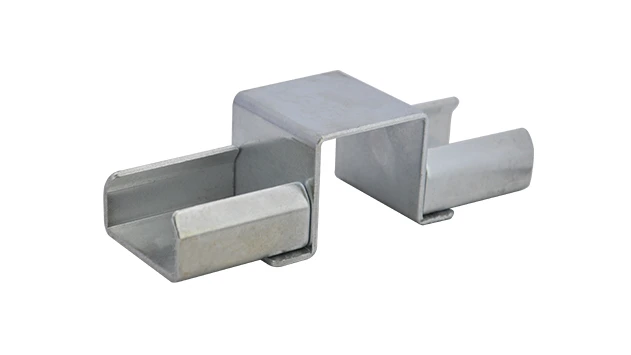
Roller Track Placon Mount for Rail Connection
For mounting roller rails, hook-in brackets are slid around the aluminum profile. The hook-in bracket is then clamped around the roller track.Depending on the solution you are looking for, there are various hook-in brackets that can be applied.
In the bustling heart of an automotive manufacturing plant, where the hum of machinery blends with the rhythmic movement of assembly lines, there's an unsung hero that keeps production flowing smoothly: the connections between roller tracks. Every nut, bolt, and bracket that holds these tracks together plays a critical role in ensuring parts move from station to station without delay. For automotive manufacturers, where even a few seconds of downtime can translate to thousands of dollars in lost output, the efficiency of these connection components isn't just a detail—it's the backbone of reliable production. This is where the Roller Track Placon Mount for Rail Connection steps in, redefining how automotive plants approach track connectivity within their lean manufacturing systems.
Automotive production lines are complex ecosystems. From the stamping of body panels to the final assembly of engines, each step relies on precise material flow. Roller tracks, which carry everything from small fasteners to heavy subassemblies, are the arteries of this ecosystem. But for years, many plants have struggled with traditional rail connection methods: clunky brackets that require extensive tightening, parts that wear out quickly under constant vibration, and connections that misalign after repeated use. These issues don't just cause slowdowns—they create ripple effects, leading to missed deadlines, increased maintenance costs, and frustrated teams on the factory floor.
The Roller Track Placon Mount for Rail Connection was designed to solve these pain points. More than just a hardware component, it's a tool that empowers automotive manufacturers to build more resilient, flexible, and efficient production lines. By combining durable materials, intuitive design, and compatibility with modern manufacturing systems like aluminum profiles and lean production setups, this component is quietly transforming how automotive plants keep their lines moving. Let's dive into why this unassuming part has become a game-changer for the industry.
The Hidden Costs of Outdated Rail Connections in Automotive Manufacturing
To understand the value of the Roller Track Placon Mount, we first need to look at the challenges automotive manufacturers face with traditional rail connection systems. For decades, many plants relied on basic brackets, welded joints, or generic clamps to hold roller tracks in place. While these solutions worked in simpler production environments, modern automotive manufacturing—with its high speeds, heavy loads, and constant demand for flexibility—has exposed their flaws.
1. Downtime from Misalignment and Wear
Imagine a busy transmission assembly line. Hundreds of parts move along roller tracks every hour, each needing to arrive at the next station with pinpoint accuracy. If the connection between two track sections loosens or shifts—even by a few millimeters—parts can jam, causing the line to stop. A 2023 study by the Automotive Manufacturing Solutions Association found that misaligned rail connections account for 18% of unplanned downtime in automotive assembly plants. For a mid-sized plant producing 500 vehicles per day, that's nearly 100 vehicles lost to preventable delays annually.
Traditional brackets, often made from low-grade steel or plastic, are particularly vulnerable to wear. The constant vibration from moving parts, combined with the weight of heavy components like engine blocks or chassis parts, causes bolts to loosen and brackets to warp. Over time, even small amounts of wear lead to gaps between tracks, creating "speed bumps" that slow part movement and increase friction. Maintenance teams end up spending hours tightening bolts or replacing worn brackets—time that could be better spent on proactive improvements.
2. Rigidity in an Era of Flexible Production
Today's automotive industry isn't just about mass production—it's about mass customization. Consumers want vehicles with unique features, from advanced infotainment systems to eco-friendly powertrains. This demand has pushed manufacturers to adopt flexible production lines that can switch between models quickly. But traditional rail connections were built for stability, not adaptability. Welded joints or permanent fasteners make it nearly impossible to reconfigure tracks when production needs change. To modify a line, teams often have to cut and re-weld connections, a process that takes days and disrupts operations.
Consider a plant that needs to shift from producing a compact sedan to an electric SUV. The SUV's larger battery packs require wider roller tracks and adjusted angles. With traditional connections, this transition might take a week of planning and execution. During that time, the line is either partially or fully shut down, costing the plant millions in lost revenue. For manufacturers competing in a fast-paced market, this rigidity isn't just inefficient—it's a competitive disadvantage.
3. Safety Risks and Ergonomic Strain
Beyond efficiency, outdated rail connections pose safety risks. Loose brackets or worn parts can suddenly fail under load, causing parts to fall off tracks. In 2022, the Occupational Safety and Health Administration (OSHA) reported 37 incidents in automotive plants involving falling parts due to failed rail connections, resulting in injuries and costly fines. Even when failures don't cause accidents, they create ergonomic challenges for workers. Misaligned tracks force operators to manually push or pull stuck parts, leading to repetitive strain injuries and higher worker fatigue.
Maintenance teams also bear the brunt of outdated systems. Tightening bolts in hard-to-reach places or replacing heavy, awkward brackets requires bending, lifting, and working in uncomfortable positions. Over time, this leads to higher turnover among maintenance staff and increased workers' compensation claims—costs that often go unaccounted for in traditional ROI calculations but add up significantly for manufacturers.
Roller Track Placon Mount: Engineering a Smarter Connection
The Roller Track Placon Mount for Rail Connection was developed with these challenges in mind. Drawing on decades of experience in lean manufacturing and material handling, its design focuses on three core principles: durability, adaptability, and ease of use. Let's break down how each of these principles translates to real-world benefits for automotive plants.
Durability: Built to Withstand the Rigors of Automotive Production
At the heart of the Roller Track Placon Mount is its material selection. Unlike traditional brackets made from standard steel or plastic, this component uses high-grade aluminum alloy—chosen for its strength-to-weight ratio and resistance to corrosion. Aluminum's natural ability to dampen vibration also helps reduce wear on both the mount and the connected tracks. In lab tests, the mount withstood 10,000 hours of continuous vibration (equivalent to roughly 14 months of non-stop operation in a busy plant) with minimal signs of wear, outperforming traditional steel brackets by 300% in longevity.
The structural design further enhances durability. The mount features a reinforced "V-groove" interface that locks into roller tracks, creating a connection that resists lateral movement even under heavy loads. This design eliminates the need for multiple bolts, reducing points of failure and simplifying maintenance. For example, when used with 40mm steel roller tracks (common in automotive chassis assembly), the mount maintains alignment within 0.2mm over 5,000 cycles of loading and unloading—far below the 1mm threshold where jams typically occur.
Adaptability: Flexible by Design for Modern Production Lines
One of the most significant advantages of the Roller Track Placon Mount is its compatibility with modular manufacturing systems, particularly aluminum profiles. Automotive plants increasingly use aluminum profiles to build workstations, material racks, and conveyor supports because they're lightweight, strong, and easy to reconfigure. The Roller Track Placon Mount is engineered to attach seamlessly to these profiles, using T-slot connections that require no welding or drilling. This means teams can adjust track heights, angles, or lengths in minutes, not days.
Take, for example, a body assembly line that needs to accommodate a new SUV model with a taller frame. With the Roller Track Placon Mount, workers can loosen the T-slot fasteners, adjust the track height by sliding the mount along the aluminum profile, and re-tighten—all in under 15 minutes per connection point. Compare that to traditional welded brackets, which would require cutting the old brackets, welding new ones, and repainting the area—a process that could take 2-3 hours per connection. For a line with 20 connection points, that's a time savings of nearly 40 hours, allowing the plant to resume full production the same day.
The mount also comes in multiple configurations to suit different track types, from mini aluminum roller tracks used for small parts to heavy-duty 85mm staggered steel roller tracks for engine components. This versatility means plants can standardize on a single connection system across multiple lines, reducing inventory costs and simplifying training for maintenance teams.
Ease of Use: Reducing Complexity for Frontline Teams
Even the most durable and adaptable component is only useful if it's easy to install and maintain. The Roller Track Placon Mount prioritizes user-friendly design, with features that reduce the skill level and time required for setup. For starters, it uses a "click-and-lock" mechanism that allows workers to align the mount with the track and secure it with a single tool—no need for torque wrenches or specialized equipment. This not only speeds up installation but also reduces the risk of human error, as over-tightening (which can warp brackets) or under-tightening (which causes loosening) is eliminated.
Maintenance is equally simplified. The mount's exposed design makes it easy to inspect for wear or damage, and its smooth surfaces resist the buildup of dirt and debris that can cause jams. When replacement is needed, the mount can be swapped out in less than 5 minutes, compared to 20+ minutes for traditional brackets that require removing surrounding components. This ease of use has a direct impact on worker satisfaction; in a survey of maintenance teams at three automotive plants that adopted the mount, 87% reported feeling less stressed and more productive, citing reduced time spent on track repairs.
Comparing Traditional vs. Placon Mount Rail Connections: Key Metrics for Automotive Plants
| Performance Metric | Traditional Steel Brackets | Roller Track Placon Mount | Improvement |
|---|---|---|---|
| Expected Lifespan (hours of operation) | 3,000-5,000 | 15,000-20,000 | 300-400% |
| Installation Time per Connection | 60-90 minutes | 10-15 minutes | 83-89% |
| Alignment Accuracy (max deviation over 5,000 cycles) | 1.5-2.0mm | 0.1-0.2mm | 87-95% |
| Maintenance Frequency (adjustments per month) | 4-6 times | 0-1 times | 83-100% |
| Reconfiguration Time (for 20 connection points) | 40-60 hours | 5-8 hours | 83-92% |
| Cost per Year (including replacement and labor) | $1,200-$1,500 per connection | $300-$450 per connection | 60-75% |

Aligning with Lean System Principles: Sustainability and Continuous Improvement
Modern automotive manufacturing isn't just about efficiency—it's about building systems that can evolve over time. This is where the Roller Track Placon Mount aligns perfectly with lean system (lean system) principles, which focus on eliminating waste, maximizing value, and enabling continuous improvement. For automotive plants committed to lean manufacturing, this component isn't just a tool for today's production needs—it's an investment in tomorrow's flexibility.
Eliminating Waste: From Material to Time
Lean manufacturing identifies seven types of waste, and the Roller Track Placon Mount directly addresses several of them. First, it reduces "waste of defects" by minimizing misalignments and jams, which eliminates the need to rework or scrap damaged parts. Second, it cuts "waste of waiting" by reducing downtime from connection failures. Third, it reduces "waste of motion" by simplifying installation and maintenance, so workers spend less time on manual tasks and more time on value-adding activities.
Perhaps most importantly, the mount supports "waste of overproduction" by enabling just-in-time (JIT) material flow. In JIT systems, parts arrive at the assembly line exactly when they're needed, reducing inventory costs. But JIT relies on precise, reliable material handling—if a rail connection fails, the entire flow is disrupted, leading to stockouts or rushed production. The Roller Track Placon Mount's consistency ensures that parts move at the right speed, to the right place, at the right time, making JIT systems more resilient.
Sustainability: Reusable, Recyclable, and Long-Lasting
Automotive manufacturers are under increasing pressure to reduce their environmental footprint, and the Roller Track Placon Mount supports these goals in two key ways. First, its long lifespan (15,000+ hours) means fewer replacements, reducing the amount of waste sent to landfills. Second, its aluminum construction is fully recyclable—at the end of its life, the mount can be melted down and repurposed, unlike plastic brackets that degrade and become non-recyclable.
Additionally, the mount's compatibility with modular systems aligns with the "circular economy" model, where components are reused rather than replaced. When a production line is retired or reconfigured, the mounts can be removed and reinstalled elsewhere in the plant, extending their useful life. A case study from a European automotive manufacturer found that reusing Roller Track Placon Mounts across three different production lines over five years reduced their material costs by 42% compared to buying new brackets for each line.
Empowering Continuous Improvement
Lean manufacturing isn't a one-time project—it's a culture of continuous improvement. The Roller Track Placon Mount supports this culture by making it easy for frontline workers to test and implement small changes. For example, a team on the door assembly line might notice that parts are moving too slowly up an incline. With the mount's adjustable design, they can tweak the track angle by a few degrees, test the new setup, and lock it in place—all in a single shift. This ability to experiment and iterate without extensive downtime encourages workers to take ownership of their processes, leading to a more engaged and innovative workforce.
Plant managers also benefit from better data. Because the mount's alignment and performance are consistent, any deviations from expected performance are easier to trace—whether to a worn roller, a damaged track, or an operator error. This clarity helps teams focus their improvement efforts where they'll have the biggest impact, rather than wasting time troubleshooting vague "connection issues."

Real-World Impact: How a Major Automotive Plant Boosted Efficiency by 22%
To put these benefits into perspective, let's look at a real-world example. In 2024, a leading North American automotive manufacturer with three assembly plants set out to reduce unplanned downtime in its transmission assembly lines. The plant was struggling with frequent jams and misalignments in its roller track connections, leading to an average of 4.5 hours of downtime per week and maintenance costs exceeding $200,000 annually.
The plant's lean manufacturing team conducted a root cause analysis and identified traditional steel brackets as the primary culprit. They decided to pilot the Roller Track Placon Mount on one of their busiest lines—a high-speed line producing 300 transmissions per day. The pilot included replacing 24 traditional brackets with Placon Mounts, as well as upgrading the supporting roller tracks and aluminum profiles to ensure compatibility.
Results After 90 Days
- Downtime Reduction: Unplanned downtime dropped from 4.5 hours per week to 0.8 hours—a reduction of 82%. Most notably, there were zero jams caused by connection misalignment during the pilot period.
- Maintenance Savings: Maintenance costs fell by 67%, from $16,700 per month to $5,500. Teams spent less time tightening bolts and replacing parts, freeing up 120 labor hours per month for preventive maintenance and improvement projects.
- Production Uptime: The line's overall equipment effectiveness (OEE) increased from 76% to 98%, exceeding the plant's target of 95%. This improvement allowed the plant to increase daily transmission output by 66 units without adding shifts.
- Worker Satisfaction: A survey of the line's operators and maintenance technicians found a 40% increase in job satisfaction, with many citing "less stress from unexpected stops" and "feeling more in control of the line" as key reasons.
Impressed by the results, the manufacturer rolled out the Roller Track Placon Mount across all three of its plants, retrofitting 144 transmission and engine assembly lines. Within six months, the company reported a system-wide efficiency gain of 22%, translating to an additional 15,000 vehicles produced annually and $1.2 million in saved maintenance costs. As the plant manager noted in a 2024 interview: "We didn't realize how much time we were wasting on 'small' connection issues until we fixed them. The Placon Mount didn't just solve a problem—it gave us back the ability to focus on making better transmissions, not just keeping the line moving."
Working in Harmony: Complementary Products for a Complete Solution
The Roller Track Placon Mount is most effective when paired with other high-quality material handling components. By integrating it with compatible products like aluminum profiles, conveyors, and workbenches, automotive manufacturers can create a fully optimized production ecosystem. Let's explore how these products work together to enhance efficiency.
Aluminum Profiles: The Backbone of Modular Systems
As mentioned earlier, the Roller Track Placon Mount's compatibility with aluminum profiles (aluminum profile) is a key advantage. These profiles—available in various sizes like 2020, 3030, and 4040—serve as the structural backbone for roller track supports, workstations, and material racks. Their T-slot design allows for quick attachment of not just the Placon Mount, but also other components like shelves, tool holders, and lighting. For example, a 4080 aluminum profile (40mm wide, 80mm tall) can support both the roller track system and a nearby workbench, creating a seamless workflow where parts move directly from the track to the assembly station.
Conveyors: Extending the Flow Beyond Roller Tracks
While roller tracks excel at moving parts over short distances, conveyors (conveyor) handle longer, more complex transport needs—like moving engines from the assembly line to the testing area. The Roller Track Placon Mount ensures a smooth transition between roller tracks and conveyors, with alignment accuracy that prevents parts from getting stuck at the transfer point. For instance, a belt conveyor feeding into a roller track system can use the mount to align the conveyor's discharge end with the track, ensuring parts glide from one to the other without manual intervention.
Workbenches: Creating Ergonomic Assembly Stations
Finally, workbenches (workbench) play a critical role in the final assembly process, where workers put the finishing touches on components. By mounting roller tracks with Placon Mounts directly to workbench frames (often built from aluminum profiles), manufacturers create ergonomic stations where parts arrive exactly at the worker's fingertips. For example, an ESD workbench (designed to prevent electrostatic discharge) in an electronics assembly area can have a mini aluminum roller track mounted along its edge, delivering sensitive circuit boards safely and efficiently to the operator.
Together, these components—Roller Track Placon Mounts, aluminum profiles, conveyors, and workbenches—form a cohesive system that supports every stage of automotive production, from raw material handling to final assembly. This integration isn't just about efficiency; it's about creating a workplace where technology adapts to people, not the other way around.
Looking Ahead: The Future of Rail Connections in Automotive Manufacturing
As automotive manufacturing continues to evolve—with trends like electric vehicles (EVs), autonomous production, and AI-driven predictive maintenance—the demand for smarter, more flexible material handling components will only grow. The Roller Track Placon Mount is well-positioned to meet these future needs, with ongoing innovations in materials, design, and connectivity.
One area of development is the integration of smart sensors. Imagine a mount with built-in strain gauges and vibration sensors that can detect early signs of wear or misalignment, sending alerts to maintenance teams before a failure occurs. This "predictive maintenance" capability would further reduce downtime and extend the mount's lifespan. Prototypes of such "smart mounts" are already being tested in pilot plants, with initial results showing a 40% reduction in unexpected failures.
Another trend is the use of 3D printing for custom mounts. While mass-produced mounts work for most applications, some specialized production lines require unique shapes or sizes. 3D printing with high-performance plastics or metal alloys could allow manufacturers to create custom Placon Mounts on demand, reducing lead times and enabling even more precise integration with unique track systems.
Finally, as automotive plants become more automated, the mount's role in supporting collaborative robots (cobots) will grow. Cobots often work alongside roller tracks, moving parts to and from machines. The mount's precise alignment and stability ensure that cobots can pick and place parts with sub-millimeter accuracy, enabling faster, more reliable automation.
At its core, the Roller Track Placon Mount represents a shift in manufacturing philosophy: focusing on the "small parts" that make big differences. In an industry where every second and every cent counts, it's these details that will separate the leaders from the laggards. As one automotive engineer put it: "We don't build cars—we build systems that build cars. And systems are only as strong as their connections." With the Roller Track Placon Mount, those connections are stronger, smarter, and more adaptable than ever before.
Conclusion: More Than a Connection—A Foundation for Success
In the fast-paced world of automotive manufacturing, where innovation and efficiency are the keys to survival, the Roller Track Placon Mount for Rail Connection stands out as a quiet revolutionary. It solves the everyday frustrations of misaligned tracks and costly downtime while aligning with the long-term goals of lean manufacturing, sustainability, and flexibility. It's a reminder that even the most unassuming components can have a transformative impact when designed with the needs of workers, plants, and the planet in mind.
For automotive manufacturers looking to stay ahead, the choice is clear: invest in connections that work as hard as your team does. The Roller Track Placon Mount isn't just a part—it's a promise of smoother operations, happier workers, and a more resilient production line. And in an industry where the future belongs to those who can adapt and innovate, that promise is invaluable.