- Company Articles
- Products and Technology
- Product knowledge
- Automotive Interior Components: Using Aluminum Honeycomb Panels for Lightweight Design

Automotive Interior Components: Using Aluminum Honeycomb Panels for Lightweight Design
Related Product
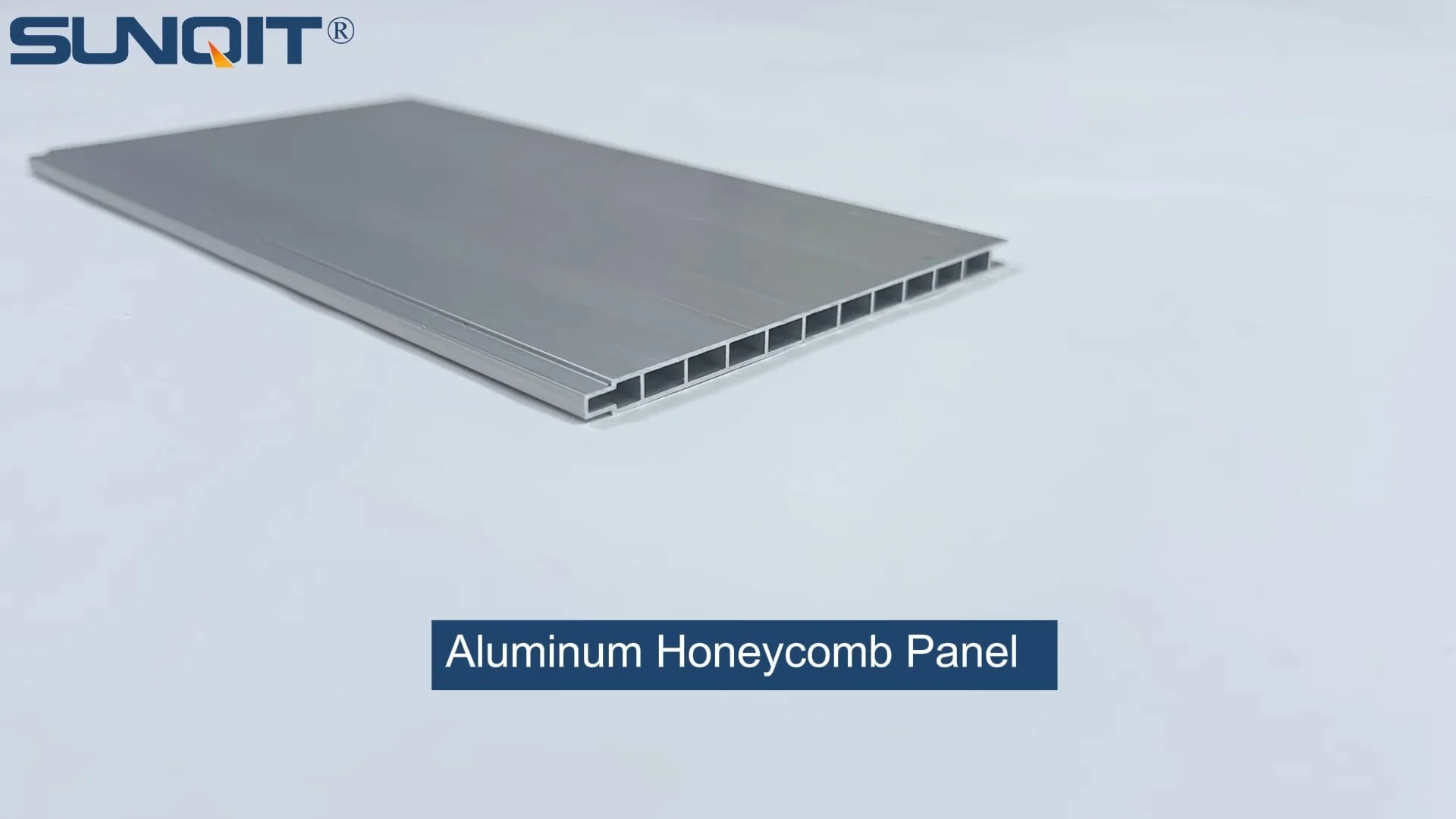
Aluminum Honeycomb Panel
Aluminum honeycomb panel used as table top, side wall, it is connected one pcs by one pcs from the side slot to make a full pieces.This panel width 105mm, 55mm, 35mm are optional for slection.
The automotive industry is in the midst of a quiet revolution—one that's not just about electric engines or self-driving technology, but about how cars are built from the inside out. As manufacturers race to meet stricter emissions regulations, boost electric vehicle (EV) range, and enhance overall performance, the focus has turned to a critical yet often overlooked area: interior components. Here's the truth: every kilogram matters. A lighter interior doesn't just improve fuel efficiency or extend battery life; it enhances handling, reduces wear on suspension systems, and even contributes to a quieter, more comfortable ride. Enter aluminum honeycomb panels—a material that's quietly reshaping what's possible in automotive interior design.
In this article, we'll explore how aluminum honeycomb panels are becoming the go-to choice for forward-thinking automakers, why they outperform traditional materials, and how they're integrated into everything from dashboards to door panels. We'll also dive into the role of aluminum extrusion profiles in their production, and how they align with lean system principles to streamline manufacturing. Whether you're an industry professional or simply curious about the future of car design, this is a deep dive into the lightweight innovation driving the next generation of vehicles.
The Need for Lightweight Interiors: Why Every Gram Counts
Let's start with the basics: why does interior weight matter so much? For decades, cars were built with a "bigger is better" mindset, with interiors packed with heavy materials like steel, dense plastics, and even wood. But as the industry shifts toward sustainability and efficiency, that mindset is obsolete. Consider this: for every 100 kg reduction in vehicle weight, a traditional gasoline-powered car can improve fuel efficiency by roughly 6-8%, while an EV can boost its range by 5-10%. For a mid-sized EV with a 300-mile range, that's an extra 15-30 miles per charge—no small feat in a market where range anxiety remains a top consumer concern.
But it's not just about efficiency. A lighter interior also translates to better performance. Lighter cars accelerate faster, brake more effectively, and handle more nimbly, as there's less mass to move, stop, or turn. For drivers, this means a more engaging, responsive ride. For manufacturers, it's a chance to differentiate their vehicles in a crowded market. Take Tesla, for example: the Model 3's interior uses lightweight materials extensively, contributing to its 0-60 mph time of just 3.1 seconds and a range of 333 miles. Every component, from the center console to the door panels, was reimagined to cut weight without sacrificing quality.
Regulations are another driving force. Governments worldwide are cracking down on carbon emissions, with the EU targeting a 55% reduction in CO2 emissions from new cars by 2030. For traditional automakers, this means rethinking every part of the vehicle—including the interior. Even luxury brands, once known for heavy, opulent interiors, are now prioritizing lightness. Bentley, for instance, has pledged to make its entire lineup electric by 2030, and part of that strategy involves swapping heavy wood and metal trims for advanced lightweight materials. The message is clear: lightweighting isn't optional anymore; it's a business imperative.
What Are Aluminum Honeycomb Panels? A Closer Look at the Material
At first glance, aluminum honeycomb panels might sound like something out of a sci-fi movie, but their design is surprisingly simple—and brilliantly effective. Imagine a sheet of material where the core isn't solid, but a grid of hexagonal cells, like a beehive, sandwiched between two thin aluminum face sheets. This structure is what gives the panels their unique properties: exceptional strength and rigidity, with almost no weight. It's the same principle that makes airplane wings strong enough to withstand turbulence while staying light enough to fly.
The magic lies in the honeycomb core. When pressure is applied—say, from a passenger leaning on a door panel or a heavy object placed on a trunk liner—the hexagonal cells distribute the force evenly across the entire panel. This means the panel can support significant weight without bending or breaking, even though the core itself is mostly air. The aluminum face sheets add additional strength and protect the core from damage, while also providing a smooth surface that can be painted, wrapped, or finished to match the car's interior (aesthetics).
But how are these panels made? The process starts with aluminum extrusion profiles—long, uniform pieces of aluminum shaped by forcing molten metal through a die. These profiles are often used to create the face sheets of the panels, as extrusion allows for precise control over thickness, texture, and strength. The honeycomb core is typically made by bonding thin aluminum strips into the hexagonal pattern, then expanding them to form the grid. Finally, the core is sandwiched between the extrusion-derived face sheets and bonded together using high-strength adhesives, creating a single, rigid panel. The result is a material that's up to 70% lighter than solid aluminum but just as strong.

Why Aluminum Honeycomb Panels Outperform Traditional Materials
To truly appreciate aluminum honeycomb panels, let's compare them to the materials they're replacing. For decades, automotive interiors relied on three main options: steel, solid plastic, and composite wood. Each has its drawbacks, and aluminum honeycomb panels address nearly all of them.
Strength vs. Weight: No Contest
Steel is strong, but it's heavy. A typical steel dashboard support beam might weigh 5-7 kg, while an aluminum honeycomb panel of the same size weighs just 1-2 kg—a reduction of 70-80%. Solid plastic is lighter than steel but lacks structural rigidity; over time, it can warp or crack under stress. Wood composites, often used in luxury cars, add weight and are prone to swelling in humid conditions. Aluminum honeycomb panels, by contrast, offer the best of both worlds: the strength of steel, the lightness of plastic, and the durability to withstand years of use.
Design Flexibility: Shaping the Future of Interiors
Automakers are increasingly prioritizing unique, customizable interiors to stand out. Traditional materials limit this creativity: steel is hard to mold into complex shapes, and plastic can only be formed into simple curves. Aluminum honeycomb panels, however, are highly malleable. During production, the honeycomb core can be shaped into contours, angles, and even 3D curves, allowing designers to create everything from sleek, minimalist dashboards to ergonomic door panels with integrated storage. This flexibility is a game-changer for brands like BMW, which uses honeycomb panels in its iX SUV's door panels to achieve a sculpted, futuristic look without adding weight.
Sustainability: A Greener Choice
In an industry under pressure to reduce its carbon footprint, sustainability matters. Aluminum is 100% recyclable, and recycling it uses just 5% of the energy required to produce new aluminum. This makes aluminum honeycomb panels a far greener option than plastic, which often ends up in landfills, or composite wood, which relies on deforestation. What's more, the lightweight nature of the panels reduces the car's overall energy consumption, further lowering its environmental impact over its lifetime. For brands like Ford, which has pledged to achieve carbon neutrality by 2050, this is a critical advantage.
Cost-Effectiveness: Long-Term Savings
It's true: aluminum honeycomb panels can cost more upfront than plastic or steel. But when you factor in long-term savings—reduced fuel costs for consumers, lower shipping costs for manufacturers, and less waste during production—the investment pays off. For example, a single EV with honeycomb panel door panels and a dashboard could save 10-15 kg in weight, translating to lower battery costs (since a smaller battery can achieve the same range) and higher profit margins for automakers. Over time, as production scales and manufacturing processes improve, the upfront cost is expected to drop even further, making the panels accessible to mainstream brands.
| Material | Weight (kg/m²) | Strength (MPa) | Recyclability | Design Flexibility |
|---|---|---|---|---|
| Steel (solid) | 7.8 | 250-500 | High | Low (hard to mold) |
| Solid Plastic | 1.2-1.5 | 30-80 | Low (often non-recyclable) | Medium (simple shapes only) |
| Composite Wood | 0.8-1.0 | 20-40 | Medium (depends on glue) | Low (prone to warping) |
| Aluminum Honeycomb Panel | 0.5-1.0 | 200-400 | High (100% recyclable) | High (complex shapes possible) |

Real-World Applications: Where Aluminum Honeycomb Panels Shine in Interiors
Now that we understand the "why," let's explore the "where." Aluminum honeycomb panels are versatile enough to be used in nearly every part of a car's interior, from structural components to decorative trim. Here are some of the most common applications:
Dashboard Substrates: The Backbone of the Interior
The dashboard is one of the largest and most visible interior components, and it's also one of the heaviest. Traditional dashboards use steel or dense plastic substrates (the underlying structure) to support gauges, airbags, and infotainment systems. By replacing these with aluminum honeycomb panels, automakers can reduce dashboard weight by 40-50%—often saving 3-5 kg per vehicle. For example, Mercedes-Benz uses honeycomb panels in the EQS electric sedan's dashboard, allowing for a sleeker, more spacious design while still meeting strict safety standards for airbag deployment.
Door Panels: Lightweight and Durable
Door panels are another prime candidate for honeycomb panels. They need to be strong enough to withstand impacts (from both inside and outside the car) and support features like armrests, speakers, and window controls—all while staying light. Aluminum honeycomb panels excel here: they're rigid enough to prevent rattling, lightweight enough to reduce door weight, and can be shaped to include storage pockets or integrated grab handles. Volvo, known for its focus on safety, uses honeycomb panels in the door panels of its XC40 Recharge EV, citing both weight savings and improved crash performance.
Seat Frames: Comfort Without the Bulk
Car seats are surprisingly heavy, thanks to their steel frames and dense padding. By using aluminum honeycomb panels in seat bases and backs, manufacturers can trim weight without sacrificing support. The panels' rigidity ensures the seat maintains its shape over time, while the lightweight design reduces strain on the seat adjusters and tracks. Toyota has experimented with honeycomb-based seat frames in its Prius hybrid, reporting a 15% reduction in seat weight and improved fuel efficiency as a result.
Trunk Liners and Cargo Floors: Strength for Heavy Loads
Trunk liners need to handle heavy luggage, groceries, and other cargo without bending or tearing. Solid plastic liners are durable but heavy; aluminum honeycomb panels offer the same durability at a fraction of the weight. For example, Audi uses honeycomb-based cargo floors in the Q4 e-tron, allowing the trunk to support up to 500 kg of weight while adding just 2 kg to the vehicle's total mass. This not only improves efficiency but also makes loading and unloading easier, as the lighter floor is less prone to sagging under heavy loads.
The Role of Aluminum Extrusion Profiles in Panel Production
We've mentioned aluminum extrusion profiles a few times, but their role in making honeycomb panels deserves a closer look. Extrusion is the process of creating long, uniform shapes by pushing heated aluminum billets through a die—a custom-made tool that shapes the metal into the desired form. This process is ideal for producing the face sheets of honeycomb panels because it allows for precise control over thickness, surface texture, and mechanical properties.
For example, to create a dashboard panel, the face sheet might need to be thin (0.5-1 mm) but strong enough to support airbag deployment. Extrusion can achieve this by adjusting the die design to create a sheet with varying thickness—thicker in areas that need more strength, thinner in others to save weight. The extrusion process also allows for integrated features, like grooves for wiring or tabs for attaching trim, which reduces the need for additional components and simplifies assembly.
Another advantage of extrusion is scalability. Once a die is created, it can produce thousands of identical profiles, ensuring consistency across panels. This is critical for automotive manufacturing, where parts must meet strict quality standards. Extruded aluminum profiles also have excellent surface finish, which means they require minimal post-processing before being bonded to the honeycomb core. This not only saves time but also reduces waste, aligning with lean system principles that prioritize efficiency and cost reduction.
In recent years, advancements in extrusion technology have expanded the possibilities even further. New die designs allow for more complex shapes, including curved or tapered profiles, which are perfect for aerodynamic or ergonomic interior components. Some manufacturers are even experimenting with "multi-cavity" dies, which produce multiple profiles in a single extrusion, cutting production time and energy use. All of these innovations make aluminum extrusion profiles an indispensable part of the aluminum honeycomb panel production process.
Aligning with Lean System Principles: Streamlining Manufacturing
The automotive industry has long embraced lean system principles—strategies focused on eliminating waste, improving efficiency, and delivering value to customers. Aluminum honeycomb panels fit seamlessly into this framework, offering benefits at every stage of the manufacturing process.
First, honeycomb panels reduce material waste. Unlike solid materials, where excess is often cut away and discarded, the honeycomb core uses just enough aluminum to maintain strength, minimizing scrap. The use of aluminum extrusion profiles further reduces waste, as extrusion produces minimal offcuts compared to other manufacturing methods like machining. For example, a typical extrusion process generates less than 5% scrap, compared to 20-30% for machining solid aluminum sheets.
Second, honeycomb panels simplify assembly. Their lightweight design makes them easier to handle on the production line, reducing the risk of worker injury and speeding up installation. They also often integrate multiple functions into a single part—for instance, a door panel that combines structural support, sound insulation, and aesthetic trim—eliminating the need for separate components and reducing assembly steps. This aligns with the lean principle of "single-piece flow," where parts move through the production line without unnecessary delays.
Third, honeycomb panels enable modular design. Automakers can create a single panel design that's adapted for multiple vehicle models, reducing the need for custom tooling and simplifying inventory management. For example, a honeycomb dashboard substrate might be used in both a compact car and an SUV, with only minor adjustments to size or finish. This reduces lead times and lowers costs, as manufacturers can produce larger batches of a single panel rather than small runs of custom parts.
Finally, the recyclability of aluminum honeycomb panels supports the lean principle of "sustainability as a form of waste reduction." At the end of a vehicle's life, the panels can be recycled into new extrusion profiles or other aluminum products, closing the loop and reducing reliance on raw materials. This not only benefits the environment but also creates cost savings, as recycled aluminum is cheaper than virgin material.
Challenges and the Road Ahead: Innovations in Aluminum Honeycomb Technology
While aluminum honeycomb panels offer tremendous potential, they're not without challenges. One of the biggest hurdles is cost: the adhesives used to bond the honeycomb core to the face sheets are expensive, and the production process requires specialized equipment. However, ongoing research is addressing this. For example, new laser bonding techniques are being developed that could replace adhesives, reducing both cost and production time. Similarly, advances in honeycomb core design—such as using thinner aluminum strips or alternative materials like carbon fiber for the core—are helping to lower weight even further.
Another challenge is thermal expansion. Aluminum expands and contracts with temperature changes, which can cause the honeycomb panels to delaminate (separate) over time if not properly designed. To combat this, manufacturers are developing hybrid panels that combine aluminum with materials like fiberglass or aramid fibers, which have different expansion rates, reducing stress on the bonds. These hybrid panels also offer improved fire resistance, a critical safety feature for automotive interiors.
Looking ahead, the future of aluminum honeycomb panels in automotive interiors is bright. As EV adoption grows, the demand for lightweight materials will only increase, and honeycomb panels are well-positioned to meet that demand. We're also likely to see more integration with smart technology: imagine a dashboard panel with embedded sensors that monitor temperature or humidity, or a door panel with integrated lighting that responds to touch. The honeycomb core could even be used to route wiring or house small components, further reducing the need for separate parts.
Perhaps most exciting is the potential for aluminum honeycomb panels to enable entirely new interior designs. With their strength and flexibility, designers could create interiors with floating dashboards, foldable seats, or modular storage systems that were previously impossible with heavy materials. As one automotive engineer put it: "Honeycomb panels don't just make cars lighter—they make them more imaginative."
Conclusion: A Lighter, Greener, More Innovative Future
Aluminum honeycomb panels are more than just a material—they're a catalyst for change in the automotive industry. By combining the strength of aluminum with the efficiency of a honeycomb structure, they're helping automakers build cars that are lighter, greener, and more innovative than ever before. From dashboards to door panels, these panels are proving that you don't have to sacrifice strength for weight, or durability for design.
The role of aluminum extrusion profiles in their production can't be overstated—they provide the precision and flexibility needed to create panels that meet the automotive industry's strict standards. And by aligning with lean system principles, honeycomb panels are streamlining manufacturing, reducing waste, and making lightweighting accessible to brands of all sizes.
As we look to the future, one thing is clear: aluminum honeycomb panels are here to stay. They're not just a trend, but a fundamental shift in how cars are designed and built—a shift that will benefit consumers, manufacturers, and the planet for years to come. So the next time you slide into the driver's seat of a new car, take a moment to appreciate the quiet innovation beneath your fingertips: a honeycomb panel, working hard to make your ride lighter, smoother, and more sustainable.