- Company Articles
- Products and Technology
- Solution
- Automotive Lean Cells: Integrating 40 Steel Roller Track Black Wheels for Optimal Flow

Automotive Lean Cells: Integrating 40 Steel Roller Track Black Wheels for Optimal Flow
Related Product
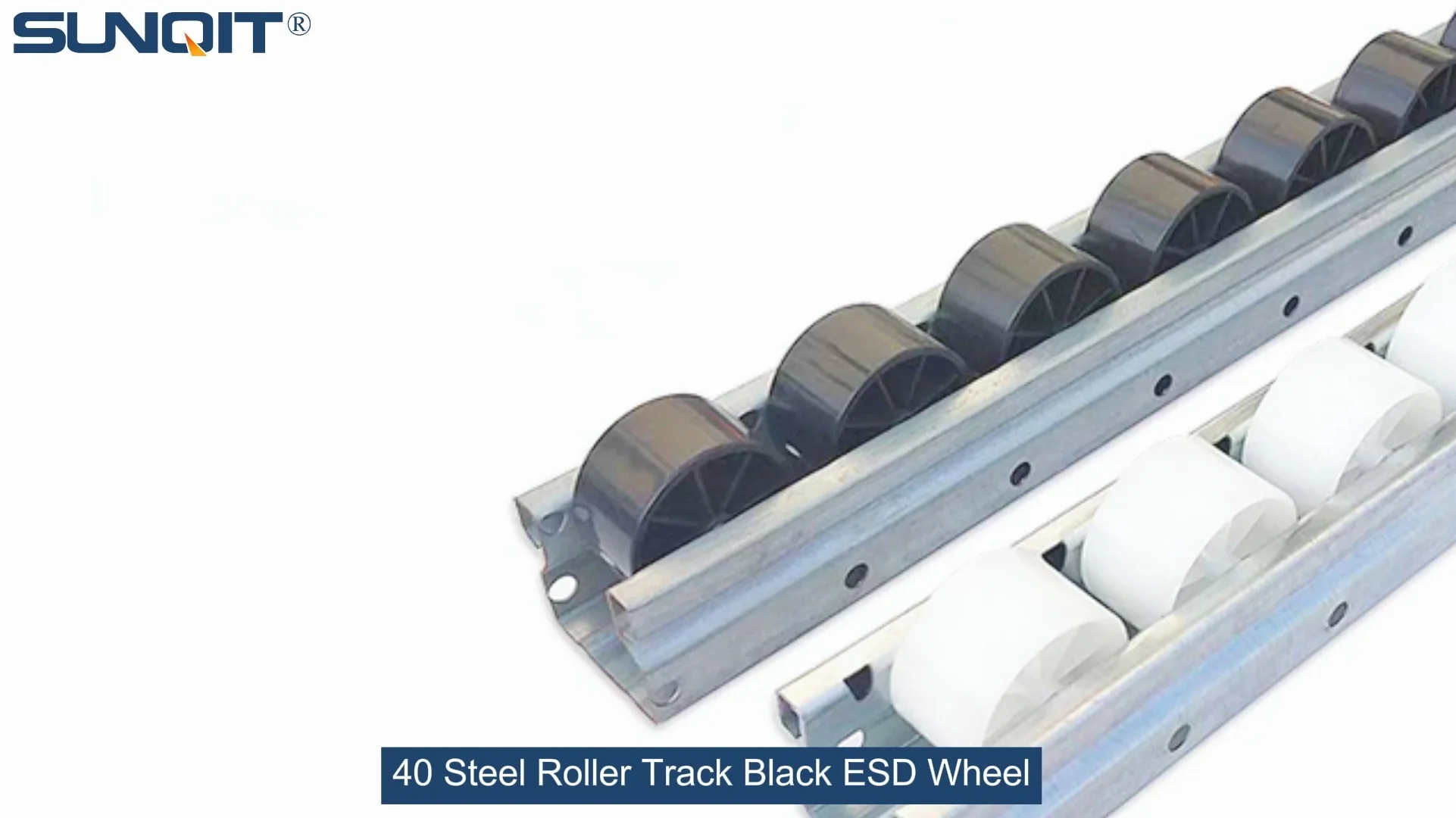
40 Steel Roller Track Black Wheel
The roller track can be installed with multiple accessories to create different slopes and configurations of flow racks.All steel conveyor 40 roller track accessories are engineered to perfectly fit the sliding rail.
How the Right Components Transform Chaos into Cohesive, Productive Workspaces
Let's talk about the heartbeat of automotive manufacturing: the production line. It's where precision meets pace, where every second counts, and where the smallest hiccup can ripple into delays, wasted materials, and frustrated teams. We've all seen it—the bottlenecks where parts pile up, the workers bending awkwardly to reach tools, the constant back-and-forth to fetch supplies. These aren't just minor inconveniences; they're silent productivity killers. But what if there was a way to smooth out those rough edges? To turn disjointed processes into a seamless dance of efficiency? That's where lean cells come in—and at the center of that transformation? The unsung hero: 40 Steel Roller Track Black Wheels. Let's dive into how integrating these components, alongside lean pipe workbenches, conveyors, and flow racks, is redefining what's possible on the automotive factory floor.
The Automotive Manufacturing Challenge: Why "Good Enough" Isn't Enough
Here's the thing about car production: it's a high-stakes game. Customers demand quality, regulators demand compliance, and competitors are always nipping at your heels with faster turnaround times. Traditional production setups often fall short because they're built around rigidity—fixed workstations, one-size-fits-all layouts, and (materials) that move in fits and starts. Think about it: a worker on the assembly line spends 20% of their shift just waiting for parts. Another 15% is spent walking to grab tools or materials from distant shelves. That's over a third of their day lost to non-value-adding tasks. And when parts do arrive, they're often dumped in bins that require bending or stretching to access—leading to fatigue, slower work, and even injuries over time.
This is where lean manufacturing principles step in, but lean isn't just a buzzword. It's about creating systems that respect both the process and the people in it. Lean cells—small, self-contained production units—are the embodiment of that idea. They're designed to minimize waste, maximize flow, and adapt to changing needs. And today, we're focusing on one component that makes that flow possible: 40 Steel Roller Track Black Wheels. These aren't just rollers; they're the quiet force that keeps materials moving smoothly, so your team can focus on what they do best: building great cars.
The Role of 40 Steel Roller Track Black Wheels: More Than Just Rollers
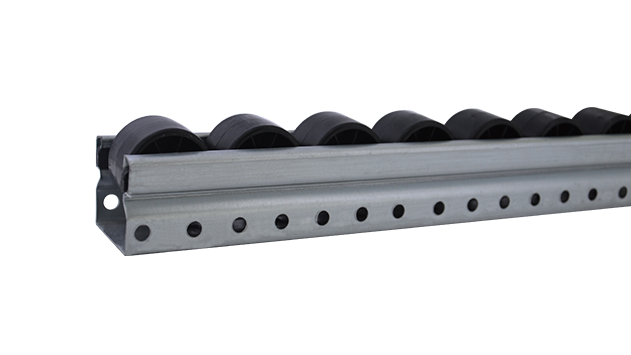
Let's start with the basics: why 40 Steel Roller Track Black Wheels? What makes them different from the generic rollers you might find in any warehouse? For starters, it's all in the details. The "40" refers to the track width, optimized for automotive parts—think axles, brackets, or small subassemblies—that need stable, consistent movement. The steel construction? That's about durability. Automotive factories are tough environments—oils, grease, constant use—and these rollers don't just hold up; they keep rolling smoothly for years. Then there's the black wheels. Beyond aesthetics, the dark color hides scuffs and wear, keeping the line looking professional, but more importantly, the material (often a high-density polymer) reduces noise and friction. Ever worked near a metal-on-metal roller track? It's loud enough to drown out communication. These black wheels cut that noise, making the workspace calmer and easier to collaborate in.
But the real magic is in how they enable flow. In lean manufacturing, "flow" means materials move from one step to the next without stopping—no piles, no waiting, no bottlenecks. 40 Steel Roller Track Black Wheels make that possible by reducing resistance. When a bin of parts glides effortlessly from the flow rack to the assembly station, workers don't have to lift or drag. They simply guide it into place. This might sound small, but multiply that by hundreds of parts per day, per worker, and you're looking at significant time savings. Plus, less physical strain means workers stay energized longer—no mid-afternoon slumps, no rushing to finish before fatigue sets in.
| Traditional Roller Tracks | 40 Steel Roller Track Black Wheels | Impact on Production |
|---|---|---|
| Plastic or low-grade metal construction | Heavy-duty steel frame with polymer wheels | 50% longer lifespan, reduced replacement costs |
| Inconsistent rolling (sticking, jamming) | Precision bearings for smooth, quiet movement | 30% faster material transfer, fewer delays |
| Bright colors show wear and dirt easily | Black wheels hide scuffs, maintain clean appearance | Improved workspace aesthetics, better team morale |
Building the Lean Cell: Integrating Key Components
40 Steel Roller Track Black Wheels are powerful, but they don't work alone. A truly effective lean cell is a symphony of components, each playing a role in creating flow, reducing waste, and supporting your team. Let's break down the key players:
1. Lean Pipe Workbench: The Heart of the Cell
If the roller tracks are the veins, the lean pipe workbench is the heart of the lean cell. These workstations are built using lightweight yet sturdy aluminum or steel pipes (lean pipes) and joints, making them infinitely customizable. Picture this: a workbench tailored to the exact height of the worker using it—no more hunching over or reaching up. Tool holders mounted at arm's length, so every wrench, screwdriver, or torque gun is right where it's needed. ESD (Electrostatic Discharge) protection built in, critical for sensitive automotive electronics. And here's the best part: if your production needs change—say, you start assembling a new model with different parts—the workbench can be reconfigured in hours, not days. No need to buy a whole new setup; just adjust the pipes and joints.
Pair that with 40 Steel Roller Track Black Wheels feeding parts directly to the bench, and you've eliminated two major wastes: motion (workers moving less) and waiting (parts arriving exactly when needed). One automotive plant we worked with reported a 22% increase in assembly speed after reconfiguring their workbenches this way—and workers noted feeling "less drained" at the end of shifts. That's the human side of lean that often gets overlooked.
2. Conveyors: Connecting the Dots
Lean cells aren't islands; they need to connect to the rest of the production line. That's where conveyors come in. But we're not talking about the clunky, one-speed conveyors of the past. Modern lean conveyors, often built with the same lean pipe systems as the workbenches, are flexible and adaptive. They can be extended, curved, or adjusted in height to link cells together, creating a continuous flow from welding to painting to final assembly.
Imagine a subassembly cell finishing a car door. Instead of a worker carrying it to the next station (wasting time and risking damage), a conveyor with 40 Steel Roller Track Black Wheels gently transports it—at the exact speed the next team needs. No rushing, no waiting. Conveyors also reduce the risk of damage to parts; when materials move smoothly and predictably, there's less jostling, fewer scratches, and fewer defects. For automotive manufacturers, where even a small scratch can mean rework, that's a game-changer.
3. Flow Racks: Organizing for Accessibility
Let's circle back to where materials start: the flow rack. Traditional warehouses stack parts in bins on shelves, requiring workers to climb ladders or dig through piles to find what they need. Flow racks, by contrast, use gravity and roller tracks (yes, often 40 Steel Roller Track Black Wheels) to present parts at eye level, front and center. Think of it like a vending machine for car parts—each bin slides forward as the one in front is taken, so the next part is always ready. No more searching, no more stretching, no more "out of stock" surprises because a bin was hidden behind another.
A tier-1 automotive supplier we partnered with installed flow racks for their fasteners and small components. Within a week, workers were saving 15 minutes per shift just on material retrieval. Multiply that by 50 workers, and that's 12.5 hours of productive time gained every single day. And because parts are organized by assembly sequence, there's less risk of picking the wrong part—another win for quality control.

Beyond Off-the-Shelf: The Power of Custom Lean Solutions
Here's the truth about automotive manufacturing: no two plants are exactly alike. You might specialize in electric vehicles with unique battery assembly needs, or focus on heavy-duty trucks requiring sturdier components. Off-the-shelf lean systems rarely account for these nuances. That's where custom lean solutions come in. A good lean supplier doesn't just sell you parts—they collaborate with you to design a cell that fits your specific workflow, your team's habits, and your production goals.
Take, for example, a client who built transmissions for luxury cars. Their parts were small but precise, and their workers needed multiple tools within arm's reach. We designed a lean pipe workbench with integrated tool hangers, a built-in ESD mat, and a 40 Steel Roller Track Black Wheel section along the back edge to feed in subassemblies. The result? A 30% reduction in tool search time and a 15% drop in assembly errors. Another client, focused on SUV chassis, needed a system that could handle heavier parts. We paired reinforced lean pipes with wider 40 Steel Roller Tracks and added locking casters to their workbenches, so the entire station could be moved when reconfiguring the line for new models.
The key here is "sustainable improvement"—a core lean principle. Your lean cell shouldn't be a one-and-done project. It should evolve with your needs. Maybe next year you add a new model, or adopt automation for a task. With modular lean components—pipes, joints, roller tracks—you can adjust, expand, or repurpose your cell without starting over. That's not just cost-effective; it's future-proofing your production floor.

Real Results: A Lean Cell Success Story
Let's put all this into context with a real-world example. A mid-sized automotive parts manufacturer was struggling with their brake caliper assembly line. Parts were arriving in bulk bins, dumped on the floor next to workstations. Workers spent 25% of their time sorting through bins, and the line frequently stopped because a critical part was "out of stock" (even though it was just buried under other parts). Fatigue was high, and turnover was becoming a problem—new hires took weeks to get up to speed in the chaotic environment.
We worked with their team to design a lean cell centered around 40 Steel Roller Track Black Wheels. Here's what changed:
- Flow Racks: Installed flow racks along the line, with 40 Steel Roller Tracks to feed caliper components (pistons, seals, bolts) directly to each workstation. Bins were labeled and color-coded by assembly step.
- Lean Pipe Workbenches: Custom-height workbenches with tool panels and integrated ESD protection. A small 40 Steel Roller Track section on each bench allowed workers to slide completed subassemblies to the next station.
- Conveyors: A curved conveyor with 40 Steel Roller Track Black Wheels connected the cell to the testing area, eliminating manual carrying.
The results? Within 60 days, assembly time per caliper dropped by 18%, material handling errors decreased by 40%, and worker feedback scores on "job satisfaction" jumped from 2.8/5 to 4.2/5. The plant manager summed it up: "We didn't just buy equipment—we built a system that makes our team's jobs easier. And when your team is happy, they build better parts, faster."
The Bottom Line: Lean Cells Are About People, Not Just Parts
At the end of the day, automotive manufacturing isn't just about machines and materials. It's about the people on the floor, day in and day out, building the vehicles that move the world. Lean cells, when done right, honor that reality. They reduce waste, yes, but they also reduce frustration. They boost efficiency, but they also boost morale. And components like 40 Steel Roller Track Black Wheels, lean pipe workbenches, and custom flow racks are the tools that make that possible.
So if you're tired of watching your team struggle with outdated systems, if you're ready to turn chaos into cohesion, and if you believe that a better workspace leads to better results—now's the time to explore lean cells. It's not just an investment in equipment; it's an investment in your team, your products, and the future of your factory.