- Company Articles
- Products and Technology
- Product knowledge
- Automotive Manufacturing: Five Way Straight Lean Pipe Joint Integration

Automotive Manufacturing: Five Way Straight Lean Pipe Joint Integration
Related Product
Five Way Straight Lean Pipe Joint
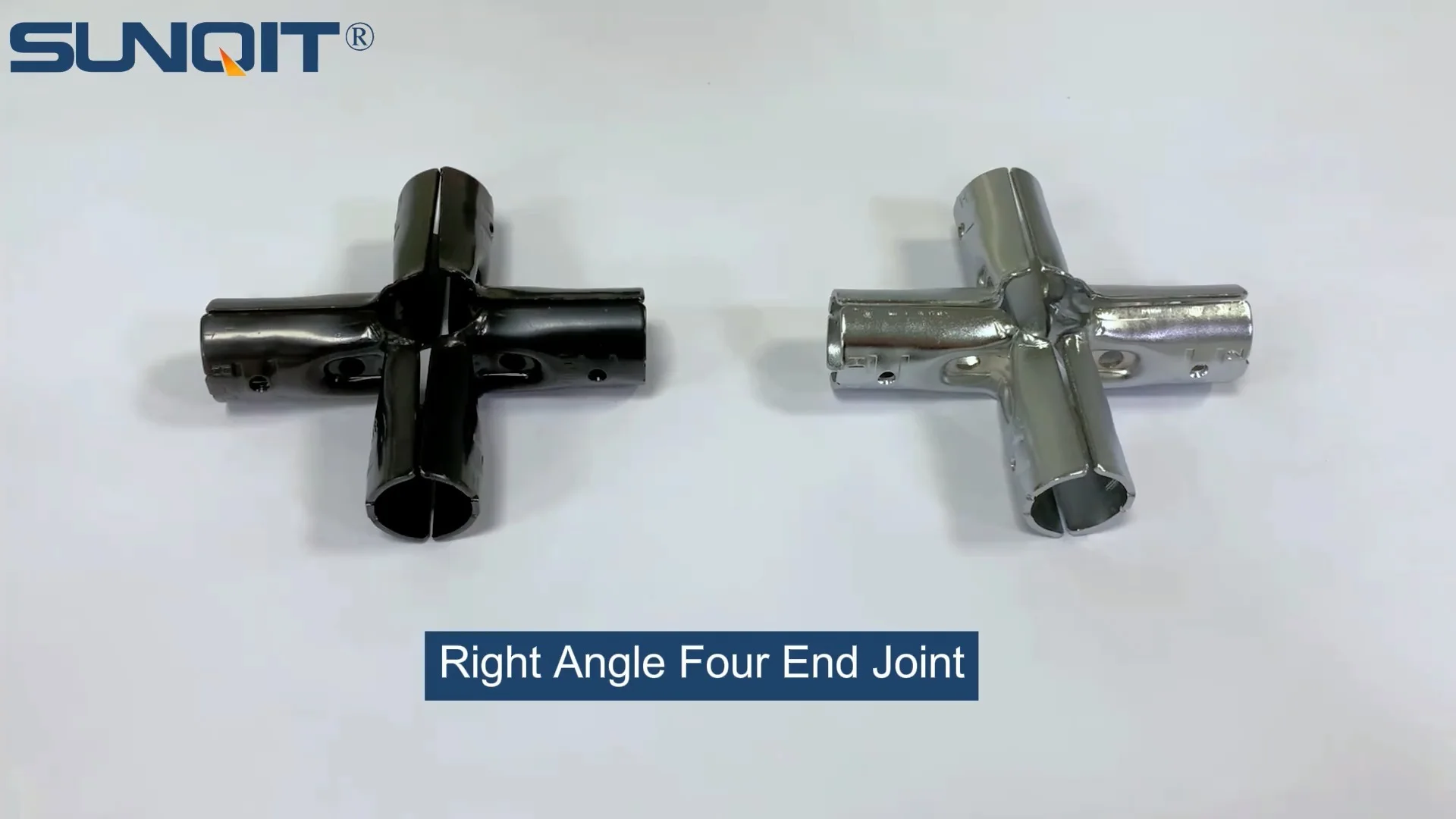
Five way straight lean pipe joint, for 5 pcs 28mm lean pipe connect in straight angle,which used widely in workbench, flow rack, hand trolley frame connection.
In the fast-paced world of automotive manufacturing, where every second counts and precision is non-negotiable, the difference between a good production line and a great one often lies in the details. For years, factory floors have grappled with rigid workstations, clunky material flow systems, and the constant struggle to adapt to changing production needs. Enter the lean system—a philosophy built on eliminating waste, streamlining processes, and putting efficiency at the forefront. But even the best lean strategies need the right tools to come to life. That's where components like the five way straight lean pipe joint step in, quietly revolutionizing how automotive plants design, build, and adapt their workspaces.
The Backbone of Flexibility: Understanding the Five Way Straight Lean Pipe Joint
At first glance, a lean pipe joint might seem like a simple piece of hardware. But for anyone who's spent hours reconfiguring a workbench or troubleshooting a jammed material rack, its importance becomes crystal clear. The five way straight lean pipe joint, in particular, is a unsung hero of modular design. Unlike traditional fixed joints that lock structures into a single shape, this small but mighty component allows for connections in five directions—up, down, left, right, and straight ahead—turning basic lean pipes into a versatile building block for almost any workstation or rack.
Imagine a team on the automotive assembly line needing to adjust their parts trolley to accommodate a new component size. With a standard joint, this might mean disassembling the entire structure, hunting for new parts, and losing valuable production time. But with a five way joint, the process is as simple as loosening a few bolts, repositioning the pipes, and tightening them back into place. No special tools, no lengthy delays, just a quick tweak to keep the line moving. For workers who've grown accustomed to "making do" with rigid setups, this kind of flexibility isn't just a convenience—it's a game-changer.
But the five way joint isn't just about adaptability. It's also about durability. Crafted from high-grade materials like steel or aluminum, these joints are built to withstand the daily grind of automotive manufacturing—heavy loads, constant movement, and the occasional bump from a passing forklift. When paired with sturdy lean pipes, they create structures that are both lightweight and robust, striking the perfect balance between mobility and stability. This is especially critical in areas like engine assembly, where precision tools and sensitive components need secure, reliable workspaces that won't wobble or shift mid-operation.
Beyond the Joint: How It Fits Into the Larger Lean System
A single joint, no matter how innovative, can't transform a factory floor on its own. Its true power shines when integrated into a broader lean system, working in harmony with other components like roller tracks, workbenches, and aluminum profiles. Let's break down how these pieces come together to create a production environment that's not just efficient, but human-centered.
| Component | Role in Lean System | How Five Way Joint Enhances It |
|---|---|---|
| Roller Track | Moves materials smoothly between workstations | Allows custom angles and heights, adapting to different part sizes without full rebuilds |
| Workbench | Provides stable, ergonomic workspace for assembly tasks | Enables adjustable shelves, tool holders, and lighting mounts for personalized worker needs |
| Aluminum Profile | Adds strength and corrosion resistance to structures | Connects profiles to pipes seamlessly, blending durability with flexibility |
| Turnover Trolley | Transports parts across the factory floor | Facilitates quick adjustments to trolley height/width for different load types |
Take roller tracks, for example. In automotive plants, these tracks are the arteries of material flow, carrying everything from small screws to heavy engine blocks across the factory. But a one-size-fits-all track system often leads to bottlenecks—parts get stuck on uneven surfaces, or workers strain to reach items that are too high or too low. By using five way joints to build the track supports, teams can adjust the track's angle, height, and even width on the fly. A track that once fed parts to a single workstation can suddenly branch off to two, or dip slightly to reduce friction for heavier loads. It's this adaptability that turns a static conveyor into a dynamic, responsive system that grows with the plant's needs.
Workbenches, too, benefit immensely from five way joint integration. In automotive assembly, no two workers are the same—someone might need a taller bench to avoid hunching over, while another requires extra shelf space for specialized tools. With traditional fixed workbenches, this means either compromising on ergonomics or investing in multiple custom setups. But with a modular bench built using five way joints, adjustments are effortless. Add a shelf here, lower the tabletop there, or attach a tool rail on the side—all without replacing the entire structure. This not only reduces physical strain on workers but also fosters a sense of ownership over their workspace, boosting morale and productivity.
Aluminum profiles, known for their strength-to-weight ratio and resistance to corrosion, are another key player in this ecosystem. When combined with five way joints, they create structures that are both lightweight and incredibly sturdy—ideal for areas like battery assembly, where cleanliness and durability are paramount. The joints' ability to connect aluminum profiles at multiple angles means plants can design intricate setups, like multi-tiered material racks or curved workstations, without sacrificing stability. It's this blend of form and function that makes the five way joint indispensable in modern automotive manufacturing.
Case Study: A Day in the Life at Greenfield Automotive Plant
Let's step onto the floor of Greenfield Automotive, a mid-sized plant that recently upgraded to a lean system centered around five way straight lean pipe joints. Before the switch, their assembly line was a patchwork of rigid metal shelves, fixed-height workbenches, and roller tracks that rarely aligned with worker needs. Maria, a assembler with 15 years of experience, recalls the frustration: "We'd have parts piling up because the roller track was too low, so we'd spend half the day bending over to grab them. And if we needed to add a new tool holder to the bench? Forget it—we'd have to drill holes or zip-tie it on, which never held."
After integrating five way joints, Greenfield's team redesigned their workstations from the ground up. Today, Maria's bench has adjustable shelves that rise to her waist height, a tool rail angled for easy access, and a roller track that feeds parts directly to her workstation at eye level. "I don't come home with a sore back anymore," she says with a smile. "And last month, when we started building the new electric model, we reconfigured the entire line in a weekend. No contractors, no shutdown—just the team, some wrenches, and a few extra pipes. It felt like we finally had control over our space."
The results spoke for themselves: material handling time dropped by 30%, worker absenteeism due to strain decreased by 25%, and the plant saw a 15% boost in overall production efficiency. For Greenfield, the five way joint wasn't just a hardware upgrade—it was a catalyst for a cultural shift, empowering workers to take charge of their processes and adapt to change with confidence.

The Human Impact: Why Flexibility Matters More Than You Think
At the end of the day, lean manufacturing isn't just about cutting costs or speeding up production—it's about people. When workers no longer have to fight against their tools, when they can adjust their environment to fit their bodies instead of the other way around, something powerful happens: they feel valued. This sense of respect for their expertise and well-being translates directly into better work—fewer errors, higher engagement, and a willingness to go the extra mile to meet deadlines.
Consider the story of Raj, a material handler at Greenfield, who now uses a turnover trolley built with five way joints. "Before, the trolley was so rigid, I could only fit 10 parts at a time. Now, I adjusted the sides to make it wider, added a second shelf, and I'm moving 20 parts per trip. That's less time walking back and forth, more time helping the assembly team if they fall behind. It's small, but it makes me feel like I'm contributing more." Raj's experience isn't unique; across the industry, plants that prioritize flexible, worker-centric setups report higher retention rates and lower turnover—a critical advantage in a market where skilled labor is in short supply.
Another often-overlooked benefit is training. New hires at Greenfield now spend less time learning to work around the tools and more time mastering their tasks. "When I started, the old workbench had tools scattered everywhere, and the roller track was always jamming," says Lila, a recent graduate who joined the plant six months ago. "Now, everything has a place, and if something isn't working, the team shows me how to adjust it with the joints. It makes me feel like I'm part of the solution, not just a cog in the machine."

Looking Ahead: The Future of Lean Integration in Automotive Manufacturing
As automotive manufacturing continues to evolve—with electric vehicles, autonomous systems, and rapid model changes becoming the norm—the need for flexible production systems will only grow. The five way straight lean pipe joint, once a niche component, is poised to become a cornerstone of this evolution. Its ability to adapt to new technologies, scale with production demands, and keep workers at the center of the process makes it more than just a tool—it's a strategic asset.
Suppliers are already innovating, developing joints with enhanced durability, quick-release mechanisms for even faster adjustments, and compatibility with emerging materials like carbon fiber pipes. Imagine a future where a single joint can connect metal, aluminum, and composite pipes, or where sensors embedded in the joint alert maintenance teams to wear and tear before it causes downtime. These advancements will only deepen the joint's role in creating smart, adaptive factories.
But perhaps the most exciting prospect is the democratization of lean manufacturing. Smaller plants, which once couldn't afford custom-built production lines, can now leverage modular systems built around five way joints to compete with larger competitors. This accessibility not only drives innovation across the industry but also ensures that more workers—regardless of their plant's size—get to experience the benefits of a workspace designed with their needs in mind.

Conclusion: More Than a Joint—A Catalyst for Change
In the grand scheme of automotive manufacturing, the five way straight lean pipe joint might seem. It doesn't have the flash of a robotic arm or the complexity of a AI-driven quality control system. But for the workers who interact with it daily—tightening its bolts, repositioning its pipes, and relying on it to keep their tools and parts within reach—it's so much more. It's a symbol of a industry that's finally putting people at the heart of production, recognizing that efficiency and humanity don't have to be at odds.
As we look to the future of automotive manufacturing, let's not forget the lessons the five way joint teaches us: that the best innovations are often the ones that make life easier for the people on the ground, that flexibility is key in a world of constant change, and that sometimes, the smallest components can have the biggest impact. So the next time you walk through a factory floor, take a moment to notice the unassuming joints holding it all together. They're not just building structures—they're building a better way to work.