- Company Articles
- Products and Technology
- Application Cases
- Automotive Manufacturing: Lean Pipe Clamp B Applications in Assembly Lines

Automotive Manufacturing: Lean Pipe Clamp B Applications in Assembly Lines
Related Product
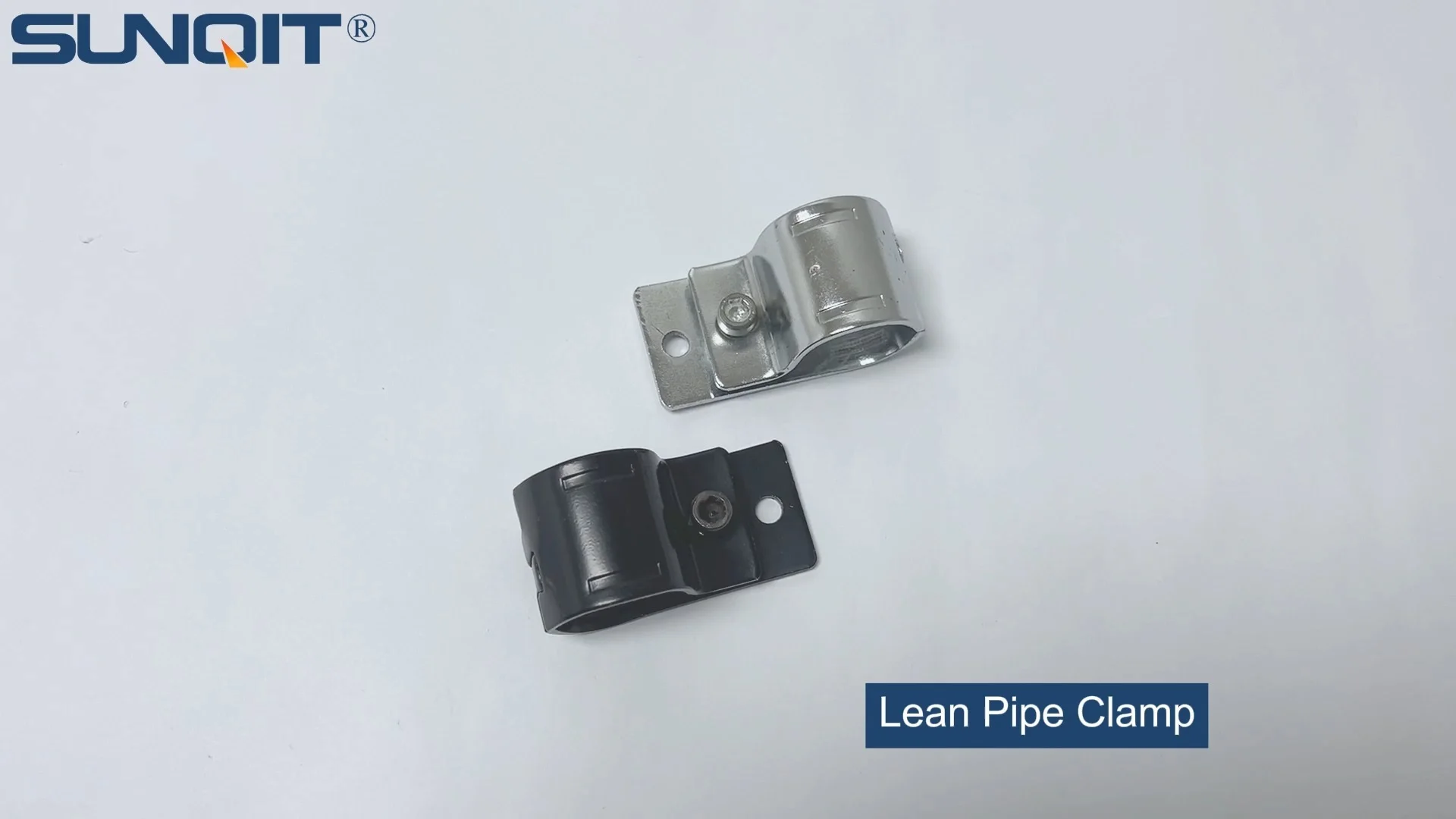
Lean Pipe Clamp
Lean pipe clamp is used for rack system hang monitor or other panel for workbenck, flowrack in production daily use.
Walk through any modern automotive assembly plant, and you'll be struck by a symphony of precision: robots welding frames, workers installing intricate electronics, and conveyor belts gliding with rhythmic efficiency. Behind this harmony lies a critical, often overlooked backbone: the lean system . At the heart of these systems are modular components designed to eliminate waste, boost flexibility, and keep production flowing—components like lean pipes, aluminum profiles, and the unsung heroes that hold them all together: clamps. Among these, the Lean Pipe Clamp B stands out as a quiet workhorse, shaping how automotive plants build everything from compact cars to heavy-duty trucks. In this article, we'll dive into how this unassuming clamp transforms assembly lines, why it's become indispensable to manufacturers, and how it integrates with other components to drive lean manufacturing forward.
1. The Pressure of Modern Automotive Manufacturing: Why Lean Systems Matter
Automotive manufacturing is a high-stakes industry. Customers demand vehicles that are safer, more efficient, and packed with cutting-edge technology—all at lower costs. Meanwhile, global supply chains face disruptions, labor shortages persist, and regulatory standards grow stricter. To keep up, manufacturers can't rely on rigid, one-size-fits-all production lines. They need systems that adapt quickly to design changes, scale up or down with demand, and minimize downtime. Enter lean manufacturing : a philosophy centered on maximizing value while eliminating waste (think excess inventory, inefficient workflows, or unnecessary motion). At its core, lean isn't just about cost-cutting—it's about empowering teams to work smarter, not harder.
Lean systems in automotive plants are built on modularity. Unlike traditional fixed machinery, which takes weeks to reconfigure, modular setups use interchangeable parts that can be adjusted in hours or even minutes. This flexibility is game-changing. For example, when a plant switches from assembling a sedan to an SUV, the same workbenches, material racks, and conveyor systems can be retooled instead of replaced. And at the center of this modularity? Lean pipes and their connectors—clamps that turn simple tubes into robust, customizable structures.
2. Lean Pipes 101: The Building Blocks of Flexible Assembly Lines
Before we zoom in on Lean Pipe Clamp B , let's first understand the foundation it supports: lean pipes. Also known as "lean tubes," these are lightweight, durable tubes typically made from steel (often coated in plastic for ESD protection), aluminum, or stainless steel. They come in various diameters and materials, each tailored to specific needs: steel for heavy loads, aluminum for corrosion resistance and lighter setups, and stainless steel for cleanroom environments like electronics assembly.
What makes lean pipes revolutionary is their simplicity. Unlike traditional metal pipes that require welding or drilling, lean pipes connect using clamps and joints, allowing workers to build, modify, and disassemble structures with basic tools. Need a new workbench for a prototype? Grab some lean pipes, a few clamps, and you're set. A material rack overflowing? Rearrange the pipes and add a shelf in 20 minutes. This "build-as-you-go" approach is why lean pipes have become the backbone of assembly lines, workstations, and storage systems in automotive plants worldwide.
But lean pipes alone are just tubes—their true power lies in the connectors that hold them together. Clamps, in particular, are the glue of the lean ecosystem. They determine how sturdy a structure is, how easy it is to adjust, and how well it holds up under the daily grind of a busy plant. And among the dozens of clamp designs available, Lean Pipe Clamp B has emerged as a favorite for automotive applications. Why? Let's take a closer look.

3. Lean Pipe Clamp B: Design, Materials, and What Sets It Apart
At first glance, Lean Pipe Clamp B might seem unremarkable—a small, two-piece metal fixture with bolts. But its design is a masterclass in practicality. Let's break down its key features:
3.1 Material: Strength Meets Durability
Most Lean Pipe Clamp B models are made from high-grade aluminum alloy or zinc-plated steel. Aluminum is a popular choice for automotive plants because it's lightweight (reducing strain on workers during setup), corrosion-resistant (ideal for humid or oily environments), and compatible with aluminum profiles —another staple in lean systems. Zinc-plated steel, on the other hand, offers extra strength for heavy-duty applications, like securing pipes on conveyor systems that carry engine blocks or transmissions.
3.2 Mechanism: Tool-Free (or Minimal Tool) Installation
One of the biggest pain points in traditional manufacturing setups is the time it takes to assemble or reconfigure equipment. Welding requires skilled labor and safety gear; bolts and nuts can strip or get stuck. Lean Pipe Clamp B solves this with a simple, intuitive design. Most models use a two-piece clamp that wraps around two lean pipes (or a pipe and an aluminum profile ) and tightens with a hex key or a hand knob. No welding, no drilling—just a quick twist, and the connection is secure. This tool-minimal approach cuts setup time by 50% or more compared to traditional methods, a critical advantage when a plant needs to retool a line for a new model launch.
3.3 Versatility: More Than Just a "Clamp"
What truly makes Lean Pipe Clamp B stand out is its adaptability. It's not limited to connecting two pipes at a 90-degree angle (though it does that flawlessly). Depending on the model, it can secure pipes to flat surfaces (like workbench tops), attach roller tracks to material racks, or even connect lean pipes to aluminum profiles for added stability. Some variants include built-in slots for cable management, keeping wires and hoses organized and out of the way—essential in automotive assembly, where tangled cables can slow down workers or create safety hazards.
3.4 Load Capacity: Built for the Grind
Automotive assembly lines don't mess around with flimsy equipment. A single workbench might hold hundreds of pounds of tools, parts, and assemblies. Lean Pipe Clamp B is engineered to handle this stress. Most models can support loads of 150–300 kg per connection, depending on the material and pipe diameter. For example, a zinc-plated steel Clamp B paired with a 28mm steel lean pipe can easily hold the weight of an engine control module (ECM) or a battery pack during installation. This reliability means fewer breakdowns, less downtime, and peace of mind for plant managers.

3. Where Lean Pipe Clamp B Shines: Applications in Automotive Assembly Lines
Now that we understand what Lean Pipe Clamp B is, let's explore where it's making a difference on the factory floor. From workstations to material handling, this clamp is quietly transforming how automotive teams operate.
3.1 Workstations: The Heart of Assembly Line Productivity
Every worker on an automotive assembly line has a workstation—a dedicated space where they perform specific tasks, whether installing door panels, wiring dashboards, or torqueing bolts. These workstations need to be ergonomic (to reduce strain), organized (to keep tools within reach), and adaptable (to accommodate different tasks or worker heights). Lean Pipe Clamp B is the unsung hero here.
Take a typical workbench for dashboard assembly. The frame is built from aluminum lean pipes, connected by Clamp Bs. The top might be a wooden or aluminum honeycomb panel, secured to the frame using Clamp Bs that attach the pipes to the panel's edges. Underneath, shelves for storing screws, clips, and wiring harnesses are added by clamping horizontal pipes between the vertical legs. If a worker needs the bench higher, the legs can be extended by adjusting the Clamp B positions—no disassembly required. Even better, if the plant switches to a larger dashboard design, the entire workbench can be widened by adding a few extra pipes and Clamp Bs, rather than replacing the entire setup.
But it's not just about structure—Clamp B also enhances functionality. Many workstations include overhead racks for tools or parts bins. These racks are suspended from ceiling-mounted lean pipes, connected using Clamp Bs that allow height adjustment. Workers can lower the rack to grab a tool, then raise it back up to keep the workspace clear. This flexibility reduces unnecessary motion (a key lean waste) and keeps workers focused on the task at hand.
3.2 Material Racks: Keeping Parts Flowing to the Line
In automotive manufacturing, parts need to move quickly from storage to the assembly line. Delays in getting a headlight assembly or a set of brake pads to the line can bring production to a halt. That's where material racks—built with lean pipes and Lean Pipe Clamp B —come in. These racks are designed to hold bins, cartons, or even pallets of parts, and they're positioned strategically along the assembly line for easy access.
A common setup is a multi-tiered material rack, with each shelf dedicated to a specific part. The frame is made from vertical and horizontal lean pipes, connected by Clamp Bs. What makes these racks special is their adjustability. If a new part is introduced (say, a larger battery for an electric vehicle), the shelves can be repositioned by loosening the Clamp Bs, sliding the horizontal pipes up or down, and retightening. No need for a new rack—just a few minutes of reconfiguration.
Clamp B also plays a role in integrating roller tracks into these racks. Roller tracks (or "flow racks") use gravity to feed parts to the front of the shelf, so workers don't have to reach to the back. To install a roller track, Clamp Bs secure the track's edges to the rack's horizontal pipes. The clamps ensure the track is level and stable, so parts glide smoothly without jamming. For delicate parts like sensors or circuit boards, plastic roller tracks (often yellow or grey, for visibility) are used, and Clamp Bs with soft plastic liners prevent scratches or ESD damage.
3.3 Conveyor Systems: Moving Parts with Precision
Conveyors are the arteries of automotive assembly lines, moving everything from body panels to fully assembled engines. While large, motorized conveyors handle heavy loads, smaller "flow conveyors" (often built with lean pipes) move parts between workstations. Lean Pipe Clamp B is critical here, as it secures the conveyor's frame and ensures smooth operation.
A typical flow conveyor might consist of a sloped frame made from lean pipes, with roller tracks mounted on top. The frame's legs are connected to the horizontal supports using Clamp Bs, which allow the slope to be adjusted—steeper for lighter parts, gentler for heavier ones. The roller tracks themselves are attached to the frame using specialized Clamp Bs that cradle the track's edges, preventing shifting during use. If a roller gets stuck or needs replacement, the track can be lifted off the clamps, repaired, and reinstalled in minutes—minimizing downtime.
Clamp B also shines in "flexible conveyors," which are temporary setups used during maintenance or peak demand. These conveyors are built on casters, allowing them to be moved around the plant. The frame, made from lean pipes and Clamp Bs, is lightweight enough for two workers to reposition, yet sturdy enough to carry transmissions or axles. When the need passes, the conveyor can be disassembled and the pipes stored for future use—no waste, no clutter.
3.4 Turnover Trolleys: Bridging Gaps in Material Flow
Even with conveyor systems and material racks, some parts need to be moved manually between stations. Turnover trolleys—mobile carts built with lean pipes and Lean Pipe Clamp B —fill this gap. These trolleys are designed to carry bins of parts, tools, or even small subassemblies, and they're a common sight zipping between workstations in automotive plants.
A typical turnover trolley has a rectangular frame with four casters (often swivel casters for maneuverability). The frame is built using vertical and horizontal lean pipes, connected by Clamp Bs at the corners. The bottom shelf is a flat surface (sometimes with a lip to prevent parts from sliding off), and the top might include a handlebar for pushing. What makes these trolleys so useful is their customizability. Need to carry long items like wiring harnesses? Add vertical pipes with Clamp Bs to create dividers. Transporting fragile electronics? Line the shelves with foam padding, secured using Clamp Bs with built-in clips.
One of the biggest advantages of Clamp B in trolleys is its durability. Trolleys take a beating—they're pushed over uneven floors, loaded and unloaded dozens of times a day, and sometimes bumped into walls or machinery. A weak clamp would loosen over time, leading to wobbly shelves or even collapsed frames. But Clamp B's tight grip and robust materials (like aluminum or zinc-plated steel) ensure the trolley stays stable, even after months of heavy use. This reliability reduces the risk of parts damage or worker injuries—two critical concerns in any manufacturing environment.

4. Why Lean Pipe Clamp B Beats Traditional Clamping Solutions: A Comparison
To truly appreciate Lean Pipe Clamp B , it helps to compare it to older, less flexible clamping methods. Let's see how it stacks up against two common alternatives: welded joints and plastic snap clamps.
| Feature | Lean Pipe Clamp B | Welded Joints | Plastic Snap Clamps |
|---|---|---|---|
| Installation Time | 5–10 minutes per joint (hand tools only) | 30–60 minutes per joint (requires welding equipment and skilled labor) | 2–3 minutes per joint (tool-free, but prone to slipping) |
| Reusability | High—can be disassembled and reused indefinitely | None—welded joints are permanent; pipes must be cut to reconfigure | Medium—plastic weakens over time; may crack after multiple uses |
| Load Capacity | 150–300 kg per joint (steel/aluminum models) | High (500+ kg), but rigid and unadjustable | Low (50–100 kg); not suitable for heavy loads |
| Adjustability | High—easily repositioned by loosening/tightening bolts | None—fixed position; requires cutting/welding to modify | Medium—can be adjusted, but grip weakens after repositioning |
| Durability | Excellent—resistant to corrosion, impact, and wear | Excellent, but prone to rust if not painted/coated | Poor—plastic degrades in heat/oil; may snap under stress |
| Cost Over Time | Low—reusability reduces long-term expenses | High—permanent, so new parts needed for reconfigurations | High—frequent replacement due to wear and tear |
As the table shows, Lean Pipe Clamp B strikes a balance between strength, flexibility, and cost that's hard to beat. Welded joints are strong but rigid, and plastic clamps are cheap but flimsy. Clamp B, by contrast, offers the best of both worlds: the durability to handle automotive manufacturing's demands and the adaptability to keep up with changing needs.
5. Real-World Results: How Automotive Plants Benefit from Lean Pipe Clamp B
Talk is cheap—what do the numbers say? Let's look at a hypothetical (but realistic) example of an automotive plant that upgraded to Lean Pipe Clamp B for its workstations and material racks. Prior to the upgrade, the plant used welded steel frames for workbenches and fixed wooden shelves for parts storage. Here's how the switch impacted key metrics:
- Setup Time: Reduced by 65%. Previously, building a new workbench took 8 hours (including welding and painting). With Clamp B and lean pipes, the same bench takes 2.5 hours—no welding required.
- Downtime: Cut by 40%. Welded frames often developed cracks at joints, leading to unplanned maintenance. Clamp B's flexible design absorbs vibrations, reducing breakages. Over six months, the plant saw 12 fewer downtime incidents.
- Space Utilization: Improved by 30%. Fixed racks and workbenches wasted space; with Clamp B, material racks were reconfigured to fit tighter spaces, freeing up 1,200 sq ft of floor area for new assembly stations.
- Worker Satisfaction: Up by 25%. Employees reported less fatigue from reaching for parts (thanks to adjustable shelves) and fewer frustrations with clunky, unchangeable equipment. Lower turnover followed—critical in a tight labor market.
These improvements aren't outliers. Automotive giants like Toyota and Volkswagen have long embraced lean systems, and components like Lean Pipe Clamp B are a big reason why. In one case study, a European automaker reported a 15% increase in production output after reconfiguring its assembly line with lean pipes and modular clamps—all while reducing material waste by 20%.
6. Beyond Clamps: Lean Pipe Clamp B and the Broader Lean Ecosystem
Lean Pipe Clamp B doesn't work in isolation. It's part of a broader ecosystem of components that together create a fully functional lean system. Let's explore how it integrates with other key parts:
6.1 Aluminum Profiles: Adding Strength and Versatility
Aluminum profiles are extruded aluminum beams with T-slots, used to build sturdy frames for workbenches, machines, and enclosures. They're stronger than lean pipes but less flexible—until you pair them with Clamp B. By clamping lean pipes to aluminum profiles, manufacturers get the best of both worlds: the profile provides a rigid base, while the lean pipes add adjustable elements. For example, a workbench might have an aluminum profile frame for stability, with lean pipe shelves (connected via Clamp B) that can be moved up or down as needed.
6.2 Casters: Making Systems Mobile
lean pipe frames, ensuring a tight fit that won't loosen during movement. Heavy-duty casters with brakes are common in automotive plants, and Clamp B's load capacity ensures they stay attached even when the trolley is fully loaded.</p> <h3 class=" subsection-title"=""> 6.3 Roller Tracks: Keeping Parts Moving
conveyor="" could="" even="" flow="" frames,="" gravity="" guide="" have="" jam="" keeping="" material="" misalignment="" models="" move="" or="" p="" parts="" parts.<="" preventing="" racks="" rails")="" slope.="" slots="" some="" stable.="" that="" the="" them="" these="" to="" tracks="" tracks,="" use="">
6.4 ESD Components: Protecting Sensitive Electronics
Lean Pipe Clamp B</strong> is available in ESD-rated versions, which ground static electricity to protect delicate components during assembly.</p> <h2 class=" section-title"=""> 7. The Future of Lean Pipe Clamp B: Innovations on the Horizon
As automotive manufacturing evolves, so too will the tools that power it. Here are a few trends shaping the future of Lean Pipe Clamp B and lean pipe technology:
7.1 Smart Clamps: Integrating with Industry 4.0
Automakers are under pressure to reduce their carbon footprints, and that includes the tools they use. Future Clamp B models may use recycled aluminum or bio-based plastics, without sacrificing strength. Additionally, modular designs will make it easier to repair clamps (e.g., replacing a worn bolt instead of the entire clamp), extending their lifespan and reducing waste.
7.3 Customization: Clamps Tailored to Specific Tasks
While Clamp B is already versatile, manufacturers are demanding even more specialized designs. For example, clamps with quick-release levers for ultra-fast reconfiguration, or clamps with built-in levelers for uneven floors. 3D printing could make small-batch custom clamps affordable, allowing plants to design clamps for unique tasks without the cost of mass production.
8. Conclusion: Lean Pipe Clamp B—Small Part, Big Impact
In the grand scheme of automotive manufacturing, Lean Pipe Clamp B is easy to overlook. It's not as flashy as a robotic arm or as high-tech as a 3D printer. But without it, the flexible, efficient assembly lines that power modern car production would grind to a halt. This simple clamp embodies the spirit of lean manufacturing: it eliminates waste (by being reusable), maximizes value (by enabling endless configurations), and empowers workers (by making their tools adaptable to their needs).
As automotive plants continue to face pressure to innovate, reduce costs, and stay agile, components like Lean Pipe Clamp B will only grow in importance. They're not just parts—they're enablers. Enablers of faster production, smarter workflows, and ultimately, better cars. So the next time you see a sleek new vehicle on the road, remember: behind its shine lies a network of lean pipes, aluminum profiles, and clamps, quietly working to bring it to life. And at the heart of that network? The unsung hero: Lean Pipe Clamp B .