- Company Articles
- Products and Technology
- Product knowledge
- Automotive Material Handling: 4040E EU Standard Aluminum Profile for Custom Trolleys

Automotive Material Handling: 4040E EU Standard Aluminum Profile for Custom Trolleys
Related Product
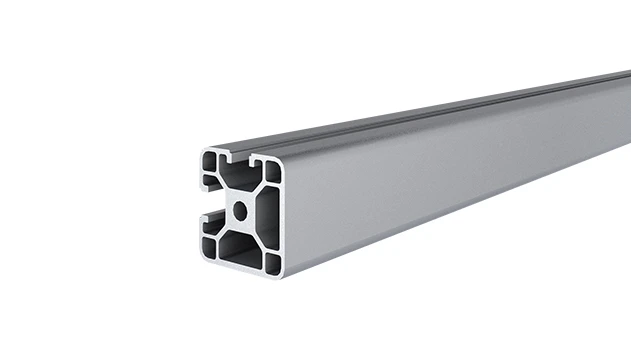
4040E EU Standard Aluminum Profile
4040E is a 4.00x4.00 CM fractional 40 series square extrusion T-slot profile with two side open T-slots, two side with closed face, each side with 4.00cm face. The profile has align-a-grooves to assist in aligning connecting profiles.
Walk into any automotive manufacturing plant, and you'll be met with a symphony of activity: robotic arms welding frames, workers assembling intricate wiring harnesses, and pallets stacked high with components—from small screws to heavy engine blocks. In the middle of all this chaos, there's an unsung hero keeping the rhythm steady: material handling trolleys. These humble tools ferry parts between stations, ensure assembly lines don't stall, and protect fragile components from damage. But not all trolleys are created equal. In a industry where precision, speed, and durability are non-negotiable, the difference between a flimsy, one-size-fits-all cart and a custom-built workhorse can mean the difference between a smooth shift and a day of delays, scrap parts, and frustrated workers.
That's where custom trolleys come in—and at the heart of many of these game-changing solutions is the 4040E EU Standard Aluminum Profile. If you've ever wondered how automotive plants keep up with the demands of modern production, or why some facilities seem to move parts with effortless efficiency, the answer often lies in this unassuming yet powerful building block. Let's dive into why the 4040E profile has become a staple in automotive material handling, how it pairs with essential components like aluminum profile accessories and caster wheels, and why it's transforming the way teams build, adapt, and thrive on the shop floor.
The Problem with "One-Size-Fits-All" in Automotive Material Handling
Automotive manufacturing is a world of extremes. One minute, a trolley might need to carry a 50kg transmission housing; the next, it's transporting a delicate dashboard with sensitive electronics. Assembly lines vary too—some are long and linear, others twist through workstations with tight corners. Workers come in all heights, and repetitive tasks demand ergonomic designs to prevent strain. Throw in the need to clean equipment regularly (thanks to oils, coolants, and dust) and the pressure to reduce waste, and it's clear: a generic trolley just won't cut it.
Take, for example, Maria, a line supervisor at a mid-sized automotive plant I visited last year. "We used to buy these heavy steel trolleys from a general supplier," she told me. "They were sturdy, but that was about it. The shelves were fixed, so if we got a new part that was taller or wider, we'd have to jury-rig solutions—stacking crates, tying parts down with bungee cords. Half the time, parts would shift and get scratched. And forget about moving them around tight corners; those steel carts weighed a ton, even empty. Our workers were complaining about back pain, and we were losing time just maneuvering them."
Then there was the issue of customization. When the plant introduced a new electric vehicle (EV) line, they needed trolleys that could handle battery packs—bulky, heavy, and sensitive to impact. The old steel carts were either too small or too rigid to adapt. "We ended up spending more on replacing damaged parts and treating worker injuries than we did on the trolleys themselves," Maria admitted. "That's when we started looking for something that could grow with us, not hold us back."
Custom Trolleys: Built for the Way You Work
Custom trolleys solve these headaches by putting flexibility first. Instead of forcing your workflow to fit a pre-made cart, you design the cart to fit your workflow. Need a shelf that adjusts in 5cm increments? Done. Want a trolley that can navigate a 90-degree turn in a 2-meter wide aisle? No problem. Need to add a roller track to let parts slide smoothly onto a workstation? Consider it handled. But customization isn't just about convenience—it's about efficiency. A trolley that's tailored to your parts and processes reduces the time spent loading/unloading, minimizes damage, and makes workers' jobs easier. And when workers are happy, productivity soars.
But to build a custom trolley that's both durable and adaptable, you need a base material you can trust. Steel is strong but heavy and hard to modify. Plastic is lightweight but lacks the load-bearing capacity for automotive parts. Wood? Not a chance in a factory environment. That's where aluminum profiles step in—and the 4040E EU Standard Aluminum Profile is leading the pack.

Why 4040E EU Standard Aluminum Profile? The Backbone of Custom Trolleys
Let's start with the basics: what is the 4040E EU Standard Aluminum Profile? In simple terms, it's a rectangular aluminum extrusion with a cross-section of 40mm x 40mm (hence "4040"). The "E" refers to its specific design—typically featuring T-slots along all four sides, which act like built-in channels for attaching accessories. And "EU Standard" means it meets strict European quality and safety regulations, ensuring consistency in dimensions, strength, and finish—critical in automotive, where even a 1mm misalignment can throw off an entire assembly process.
But numbers and standards only tell part of the story. What makes the 4040E profile a standout for custom trolleys? Let's break it down:
- Strength without the bulk: Aluminum is about 30% lighter than steel, but the 4040E profile doesn't skimp on strength. Thanks to its extrusion process (where aluminum is forced through a die to create its shape), it has a uniform structure that can handle loads up to 200kg per linear meter—more than enough for most automotive parts. This means trolleys built with 4040E are sturdy enough to carry heavy components but light enough for a single worker to push, even up a slight incline.
- T-slots: The key to easy customization: Those T-slots along the profile's sides are a game-changer. Instead of drilling holes or welding, you can slide bolts, brackets, or accessories into the slots and tighten them with a hex key. Need to add a shelf? Slide in a bracket, secure it, and you're done. Want to reposition a roller track? Loosen the bolts, adjust, and retighten. No special tools, no downtime, no permanent modifications. This "build-as-you-go" flexibility is exactly what Maria's team needed when their EV line came online.
- Resistance to the elements: Automotive plants are tough on equipment. Oils, coolants, and cleaning agents can corrode steel over time, and humidity can warp wood. Aluminum, however, forms a natural oxide layer that resists rust and corrosion. The 4040E profile often comes with an anodized finish (a protective coating applied via electrolysis) that adds extra durability, making it easy to wipe clean without worrying about long-term damage.
- Consistency you can count on: EU standards aren't just about safety—they're about predictability. When you order 4040E profiles from a reputable supplier, you know every piece will have the same dimensions, slot spacing, and load capacity. This consistency means you can pre-design trolleys on a computer, order the parts, and assemble them with confidence—no surprises when the shipment arrives.
Building Blocks: 4040E and Its Perfect Partners
A profile alone doesn't make a trolley. To turn the 4040E into a functional workhorse, you need the right companions: aluminum profile accessories, caster wheels, and roller track. Think of them as the profile's supporting cast—each playing a role in making the trolley adaptable, mobile, and efficient.
Aluminum Profile Accessories: The Glue That Holds It All Together
If the 4040E profile is the skeleton of the trolley, aluminum profile accessories are the joints, muscles, and skin. These small but mighty components turn a pile of aluminum bars into a fully functional cart. Let's meet the stars:
- Connectors: These are the unsung heroes of customization. From 90-degree angle brackets to 135-degree corner connectors, these pieces let you join profiles at any angle without welding. The best ones slide into the T-slots and tighten with a cam lever or hex bolt, so you can disassemble and reconfigure the trolley later if needed.
- End caps: Simple but essential. These plastic or aluminum caps snap onto the ends of the 4040E profile, covering sharp edges (a safety must in busy plants) and preventing dust, dirt, or liquids from getting into the T-slots.
- Shelf brackets: Adjustable and sturdy, these attach to the profile to hold shelves, bins, or tool holders. Many are height-adjustable, so you can set shelves at waist level for easy access or stack them high to maximize storage.
- Cable management clips: Automotive trolleys often need to carry tools with cords or parts with sensors. These clips slide into the T-slots to route cables neatly, preventing tangles and tripping hazards.
The beauty of these accessories? They're designed to work seamlessly with the 4040E profile. No hunting for mismatched parts or drilling custom holes—just pick the pieces you need, slide them into place, and tighten. It's like building with high-tech Legos, but for grown-ups (and with a lot more weight capacity).
Caster Wheels: Mobility That Keeps Up with the Line
What good is a custom trolley if it's a pain to move? That's where caster wheels come in. The right set can turn a static shelf into a mobile workstation, making it easy to glide parts from the warehouse to the assembly line, even around tight corners.
For 4040E-based trolleys, caster wheels are typically mounted using bracket plates that attach to the profile's T-slots. This means you can choose exactly where to place them—whether you need a 4-wheel design for stability or a 3-wheel setup for better maneuverability. But not all caster wheels are the same. In automotive, you'll want to look for:
- Swivel vs. rigid: Swivel casters rotate 360 degrees, making it easy to navigate tight spaces. Rigid casters (fixed in place) are better for straight-line movement, like along a conveyor. Many trolleys use a mix: two swivel casters with brakes for steering and two rigid casters for stability.
- Load capacity: Match the caster's weight rating to your trolley's maximum load. For heavy parts, look for casters rated at 150kg or more per wheel.
- Wheel material: Rubber or polyurethane wheels are gentle on factory floors and absorb shocks, protecting delicate parts. For outdoor use or rough surfaces, phenolic resin wheels are more durable.
- Brakes: A must-have for safety. When loading/unloading or parked at a workstation, a simple foot brake locks the caster in place, preventing the trolley from rolling away.
I saw this in action at Maria's plant after they switched to 4040E trolleys. "We added swivel casters with brakes to all our carts," she said. "Now, when a worker needs to unload parts, they just tap the brake with their foot, and the trolley stays put. No more chasing runaway carts down the line! And because the casters attach to the profile via brackets, we can swap them out if one wears down—no need to replace the entire trolley."
Roller Track: Letting Parts Glide, Not Grind
For trolleys that transport parts to and from assembly stations, roller track is a game-changer. These tracks—made of aluminum or plastic rollers mounted on a frame—let parts slide smoothly onto workbenches or into bins, reducing the need for lifting and lowering. And yes, you guessed it: roller track integrates seamlessly with the 4040E profile, thanks to brackets that slide into the T-slots.
Imagine a trolley loaded with transmission parts. Instead of a worker bending down to lift each part off the cart, the roller track lets them gently push the part onto the assembly line—a small change that adds up to big reductions in back strain and time spent. In high-volume areas, some plants even angle the roller track slightly, so parts "flow" to the next station using gravity—no pushing required.
"We added roller track to our dashboard trolleys," Maria explained. "The dashboards are lightweight but awkward to hold. Now, the worker at the front of the line just slides the dashboard off the trolley onto their workstation. It's cut loading time by 30%, and we haven't had a single dashboard cracked since we switched."
4040E vs. The Competition: Why Aluminum Beats Steel and Plastic
You might be thinking, "Why not just use steel profiles or plastic tubing?" It's a fair question. Let's put the 4040E aluminum profile head-to-head with its rivals to see why it's the top choice for automotive custom trolleys:
| Feature | 4040E Aluminum Profile | Steel Profile (40mm x 40mm) | Plastic Tubing (40mm x 40mm) |
|---|---|---|---|
| Weight (per meter) | ~1.8kg | ~3.2kg | ~0.9kg |
| Max Load Capacity (per linear meter) | 200kg | 300kg | 50kg |
| Customization Ease | High (T-slots, compatible with accessories) | Low (requires welding/drilling) | Medium (limited accessory options) |
| Corrosion Resistance | High (anodized finish) | Low (prone to rust without coating) | High (but prone to UV damage) |
| Cost (per meter, approx.) | €15-€25 | €8-€15 | €5-€10 |
| Ergonomics | High (lightweight, easy to maneuver) | Low (heavy, tiring to move) | Medium (light but less stable) |
As the table shows, steel is stronger, but its weight makes it impractical for mobile trolleys. Plastic is lightweight but too flimsy for heavy automotive parts. The 4040E aluminum profile strikes the perfect balance: strong enough for most loads, light enough for easy movement, and customizable enough to adapt to changing needs. And while it's pricier than steel or plastic upfront, the savings in reduced worker strain, fewer damaged parts, and longer lifespan make it a smart long-term investment.
Real-World Impact: How 4040E Trolleys Transformed Maria's Plant
Numbers and specs are great, but nothing tells the story like real results. Let's circle back to Maria's plant. After switching to custom trolleys built with 4040E aluminum profiles, aluminum profile accessories, and heavy-duty caster wheels, the changes were immediate:
- 35% reduction in part damage: The adjustable shelves and roller track meant parts stayed secure during transport. "We used to have 5-10 damaged parts per week," Maria said. "Now it's maybe 1-2, and those are usually operator error, not trolley issues."
- 25% faster material delivery: The lightweight trolleys and swivel casters cut down on time spent moving parts between stations. "Workers aren't wasting energy wrestling with heavy carts anymore. They can focus on assembling, not transporting."
- 50% fewer ergonomic complaints: Adjustable heights and easier maneuverability reduced strain on workers' backs and shoulders. "Our HR team said injury reports related to material handling dropped by half in the first month," Maria noted.
- Easy reconfiguration for new projects: When the plant started producing hybrid engines, they needed taller trolleys to accommodate the battery modules. "We just bought extra 4040E profiles and height-adjustable brackets, disassembled the old carts, and rebuilt them in a day. No need to buy new trolleys—we saved €10,000 right there."
Perhaps the biggest win? Worker morale. "Our team feels heard," Maria told me. "They see that we invested in tools that make their jobs easier, and that makes them more engaged. When people are happy, they're more productive—and that's the best ROI of all."
Choosing the Right Supplier: Why Quality Matters
Not all 4040E profiles are created equal. To get the most out of your custom trolleys, you need a supplier who understands automotive needs—someone who can provide not just the profile, but also the right aluminum profile accessories, caster wheels, and technical support. Here's what to look for:
- EU Standard compliance: Ensure the supplier can provide certificates proving their 4040E profiles meet EU standards for strength, finish, and dimensions.
- Range of accessories: A good supplier will stock everything from connectors to caster wheels, so you can get all your components in one place (and avoid compatibility issues).
- Technical expertise: Look for suppliers who offer design support. Many will help you draft trolley blueprints based on your parts, workflow, and space constraints.
- Lead times: Automotive production waits for no one. Choose a supplier with fast turnaround times, especially for custom orders.
The Future of Automotive Material Handling: Flexible, Durable, and Worker-Centric
As automotive manufacturing evolves—with electric vehicles, autonomous assembly lines, and smaller batch sizes—the need for flexible material handling solutions will only grow. The 4040E EU Standard Aluminum Profile isn't just a trend; it's a foundation for this future. Its ability to adapt, its strength-to-weight ratio, and its compatibility with a universe of accessories make it the ideal building block for the next generation of custom trolleys.
So the next time you walk through an automotive plant and see a trolley gliding smoothly, loaded with parts that arrive undamaged and on time, take a closer look. Chances are, you'll spot the 4040E profile's familiar T-slots and sturdy frame—quietly powering the efficiency that keeps the industry moving forward. And for workers like Maria and her team, that's not just a trolley. It's a tool that lets them do their best work, day in and day out.
In the end, automotive manufacturing is about people as much as it is about machines. And when you equip those people with tools built to support them—tools like custom trolleys with 4040E aluminum profiles—you're not just building better cars. You're building better, more resilient, and more human factories.