- Company Articles
- Products and Technology
- Product knowledge
- Automotive Parts Assembly: Precision Work with Aluminum Workbench A

Automotive Parts Assembly: Precision Work with Aluminum Workbench A
Related Product
Aluminum Workbench A
Aluminum tube workbench is more flexible and durable, compared with traditional PE/ABS coated steel tube. It is easy to assemble, anti corrosion, rust protection, and recycle use after disassemble.
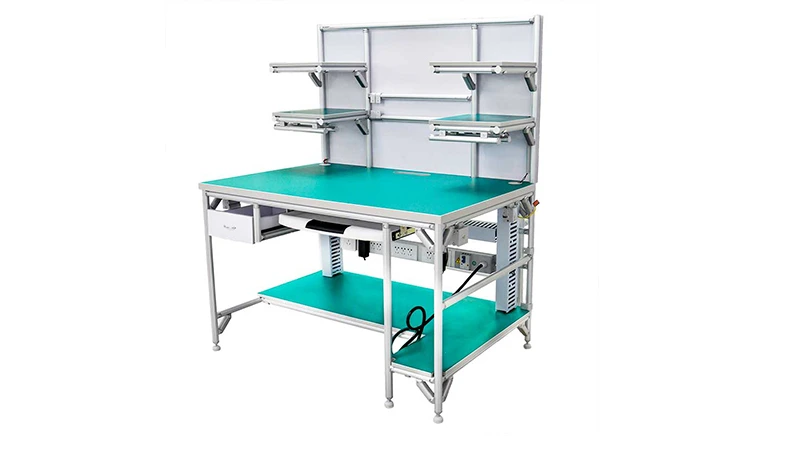
How a single workbench is redefining efficiency, safety, and adaptability in modern car manufacturing
The Heartbeat of Automotive Manufacturing: Where Precision Meets People
Walk into any automotive assembly plant, and you'll feel it immediately—the hum of machinery, the rhythmic movement of conveyor belts, and the focused energy of workers piecing together the next generation of vehicles. Every bolt tightened, every wire connected, every plastic panel aligned matters. A single misstep in this intricate dance can lead to delays, defects, or worse: compromised safety for the drivers who'll one day trust those vehicles with their lives.
At the center of this chaos-turned-order are the workbenches. Not just any tables, but the unsung heroes where assemblers spend 8+ hours a day, their hands moving with the precision of a concert pianist. These workbenches aren't just furniture; they're extensions of the workers themselves. They need to be sturdy enough to support heavy components, flexible enough to adapt to changing assembly lines, and smart enough to protect delicate parts from damage. And in an industry where electronics now make up 40% of a car's value (up from just 10% in the 1980s), they also need to guard against invisible threats like static electricity.
This is where Aluminum Workbench A enters the story. It's not just a tool—it's a solution born from listening to the people on the factory floor. The assemblers who complained about back pain from hunched workstations. The supervisors frustrated by workbenches that took hours to reconfigure for new car models. The quality control teams tired of finding micro-scratches on sensitive circuit boards caused by static discharge. Aluminum Workbench A wasn't designed in a boardroom; it was built in response to real problems, by people who understand that the best manufacturing tools put people first.
The Problem with "Good Enough": Why Traditional Workbenches Fall Short
For decades, automotive plants relied on two types of workbenches: heavy, fixed wooden tables that felt like they'd been bolted to the floor since the factory opened, or flimsy metal frames that wobbled under the weight of a car battery. Both had their flaws, and both forced workers to adapt to the tools—instead of the other way around.
Take Maria, for example, an assembler at a mid-sized car plant in Michigan. For years, she worked at a wooden workbench that stood 36 inches tall—perfect for her colleague Raj, who's 6'2", but a nightmare for Maria, who's 5'3". "I'd spend my shifts bending forward, my shoulders hunched, just to reach the parts on the far side of the table," she recalls. "By Friday, my lower back would ache so badly I could barely lift my kids. And don't get me started on static—we'd have these little anti-static mats, but they'd slide around or wear thin, and I'd get zapped every time I touched the wiring harnesses. One day, I even fried a $200 sensor because of a static spark. That's when I thought, 'There has to be a better way.'"
Maria's story isn't unique. Across the industry, traditional workbenches have become bottlenecks in an era where car models change faster than ever. A plant might produce a sedan one month, an SUV the next, and a hybrid the month after—and each requires different tools, parts, and layouts. Fixed workbenches can't keep up. They're also magnets for waste: cluttered surfaces, parts stacked in hard-to-reach corners, and time wasted searching for tools that don't have a dedicated spot.
Then there's the issue of durability. Wooden benches absorb oil and grease, becoming breeding grounds for bacteria. Cheap metal frames rust, leaving stains on parts and creating sharp edges that snag gloves (or worse, skin). And when a part of the bench breaks—a leg, a shelf, a drawer—replacing it often means replacing the entire unit, costing time and money.
The Cost of "Good Enough": A 2023 study by the Automotive Industry Association found that plants using outdated workbenches reported 15% more work-related musculoskeletal injuries, 22% longer setup times for new assembly lines, and 8% higher defect rates on electronic components compared to facilities with modern, ergonomic workstations. For a plant producing 500 cars a day, that's 40 defective components per day—each with the potential to derail a production run.

Aluminum Workbench A: More Than a Table—A Lean System in Disguise
Enter Aluminum Workbench A. At first glance, it might look like a sleek upgrade from the clunky benches of old, but dig deeper, and you'll realize it's a complete rethink of what a workbench can be. Built with automotive assembly in mind, it's designed to solve the very problems Maria and her colleagues face daily: ergonomics, adaptability, static protection, and durability. Let's break down what makes it different.
1. The Backbone: Aluminum Profile—Strength Without the Weight
The first thing you notice about Aluminum Workbench A is its frame: a lightweight yet incredibly strong aluminum extrusion profile. Unlike wood or traditional steel, aluminum brings a rare combination of heft and flexibility. The profile itself is engineered with T-slots—long, narrow grooves running along its length—that act like built-in connection points. This means you can attach shelves, tool holders, lights, or even small monitors without drilling holes or welding. Need a new shelf for larger components? Just slide in a bracket and tighten a screw. Done. No more waiting for maintenance to drill into a wooden bench or weld a steel frame.
But why aluminum? For starters, it's rust-proof. In a plant where oil, coolant, and cleaning solutions are part of daily life, that's a game-changer. No more orange rust stains on circuit boards or corroded legs that wobble. It's also surprisingly light: a 6-foot Aluminum Workbench A weighs about 75 pounds, compared to 150+ pounds for a wooden bench of the same size. That might not sound like much, but when you need to reposition the bench to align with a new conveyor line, two workers can move it in minutes—no forklift required.
And let's talk about customization. The aluminum profile comes in standard lengths, but it's easy to cut to size, meaning the workbench can be built to fit exactly the space available. Whether you need a compact 4-foot bench for a tight corner or an 8-foot behemoth for assembling engine blocks, Aluminum Workbench A adapts. It's modular by design—so if your assembly line expands next year, you can add extensions instead of buying a whole new bench.
2. Smooth as Silk: Roller Track for Effortless Material Flow
Walk up to the edge of Aluminum Workbench A, and you'll notice something else: a sleek strip of roller track running along one side. These aren't just any rollers—they're precision-engineered plastic or aluminum wheels, spaced evenly to let parts glide from the conveyor onto the workbench (or vice versa) with zero friction. For assemblers like Maria, this is a game-changer.
"Before, I'd have to reach across the bench to grab a wiring harness from the conveyor, which meant stretching my arm over 2 feet every time," she says. "Now, I just push a button, and the harness slides right up to me on the roller track. My shoulder pain? Gone. And because the rollers are smooth, I don't have to worry about scratching the plastic casing of the harness. It's like having a little helper right there on the bench."
The roller track isn't just about convenience—it's about flow , a core principle of lean system thinking. In lean manufacturing, "flow" means ensuring materials and parts move through the production process with minimal stops or delays. Traditional workbenches disrupt flow: parts get stuck, workers waste time fetching them, and bottlenecks form. Aluminum Workbench A's roller track eliminates that. It's even customizable: you can choose between plastic rollers (gentler on delicate parts) or steel (for heavier components), and adjust the angle of the track to control how fast parts slide (steeper for lightweight items, flatter for heavier ones).
And if you need to move parts across the bench, not just along the edge? No problem. Aluminum Workbench A can be fitted with swivel roller balls—small, 1-inch nylon or stainless steel balls embedded in a plate—that let you slide heavy components (like a car door panel) across the work surface with one hand. No more straining to lift and carry; just a gentle push, and the part glides into place.
3. Guarding the Invisible: ESD Workstation Features for Sensitive Electronics
In today's cars, electronics are everywhere: from infotainment systems to advanced driver-assistance systems (ADAS) that can detect pedestrians or automatically apply the brakes. These components are delicate, and static electricity—something as simple as walking across a carpet—can fry a circuit board in milliseconds. That's why Aluminum Workbench A isn't just a workbench; it's an ESD workstation.
ESD, or electrostatic discharge, protection starts with the work surface itself. The bench top is made of a special conductive material that dissipates static electricity, rather than letting it build up. It's connected to a grounding cord that runs from the bench to the factory floor, channeling any static charge safely into the ground. Even the roller track and swivel balls are ESD-safe: their plastic components are infused with carbon to prevent static buildup, and metal parts are grounded to the frame.
"I used to be terrified of handling the ADAS sensors," says Raj, Maria's colleague, who assembles camera modules for self-parking systems. "One wrong move, and you're out $500. Now, I can set the sensor on the bench, connect the wires, and test it without worrying. The ESD mat on the bench lights up green when it's grounded, so I know I'm safe. It's like having a security blanket for my work."
But ESD protection isn't just about the bench top. Aluminum Workbench A also includes optional ESD wristbands that plug directly into the bench, ensuring the worker themselves is grounded. Even the caster wheels (if you opt for the mobile version) are conductive, so the bench stays grounded even when moved. It's a holistic approach that leaves no room for static-related accidents.
4. Built for Humans: Ergonomics That Keep Workers Healthy (and Happy)
Remember Maria's back pain? Aluminum Workbench A was designed to fix that. The bench height is adjustable—from 30 inches to 42 inches—with a simple hand crank or electric lift (for heavier models). No more one-size-fits-all workstations. A tall worker can raise the bench to avoid bending; a shorter worker can lower it to keep their elbows at a comfortable 90-degree angle. It's a small change, but it makes a world of difference over an 8-hour shift.
The work surface is also contoured. Instead of a flat, rigid top, the edges slope gently downward, reducing pressure on the forearms when leaning on the bench. And for workers who stand all day, there's an optional anti-fatigue mat that cushions feet and encourages subtle movement, improving blood flow and reducing leg soreness.
But ergonomics isn't just about physical comfort—it's about reducing mental strain, too. Aluminum Workbench A comes with built-in tool organizers: slots for screwdrivers, holders for pliers, and magnetic strips for wrenches. Everything has a place, so workers don't waste time hunting for tools. There's even a small shelf under the main surface for bins of screws, washers, and other small parts, keeping the top clutter-free. "I used to spend 10 minutes every morning just tidying my bench," Maria says. "Now, everything has a spot, and I can focus on assembling instead of organizing."

From the Drawing Board to the Factory Floor: How Aluminum Workbench A Fits Into Lean Systems
Automotive manufacturing isn't just about building cars—it's about building them efficiently . That's where lean system principles come in: 5S (Sort, Set in Order, Shine, Standardize, Sustain), waste reduction, and continuous improvement. Aluminum Workbench A isn't just compatible with lean systems; it's built for them.
Take 5S, for example. "Sort" (removing unnecessary items) is easier when the workbench has dedicated storage—no more random tools cluttering the surface. "Set in Order" (organizing what's left) is built into the design, with tool holders and labeled bins. "Shine" (cleaning regularly) is simpler because the aluminum surface wipes clean with a damp cloth, and there are no cracks or crevices for dirt to hide. "Standardize" (making processes consistent) is a breeze when every workbench in the plant is identical, so workers can move between stations without relearning where things go. And "Sustain" (maintaining the system) is supported by the bench's durability—no more broken parts derailing organization efforts.
Waste reduction is another area where Aluminum Workbench A shines. In lean terms, "waste" includes overproduction, waiting, defects, and unnecessary movement. The roller track reduces waiting by keeping parts flowing to the worker, not the other way around. The ergonomic design cuts down on unnecessary movement (no more stretching or bending). And the ESD protection reduces defects from static damage. Even the modular design reduces waste: instead of scrapping an entire bench when you need a new feature, you just add an accessory.
But don't just take our word for it. Let's look at a real-world example: a mid-sized automotive plant in Ohio that switched to Aluminum Workbench A in 2024. Before the switch, the plant's assembly line for dashboard electronics struggled with two main issues: static-related defects (about 5 per day) and long setup times when switching between dashboard models (4 hours per changeover). Within three months of installing Aluminum Workbench A, the plant saw:
- 0 static-related defects : The ESD workbench features eliminated static damage entirely.
- Setup time reduced to 1 hour : The modular aluminum profile and roller track made reconfiguring the bench for new dashboard models a snap.
- 12% increase in daily output : Workers spent less time moving parts and more time assembling, thanks to the roller track and organized tool storage.
- 80% reduction in work-related back pain reports : The adjustable height and contoured surface made a tangible difference for workers.
"We didn't just buy workbenches—we invested in our people and our process," says the plant's operations manager, John Chen. "The ROI was clear within the first month. The workers are happier, the line runs smoother, and the quality has never been better. Aluminum Workbench A isn't just a tool; it's a partner in our lean journey."
Beyond the Basics: Accessories That Make Aluminum Workbench A Truly Custom
What makes Aluminum Workbench A truly versatile is its ecosystem of accessories. Think of it as a base camp—you can add gear based on your specific needs. Here are some of the most popular add-ons, and how they transform the workbench for different tasks:
Caster Wheels: Mobility When You Need It
Not all assembly lines are fixed. Sometimes, you need to move the workbench to a new location—whether to align with a temporary conveyor or to make space for maintenance. Aluminum Workbench A can be fitted with heavy-duty caster wheels (with brakes!) that let you roll the bench smoothly across the factory floor. The casters are lockable, so once you're in position, the bench stays put. "We had a situation last month where a conveyor broke down, and we needed to set up a temporary assembly station in the corner," John Chen recalls. "With the casters, we moved three workbenches in 15 minutes. Before, that would have taken an hour and a forklift."
Aluminum Guide Rails: Keeping Parts on Track
For assembly tasks that involve long, narrow parts (like door seals or wiring harnesses), aluminum guide rails are a must. These rails attach to the edge of the workbench, creating a channel that keeps parts from sliding off. They're adjustable, so you can widen or narrow the channel based on the part size. "We assemble the weatherstripping for car doors on these benches," says an assembler at the Ohio plant. "The guide rails keep the stripping straight, so I don't have to hold it with one hand while applying adhesive with the other. It's like having an extra set of hands."
LED Task Lights: Brightness Without the Glare
Assembling small components—like the microchips in ADAS systems—requires good lighting. Aluminum Workbench A's LED task lights mount to the aluminum profile above the work surface, providing bright, cool light that doesn't cast shadows or glare. The lights are dimmable, so workers can adjust the brightness to their preference, and they're energy-efficient, using just 10 watts each. "I used to strain my eyes trying to see tiny solder points," Raj says. "Now, the light is perfect, and my eyes don't tire by the end of the shift."
Adjustable Leveling Feet: Stability on Uneven Floors
Factory floors aren't always perfectly smooth. Concrete can crack, or tiles can lift, leaving small bumps or dips. Aluminum Workbench A's adjustable leveling feet let you tweak each leg's height by a few millimeters, ensuring the bench stays stable even on uneven surfaces. No more wobbling tables or parts rolling off—just a solid, steady work surface.
The Verdict: Why Aluminum Workbench A Isn't Just a Purchase—It's an Investment
At this point, you might be thinking: "This all sounds great, but how much does it cost?" It's true—Aluminum Workbench A isn't the cheapest option on the market. But in manufacturing, as in life, you get what you pay for. Let's break down the ROI:
- Reduced injuries : Fewer workers' compensation claims and lost workdays.
- Faster setup times : Adapting to new models means less downtime.
- Fewer defects : ESD protection and ergonomic design mean higher quality.
- Longevity : Aluminum lasts decades, so you won't need to replace the bench every 3-5 years.
- Happier workers : Lower turnover and higher productivity (studies show happy workers are 12% more productive).
But beyond the numbers, there's something more intangible: pride. When workers see that their employer has invested in tools that make their jobs easier and safer, it sends a message: "You matter." And in an industry where talent retention is more competitive than ever, that matters.
Maria puts it best: "I used to dread coming to work some days, just because my body ached so much. Now, I walk up to my Aluminum Workbench A, adjust the height to fit me, and think, 'Let's build something great.' That's the difference."
The Road Ahead: How Aluminum Workbench A is Shaping the Future of Automotive Assembly
The automotive industry isn't standing still. Electric vehicles, autonomous driving, and AI-powered quality control are changing the game. As cars become more complex, the tools that build them need to evolve, too. Aluminum Workbench A is already adapting: future versions will include built-in USB charging ports for tools, integrated barcode scanners to track parts, and even sensors that alert workers if a part is misaligned.
But no matter how advanced technology gets, manufacturing will always be about people. And people need tools that respect their skills, protect their health, and adapt to their needs. Aluminum Workbench A does all three. It's not just a workbench for today's cars—it's a workbench for the cars of tomorrow, and the workers who will build them.
So the next time you see a car on the road, take a moment to think about the hands that built it. And maybe, just maybe, those hands spent their day at an Aluminum Workbench A—where precision, people, and progress come together.
Traditional vs. Aluminum Workbench A: A Side-by-Side Comparison
| Feature | Traditional Wooden/Steel Workbench | Aluminum Workbench A |
|---|---|---|
| Weight | 150-200 lbs (hard to move) | 75-100 lbs (movable by 2 people) |
| Customization | Limited (requires drilling/welding) | Unlimited (T-slots for easy accessory attachment) |
| ESD Protection | None (unless retrofitted with mats) | Built-in (conductive surface, grounding cord) |
| Ergonomics | Fixed height, flat surface (back pain risk) | Adjustable height, contoured surface (reduces strain) |
| Durability | 5-7 years (rust, rot, warping) | 20+ years (rust-proof aluminum) |
| Setup Time for New Models | 4+ hours (reconfiguring requires tools) | 30 minutes (modular accessories, no tools needed) |
| Tool Organization | Basic (shelves, no dedicated holders) | Built-in (slots, magnetic strips, bin storage) |
| Material Flow | Manual (workers must lift/carry parts) | Roller track and swivel balls (effortless sliding) |