
Let's talk about something that's often overlooked but makes a huge difference in automotive manufacturing: how you handle parts. If you've ever walked through an automotive plant, you know the chaos—parts moving from storage to assembly lines, workers lifting heavy components, and the constant pressure to keep things moving smoothly. That's where the 60 Aluminum Roller Track Yellow comes in, and it's not just another piece of equipment—it's a game-changer for automotive parts handling.
What Is the 60 Aluminum Roller Track Yellow, Anyway?
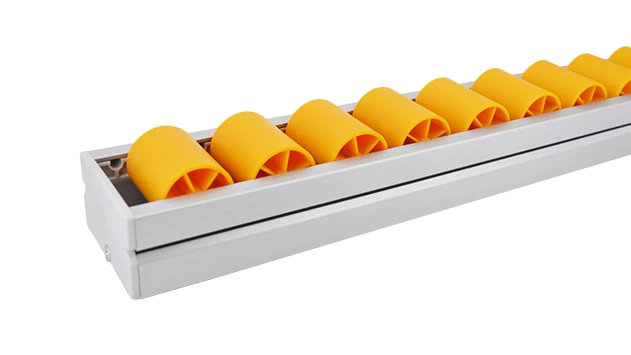
First things first: let's break down what this roller track is. It's made from high-quality aluminum, which means it's lightweight but tough enough to handle heavy automotive parts. The yellow color isn't just for looks—it's a safety standard, making the track easy to spot in busy factories, so workers don't trip over it or miss it when moving parts. The rollers are smooth, so parts glide along without getting stuck, and it's designed to work seamlessly with other lean components like lean pipe systems and flow racks.
Why It Matters for Automotive Parts Handling
Automotive manufacturing is all about precision and speed. Every second wasted on moving parts from one place to another adds up, and every scratch on a part means a delay or a cost. Let's see how the 60 Aluminum Roller Track Yellow solves these problems:
1. Smooth, Damage-Free Part Flow
Imagine moving a delicate engine part—like a camshaft—from storage to the assembly line. If you're using a rough surface or a stiff rack, you risk scratching or bending it. But with this roller track, the part slides smoothly. The aluminum rollers are gentle on the part's surface, and the track's design ensures there's no friction that could cause damage. For interior parts like door panels or dashboard components, this is even more critical—you don't want to ruin the finish before the car ever hits the road.
2. Flexibility to Adapt to Changing Lines
Automotive factories don't stay the same forever. New models come out, production lines get reconfigured, and you need equipment that can keep up. The 60 Aluminum Roller Track Yellow is part of a lean system, which means it's modular. You can easily add or remove sections, attach it to lean pipe frames, or integrate it into flow racks. For example, if your plant starts making a new SUV model with larger parts, you can adjust the track layout without buying entirely new equipment. That's a big win for cost savings and efficiency.
3. Durability That Stands Up to Automotive Environments
Automotive plants are tough places. There's oil, grease, and fluids everywhere, which can corrode metal over time. But aluminum is resistant to corrosion, so this roller track will last longer than steel alternatives. Plus, the yellow coating doesn't fade easily, so it stays visible for safety even after years of use. You won't have to replace it every few months—this is an investment that pays off.
4. Safety First
Safety is non-negotiable in automotive manufacturing. The yellow color of the track makes it stand out in busy areas, reducing the risk of tripping. The smooth rollers also prevent parts from getting jammed, which can lead to accidents when workers try to force them. And since it's lightweight, installing or moving the track doesn't require heavy lifting, which cuts down on back injuries.

Real-World Example: How One Plant Transformed Their Brake Line
Let's take a concrete example. A mid-sized automotive plant was having issues with their brake assembly line. The old system used wooden racks to hold brake calipers, and workers had to lift each caliper to move it to the next station. This was slow—each worker spent 15 minutes an hour just moving parts—and there were frequent scratches on the calipers, leading to rework. They decided to switch to flow racks equipped with the 60 Aluminum Roller Track Yellow. Here's what happened: - Workers no longer had to lift parts—they just slid them along the track. This cut the time spent moving parts by 70%. - The smooth rollers eliminated scratches, so rework dropped by 85%. - When the plant updated the brake design to fit a new car model, they could easily adjust the track layout by adding lean pipe sections. No new racks needed—saving them thousands of dollars. The plant manager said, "This roller track didn't just improve our line—it changed how we think about parts handling. We're now using it in three other lines, and the results are the same."

How It Works With Other Lean Components
The 60 Aluminum Roller Track Yellow isn't a standalone product—it's part of a bigger picture. Let's see how it integrates with other key components:
Lean Pipe Systems
Lean pipe (also known as aluminum lean pipe) is used to build frames for racks, workbenches, and other equipment. The roller track can be attached to these frames easily, so you can create custom setups. For example, you can build a flow rack with a lean pipe frame and add the 60 Aluminum Roller Track Yellow to the shelves. This gives you a flexible storage solution that's easy to reconfigure.
Flow Racks
Flow racks are essential for FIFO (first-in-first-out) inventory management. Adding the 60 Aluminum Roller Track Yellow to flow racks means parts move from the back to the front automatically. For automotive parts like nuts, bolts, or small sensors, this ensures that the oldest parts are used first, reducing waste and keeping inventory fresh.
Conveyors
Conveyors are used to connect different stations in the assembly line. The roller track can be integrated with conveyor systems to create a continuous flow. For example, parts from the warehouse can go onto a conveyor with the roller track, then move directly to the assembly station. This eliminates the need for manual transport, saving time and reducing errors.
ESD Workbenches
Automotive manufacturing uses a lot of electronic components—like sensors or infotainment systems. These parts are sensitive to static electricity, so you need ESD workbenches to prevent damage. The 60 Aluminum Roller Track Yellow can be attached to ESD workbenches, so parts move smoothly to the bench without picking up static. This is a must-have for any plant that handles electronic automotive parts.
Comparing the 60 Aluminum Roller Track Yellow to Other Options
You might be wondering: why not use plastic or steel roller tracks? Let's look at the differences:
| Feature | 60 Aluminum Roller Track Yellow | Steel Roller Track | Plastic Roller Track |
|---|---|---|---|
| Material | High-quality aluminum | Steel | Plastic |
| Weight | Lightweight (easy to install/reposition) | Heavy (hard to move) | Very light (but less durable) |
| Corrosion Resistance | Excellent (resists oil/fluids) | Poor (rusts easily) | Good (but can crack) |
| Safety Visibility | Yellow (highly visible) | Usually gray/black (hard to spot) | Various colors (but not always safety-compliant) |
| Compatibility with Lean Components | Seamless (works with lean pipe, flow racks) | Limited (hard to attach to lean systems) | Limited (not as sturdy for heavy parts) |
| Durability | Long-lasting (resists wear and tear) | Durable but heavy | Less durable (can break under heavy loads) |
More Automotive Use Cases to Consider
The 60 Aluminum Roller Track Yellow isn't just for one part of the plant—it's useful everywhere:
Engine Assembly Line
Engine parts like cylinder heads, pistons, and crankshafts are heavy and delicate. Using the roller track to move these parts ensures they don't get damaged, and the smooth flow keeps the assembly line moving quickly. For example, a plant can use the track to move a cylinder head from the machining station to the assembly station without any manual lifting.
Interior Parts Manufacturing
Door panels, seats, and dashboard components need to stay scratch-free. The roller track's smooth surface and gentle rollers are perfect for this. Workers can slide the parts along the track from the sewing station (for seats) to the assembly line without worrying about ruining the fabric or plastic.
Warehouse Storage
Warehouses in automotive plants store thousands of parts. Flow racks with the 60 Aluminum Roller Track Yellow help keep these parts organized. For example, storing brake pads in a flow rack with the track ensures that the oldest pads are used first, which is important for inventory control. The track also makes it easy to access parts—you don't have to dig through a pile to find what you need.
Quality Control (QC) Station
After parts are assembled, they go to QC. Using the roller track to move parts to the QC station saves time. Pairing it with an ESD workbench means that electronic parts are tested without static damage. This helps the QC team work faster and more accurately.
Why Choose This Roller Track for Your Plant?
When you're looking for lean components for your automotive plant, you want a solution that fits seamlessly into your existing setup. This roller track is part of a complete lean system, so you can get everything you need—from the track to lean pipe, flow racks, and conveyors—from a single supplier. This saves you time and money, and you know all the parts will work together without issues.
Final Thoughts
The 60 Aluminum Roller Track Yellow is more than just a piece of equipment—it's a tool that helps automotive plants work smarter, not harder. It solves common problems like part damage, slow flow, and inflexible lines. Whether you're building engines, assembling interiors, or storing parts in the warehouse, this roller track can make a big difference. If you're looking to improve your automotive parts handling, consider the 60 Aluminum Roller Track Yellow. It's durable, flexible, safe, and part of a complete lean system that can transform your plant. So why wait? Give your workers the tools they need to succeed, and watch your production line become more efficient than ever.