- Company Articles
- Products and Technology
- Product knowledge
- Automotive Parts Handling: Flat Swivel Castor Wheel with Brake for Component Trolleys

Automotive Parts Handling: Flat Swivel Castor Wheel with Brake for Component Trolleys
Related Product
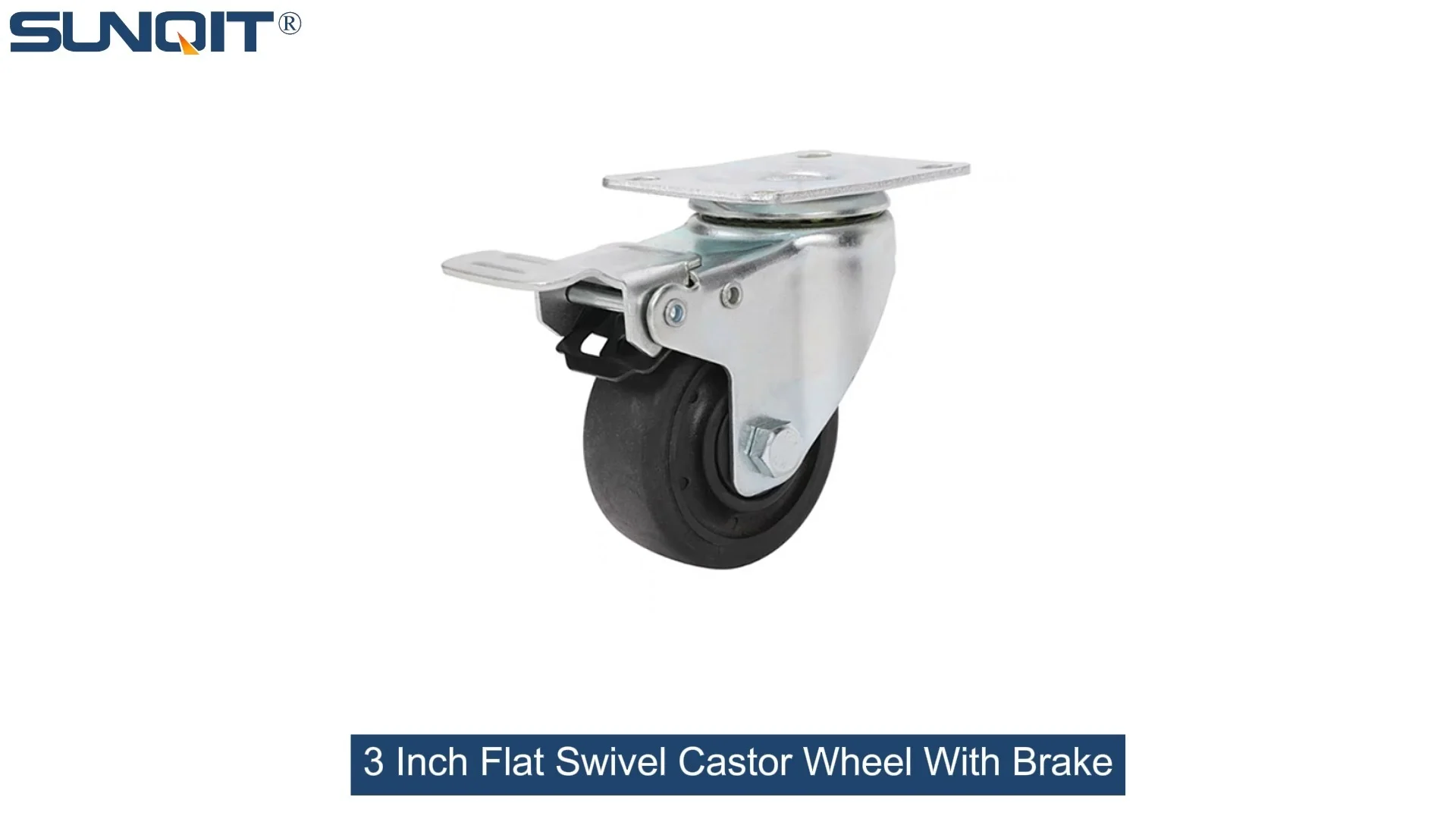
Flat Swivel Castor Wheel With Brake
Chair Casters Ball Bearing Wheels Rubber Base with brake design. Resistant to abrasion, impact and corrosion. Heavy payload can hold 70Kgs per pcs,which can make it works at a stable and smooth status.
Walk into any automotive manufacturing plant, and you'll quickly realize that the heartbeat of production isn't just the assembly lines or robotic arms—it's the quiet, relentless movement of parts. From tiny screws to heavy engine blocks, every component has a journey: from storage racks to workbenches, from inspection stations to final assembly. When that journey hits a snag—whether a trolley jams in a tight aisle, a load shifts unexpectedly, or a worker strains to push a heavy cart—the entire operation feels the ripple effect. Delays stack up, frustration rises, and the carefully calibrated rhythm of lean manufacturing stumbles. In these moments, it's easy to overlook the unsung heroes keeping things moving: the casters beneath those component trolleys. Specifically, the flat swivel castor wheel with brake has emerged as a game-changer, turning cumbersome handling into a smooth, safe, and efficient process. Let's dive into why this small but mighty component matters, how it integrates with tools like turnover trolleys and racks , and why it's become a cornerstone of modern lean system implementations in automotive facilities.
The Hidden Costs of Clunky Component Handling
To appreciate the impact of a well-designed caster, it helps to first understand the chaos of outdated handling equipment. Take, for example, a mid-sized automotive parts supplier I visited last year. Their facility produced brake components for major automakers, and their storage area was lined with metal turnover trolleys—sturdy, but fitted with basic, fixed casters. The problem? The aisles between storage racks were barely wide enough for two trolleys to pass, and the fixed wheels meant workers had to maneuver in wide arcs, often backing up or recruiting a coworker to help pivot. "By the end of the day, my shoulders ache just from pushing carts," one assembler told me. "And don't get me started on the brakes—half the time, they don't lock properly, so we have to wedge wood blocks under the wheels to keep trolleys from rolling during loading."
This wasn't just a comfort issue. The plant's lean coordinator shared their data: over six months, 12% of production delays were linked to material handling. Trolleys getting stuck in corners led to missed pick-up times for assembly lines. Unreliable brakes caused two minor incidents where loads shifted, damaging parts worth thousands of dollars. And the time wasted on maneuvering? It added up to nearly 40 hours of lost labor per week—time that could have been spent on value-adding tasks like quality checks or process improvements.
These struggles are universal in automotive manufacturing. Parts are heavy (a single transmission housing can weigh 80+ pounds), storage areas are often optimized for density over space, and workflows demand precision—parts must arrive at the workbench exactly when needed, not a minute late. Traditional casters, with their limited swivel range, weak brakes, or rigid fixed wheels, simply can't keep up. That's where the flat swivel castor wheel with brake steps in: designed to address these specific pain points, it transforms component trolleys from a source of frustration into a tool for efficiency.
What Makes a Flat Swivel Castor Wheel with Brake Different?
At first glance, a caster might seem like a simple part: a wheel, a frame, and a brake. But in automotive settings, "simple" isn't enough. Let's break down the design features that make these casters stand out, and why each matters for handling heavy, delicate, or time-sensitive parts.
1. The "Flat Swivel" Advantage: Maneuverability in Tight Spaces
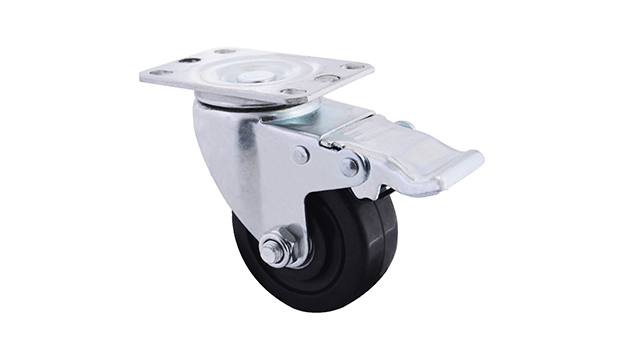
Traditional swivel casters often have a tall, bulky design, with the swivel mechanism sitting high above the wheel. This raises the center of gravity of the trolley, making it prone to tipping when loaded unevenly—risky when hauling heavy engine parts. Worse, the tall profile can limit clearance in low-ceiling storage areas or under workbenches. Flat swivel casters solve this by keeping the swivel joint close to the wheel, lowering the overall height. This not only improves stability but also allows the wheel to rotate 360 degrees with minimal resistance. Imagine pushing a trolley loaded with suspension parts down a narrow aisle between racks: with flat swivel casters, a single worker can pivot smoothly around corners, navigate between other carts, and even reverse without jerking—no more stopping to readjust or recruiting help.
2. Brake Reliability: When "Staying Put" Matters Most
In automotive plants, a caster's brake isn't just a safety feature—it's a precision tool. Think about a turnover trolley parked at a workbench: during assembly, the worker needs the trolley to stay perfectly still, even if bumped by a passing forklift or another cart. A weak brake might slip, causing the trolley to roll and jostle the parts, potentially damaging sensitive components like fuel injectors or electrical harnesses. Flat swivel casters with brakes address this with robust, easy-to-engage mechanisms. Many models use a "total lock" brake, which locks both the wheel and the swivel joint simultaneously. This dual locking prevents both rolling and swiveling, ensuring the trolley stays anchored in place. Even better, the brake lever is designed for quick, one-handed operation—no bending or struggling, which matters when a worker's hands are full of tools or parts.
3. Durability for Heavy Loads and Rough Floors
Automotive facilities aren't gentle on equipment. Floors are often concrete, scarred by years of forklift traffic. Trolleys carry loads that can exceed 500 pounds, day in and day out. A flimsy caster wheel would crack, warp, or wear down quickly, leading to frequent replacements and unexpected downtime. Flat swivel casters are built to withstand this abuse. The wheels themselves are typically made from high-density polyurethane or rubber, which absorbs shocks (protecting delicate parts) and resists wear. The swivel joints use precision ball bearings, sealed to keep out dirt, grease, and metal shavings—common in automotive environments. Even the mounting plate, which attaches the caster to the trolley, is reinforced with steel, ensuring it doesn't bend under heavy loads. For suppliers, this durability translates to lower maintenance costs; for workers, it means fewer interruptions and smoother, more predictable movement.
Integration with Turnover Trolleys, Racks, and Lean Systems
A great caster is only as effective as the system it's part of. In automotive manufacturing, that system revolves around lean principles: eliminating waste, streamlining flow, and empowering workers to focus on value. Let's explore how flat swivel castor wheels with brake align with two key tools in this system: turnover trolleys and racks, and the broader lean workflow.
Turnover Trolleys and Racks: From Storage to Workbench, Seamlessly
Turnover trolleys and racks are the workhorses of parts storage and transport. Designed to hold bins, trays, or even entire pallets of components, they need to move easily from the warehouse to the assembly line, then back for refilling. Without the right casters, this "turnover" process becomes a bottleneck. For example, a rack loaded with body panels might sit in storage for days, then need to be wheeled directly to the welding station. If the casters stick, the trolley might scrape the floor, damaging both the surface and the panels. If the brakes fail, the rack could roll into a welding robot, causing costly downtime.
Flat swivel casters with brakes solve these issues by making turnover trolleys more versatile. Their low profile fits under standard racking systems, so trolleys can slide directly into storage slots when not in use, saving floor space. The smooth swivel makes it easy to position the rack exactly at the workbench—no more reaching or stretching to grab parts from an awkwardly placed trolley. And the reliable brake ensures the rack stays put while workers unload components, reducing the risk of parts falling or shifting. In one plant I visited, switching to these casters on their turnover racks cut the time to restock assembly stations by 30%—simply because workers could move, position, and secure the racks in seconds, not minutes.
Lean Systems: Reducing Waste, One Movement at a Time
Lean manufacturing is all about eliminating "muda"—waste in all its forms: wasted time, wasted motion, wasted materials. In many facilities, material handling is a hidden source of muda. Workers walking back and forth to fetch parts, struggling to move trolleys, or stopping to fix stuck casters—all of these are non-value-added activities. Flat swivel castor wheels with brake attack this waste head-on.
Consider the "5S" framework (Sort, Set in Order, Shine, Standardize, Sustain), a cornerstone of lean systems. "Set in Order" requires tools and materials to be stored in their "point of use"—close to where they're needed. With maneuverable casters, trolleys can be positioned right at the workbench, so workers don't waste steps fetching parts. "Standardize" means creating consistent processes; reliable casters ensure that moving a trolley is the same every time, whether the worker is new or experienced. And "Sustain"? When tools work well, workers are more likely to follow procedures—no cutting corners by leaving trolleys in the aisle because they're too hard to push back to storage.
Beyond 5S, these casters support continuous flow, another lean principle. In an ideal lean workflow, parts move smoothly from one process to the next, like water in a stream. When a trolley gets stuck or a brake fails, the stream dams up. With flat swivel casters, the flow stays steady: parts arrive at the workbench on time, empty trolleys are quickly returned for refilling, and bottlenecks are minimized. Over time, these small, consistent improvements add up to big gains in productivity and morale.

Traditional Casters vs. Flat Swivel Castors with Brake: A Real-World Comparison
To put these benefits into perspective, let's look at a side-by-side comparison of traditional casters and flat swivel castors with brake, based on feedback from automotive plants that made the switch. The data below comes from a six-month study at a mid-sized supplier of powertrain components, where 50 trolleys were upgraded with the new casters, and 50 kept their original equipment.
| Metric | Traditional Casters | Flat Swivel Castors with Brake | Improvement |
|---|---|---|---|
| Time to move a loaded trolley (50ft aisle) | 45 seconds | 22 seconds | 51% faster |
| Worker-reported strain (1-10 scale) | 7.2/10 | 3.5/10 | 51% reduction |
| Trolley-related incidents (e.g., tipping, shifting loads) | 12 incidents/week | 2 incidents/week | 83% reduction |
| Maintenance time (hours/week) | 6.5 hours | 1.2 hours | 82% reduction |
| Worker satisfaction (1-10 scale) | 4.8/10 | 8.3/10 | 73% improvement |
*Data from a six-month study at a powertrain component manufacturer, n=100 trolleys (50 control, 50 upgraded).
The numbers speak for themselves: faster movement, less strain, fewer accidents, and happier workers. But the most telling feedback came from the workers themselves. "I used to dread moving the brake caliper trolley," said one assembler. "It would get stuck every time I tried to turn, and the brake felt like a joke—it would slide if you breathed on it. Now? I can push it with one hand, lock it in place with my foot, and focus on building parts, not fighting the cart." Another noted, "The old casters would scrape the floor so bad, we had to replace them every few months. These new ones? They're quiet, smooth, and I haven't had to adjust a single one since we got them."

Choosing the Right Caster: Key Considerations for Automotive Applications
Not all flat swivel castor wheels with brake are created equal. To maximize their benefits, you'll need to choose the right model for your specific needs. Here are the critical factors to consider when selecting casters for component trolleys, turnover racks, or workbenches in automotive settings.
Load Capacity: Match the Caster to the Parts
Start with the basics: how much weight will the trolley carry? A trolley for small fasteners might need a 200-pound capacity, while one hauling engine blocks could require 1,200+ pounds. Always choose a caster with a load rating higher than your maximum expected load—overloading leads to premature wear, brake failure, or even wheel collapse. Look for casters with reinforced frames and double-wheel designs for heavier loads; they distribute weight more evenly and reduce stress on the wheel bearings.
Floor Type: Protect Surfaces and Improve Traction
Concrete floors, epoxy coatings, and even polished concrete each interact differently with caster wheels. Rubber wheels are ideal for concrete, as they absorb shocks and reduce noise, but they can mark epoxy floors. Polyurethane wheels are a better choice for epoxy or painted surfaces—they're non-marking and offer excellent traction without sticking. For rough or uneven floors (common in older plants), consider wheels with a larger diameter (4-6 inches) to roll over cracks and debris more easily.
Brake Type: Total Lock vs. Directional Lock
As mentioned earlier, total lock brakes (which lock both wheel rotation and swivel) are best for automotive settings, where stability is critical. Directional locks only prevent the wheel from turning, leaving the swivel joint free to move—risky if the trolley is bumped. Some casters also offer "foot-operated" brakes, which are easier to engage than hand brakes when workers have gloves on or hands full. Test the brake lever to ensure it's easy to reach and requires minimal force to lock/unlock.
Compatibility with Trolleys and Racks
Finally, ensure the caster's mounting plate fits your existing trolleys or racks. Most manufacturers offer standard plate sizes (e.g., 4x4 inches, 5x5 inches), but custom plates are available if your equipment has unique mounting holes. If you're investing in new turnover trolleys, look for models designed to work with flat swivel casters—they'll have reinforced mounting points and a low deck height to maximize the caster's stability benefits.
Keeping Casters Rolling: Maintenance Tips for Longevity
Even the best casters need care to perform at their best. Fortunately, flat swivel castor wheels with brake require minimal maintenance—especially compared to traditional models. Here's a simple routine to keep them in top shape:
- Daily Inspection: Have workers check brakes for wear or sticking, and wheels for debris (e.g., metal shavings, loose screws) that could jam the swivel joint. A quick kick or spin of the wheel can reveal issues early.
- Weekly Lubrication: Apply a light machine oil to the swivel joint and wheel bearings. Avoid heavy greases, which can attract dirt and slow rotation.
- Monthly Tightening: Check mounting bolts for looseness—vibration from moving heavy loads can cause them to wiggle free over time. A quick wrench turn prevents the caster from shifting or detaching.
- Quarterly Deep Clean: Use a wire brush to remove built-up grime from the swivel raceway (the channel where the swivel joint rotates). This ensures smooth 360-degree movement and prevents rust.
By following this routine, most facilities find their casters last 2-3 years—double the lifespan of traditional models. And when replacement is needed, look for suppliers that offer easy-to-swap parts (e.g., wheels, brakes) instead of requiring full caster replacement; this cuts maintenance costs further.
Beyond the Caster: Building a Lean, Worker-Centric Handling System
At the end of the day, a flat swivel castor wheel with brake is more than just a part—it's a symbol of a broader shift in manufacturing: putting workers first. When we design tools that reduce strain, improve safety, and make daily tasks easier, we don't just boost productivity—we show employees that their well-being matters. In automotive plants, where precision and reliability are everything, this mindset translates to better quality, lower turnover, and a culture of continuous improvement.
Whether you're upgrading existing turnover trolleys, designing a new lean workflow, or simply looking to reduce the daily frustrations of material handling, don't overlook the casters. They may be small, but their impact is huge: smoother movement, safer workspaces, and a more efficient, connected operation. In the end, that's what lean manufacturing is all about—not just eliminating waste, but creating systems that work with people, not against them. And in that mission, the flat swivel castor wheel with brake is a quiet but powerful ally.