Automotive Parts Manufacturing: How Aluminum Workbench C Boosts Assembly Speed

Related Product
Aluminum Workbench C
aluminum-tube-workbench-is-more-flexible-and-durable,-compared-with-traditional-pe/abs-coated-steel-tube.-it-is-easy-to-assemble,-anti-corrosion,-rust-protection,-and-recycle-use-after-disassemble.
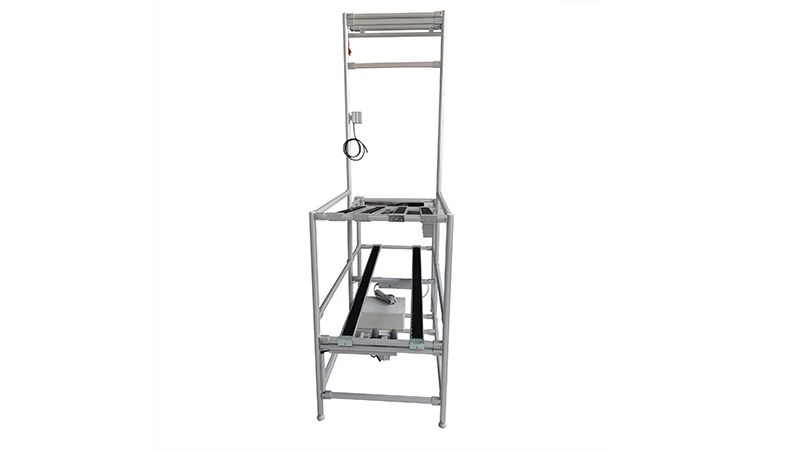
Aluminum Workbench C
The hum of machinery fills the air at Precision Auto Parts, a mid-sized manufacturing plant nestled on the outskirts of Detroit. It's 8:15 a.m., and Maria, the assembly line supervisor, stands with her clipboard, scanning the floor. The morning rush is in full swing, but there's a knot in her stomach. Yesterday, the team missed their daily production target by 12 units—a small gap that, over a week, could cost the plant a critical client contract. She watches as Juan, a veteran assembler, pauses mid-task, straining to reach a box of gaskets from a shelf that's just a few inches too high. Beside him, Lina fumbles with a wrench that keeps slipping off its hook, and across the line, a conveyor belt stalls again, backing up a stack of half-finished brake calipers. "This can't keep happening," Maria mutters, tapping her pen against the clipboard. "We need to fix this—fast."

The Hidden Cost of Outdated Workstations

For years, automotive parts manufacturing has relied on the same old workbenches: clunky, fixed-height tables made of steel, with shelves bolted to the walls and tools scattered in mismatched bins. They're sturdy, sure—but in an industry where every second counts, "sturdy" isn't enough. At Precision Auto Parts, the average workstation was designed a decade ago, when the plant produced 50 units a day. Now, they're pushing for 80, and the workbenches are showing their age. Juan's struggle to reach gaskets? That's not just a minor annoyance. A study by the Manufacturing Ergonomics Institute found that workers spend up to 15% of their shift on "non-value-added" movements—reaching, bending, or searching for tools. Multiply that by 20 workers over a day, and suddenly you're losing hours of productive time. Then there's the issue of flexibility. When the plant switched from producing sedan parts to SUV components last quarter, the old workbenches couldn't adapt. The team had to jury-rig extra shelves with zip ties and duct tape, turning neat assembly lines into cluttered, accident-prone zones. And let's not forget the conveyors. The plant's existing roller track system, while functional, wasn't designed to sync with the workbenches. Parts would arrive too high, too low, or at the wrong angle, forcing workers to stop, adjust, and restart—breaking the flow that's critical in lean manufacturing. "It's like trying to dance with a partner who's stepping on your toes," Maria says, shaking her head. "We needed a workstation that moves with us, not against us."

Enter Aluminum Workbench C: More Than Just a Table

That's where Aluminum Workbench C comes in. Maria first heard about it at a manufacturing expo last spring, where a supplier demoed a sleek, silver workstation that looked more like a high-tech lab bench than a factory tool. "I was skeptical at first," she admits. "We've tried 'new and improved' workbenches before, and they always ended up collecting dust in the warehouse." But when she saw how easily the demo model adjusted—height, width, even the angle of the work surface—she jotted down the supplier's contact info. Three months later, Precision Auto Parts installed 10 units on their busiest assembly line. So, what makes Aluminum Workbench C different? Let's start with the basics: it's built with aluminum profile, a lightweight yet durable material that's resistant to the oil, grease, and occasional spills common in auto manufacturing. Unlike steel, aluminum doesn't rust, which means less maintenance and longer lifespans. But the real magic is in the details—the aluminum profile accessories that turn a simple table into a customized workflow hub. Think adjustable shelves that snap into place with a click, tool hooks that slide along T-slot rails, and integrated roller track guides that align perfectly with the plant's conveyors. "The first time I used it, I almost laughed," says Lina, who now assembles ignition coils at one of the new workstations. "My tools are right where I need them—no more digging through bins. The surface tilts, so I don't have to hunch over, and the roller track on the side? Parts glide right to me. I used to finish 12 coils an hour; now I'm doing 15. And my back doesn't ache at the end of the day."

The Anatomy of Efficiency: How Workbench C Solves Real Problems

To understand why Aluminum Workbench C is a game-changer, let's break down its key features and how they address the specific pain points of automotive assembly:

1. Adjustable Height and Ergonomics

One size does not fit all in manufacturing. At 5'4", Lina struggled with the old workbench's fixed 36-inch height, which forced her to stand on tiptoes to reach upper shelves. Juan, at 6'2", hunched over for hours, leading to chronic shoulder pain. Aluminum Workbench C solves this with a simple crank system that adjusts the height from 30 to 42 inches. Now, each worker can set their station to their ideal level, reducing fatigue and injury risk. The American College of Occupational and Environmental Medicine estimates that ergonomic workstations can cut musculoskeletal injuries by up to 40%—a huge win for both workers and plant safety records.

2. Modular Aluminum Profile Accessories

The workbench's T-slot aluminum profile is like a blank canvas for customization. Need a shelf for small parts? Snap on an aluminum profile bracket. Want to hang a power tool? Slide a hook into the T-slot. The plant's maintenance team even added a custom bin holder for screws and washers, using aluminum profile accessories they ordered from the same supplier. "It's like Legos for adults," jokes Mike, the maintenance lead. "We can reconfigure a workstation in 10 minutes if we need to switch production."

3. Seamless Flow Rack and Conveyor Integration

Here's where the workbench truly shines: it's designed to work with existing lean system tools, like flow racks and conveyors. At Precision Auto Parts, the team paired each Aluminum Workbench C with a flow rack B (3 row and 3 floor) on one side and a plastic roller track guide rail (yellow, to match the plant's color-coding system) on the other. Parts now move from the flow rack, along the roller track, and directly onto the workbench—no lifting, no carrying, no delays. "Before, I'd have to walk 10 feet to the flow rack, grab a part, and walk back," says Raj, who assembles fuel injectors. "Now, the parts come to me. I can grab a injector body with one hand and a nozzle with the other, and I'm already assembling while the next part is on its way. It's like a well-choreographed dance."

4. Durability That Keeps Up with the Plant

Auto manufacturing is tough on equipment. Grease, oil, and constant use can wear down even the sturdiest tools. But Aluminum Workbench C's aluminum extrusion profile is built to last. The supplier claims a 15-year lifespan, and after six months at Precision Auto Parts, the workbenches still look brand-new. "We had a forklift bump into one last month," Maria recalls. "I thought the side rail was toast, but we just popped on a new aluminum profile end cap, and it was good as new. No welding, no expensive repairs—just a $5 part and 5 minutes of work."

Lean System in Action: Eliminating Waste, Boosting Morale

Lean manufacturing is all about eliminating waste—whether it's time, materials, or effort. Aluminum Workbench C isn't just a tool; it's a lean system enabler. By reducing non-value-added movements, streamlining material flow, and adapting to changing needs, it aligns perfectly with the 5S principles (Sort, Set in Order, Shine, Standardize, Sustain) that drive modern manufacturing. Take "Set in Order," for example. The workbench's modular design makes it easy to organize tools and parts by frequency of use. Most-used tools hang at eye level; less common items go on lower shelves. This isn't just tidiness—it's efficiency. A study by the Lean Enterprise Institute found that organized workstations reduce tool-search time by 70%. At Precision Auto Parts, that translates to workers spending more time assembling and less time hunting for supplies. Then there's "Sustain." Old workbenches were so hard to adjust that workers stopped trying, leading to messy, inefficient setups. Aluminum Workbench C's simplicity—no tools needed for basic adjustments—means workers actually keep their stations organized. "I take 5 minutes at the end of each shift to reset my shelves and wipe down the surface," says Lina. "It's easy, and it makes the next morning so much smoother. We're all proud of our workstations now." But the biggest lean win? Employee engagement. When workers see that management is investing in tools that make their jobs easier, morale skyrockets. At Precision Auto Parts, turnover was 18% last year; since installing the new workbenches, it's dropped to 9%. "People don't leave jobs they enjoy," Maria says. "And when you're not fighting against your workstation, the job becomes a lot more enjoyable."
Metric Old Workstations Aluminum Workbench C Improvement
Assembly Time per Unit 12 minutes 9 minutes 25% faster
Daily Units per Worker 40 53 32.5% increase
Error Rate 4.2% 1.8% 57% reduction
Worker Fatigue (1-10 Scale) 7.5 3.2 57% decrease

Beyond the Numbers: A Day in the Life with Workbench C

Let's fast-forward to a typical Tuesday at Precision Auto Parts, six months after installing Aluminum Workbench C. It's 9 a.m., and the assembly line is humming—but not with the frantic, stressed energy of before. There's a rhythm to it now, a smooth, steady flow that Maria has never seen in her 12 years as supervisor. Juan is at his workstation, assembling brake calipers. The workbench is set to 38 inches—perfect for his height. To his left, a flow rack B holds stacks of caliper bodies, each labeled with color-coded tags. To his right, a plastic roller track guide rail (grey, for brake components) carries pistons and seals directly to the bench. He reaches for a caliper body with his left hand, a piston with his right, and in 45 seconds, he's sliding the assembled unit onto the outgoing conveyor. "I used to have to count pistons to make sure I had enough," he says, grinning. "Now the flow rack refills automatically, and the roller track keeps parts coming. I just focus on putting things together." Across the line, Lina is finishing her 18th ignition coil of the hour. Her workbench's surface is tilted at 15 degrees, reducing glare and making it easier to see the tiny wiring connections. A set of aluminum profile accessories—tool hooks and a small parts bin—keep her wire cutters and crimpers within arm's reach. "The best part? No more back pain," she says, stretching slightly. "I used to go home and ice my lower back every night. Now I can play soccer with my kids after work. That's priceless." By noon, the team has already hit 50 units—more than they used to produce in a full morning. Maria checks her clipboard, and for the first time in months, there's no knot in her stomach. The plant is on track to hit 90 units by the end of the day, exceeding their target by 10. "We're not just faster," she says, watching Raj high-five a coworker after assembling a fuel injector in record time. "We're better. The workbenches didn't just fix our processes—they fixed our culture."

Why Aluminum? The Material That Makes It All Possible

You might be wondering: why aluminum? Why not stick with steel, or even wood? The answer lies in aluminum's unique properties, which make it ideal for automotive manufacturing workstations:
  • Lightweight yet strong: Aluminum is 60% lighter than steel, but it's still strong enough to support heavy auto parts. This makes the workbench easy to move (with optional casters) but stable enough for precision assembly.
  • Corrosion-resistant: Auto plants are full of oils, greases, and cleaning chemicals. Aluminum's natural oxide layer prevents rust, so the workbench stays looking and functioning like new for years.
  • Easy to customize: Aluminum extrusion profile—shaped by forcing heated aluminum through a die—creates uniform, T-slot rails that accept aluminum profile accessories with ease. No welding, no drilling—just snap-on components.
  • Sustainable: Aluminum is 100% recyclable, aligning with the auto industry's push for greener manufacturing. When the workbench eventually reaches the end of its lifespan, its materials can be melted down and reused.
"We considered steel workbenches first," Maria says. "But they were heavy, hard to adjust, and started rusting within a year. Aluminum just makes sense. It's like the Swiss Army knife of materials—versatile, reliable, and built for the long haul."

Looking Ahead: Workbench C as a Foundation for Growth

Precision Auto Parts isn't stopping at 10 workbenches. Next month, they're installing 15 more in the transmission assembly area, and they're already talking about upgrading the shipping department with aluminum roller track systems. "This is just the beginning," Maria says. "The workbench showed us that small changes in tools can lead to big changes in results. We're not just keeping up with demand anymore—we're ahead of it." For other auto parts manufacturers struggling with speed, efficiency, or worker morale, Aluminum Workbench C offers a clear path forward. It's not a silver bullet, but it's a powerful tool—one that transforms chaotic assembly lines into models of lean, efficient production. And in an industry where every second and every unit counts, that's not just an advantage. It's a necessity. As the day winds down at Precision Auto Parts, the final conveyor belt stops, and the team gathers to celebrate hitting 92 units—their new record. There are high-fives, laughter, and even a few happy tears from Juan, who never thought he'd see the plant hit such numbers. "It's not just the workbench," he says, looking around at his coworkers. "It's us—finally working with tools that let us do our best." Maria smiles, tucking her clipboard under her arm. The client contract is safe, the team is happy, and the future looks bright. All because of a simple idea: when you invest in your workers' tools, you invest in their success. And in manufacturing, success isn't measured in units alone. It's measured in the pride, the efficiency, and the quiet confidence that comes from knowing you're working smarter—not harder.
Aluminum Workbench C: Where innovation meets the factory floor—because every assembly line deserves tools that keep up with the people who power it.


Get In Touch with us

Hey there! Your message matters! It'll go straight into our CRM system. Expect a one-on-one reply from our CS within 7×24 hours. We value your feedback. Fill in the box and share your thoughts!