- Company Articles
- Products and Technology
- Application Cases
- Automotive Parts Production: Four Way Straight Lean Pipe Joint Applications in Assembly Cells

Automotive Parts Production: Four Way Straight Lean Pipe Joint Applications in Assembly Cells
Related Product
Four Way Straight Lean Pipe Joint
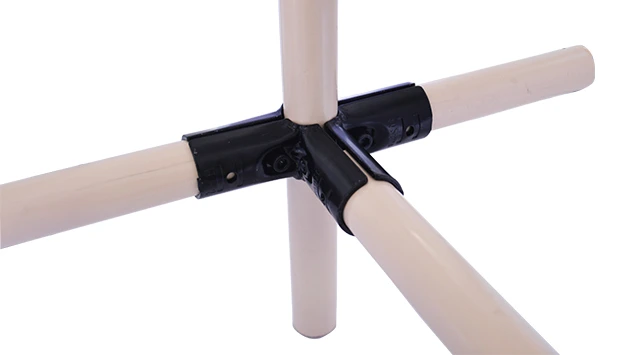
Four way lean pipe joint for 4 pcs 28MM lean pipe connection in straight angle, which used widely in workbench, flow rack, hand trolley frame connection.
In the fast-paced world of automotive manufacturing, every second counts. A single delay in the assembly line can ripple through the entire production schedule, leading to missed deadlines, increased costs, and frustrated teams. Over the years, manufacturers have turned to lean principles to streamline operations, eliminate waste, and boost efficiency. At the heart of many successful lean systems lies a humble yet powerful component: the four way straight lean pipe joint. This unassuming piece of hardware has quietly revolutionized how assembly cells are designed, built, and adapted—especially in automotive parts production, where precision and flexibility are non-negotiable.
The Challenges of Modern Automotive Parts Production
Automotive parts production is a complex dance of moving components, skilled labor, and tight tolerances. From engine parts to interior trim, each piece must meet exact specifications, and assembly lines must adapt quickly to model changes, seasonal demand spikes, or design updates. Traditional assembly setups often rely on fixed, rigid structures—welded steel workbenches, static shelving, and inflexible conveyor systems. While these might work for long-running, single-model production, they become liabilities when a manufacturer needs to switch between SUV door panels in the morning and sedan bumpers in the afternoon.
Consider the scenario at a mid-sized automotive parts plant in Michigan. A few years ago, their assembly cells for transmission components were built with bolted steel frames. When the company won a contract to produce a new, smaller transmission for electric vehicles, they faced a problem: the existing workbenches were too large, the material racks couldn't accommodate the new part sizes, and reconfiguring the line would require weeks of downtime and costly welding work. The team was stuck between missing the contract deadline or overspending on a temporary fix. This is where lean systems, and specifically the four way straight lean pipe joint, entered the picture.
Lean Systems: More Than Just a Buzzword
Lean manufacturing isn't about cutting corners or reducing quality—it's about creating value by minimizing waste. Waste, in lean terms, includes everything from excess inventory and unnecessary movement to waiting times and overproduction. To tackle these, lean systems prioritize flexibility, modularity, and employee empowerment. Instead of building assembly cells around fixed structures, lean designs focus on adaptability: structures that can be rearranged, extended, or modified in hours, not weeks.
At the core of these adaptable structures are lean pipes (also known as "lean tubes") and their accompanying joints. Lean pipes are typically made of steel or aluminum, coated in plastic or rubber to prevent damage to parts, and come in various diameters. But it's the joints that make them truly versatile. Joints connect pipes at different angles, allowing teams to build everything from workbenches and material racks to flow racks and conveyor systems. Among the many types of joints available, the four way straight lean pipe joint stands out for its ability to create stable, multi-directional structures with minimal effort.

The Four Way Straight Lean Pipe Joint: A Closer Look
The four way straight lean pipe joint is exactly what its name suggests: a connector that joins four lean pipes in a straight, linear configuration (think of a cross shape, but with pipes extending in four directions along the same plane). Made from durable materials like die-cast aluminum or reinforced plastic, these joints are designed to lock pipes securely in place while still allowing for quick disassembly. Most feature a simple clamping mechanism—tighten a bolt, and the joint grips the pipe; loosen it, and the pipe can be repositioned or removed.
What makes this joint so valuable in automotive assembly? For starters, it's incredibly strong. Despite its lightweight design, a well-made four way joint can support the weight of heavy automotive parts, tools, and even automated equipment. Secondly, it's modular. Unlike welded connections, which are permanent, these joints let teams experiment with layouts. Need to add a shelf to a workbench? Slide a pipe into the joint. Want to extend a material rack to hold more inventory? Attach another section using the same joint. And thirdly, it's cost-effective. Instead of replacing an entire workbench when needs change, you simply reconfigure the existing pipes and joints—saving on materials and labor.

Applications in Assembly Cells: From Workbenches to Flow Racks
In automotive parts production, assembly cells are the lifeblood of the operation. Each cell is a dedicated area where a specific task is performed: assembling a brake caliper, inspecting a wiring harness, or kitting parts for the main line. The four way straight lean pipe joint plays a role in nearly every aspect of these cells, from the workbench where the operator stands to the flow rack that feeds parts to the line.
1. Lean Pipe Workbenches: The Operator's Command Center
A workbench is more than just a table—it's where the operator spends 8–10 hours a day, assembling, inspecting, and testing parts. A poorly designed workbench leads to fatigue, errors, and slowdowns. Lean pipe workbenches, built with four way straight joints, solve these issues by putting everything the operator needs within arm's reach.
Take the example of a workbench used for assembling fuel injectors. The operator needs access to small parts (O-rings, gaskets), tools (torque wrenches, screwdrivers), and a surface to test the assembled injector. With a lean pipe workbench, the frame is built using four way joints to create a stable base. Pipes extend upward from the corners, connected by horizontal pipes at waist height to hold tool hooks and parts bins. A shelf above the work surface, supported by four way joints, holds instruction manuals and a small monitor displaying quality checklists. Because the joints are adjustable, the height of the workbench can be modified to fit operators of different sizes, reducing strain on shoulders and backs.
When the plant switches to a new injector model with slightly different parts, the team doesn't need a new workbench. They simply loosen the joints, reposition the parts bins, and add an extra shelf for the new tooling. The whole process takes less than an hour, meaning the line is back up and running with minimal downtime.
2. Flow Racks: Keeping Parts Moving, Without the Wait
In any assembly cell, waiting for parts is a major source of waste. If an operator runs out of bolts or gaskets, they have to stop working, walk to the storage area, and fetch more—wasting valuable time. Flow racks (also called "flow shelving") solve this by bringing parts directly to the assembly line. These racks use gravity to feed parts forward, so the next bin is always ready when the current one is empty.
The four way straight lean pipe joint is instrumental in building these flow racks. Imagine a flow rack for automotive door handles: it needs to hold 10 bins, each containing 50 handles, and feed them to the assembly line in sequence. The rack's frame is constructed with vertical lean pipes, connected horizontally by four way joints at the top, middle, and bottom. These horizontal pipes support the roller track—the sloped rails that the bins slide along. By using four way joints, the team can adjust the width of the rack to fit different bin sizes, add extra vertical supports for stability, or even extend the rack to hold more bins during peak production.
One plant in Ohio took this a step further by integrating their flow racks with a roller track system. Using four way joints, they connected the flow rack's roller track to a conveyor that runs alongside the assembly line. When a bin is empty, the operator pushes it onto the conveyor, which sends it back to the warehouse for refilling. Meanwhile, the next full bin slides forward automatically. This setup cut down on "walking waste" by 40% and reduced assembly line downtime by nearly 25% in the first month alone.
3. Roller Track Systems: Seamless Material Flow
Roller tracks are the unsung heroes of material handling in automotive plants. These systems use a series of rollers to move parts, bins, or even entire subassemblies from one station to the next—reducing the need for manual lifting and carrying. Whether it's moving a dashboard from the upholstery cell to the final assembly line or transporting a pallet of engine blocks to the testing area, roller tracks keep materials flowing smoothly.
The four way straight lean pipe joint plays a key role in building and supporting these tracks. Roller tracks need stable frames to keep them level (even a slight tilt can cause parts to jam or slide too quickly). By using four way joints, teams can construct frames that are both strong and adjustable. For example, a roller track for transmission casings (which weigh around 30 pounds each) needs heavy-duty support. The frame is built with 2-inch diameter lean pipes, connected by four way joints at 2-foot intervals to prevent sagging. Cross-braces, added using the same joints, further stabilize the structure. If the plant later needs to widen the track to accommodate larger casings, they simply add more pipes and joints—no welding required.
The Benefits: Why Automotive Plants Are Choosing Lean Pipe Joints
The four way straight lean pipe joint isn't just a tool for building structures—it's a catalyst for change. Here's how it delivers value in automotive parts production:
- Reduced Downtime: Reconfiguring a traditional steel workbench might take a team of welders two days. With lean pipes and four way joints, the same team can reconfigure three workbenches in an afternoon. This agility means plants can respond faster to new orders, design changes, or production bottlenecks.
- Lower Costs: Lean pipe systems cost significantly less than welded steel structures, and their modularity means you won't have to replace entire setups when needs change. One automotive supplier in Texas reported saving over $75,000 in the first year after switching to lean pipe workbenches and flow racks.
- Improved Ergonomics: Adjustable heights and customizable layouts reduce strain on operators. A study by the Manufacturing Ergonomics Institute found that plants using lean pipe workbenches saw a 35% decrease in workplace injuries related to lifting and reaching.
- Scalability: As production grows, lean systems grow with it. Adding a new assembly cell? Simply order more pipes and joints, and build it alongside the existing ones. No need for major construction or facility expansions.
| Traditional Assembly Setup | Lean Setup with Four Way Straight Lean Pipe Joint | Key Improvement |
|---|---|---|
| Welded steel workbench (fixed height, non-adjustable) | Lean pipe workbench (height-adjustable, modular shelves/tools) | 35% reduction in operator fatigue; 40% faster reconfiguration |
| Static shelving (parts stored 50+ feet from assembly line) | Flow rack with roller track (parts fed directly to line) | 25% decrease in line downtime; 50% less walking waste |
| Bolted conveyor system (requires welding to extend/modify) | Lean roller track (assembled with four way joints, no welding) | 60% faster modifications; 30% lower maintenance costs |
Real-World Impact: A Success Story
To understand the true impact of the four way straight lean pipe joint, let's look at a real example. A tier-one automotive supplier in Tennessee, which produces suspension components for major automakers, was struggling with inefficiencies in their assembly cells. Their workbenches were too low for taller operators, material racks were overflowing with excess inventory, and the conveyor system couldn't keep up with the demand for a new, heavier control arm.
The plant manager, a 20-year industry veteran, decided to invest in a lean system. They partnered with a lean system supplier that specialized in automotive applications, and together, they redesigned three assembly cells using lean pipes, four way straight joints, and roller track components. The results were staggering:
- Workbench Reconfiguration: The new lean pipe workbenches, built with four way joints, were adjustable to three heights. Within a week, operator complaints about back pain dropped by 70%.
- Flow Rack Implementation: Flow racks with roller track, assembled using four way joints, reduced the distance operators walked to fetch parts from 60 feet to 5 feet. This saved an average of 2 hours per operator per day.
- Conveyor Upgrade: The old conveyor was replaced with a lean roller track system. Using four way joints, the team extended the track by 15 feet in just 4 hours (compared to the 2 days it would have taken to weld a steel extension). The new track handled the heavier control arms without jamming, increasing throughput by 18%.
Six months later, the plant had expanded the lean system to all 12 assembly cells. They reported a 22% increase in production output, a 15% reduction in labor costs, and a 30% improvement in on-time deliveries. "The four way joint was the unsung hero," the plant manager noted. "It let us build exactly what we needed, when we needed it, without overcomplicating things."
Choosing the Right Lean System Supplier
While the four way straight lean pipe joint is a simple component, its performance depends on quality. A poorly made joint—one with loose tolerances or weak materials—can lead to wobbly workbenches, unstable flow racks, or even safety hazards. That's why choosing the right lean system supplier is critical.
When evaluating suppliers, look for those with experience in automotive manufacturing. They should understand the unique demands of the industry—high weights, tight tolerances, and the need for ESD (electrostatic discharge) protection in some applications. Ask about material quality: Are the joints made from die-cast aluminum or cheap plastic? Do the lean pipes have a durable coating to prevent scratches on parts? Also, check their range of accessories: a good supplier will offer not just joints and pipes, but also roller track, casters, and ESD workbench components to complete your assembly cell.
Another key factor is support. A great supplier doesn't just sell you parts—they help you design your assembly cell. Look for suppliers that offer on-site consultations, CAD design services, or even training for your team on how to build and reconfigure lean structures. After all, the true power of the four way joint lies in how your team uses it.
Conclusion: Small Joint, Big Results
In the grand scheme of automotive manufacturing, the four way straight lean pipe joint might seem like a small player. But as countless plants have discovered, it's the small, flexible components that often drive the biggest improvements. By enabling modular, adaptable assembly cells, this joint helps manufacturers reduce waste, boost efficiency, and stay competitive in an industry that never stops evolving.
Whether you're building a new assembly line from scratch or retrofitting an existing one, don't overlook the power of lean systems—and the humble four way joint. It might just be the key to turning your production challenges into opportunities for growth.