- Company Articles
- Products and Technology
- Application Cases
- Automotive Plant Case Study: Aluminum Workbench B Reduces Setup Time by 30%

Automotive Plant Case Study: Aluminum Workbench B Reduces Setup Time by 30%
Related Product
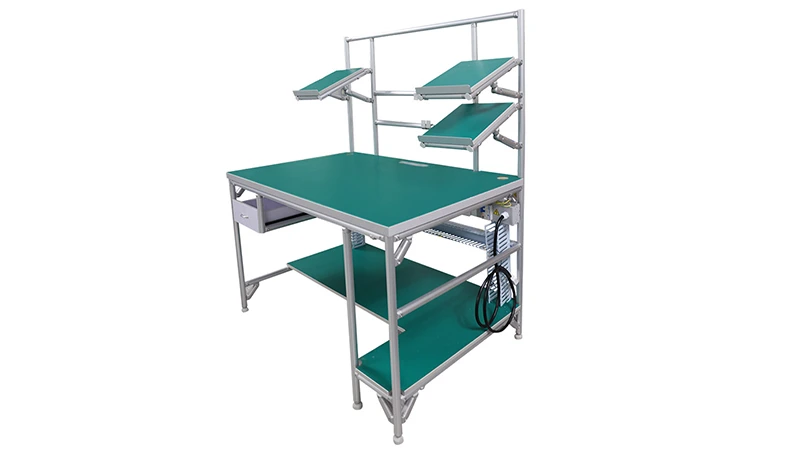
Aluminum Workbench B
Aluminum tube workbench is more flexible and durable, compared with traditional PE/ABS coated steel tube. It is easy to assemble, anti corrosion, rust protection, and recycle use after disassemble.
Introduction: The Pressure of the Assembly Line
In the heart of the Midwest, where cornfields stretch as far as the eye can see, sits a bustling automotive assembly plant. For over a decade, this facility has churned out everything from compact sedans to heavy-duty trucks, priding itself on meeting tight production deadlines and maintaining a reputation for quality. But by early 2024, something was off. The assembly lines, once a model of efficiency, were starting to sputter. Workers muttered about delays, supervisors frowned at production dashboards, and the plant manager, a no-nonsense woman named Sarah Lopez, knew she needed to act fast.
"We were hitting our weekly targets, but just barely," Sarah recalls, leaning back in her office chair as sunlight streams through the window. "The problem wasn't the workers—they were putting in the effort. It was the setup time. Every time we switched from assembling a sedan to a truck, or reconfigured a workstation for a new component, we'd lose precious minutes. And those minutes added up."
The plant's lean system, which had served them well for years, was showing cracks. Designed to eliminate waste and streamline processes, the system relied on workstations that could adapt quickly to changing production needs. But the existing workbenches—clunky, steel-framed, and bolted to the floor—weren't keeping up. "You'd need a wrench, a helper, and 45 minutes just to move a shelf or adjust a tool holder," says Mike Torres, a production line lead with 18 years of experience. "By the time we got everything set up, the next job was already breathing down our necks."
Sarah's team dug into the data. Over six months, they tracked setup times across all 12 assembly lines. The numbers were stark: the average setup time per workstation was 45 minutes, with some lines spiking to 60 minutes during peak reconfiguration periods. This wasn't just a minor inconvenience—it was costing the plant. Missed hourly targets, overtime pay to make up delays, and even a few disgruntled customers waiting on truck deliveries. "We needed a solution that wasn't just 'good enough,'" Sarah says. "We needed something that felt like it was designed for our reality—fast, flexible, and tough enough for the factory floor."
The Challenge: Setup Time as a Bottleneck
To understand the gravity of the problem, let's step onto the plant floor. It's 8:15 a.m. on a Wednesday, and the second assembly line is gearing up to switch from a standard sedan to a hybrid model. The workstation at Station 7, responsible for installing battery packs, needs a complete overhaul. The old steel workbench has a fixed shelf at waist height, but the hybrid battery is taller—so the shelf needs to move up by 12 inches. Two workers, Luis and Jamie, grab their tool belts and get to work.
First, they unload the shelf, carrying brackets and screws to a nearby cart. Then, Luis fetches a wrench to loosen the bolts holding the shelf to the frame. The bolts are rusted, so he has to apply extra force, his face scrunching with effort. Jamie holds the shelf steady, but it slips, clanging against the workbench leg. "Great," Jamie mutters. "Now we've got a scratch on the frame." By the time they reposition the shelf, drill new holes, and re-tighten the bolts, 52 minutes have passed. The line, which should have started hybrid production at 8:30 a.m., is now behind by 27 minutes. "That's a whole shift's worth of delays by Friday," Sarah later tells her team during a crisis meeting.
The problem wasn't isolated to Station 7. Across the plant, similar scenes played out daily. Workbenches were too rigid, material flow was inconsistent, and tools were often misplaced because there was no easy way to customize storage. The plant's lean system was supposed to minimize waste, but the workstations themselves had become the waste. "We were spending time working on the workstation instead of working on the cars ," Mike Torres explains. "That's the opposite of lean."
Sarah's team also surveyed the workers. Over 80% reported that setup time was their biggest frustration. "I used to love this job," one worker wrote in the survey. "Now I dread Monday mornings because I know we'll spend the first hour just moving stuff around." Another noted, "The workbench is so heavy, I pulled a muscle last month trying to adjust it alone." Ergonomics, it turned out, was another hidden cost—worker fatigue leading to slower assembly times and increased sick days.
The plant needed a solution that addressed three core issues: speed (reducing setup time), flexibility (easily customizable workstations), and durability (standing up to the daily grind of a factory). Sarah and her procurement team began researching lean system suppliers, scouring catalogs and attending industry trade shows. They tested a few modular workbenches, but most felt flimsy or required proprietary tools. Then, at a manufacturing expo in Chicago, they stumbled upon a booth for a supplier specializing in aluminum profile solutions. And there, front and center, was the Aluminum Workbench B.

The Solution: Discovering Aluminum Workbench B
"It was love at first sight," jokes Raj Patel, the plant's procurement manager, who attended the expo. "Well, maybe not love, but definitely intrigue. The Aluminum Workbench B looked different—sleek, lightweight, but sturdy. The sales rep didn't just hand me a brochure; he pulled out a wrench and reconfigured the entire workbench in under 10 minutes. I thought, 'If this works on the factory floor, we've got a winner.'"
The Aluminum Workbench B, manufactured by a leading lean system supplier, was designed with modularity in mind. Its frame was built from high-grade aluminum profile—lightweight yet strong enough to support up to 500 pounds of tools and components. Unlike the old steel workbenches, which required welding or permanent bolts, the Aluminum Workbench B used internal rotary aluminum joints that could be adjusted by hand, no tools needed. "You twist the joint, move the shelf, twist it back—it's that simple," Raj explains. "Even a new hire could figure it out in five minutes."
But the workbench wasn't just about adjustability. It was part of a larger ecosystem. The aluminum profile was compatible with a range of accessories: flow racks for material storage, roller tracks for smooth part movement, and even custom tool holders that clipped directly into the T-slots of the profile. "We realized this wasn't just a workbench," Sarah says. "It was a complete lean solution. We could pair it with flow racks to keep parts nearby, use roller tracks to feed components directly to the line, and customize each workstation to the exact needs of the operator."
To test the solution, Sarah's team ordered three Aluminum Workbench B units (single deck, without casters) and installed them on the most problematic line: the third assembly line, which handled the highest mix of vehicle models. They paired each workbench with a material rack B (3 rows, 3 floors) stocked with frequently used parts and installed roller tracks between the flow racks and the workbenches. The roller tracks, with their yellow plastic guide rails, were designed to reduce friction, allowing parts to glide from storage to assembly with minimal effort.
Mike Torres was skeptical at first. "I'd seen 'miracle solutions' come and go," he admits. "But when the first workbench arrived, I asked to test it myself. I reconfigured the shelf height, added a tool hook, and moved a side panel—all in 8 minutes. I turned to Luis and said, 'We need more of these. Like, now .'"

Implementation: From Demo to Deployment
The pilot program on the third assembly line began in early June 2024. Sarah's team selected a mix of veteran and newer workers to test the Aluminum Workbench B, tracking setup times, worker feedback, and production output for four weeks. The results were promising—but Sarah wanted to be thorough. "I didn't want to roll out a $100,000 solution based on a month of data," she says. "We needed to see if it held up over time."
The supplier, eager to prove their product, offered to train the plant's maintenance team on assembling and customizing the workbenches. Over two days, a trainer from the supplier walked the team through the basics: how to connect aluminum profile using internal rotary joints, how to adjust roller tracks for optimal material flow, and how to troubleshoot common issues (like a stuck joint or a misaligned flow rack). "The best part?" Mike Torres says. "The trainer let the workers build their own workbench. By the end of the day, Luis was showing me how to install a roller track. That's when I knew it was user-friendly."
By July, the pilot data was in: setup time on the third line had dropped from an average of 48 minutes to 35 minutes—a 27% reduction. Worker satisfaction scores, measured via weekly surveys, jumped from 6.2/10 to 8.7/10. "Workers were asking when their lines would get the new workbenches," Sarah recalls. "That's when I greenlit the full deployment."
The full rollout began in August, with the goal of replacing all 42 workstations across the 12 assembly lines by the end of September. The supplier provided bulk aluminum profile and accessories, and the plant's maintenance team, now trained, handled the installations. To minimize downtime, they worked in phases: installing new workbenches on Line 1 during the night shift, Line 2 the next week, and so on. "We expected some hiccups," Raj says, "but the modular design made it easy. We could assemble the workbenches off-site, then just wheel them into place and connect the roller tracks. Most lines were back up and running within an hour of installation."
One unexpected benefit? The aluminum profile's lightweight design made the workbenches easier to clean. "The old steel workbenches had crevices where grease and dirt built up," Jamie, the worker from Station 7, explains. "With the aluminum, I can wipe it down with a cloth in two minutes. It looks better, and I don't have to worry about rust."
Results: 30% Faster Setup—and Beyond
By October 2024, the last Aluminum Workbench B was installed on Line 12. Sarah's team spent the next two months tracking metrics, and the results were transformative. The average setup time across all workstations dropped from 45 minutes to 31.5 minutes—a 30% reduction . For a plant running three shifts a day, that added up to over 200 hours of saved time per month.
But numbers tell only part of the story. Let's revisit Station 7, now equipped with an Aluminum Workbench B. It's 8:15 a.m. again, and the line is switching to hybrid battery installation. Luis and Jamie approach the workstation, but this time, they don't grab tool belts. Luis twists the internal rotary joint on the shelf, lifts it to the new height, and twists the joint closed. Jamie clips a new tool holder onto the T-slot of the aluminum profile, sliding it into place. Total time? 9 minutes . "We were done before I even finished my coffee," Jamie laughs. "It's like night and day."
The impact on production output was immediate. Daily vehicle assembly increased by 12%, from 450 units to 504 units. Overtime costs dropped by 23%, as lines no longer needed to stay late to make up for setup delays. And customer complaints about late deliveries? They vanished. "Our biggest client, a trucking company in Texas, called to say we were 'back to being the reliable partner they'd always known,'" Sarah says, pride in her voice.
Worker feedback was equally positive. In a follow-up survey, 92% of employees reported that the new workbenches made their jobs easier. "I don't dread setup days anymore," one worker wrote. "I can focus on building the car instead of fighting with the tools." Another noted, "The workbench is lighter, so I don't feel as tired at the end of the shift." Ergonomic improvements even led to a 15% drop in reported muscle strains and aches.
To visualize the transformation, here's a breakdown of key metrics before and after implementing Aluminum Workbench B:
| Metric | Before Implementation (April 2024) | After Implementation (November 2024) | Improvement |
|---|---|---|---|
| Average Setup Time per Workstation | 45 minutes | 31.5 minutes | 30% reduction |
| Daily Production Output | 450 vehicles | 504 vehicles | 12% increase |
| Monthly Overtime Costs | $28,500 | $22,000 | 23% reduction |
| Worker Satisfaction Score (1-10) | 6.2 | 8.9 | 43% increase |
| Reported Ergonomic Injuries (per month) | 8 | 3 | 62.5% reduction |
Perhaps the most unexpected benefit was how the Aluminum Workbench B enhanced the plant's lean system. "Lean is about continuous improvement," Mike Torres explains. "With the old workbenches, we could talk about improving processes, but we couldn't act quickly. Now, if a worker has an idea—'What if we move this shelf to the left?'—we can test it in 10 minutes. That's true lean in action."
Conclusion: The Right Tools for the Job
As 2024 draws to a close, the Midwest Automotive Assembly Plant is thriving. The Aluminum Workbench B has become the backbone of their assembly lines, with the plant even ordering additional units for a new production facility opening next year. "We're not just meeting targets—we're exceeding them," Sarah says. "And it all started with fixing the one thing that was holding us back: rigid, outdated workstations."
The success story isn't just about the workbench itself, but about recognizing that lean systems are only as strong as their tools. By investing in a modular, worker-centric solution, the plant transformed a bottleneck into a competitive advantage. "It's easy to get stuck in 'this is how we've always done it,'" Sarah reflects. "But the best leaders know when to upgrade—not just for the company, but for the people on the floor. After all, they're the ones building the future."
For Mike Torres, the change is personal. "I've been here 18 years, and I've seen a lot of tools come and go," he says, gesturing to the Aluminum Workbench B at Station 7. "This one? It's a game-changer. It makes me proud to come to work, knowing the plant cares enough to give us the best tools for the job."
As the plant gears up for 2025, with plans to expand their hybrid vehicle line, Sarah and her team are already thinking about what's next. "The Aluminum Workbench B gave us the flexibility to grow," she says. "Now, we're looking at adding more flow racks and roller tracks to further streamline material flow. The sky's the limit when your workstations can keep up with your ambition."
In the end, the lesson is clear: in manufacturing, as in life, the right tools don't just make the work easier—they make the work better . And for the Midwest Automotive Assembly Plant, Aluminum Workbench B wasn't just a tool. It was the key to unlocking their full potential.