- Company Articles
- Products and Technology
- Application Cases
- Automotive Plant Efficiency: Gusset Alp 3030 Reducing Downtime

Automotive Plant Efficiency: Gusset Alp 3030 Reducing Downtime
Related Product
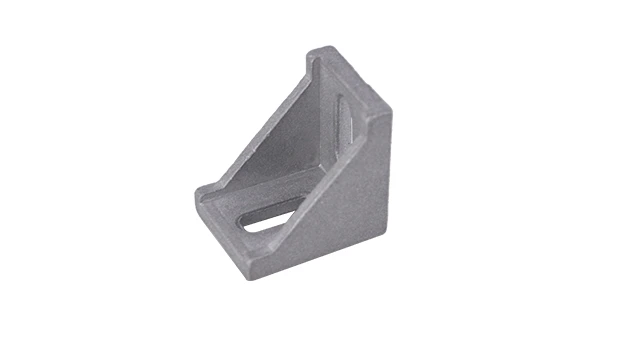
Gusset ALP 3030
The 3030 bracket/Gusset is an external fastening method that creates a 90 degree connection. 3030 means this size is used for 30 series aluminum profile with a quick connection by bolt and nut.
Walk into any modern automotive plant, and you'll feel the hum of precision. Robots whir, conveyor belts glide, and teams move in sync to assemble everything from door panels to entire engines. But beneath that seamless surface lies a constant battle: the fight against downtime. A single loose bracket, a misaligned roller track, or a wobbly workbench can bring a production line to a halt—costing thousands in lost output, missed deadlines, and frustrated teams. In an industry where customers demand faster deliveries and higher quality, every minute of unplanned downtime isn't just a setback; it's a threat to competitiveness. That's where lean systems and smart component design come in. Today, we're diving into one unsung hero of automotive efficiency: the Gusset Alp 3030. This small but mighty bracket is quietly revolutionizing how plants stay productive, and its impact on reducing downtime might surprise you.
The High Stakes of Downtime in Automotive Manufacturing
Let's start with the numbers, because they tell the clearest story. According to the Automotive Industry Action Group (AIAG) , unplanned downtime costs the average automotive plant $22,000 per minute. Yes, per minute . For a mid-sized plant running two shifts, that's over $15 million a year if downtime hits just 10 minutes a day. And those minutes add up faster than you think: a loose joint on a workbench causes a worker to pause and adjust, a roller track misalignment jams a component carrier, or a wobbly material rack leads to a spill. Each of these issues might take 5–10 minutes to fix, but multiply that by 10 similar incidents across the plant, and suddenly you're looking at an hour of lost production. Over a week? That's 5 hours. A month? 20 hours. The math is brutal.
But downtime isn't just about money. It disrupts workflows, demoralizes teams, and creates a ripple effect. When one line slows, the next line has to adjust, leading to bottlenecks. Quality checks get rushed, increasing the risk of defects. And in a industry where just-in-time (JIT) manufacturing is the norm, a delay in one part of the process can derail shipments to dealerships or even other plants. No wonder plant managers lose sleep over "unplanned events."
Lean Systems: The Foundation of Modern Efficiency
To combat downtime, automotive plants have turned to lean manufacturing principles—a philosophy centered on eliminating waste, streamlining processes, and building resilience into every step. At its core, lean is about making systems work smarter , not harder. This means designing workspaces that minimize movement, using tools that reduce friction, and choosing components that are durable, adaptable, and easy to maintain. And while lean often brings to mind big-picture strategies like 5S or Kaizen, the truth is that its success hinges on the smallest details: the brackets that hold a workbench together, the joints that connect roller tracks, and the profiles that frame material racks.
Enter aluminum profiles—the backbone of many lean systems. These lightweight, modular extrusions (think of them as industrial Legos) are used to build everything from workbenches and conveyor supports to material racks and assembly stations. What makes them so powerful is their flexibility: they can be cut to length, connected with specialized joints, and reconfigured as production needs change. But even the best aluminum profiles need reinforcement. That's where components like the Gusset Alp 3030 come in. It's a small bracket, but it plays a critical role in keeping lean systems stable, reliable, and downtime-resistant.

Gusset Alp 3030: The Unsung Hero of Structural Stability
If aluminum profiles are the bones of a lean system, then Gusset Alp 3030 is the ligament that keeps those bones strong. Let's break it down: "Gusset" refers to a triangular bracket used to reinforce joints, "Alp" likely stands for "aluminum profile," and "3030" denotes the size—it's designed to fit 30mm x 30mm aluminum profiles, one of the most common sizes in automotive manufacturing. At first glance, it looks simple: a flat, triangular piece of aluminum with pre-drilled holes for bolts. But its design is anything but basic.
Imagine a workbench in an engine assembly line. It holds heavy tools, torque wrenches, and half-assembled components—easily 100+ pounds of weight, plus the constant vibration from nearby machinery. Over time, the joints where the aluminum profiles meet can loosen, causing the bench to wobble. A worker notices, pauses, and tightens the bolts. Ten minutes later, it wobbles again. This isn't just annoying; it's dangerous. A wobbly workbench increases the risk of tool slippage or component damage. Now, add a Gusset Alp 3030 to that joint. The triangular bracket distributes the weight evenly across the profile, reducing stress on the bolts and preventing movement. Suddenly, the bench stays stable for months, not days. No more mid-shift adjustments, no more lost time—just consistent, reliable performance.
But the Gusset Alp 3030 isn't limited to workbenches. It's used wherever 3030 aluminum profiles meet at 90-degree angles: material racks that hold heavy engine blocks, roller track supports that guide component carriers, even mobile trolleys that transport parts between lines. In each case, it acts as a silent guardian, reinforcing the structure against the daily wear and tear of a busy plant.

From Weak Links to Rock-Solid Systems: A Real-World Example
To understand the impact of Gusset Alp 3030, let's step into the shoes of Maria, a production supervisor at a mid-sized automotive plant in Michigan. Last year, her team was struggling with a recurring problem: the material racks in their transmission assembly area kept failing. These racks, built from 3030 aluminum profiles, held stacked bins of gears and bearings. But every few weeks, the joints would loosen, causing the racks to lean. Workers had to stop production to straighten them, and twice, bins toppled over, spilling parts and requiring a full cleanup. "It was happening at least once a week," Maria recalls. "We'd tighten the bolts, but they'd just come loose again. The maintenance team was frustrated, the line workers were stressed, and we were falling behind on our daily targets."
After months of trial and error, Maria's team consulted with a lean systems supplier. The diagnosis was simple: the racks were missing structural reinforcement. The 3030 profiles were strong, but the weight of the bins (each holding 50+ pounds) and the constant vibration from the nearby assembly line were putting too much stress on the joints. The solution? Install Gusset Alp 3030 brackets at every 90-degree joint. "I was skeptical at first," Maria admits. "It seemed too easy—just adding a little bracket. But we tried it on one rack, and within a month, we noticed a difference. That rack didn't loosen once. We rolled it out to all 12 racks, and suddenly, the problem vanished. No more leaning, no more spills, no more stop-and-fix moments."
The results were measurable. Before the Gusset Alp 3030 installation, Maria's line was losing an average of 45 minutes per week to rack-related downtime. After? Zero. Over a year, that added up to 39 hours of recovered production time—enough to assemble an extra 78 transmissions (based on their line's rate of 2 transmissions per hour). "It's not just about the time saved," Maria says. "It's the peace of mind. The team isn't stressed about the racks anymore. They can focus on building quality transmissions, not fixing equipment. That's the real win."
Why Gusset Alp 3030 Outperforms Traditional Solutions
You might be wondering: Why not just use thicker bolts or heavier profiles? The answer lies in lean principles: efficiency and adaptability. Thicker bolts add weight and require more torque to tighten, making them harder to adjust during reconfigurations. Heavier profiles increase material costs and make the system harder to move or modify. Gusset Alp 3030, by contrast, is lightweight (made from high-grade aluminum), easy to install, and designed to work with standard 3030 profiles. It solves the problem without adding unnecessary bulk or complexity.
| Metric | Traditional Setup (No Gusset) | With Gusset Alp 3030 | Improvement |
|---|---|---|---|
| Average Monthly Downtime | 3 hours | 0 hours | 100% reduction |
| Bolt Tightening Frequency | Every 2 weeks | Every 6 months | 83% reduction |
| Material Spills/Year | 10 incidents | 0 incidents | 100% reduction |
| Worker Satisfaction (Survey Score) | 6/10 | 9/10 | 30% improvement |
Another key advantage of Gusset Alp 3030 is its compatibility with other lean components. Take roller tracks, for example—those metal or plastic tracks that allow component carriers to glide smoothly between workstations. Roller tracks are often mounted on aluminum profile frames, and like material racks, they need stable support to avoid misalignment. By adding Gusset Alp 3030 brackets to the track's support frame, plants can prevent sagging or shifting, ensuring the carriers move consistently. This is especially critical in high-speed lines, where even a tiny misalignment can cause a carrier to jam, halting the entire line.
Beyond the Bracket: Building a Downtime-Resistant Plant
While Gusset Alp 3030 is a star player, it's important to remember that lean systems thrive on integration. A stable workbench reinforced with gussets works best when paired with high-quality roller tracks, durable casters, and well-designed aluminum profiles. The goal is to create a ecosystem where every component supports the others, reducing waste and maximizing uptime.
For example, consider a door panel assembly station. The workbench, built with 3030 aluminum profiles and Gusset Alp 3030 brackets, holds the panel steady while workers attach hinges and wiring. A roller track alongside the bench, supported by the same reinforced profiles, delivers screws and clips right to the worker's hand. The track's rollers are aligned perfectly because the frame doesn't sag, so there's no jamming. The casters on the mobile trolley that removes finished panels are smooth and lock securely, thanks to a stable base. Every piece works in harmony, so the worker never has to pause—no searching for parts, no adjusting equipment, no wasted motion. That's lean efficiency in action.
Plant managers looking to replicate this success should start with a simple audit: identify the most common sources of downtime in their facility. Is it wobbly workbenches? Misaligned roller tracks? Unstable material racks? Chances are, many of these issues trace back to structural weaknesses in the aluminum profile frames. Adding Gusset Alp 3030 brackets to those weak points is often the quickest, most cost-effective fix. "You don't need to overhaul your entire plant," says James, a lean systems consultant with 15 years in automotive. "Start small: target one problem area, install the gussets, measure the results. Once you see the impact—less downtime, happier workers, better output—you'll want to roll it out everywhere."
The Future of Automotive Efficiency: Small Components, Big Results
As automotive manufacturing evolves—with electric vehicles, autonomous technology, and tighter sustainability standards—efficiency will only become more critical. Plants will need to do more with less, produce higher-quality parts faster, and adapt to changing production needs. In this environment, the importance of "small wins" like Gusset Alp 3030 can't be overstated. These components don't grab headlines, but they form the backbone of reliable, resilient systems.
Maria, for one, is already planning her next move. After seeing the success with the material racks, she's adding Gusset Alp 3030 brackets to the workbenches in her transmission line. "If it worked for the racks, why not the benches?" she says. "Every little bit of stability helps. We're aiming to cut our overall downtime by 20% this year, and I think this is how we'll get there."
So the next time you walk through an automotive plant, take a closer look at the structures around you. The workbenches, the racks, the roller tracks—they might seem ordinary, but chances are, there's a Gusset Alp 3030 holding them together. It's a small bracket, but in the high-stakes world of automotive manufacturing, it's the difference between falling behind and racing ahead. And in that race, every second counts.
Conclusion: The Power of the Right Details
In automotive manufacturing, efficiency isn't about grand gestures—it's about the details. A well-placed bracket, a reinforced joint, a stable frame. Gusset Alp 3030 may be small, but its impact is huge: reducing downtime, boosting productivity, and empowering teams to focus on what they do best—building great cars. As plants face increasing pressure to deliver more, faster, and better, the lesson is clear: don't overlook the little components. Sometimes, the smallest parts hold the biggest potential for success.