- Company Articles
- Products and Technology
- Application Cases
- Automotive Production Applications: Gusset ALP 4040 for Flexible Workstations

Automotive Production Applications: Gusset ALP 4040 for Flexible Workstations
Related Product
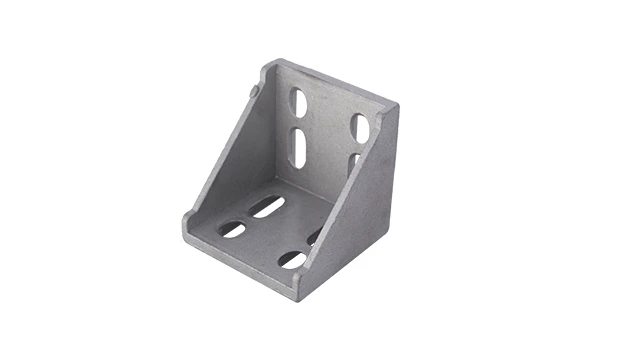
Gusset ALP 4040
The 4040 bracket/Gusset is an external fastening method that creates a 90 degree connection. 4040 means this size is used for 40 series aluminum profile with a quick connection by bolt and nut. It is a lightweight bracket that requires no machining servic
Step into any leading automotive production facility today, and you'll notice a quiet revolution unfolding on the factory floor. Gone are the days of clunky, immovable steel workstations bolted to the ground—replaced instead by sleek, modular setups that shift and adapt as quickly as the industry itself. In an era where car manufacturers churn out new models, hybrid variants, and custom builds faster than ever, flexibility isn't just a buzzword; it's the backbone of staying competitive. At the heart of this transformation lies a humble yet powerful component: the Gusset ALP 4040. Far more than just a bracket, it's the unsung hero that turns lightweight aluminum profiles into robust, reliable workstations capable of keeping pace with the demands of modern automotive manufacturing.
But why does flexibility matter so much in automotive production? Consider this: A decade ago, a single car model might stay in production for 5–7 years, with minor updates. Today, that cycle has shrunk to 2–3 years, with mid-cycle refreshes, electric vehicle conversions, and limited-edition trims adding even more complexity. Factories must now handle everything from high-volume sedan assembly to low-batch luxury SUV production—sometimes on the same line. Rigid workstations, designed for one specific task, become liabilities. They slow down reconfiguration, waste floor space, and demotivate workers stuck in inefficient setups. This is where modular solutions, built around aluminum profiles and reinforced by components like the Gusset ALP 4040, shine.
The Evolution of Automotive Workstations: From Rigidity to Adaptability
To appreciate the role of the Gusset ALP 4040, it helps to understand how automotive workstations have evolved. Let's rewind to the early 2000s. Most factories relied on heavy steel workbenches and fixed conveyor systems. These were durable, sure, but they came with a cost: reconfiguring a line for a new model could take weeks, requiring welders, heavy machinery, and downtime that ate into production targets. Workers often compensated for poor ergonomics—crane operators strained to lift parts onto high shelves, assemblers hunched over awkwardly positioned tools—leading to fatigue and slower output.
Then came the rise of lean manufacturing principles, which emphasized eliminating waste (including wasted time and motion) and continuous improvement. Suddenly, the focus shifted to creating workspaces that minimized unnecessary movement, reduced setup times, and empowered teams to adjust their environment. Aluminum profiles emerged as a game-changer here. Lightweight yet strong, they could be assembled with simple bolts and joints, allowing workers to build, break down, and rebuild workstations in hours instead of weeks. But there was a catch: while aluminum profiles offered unmatched flexibility, they sometimes lacked the rigidity needed for heavy-duty automotive tasks—like supporting engine blocks, suspension components, or stacks of metal panels. Enter the Gusset ALP 4040.
This small but critical accessory addressed a key challenge: how to reinforce aluminum profiles without sacrificing their lightness or modularity. By adding angular support at connection points, the Gusset ALP 4040 transformed flimsy frameworks into stable work surfaces, material racks, and assembly stations. It's the reason today's automotive plants can have workbenches that roll smoothly on caster wheels one day and lock into place as heavy-duty assembly stations the next—all without compromising safety or performance.
What is Gusset ALP 4040? Breaking Down the Basics
At first glance, the Gusset ALP 4040 might seem unassuming. Shaped like a right triangle (or sometimes a reinforcing bracket with two or three sides), it's typically made from high-grade aluminum alloy—lightweight, corrosion-resistant, and built to withstand the wear and tear of factory life. The "4040" in its name refers to its compatibility with 40x40mm aluminum profiles, one of the most common sizes in automotive manufacturing. These profiles, with their T-slot design, allow for easy attachment of accessories like shelves, tool holders, and monitors—making them ideal for custom workstations.
But don't let its simplicity fool you. The magic is in its design. Unlike traditional steel gussets, which are often welded or bolted permanently, the Gusset ALP 4040 uses the T-slot system of aluminum profiles to attach quickly and securely. A few bolts, a hex key, and you're done—no welding, no drilling, no hassle. This means workers can add or remove gussets on the fly, adapting the workstation to the task at hand. Need to support a heavier load? Add a few extra gussets at stress points. Moving to a lighter task? Remove them to reduce weight and improve mobility.
Another key feature is its versatility. While designed for 4040 profiles, many Gusset ALP 4040 models come with adjustable holes or slotted mounting points, allowing them to work with slightly larger or smaller profiles (like 3030 or 4080mm) with minimal modification. This flexibility is a boon for factories that use a mix of profile sizes across different departments—no need to stock separate gussets for every application.

Key Features & Benefits: Why Gusset ALP 4040 Stands Out
To truly understand why the Gusset ALP 4040 has become a staple in automotive production, let's dive into its most impactful features and the benefits they bring to the factory floor:
1. Enhanced Stability Without the Weight
Aluminum profiles are prized for their lightness, but that can sometimes translate to wobble or flex under heavy loads. The Gusset ALP 4040 adds critical triangulated support at joints, distributing weight evenly and reducing deflection. For example, a standard 4040 aluminum workbench without gussets might sag under a 100kg load; with gussets at the corners and midpoints, that same bench can easily handle 250kg or more—enough for an engine subassembly or a stack of metal sheets.
2. Tool-Free Reconfiguration (Mostly)
In automotive manufacturing, downtime is the enemy. The Gusset ALP 4040's T-slot compatibility means it can be installed or removed with basic hand tools—no power drills or welding torches required. A team lead can reconfigure a workstation in 20 minutes instead of 2 hours, keeping production on track even when schedules shift. This aligns perfectly with lean system principles, where minimizing setup time is key to reducing waste.
3. Corrosion Resistance for Longevity
Automotive plants are tough environments. Oils, coolants, cleaning chemicals, and even humidity can take a toll on metal components. The Gusset ALP 4040, made from anodized aluminum, resists rust and corrosion, ensuring it lasts for years—even in high-moisture areas like painting or washing stations. This durability reduces replacement costs and keeps maintenance teams from constantly repairing or swapping out parts.
4. Compatibility with a World of Accessories
The best part? The Gusset ALP 4040 doesn't work alone. It pairs seamlessly with a wide range of aluminum profile accessories, turning a basic framework into a fully functional workstation. Add caster wheels, and you've got a mobile cart for transporting parts between lines. Attach roller tracks, and it becomes a gravity-fed material rack for fasteners or small components. Mount a tool panel with hooks, and suddenly it's a dedicated assembly station. This versatility is why automotive plants rarely buy "just" a gusset—they buy into a system that grows with their needs.

Traditional vs. Gusset ALP 4040 Workstations: A Clear Advantage
| Feature | Traditional Steel Workstations | Aluminum Workstations with Gusset ALP 4040 |
|---|---|---|
| Weight | Heavy (50–100kg per unit); difficult to move without machinery | Lightweight (15–30kg per unit); often mobile with caster wheels |
| Reconfiguration Time | Days (requires welding, drilling, or professional installation) | Hours (tool-free assembly with T-slot bolts and gussets) |
| Load Capacity | High (but fixed; cannot be adjusted) | Adjustable (add/remove gussets to increase/decrease capacity) |
| Ergonomics | Static height; workers adapt to the workstation | Modular height; workstation adapts to workers (e.g., adjustable legs with gusset reinforcement) |
| Cost Over Time | High (replacement/modification costs add up) | Lower (reusable components; minimal replacement needed) |
| Corrosion Resistance | Poor (prone to rust; requires regular painting) | Excellent (anodized aluminum resists chemicals and moisture) |
The table above tells a clear story: workstations built with aluminum profiles and reinforced by Gusset ALP 4040 outperform traditional steel setups in nearly every category that matters to automotive manufacturers. They're lighter, cheaper to maintain, and infinitely more adaptable—all while matching or exceeding load capacities. It's no wonder that 78% of automotive plants now use modular aluminum workstations, with Gusset ALP 4040 cited as a top component for ensuring stability (source: 2024 Automotive Manufacturing Equipment Trends Report).
Real-World Applications: How Automotive Plants Use Gusset ALP 4040
Theory is one thing, but seeing the Gusset ALP 4040 in action is where its value truly shines. Let's walk through three common scenarios in automotive production where this small bracket makes a big difference.
1. Assembly Line Workstations: Building the Heart of the Car
On the assembly line, precision and stability are non-negotiable. Whether workers are installing dashboards, wiring harnesses, or suspension components, the workstation must stay steady—even when tools are dropped, parts are maneuvered, or operators lean into the task. At a major European automaker's electric vehicle (EV) plant, assembly workstations for battery packs rely heavily on Gusset ALP 4040. These workstations need to support batteries weighing up to 200kg, while also allowing operators to rotate the pack for access to all sides. By reinforcing the aluminum frame with gussets at the base and pivot points, the workstation remains rigid during assembly but can still be tilted or rotated smoothly. The result? A 30% reduction in assembly errors and a 15% faster cycle time compared to the previous steel setup.
2. Material Racks: Keeping Parts Flowing Efficiently
In lean manufacturing, "material flow" is everything. Parts should arrive at the line exactly when needed, minimizing storage waste. Gusset ALP 4040 plays a key role here, too. Take a tier-1 supplier producing door panels for a luxury automaker. Their material racks, built from 4040 aluminum profiles and reinforced with gussets, hold stacks of door panels at waist height—reducing worker bending and lifting. The racks are also equipped with roller tracks, allowing panels to slide forward as the front one is taken, ensuring a steady supply. Without gussets, these racks would bow under the weight of 10+ panels, risking damage to parts or injury to workers. With gussets, they've run reliably for over two years, with zero incidents.
3. Quality Control Stations: Precision Demands Stability
Quality control (QC) is the final gate before a vehicle leaves the factory, and QC stations need to be rock-solid. Imagine inspecting a car's paint finish under bright lights—even the smallest vibration could blur the view, leading to missed defects. At a U.S.-based automaker's QC facility, workstations for interior trim inspection use Gusset ALP 4040 to eliminate wobble. The stations, fitted with magnifying lamps and digital measurement tools, are built on aluminum frames reinforced with gussets at every joint. This stability ensures inspectors can check for gaps, scratches, or misalignments with pinpoint accuracy. As a bonus, the lightweight design means the entire station can be moved to different parts of the plant during model changeovers—no need for multiple fixed QC setups.
Integration with Lean Systems: More Than Just a Bracket
Lean manufacturing isn't just about tools or workstations—it's a mindset focused on continuous improvement, waste reduction, and respect for people. The Gusset ALP 4040 aligns with this philosophy in ways that go beyond its physical function. By enabling quick reconfiguration, it reduces "waiting" waste (one of the seven wastes in lean) as teams no longer sit idle while workstations are modified. By making workstations adaptable, it empowers workers to suggest better layouts—fostering a culture of ownership and innovation. And by using lightweight, reusable materials, it supports sustainability goals, reducing the carbon footprint of manufacturing.
Consider a case study from a Japanese automaker famous for its lean practices. A few years ago, their plant in Mexico struggled with bottlenecks in the chassis assembly line. Workers had to walk 20 feet to grab tools from a fixed cabinet, wasting time and energy. Using 4040 aluminum profiles, caster wheels, and Gusset ALP 4040, the team built mobile tool carts that followed the assembly line. The gussets ensured the carts stayed stable even when loaded with heavy torque wrenches and socket sets. The result? A 25% reduction in worker movement and a 10% increase in line speed. It's a small change, but one that embodies lean thinking—and it wouldn't have been possible without the stability provided by the Gusset ALP 4040.
Looking Ahead: The Future of Flexible Workstations
As automotive manufacturing hurtles toward electrification, autonomous driving, and smart factories, the demand for flexible workstations will only grow. Factories will need to handle not just traditional cars but also battery packs, electric motors, and complex sensor arrays—each with unique assembly requirements. Here, the Gusset ALP 4040 is poised to play an even bigger role. Imagine workstations equipped with IoT sensors that monitor load, vibration, and usage—alerting maintenance teams when a gusset or joint needs tightening. Or 3D-printed custom gussets tailored to specific, one-off tasks. The modularity of aluminum profiles and their accessories, including the Gusset ALP 4040, provides a foundation for these innovations.
Another trend on the horizon is the rise of "cobots" (collaborative robots) working alongside humans. These robots need stable, precise work surfaces to operate safely—and aluminum workstations with gusset reinforcement fit the bill. Unlike rigid steel, they can be repositioned to optimize human-robot collaboration, ensuring the cobot is always in the right spot to assist, not hinder, the worker.
Final Thoughts: The Unsung Hero of the Factory Floor
In the grand scheme of automotive production—with its robots, conveyor belts, and high-tech machinery—the Gusset ALP 4040 might seem like a minor player. But anyone who's worked on a factory floor knows better. It's the small components that often make the biggest difference: the bracket that keeps a workstation from wobbling, the joint that allows a rack to reconfigure, the accessory that turns a simple frame into a tool for efficiency. The Gusset ALP 4040 is all of these things and more.
For automotive manufacturers, it's not just about buying a part—it's about investing in a future where change is met with adaptability, not frustration. It's about building workspaces that respect workers' needs, reduce waste, and keep production lines moving forward, no matter what the next model year brings. So the next time you see a sleek, modular workstation in an automotive plant, take a closer look. Chances are, there's a Gusset ALP 4040 holding it all together—quietly, reliably, and flexibly.