- Company Articles
- Products and Technology
- Application Cases
- Automotive Production Lines: Applications of 4040E EU Standard Aluminum Profile

Automotive Production Lines: Applications of 4040E EU Standard Aluminum Profile
Related Product
4040E EU Standard Aluminum Profile
4040E is a 4.00x4.00 CM fractional 40 series square extrusion T-slot profile with two side open T-slots, two side with closed face, each side with 4.00cm face. The profile has align-a-grooves to assist in aligning connecting profiles.
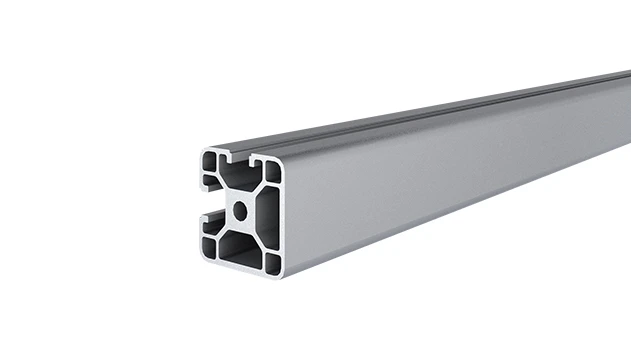
How a single aluminum profile is reshaping efficiency, flexibility, and lean manufacturing in car production
Walk into any modern automotive factory, and you'll witness a ballet of machines, workers, and parts moving in perfect harmony. From the stamping of body panels to the final inspection of a finished car, every step demands precision, speed, and adaptability. In this high-stakes environment, one unassuming component has emerged as a quiet hero: the 4040E EU standard aluminum profile . It's not just a piece of metal—it's the backbone of the flexible, durable, and lean systems that keep production lines running smoothly, even as car models, technologies, and consumer demands evolve.
For years, automotive manufacturers relied on heavy steel frames or one-size-fits-all fixtures that resisted change. But today's plants can't afford rigidity. With electric vehicles (EVs) rising in popularity, shorter product cycles, and the need to minimize waste, the industry is turning to solutions that adapt as quickly as their blueprints do. Enter the 4040E aluminum profile: lightweight yet strong, modular, and built to grow with your production line. Let's dive into how this profile is transforming workbenches, conveyors, flow racks, and entire lean systems on the factory floor.
What Makes the 4040E EU Standard Aluminum Profile Special?
First, let's get the basics straight: the 4040E is a European-standard aluminum extrusion profile, measuring 40mm by 40mm in cross-section. Its "E" designation refers to a specific groove design in its T-slot system—a detail that might sound minor, but makes all the difference in how it integrates with accessories. Unlike generic aluminum bars, this profile is engineered for industrial use, with a balanced mix of strength, weight, and versatility.
Key Features That Matter to Automotive Plants:
- Lightweight but Tough: Aluminum's natural strength-to-weight ratio means 4040E frames are easy to maneuver during setup or reconfiguration, yet sturdy enough to support heavy car parts like engines or transmissions.
- Corrosion Resistance: Unlike steel, aluminum doesn't rust—critical in factories where lubricants, coolants, or humidity could damage metal over time.
- T-Slot Modularity: The profile's T-shaped grooves let workers attach accessories (think 90° aluminum profile connectors , brackets, or tool holders) without welding or drilling. Need to add a shelf to a workbench? Just slide a bracket into the slot and tighten a bolt.
- Customizable Lengths: Suppliers cut 4040E to exact specifications, so you never pay for extra material you don't need.
- ESD Compatibility: When paired with conductive accessories, 4040E can be part of ESD workstation setups, protecting sensitive electronics (like EV batteries or infotainment systems) from static damage.
On the Factory Floor: Real-World Applications
To understand why 4040E is becoming a staple in automotive plants, let's look at how it's used in three critical areas: workbenches, conveyors/flow racks, and lean system integration. These aren't just theoretical—they're daily realities for workers building everything from sedans to electric trucks.
1. Workbenches: Where Precision Meets Ergonomics
Imagine a technician assembling the dashboard of a luxury SUV. They need a stable surface to lay out components, easy access to tools, and enough space to maneuver without straining. A workbench built with 4040E aluminum profile delivers all three—and then some.
Take an ESD workstation in an EV battery assembly line. The 4040E frame forms the bench's skeleton, with a conductive tabletop and grounding straps (attached via T-slots) to dissipate static electricity. This prevents tiny electrical discharges from frying delicate battery management systems—a $500 part that could derail production if damaged. But it's not just about safety; it's about adaptability. If the plant switches to a larger battery pack, workers can adjust the bench height using adjustable leveling feet , add side shelves with aluminum profile accessories , or mount cable organizers to keep the area clutter-free. "We used to have to order new benches every time we changed models," says Maria, a production supervisor at a Midwest automotive plant. "Now we just reconfigure the 4040E frames. Last month, we shifted from a hybrid to an EV line in two days—no welding, no downtime."
2. Conveyors and Flow Racks: Keeping Parts Moving
In automotive production, parts rarely stay in one place. A door panel might start at the stamping shop, move to painting, then to assembly—all while being handled by robots and workers. Flow racks and conveyors built with 4040E ensure this journey is smooth, fast, and reliable.
Consider a flow rack in a parts warehouse feeding the assembly line. The rack's frame is 4040E, with roller tracks (attached via roller track connectors ) sloped gently downward. As workers take a part from the front, the next one slides forward—no pushing, no waiting. For heavier items like engine blocks, conveyors with 4040E frames and motorized rollers keep parts moving at a steady pace. What happens when the plant introduces a new car model with larger door panels? The old flow rack's roller tracks are too narrow. With 4040E, the maintenance team simply unbolts the existing tracks, adds longer aluminum guide rails , and reattaches them—done in an afternoon. "We used to have steel flow racks that weighed a ton," recalls Jake, a maintenance technician. "Changing their width meant cutting and welding. Now with 4040E, I can reconfigure a rack during my lunch break."
3. Lean System Integration: Eliminating Waste, Boosting Efficiency
Lean manufacturing isn't just a buzzword—it's a mindset focused on cutting waste (time, materials, space) while improving quality. 4040E fits this philosophy like a glove, thanks to its modular design and reusability.
Take "changeover waste," the time lost when switching production from one model to another. A traditional steel-based line might take a week to retool; with 4040E, it can take days or even hours. For example, when a plant shifts from producing a gas-powered sedan to an electric hatchback, the 4040E-based conveyors can be repositioned, workbenches adjusted, and flow racks resized—all without replacing the core aluminum frames. This flexibility reduces downtime, which in automotive terms, saves thousands of dollars per minute.
Then there's material waste. Aluminum is 100% recyclable, and 4040E profiles can be disassembled and repurposed when they're no longer needed. A workbench frame from a discontinued model might become part of a new material rack or a turnover trolley. "We used to throw away steel frames when they got outdated," says Raj, a sustainability coordinator at a West Coast plant. "Now we keep a 'parts library' of 4040E pieces. Last quarter, we reused 80% of our old profiles—that's 12 tons of metal diverted from landfills."

4040E vs. Traditional Solutions: A Factory Manager's Perspective
Still on the fence about switching to 4040E? Let's compare it to two common alternatives: traditional steel profiles and smaller aluminum profiles (like the 3030 EU standard). The table below breaks down how they stack up in key areas automotive plants care about.
| Feature | 4040E Aluminum Profile | Traditional Steel Profile | 3030 Aluminum Profile |
|---|---|---|---|
| Weight (per meter) | ~1.8 kg | ~8 kg | ~1.1 kg |
| Max Load Capacity | ~500 kg (per meter, vertical) | ~1,000 kg (per meter, vertical) | ~300 kg (per meter, vertical) |
| Corrosion Resistance | High (no rust) | Low (needs painting/coating) | High (no rust) |
| Reconfigurability | Excellent (T-slot system, no welding) | Poor (requires cutting/welding) | Good (T-slot, but smaller load capacity) |
| Cost Over 5 Years* | $X (lower due to reusability) | $3X (higher due to replacement/waste) | $1.5X (may need upgrades for heavy loads) |
*Estimated, based on typical automotive production cycles and reuse rates.
For most automotive applications, 4040E hits the sweet spot: it's lighter than steel, stronger than smaller aluminum profiles, and infinitely more adaptable than either. It's an investment that pays off in reduced downtime, lower waste, and happier, more efficient workers.
The Road Ahead: 4040E in the Age of EVs and Smart Factories
As automotive manufacturing evolves, 4040E is poised to play an even bigger role. Here's why:
- EVs Need Flexible Electronics Production: Electric vehicles rely on complex electronics—battery management systems, autonomous driving sensors, and high-voltage wiring. These components demand ESD workstations and precision assembly setups that 4040E, with its ESD-compatible accessories, can easily support.
- Smart Factory Integration: The rise of Industry 4.0 means more sensors, cameras, and IoT devices on the factory floor. 4040E's T-slots make it simple to mount these tools—no need for custom brackets. Want to add a camera to monitor a conveyor? Slide a mount into the T-slot and plug it in.
- Sustainability Goals: Automakers are under pressure to reduce their carbon footprints. Aluminum is one of the most recyclable materials on the planet, and 4040E's long lifespan (10+ years in industrial use) means less frequent replacement—both wins for sustainability reports.
More Than a Profile—A Partner in Production
At the end of the day, the 4040E EU standard aluminum profile isn't just a part of the automotive production line—it's a partner. It adapts when models change, supports workers when they need better tools, and helps plants meet their lean and sustainability goals. It's the quiet force that keeps the symphony of manufacturing in tune, one 40x40mm extrusion at a time.
So the next time you see a car roll off the line, remember: behind that sleek exterior is a network of workbenches, conveyors, and flow racks—many of them built with 4040E. And in that network, you'll find the future of automotive production: flexible, efficient, and ready for whatever comes next.