Automotive Production Lines: Applications of Aluminum Guide Rail A in Assembly Stations

Related Product
Aluminum Guide Rail A
The aluminum guide rails hold the transport goods securely on the roller track. For installation, the guide rails are simply pushed over the roller tracks.To protect sensitive products.
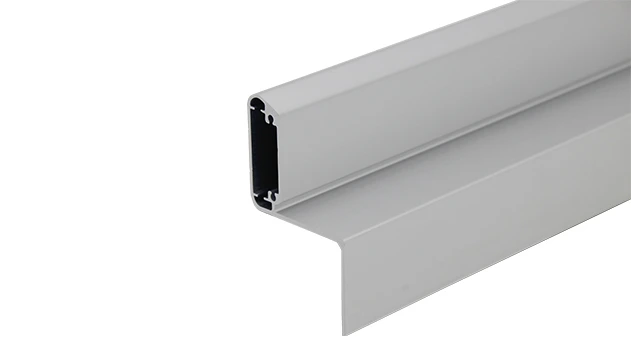
Aluminum Guide Rail A
Walk into any leading automotive plant today, and you'll notice a quiet revolution happening on the assembly floor. The hum of machinery blends with the precision of human hands, but what truly drives efficiency isn't just the robots or the workers—it's the invisible backbone of lean manufacturing: the components that connect, support, and streamline every step of production. Among these unsung heroes, Aluminum Guide Rail A stands out as a game-changer, redefining how assembly stations operate in the fast-paced world of automotive manufacturing.
In an industry where a single production line might assemble hundreds of cars daily, with each vehicle requiring thousands of parts, the need for flexibility, durability, and efficiency has never been higher. Traditional assembly setups often struggle with rigidity—fixed rails that take weeks to reconfigure, heavy materials that slow down adjustments, and frequent maintenance that disrupts workflows. This is where Aluminum Guide Rail A steps in, embodying the core principles of lean production: eliminate waste, optimize flow, and empower continuous improvement .

What Makes Aluminum Guide Rail A Unique?

At its core, Aluminum Guide Rail A is more than just a piece of metal—it's a testament to how smart design can transform manufacturing. Crafted from high-grade aluminum alloy, it balances strength with surprising lightness, a combination that addresses two critical pain points in automotive assembly: weight and corrosion. Unlike steel rails that rust over time (especially in plants with high humidity or frequent cleaning), aluminum's natural resistance to corrosion ensures a longer lifespan, reducing the need for replacements and cutting long-term costs.
But its real strength lies in modularity. Designed with lean principles in mind, Aluminum Guide Rail A uses a t-slot aluminum profile system, allowing it to connect seamlessly with other components like aluminum lean pipe, roller track, and workbench surfaces. This means assembly teams can reconfigure a station in hours, not days, to adapt to new car models or production demands. Imagine switching from assembling a compact sedan to an electric SUV—with traditional rails, this might require dismantling and rebuilding entire sections. With Aluminum Guide Rail A, it's as simple as adjusting brackets, adding extensions, or integrating new roller track segments.
Key Features:
- Lightweight yet durable: 30% lighter than steel rails, reducing strain on assembly line structures and easing manual adjustments.
- Corrosion-resistant: Ideal for automotive plants with strict cleanliness standards or exposure to fluids.
- Tool-less assembly: Uses simple fasteners and clamps, eliminating the need for welding or heavy machinery during setup.
- Reusable design: Components can be repurposed across stations or lines, aligning with sustainability goals.

Aluminum Guide Rail A in Action: Assembly Station Applications

Let's dive into the real-world scenarios where Aluminum Guide Rail A shines brightest. In automotive assembly, every station has unique needs—from feeding parts to the line to securing tools for workers. Here's how this versatile component delivers value across critical workflows:

1. Streamlining Material Flow with Roller Track Integration

One of the biggest sources of waste in manufacturing is waiting time —when workers stand idle because parts haven't arrived at their station. Aluminum Guide Rail A solves this by acting as the "roadway" for roller track systems, which carry everything from door panels to engine components across the line. Unlike fixed conveyor belts that limit flexibility, the rail's modular design lets plants customize the path of materials. For example, in a dashboard assembly station, roller track mounted on Aluminum Guide Rail A can be angled to feed airbags, wiring harnesses, and control panels directly to the worker, reducing reach and movement.
What's more, the rail's smooth surface minimizes friction, allowing roller track to glide with less force—meaning even heavy parts (like battery packs for electric vehicles) can be moved manually with ease, reducing reliance on powered conveyors and cutting energy costs. In one case study, a European automaker reported a 15% reduction in part delivery time to the line after switching to Aluminum Guide Rail A-equipped roller track systems.

2. Building Flexible Workstations with Aluminum Lean Pipe

Assembly stations aren't just about moving parts—they're where workers spend 8+ hours a day, so ergonomics and adaptability matter. Aluminum Guide Rail A pairs seamlessly with aluminum lean pipe to create custom workbench setups that adjust to both the task and the worker. For instance, in a seat assembly station, the rail can form the base of a height-adjustable workbench, allowing operators of different heights to set their ideal working level. Add in ESD (Electrostatic Discharge) protection features, and it becomes an ESD workstation capable of handling sensitive electronic components like infotainment systems, where static electricity could damage circuit boards.
The beauty of this combination is its responsiveness to change. When a new seat design requires additional tools or parts storage, assembly teams can quickly add shelves, tool hooks, or extra roller track sections to the Aluminum Guide Rail A frame—no welding, no downtime. This flexibility is a lifesaver in an industry where product cycles grow shorter by the year.

3. Enhancing ESD Protection for Sensitive Electronics

Modern cars are rolling computers, packed with sensors, cameras, and control modules. These components are damaged by static electricity, making ESD protection non-negotiable. Aluminum Guide Rail A plays a crucial role here by integrating with ESD workbench surfaces and grounding systems. Its conductive aluminum structure can be linked to the plant's grounding network, ensuring any static charge dissipates safely, protecting both parts and workers.
Unlike plastic or coated steel rails, which can lose conductivity over time, aluminum maintains consistent grounding performance, even after years of use. This reliability is why automotive plants specializing in electric vehicles (where battery electronics are particularly sensitive) are increasingly adopting Aluminum Guide Rail A as part of their ESD safety protocols.

4. Optimizing (Human-Robot Collaboration)

The rise of collaborative robots (cobots) in automotive assembly has blurred the line between human and machine work. These robots assist with repetitive tasks like tightening bolts or lifting heavy parts, but they need precise guidance to operate safely alongside workers. Aluminum Guide Rail A provides that guidance. Mounted on the floor or overhead, it acts as a "track" for cobots, ensuring they move along predefined paths without straying into worker zones. Its lightweight design also reduces the load on cobot arms, extending their operational life and reducing maintenance needs.
For example, in a door assembly station, a cobot might use Aluminum Guide Rail A to slide between positions, delivering door frames to workers and then returning to fetch the next one. The rail's smooth surface ensures the cobot moves quietly and accurately, preventing jolts that could damage parts or disrupt the worker's rhythm.

Synergy with Other Lean Components

Aluminum Guide Rail A doesn't work in isolation—it's part of a larger lean ecosystem. When combined with other components like conveyor systems, flow racks, and custom lean solutions, its impact multiplies. Let's explore these partnerships:
Component How They Work Together Result
Aluminum Lean Pipe Forms the structural frame of workstations, with Aluminum Guide Rail A as the rail system for parts movement. Flexible, reconfigurable stations that adapt to changing production needs.
Roller Track Rollers mount directly onto Aluminum Guide Rail A, creating gravity-fed or powered material flow lines. Reduced manual handling of parts; 20-30% faster material delivery to stations.
ESD Workbench Rail integrates with ESD-safe surfaces and grounding clips to protect sensitive electronics. Zero static-related part failures in critical electronic assembly steps.
Custom Lean Solution Engineers design rail layouts tailored to specific automotive processes (e.g., battery pack assembly). Production lines optimized for unique vehicle models, reducing waste by up to 25%.

Real Results: A Case Study

To put these benefits into perspective, consider a mid-sized automotive manufacturer in Asia that recently upgraded its assembly lines with Aluminum Guide Rail A and lean components. The plant produces both gasoline and electric vehicles, requiring frequent line changes. Before the upgrade, switching between models took 48 hours, involving teams of workers to modify steel rails and conveyor systems. Post-upgrade, the same switch takes just 6 hours— a 87.5% reduction in downtime .
But the improvements didn't stop there. The plant also reported: - A 22% drop in maintenance costs, thanks to aluminum's corrosion resistance and tool-less repairs. - A 15% increase in worker productivity, as ergonomic workbench setups reduced fatigue and movement. - A 30% reduction in material waste, as reusable rail components replaced one-time-use steel brackets.

Why Choose Aluminum Guide Rail A Over Traditional Options?

It's natural to ask: Why not stick with steel rails, which have been around for decades? The answer lies in the total cost of ownership (TCO). While steel might have a lower upfront price, its heavier weight, higher maintenance, and lack of flexibility drive up costs over time. Let's break it down:
Factor Steel Rails Aluminum Guide Rail A
Installation Time 3-5 days per station 1-2 days per station
Reconfiguration Cost High (requires welding, new parts) Low (modular components, tool-less adjustments)
Maintenance Frequency Quarterly (rust removal, tightening) Annually (cleaning, minor part swaps)
Expected Lifespan 5-7 years 10-12 years
Sustainability Limited reuse; high recycling energy 100% recyclable; components reusable across lines

Looking Ahead: The Future of Aluminum Guide Rail A

As automotive manufacturing shifts toward electrification and smart factories, the demand for adaptable, data-driven tools will only grow. Aluminum Guide Rail A is already evolving to meet these needs. Some manufacturers are integrating sensor mounts directly into the rail's t-slot design, allowing real-time monitoring of part flow, workstation usage, and even predictive maintenance alerts. Imagine a rail system that tells you when a roller track needs lubrication or when a workstation is due for reconfiguration—this is the future of lean manufacturing.
Sustainability is another key driver. With automakers committing to carbon neutrality, Aluminum Guide Rail A's recyclable nature and low energy footprint during production align perfectly with these goals. Unlike steel, which requires intensive mining and processing, aluminum can be recycled repeatedly without losing quality, making it a cornerstone of green manufacturing initiatives.

Conclusion: More Than a Rail—A Lean Revolution

Aluminum Guide Rail A is more than a component; it's a catalyst for change in automotive production. By combining lightweight design, modularity, and sustainability, it addresses the industry's most pressing challenges: flexibility, efficiency, and cost control. Whether you're assembling traditional combustion engines or cutting-edge electric vehicles, this unassuming rail system has the power to transform your assembly stations from rigid setups into dynamic, adaptable hubs of productivity.
In the end, lean manufacturing isn't just about tools—it's about mindset. Aluminum Guide Rail A embodies that mindset, empowering teams to question the status quo, eliminate waste, and build a production line that grows with their needs. For automotive manufacturers ready to take the next step in efficiency, the answer is clear: it's time to guide your assembly stations into the future with Aluminum Guide Rail A.


Get In Touch with us

Hey there! Your message matters! It'll go straight into our CRM system. Expect a one-on-one reply from our CS within 7×24 hours. We value your feedback. Fill in the box and share your thoughts!