- Company Articles
- Products and Technology
- Application Cases
- Automotive Production Lines: Using 4040C EU Standard Aluminum Profile for Flexible Structures

Automotive Production Lines: Using 4040C EU Standard Aluminum Profile for Flexible Structures
Related Product
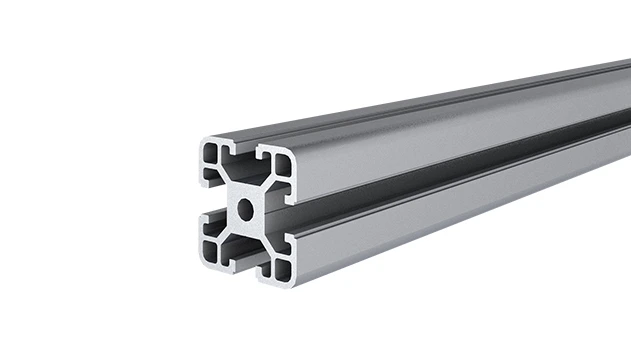
4040C EU Standard Aluminum Profile
4040C is a 4.00x4.00 CM fractional 40 series square extrusion T-slot profile with four open T-slots, each side with 4.00cm face. The profile has align-a-grooves to assist in aligning connecting profiles.
Walk into any modern automotive production plant, and you'll notice a relentless rhythm—robots welding frames, workers assembling intricate components, and materials flowing seamlessly from one station to the next. But behind this harmony lies a critical challenge: how to keep pace with an industry that's constantly evolving. Today's car buyers want more options—hybrid engines, electric vehicles, custom infotainment systems—and automakers need production lines that can adapt without grinding to a halt. This is where flexibility becomes not just a buzzword, but a lifeline. And at the heart of flexible production systems? The 4040C EU Standard Aluminum Profile, a humble yet revolutionary building block that's redefining how automotive plants design, build, and reconfigure their lines.
Why Rigidity No Longer Works in Automotive Manufacturing
For decades, automotive production lines were built like fortresses—heavy, welded steel structures that stayed put for years, even decades. They were designed for one thing: churning out the same model, day in and day out. But those days are gone. Today, a single plant might produce multiple models on the same line, with frequent updates to features and components. A sedan today, a crossover tomorrow; a gas engine this month, a hybrid next. Rigid steel structures can't keep up. Welding and cutting steel to reconfigure a workstation takes weeks, if not months, and costs a fortune in downtime. worse, it leaves plants vulnerable to missed deadlines and lost opportunities when customer demands shift suddenly.
Consider this: A major automaker recently announced plans to accelerate its shift to electric vehicles, aiming to produce 50% EVs within five years. To do that, its existing production lines—built for internal combustion engines—needed a makeover. Traditional steel workstations would have required a complete tear-down and rebuild, costing millions and taking months of production time. Instead, the plant turned to modular aluminum structures, built around profiles like the 4040C EU Standard Aluminum Profile. In a matter of weeks, old workstations were disassembled, and new ones—tailored for EV battery assembly—were erected. No welding, no heavy machinery, just quick-connect components that snapped into place. That's the power of flexibility, and it's why aluminum profiles are becoming the backbone of modern automotive manufacturing.
Meet the 4040C EU Standard Aluminum Profile: A Closer Look
So, what exactly is the 4040C EU Standard Aluminum Profile, and why does it matter for automotive production? Let's start with the basics. Aluminum extrusion profiles—like the 4040C—are lightweight, hollow structures made by pushing heated aluminum through a die to create a specific cross-sectional shape. The "4040C" refers to its dimensions: 40mm by 40mm, with a specific groove design (the "C" variant) that's compatible with a wide range of accessories. But numbers only tell part of the story. What makes this profile special is how it balances strength, versatility, and ease of use—three qualities that are non-negotiable in a fast-paced factory setting.
First, strength. Despite being lightweight (about 1/3 the weight of steel), the 4040C profile is surprisingly robust. It's made from high-grade aluminum alloy (typically 6063-T5), which offers excellent structural integrity. This means it can support heavy loads—think car parts, tools, even small machinery—without bending or warping. In automotive plants, where workstations often hold hundreds of pounds of components, this strength is critical. Yet, unlike steel, it's easy to handle; a single worker can lift and maneuver a 2-meter length of 4040C profile without straining, making assembly and reconfiguration a one-person job.
Second, versatility. The 4040C's T-slot design is a game-changer. Those grooves running along its length? They're not just for show. They allow for quick attachment of accessories—brackets, shelves, handles, even sensors—without drilling or welding. Need to add a tool holder to a workstation? Slide a T-bolt into the slot, tighten a nut, and you're done. Want to mount a light above an assembly area? Clip a bracket into the groove and secure it. This modularity means the same profile can be used for everything from workbenches to material racks, conveyor frames, and even turnover trolleys. It's like a grown-up version of building blocks, but for factories.
Third, corrosion resistance. Automotive plants are tough environments—oils, coolants, and occasional spills are part of daily life. Steel structures rust over time, weakening joints and requiring constant maintenance. Aluminum, on the other hand, naturally forms a protective oxide layer that resists corrosion. This means 4040C profiles stay looking and performing like new, even in damp or messy areas. For plants that want to minimize downtime and maintenance costs, this is a huge win.

From Workbenches to Flow Racks: Real-World Applications in Automotive Lines
Let's get practical. How do automotive plants actually use the 4040C EU Standard Aluminum Profile? The answer is: everywhere. From the assembly line to the warehouse, this profile pops up in countless applications, each solving a specific problem. Let's break down a few key uses.
Workstations: Built for the People Behind the Line
At the heart of any automotive production line are the workstations—where workers spend hours assembling parts, inspecting components, or operating tools. These workstations need to be ergonomic (to reduce fatigue), customizable (to fit different tasks), and adaptable (to change with new models). The 4040C profile excels here. Take, for example, a workbench used for dashboard assembly. Using 4040C profiles as the frame, workers can adjust the height with telescoping legs (secured via T-slot bolts), add shelves at the perfect angle for easy access to screws and clips, and mount tool organizers on the side. If the next model's dashboard is slightly larger, the workstation can be widened by adding a few extra profile sections and repositioning the shelves. No need to buy a new workbench—just reconfigure the existing one.
One plant in Germany took this a step further by adding caster wheels to their 4040C-based workstations. Now, instead of workers walking to the parts, the workstation (with all tools and materials) rolls to the assembly line. This might sound small, but it cut down on walking time by 20%—adding up to hours of saved labor each day. And when the line needs to be rebalanced, the workstations can be wheeled into new positions in minutes, not days.
Flow Racks: Keeping Materials Moving
In automotive manufacturing, materials don't just sit—they flow. From bolts and washers to larger components like brake calipers, parts need to move smoothly from storage to the assembly line. Flow racks—tilted shelves with roller tracks—are designed to do just that, using gravity to feed parts to workers as they need them. But traditional flow racks, made from steel, are heavy and hard to adjust. Enter 4040C aluminum profiles.
A 4040C-based flow rack starts with a simple frame: vertical 4040C posts connected by horizontal crossbars. Then, aluminum roller tracks (another key component) are mounted to the frame at a slight angle. The beauty is in the adjustability. Need to add a new shelf for a larger part? Just bolt on two more crossbars and slide in a new roller track. Want to change the tilt angle for faster or slower part flow? Loosen the brackets, adjust, and retighten. Even the roller tracks themselves can be swapped out—plastic wheels for lightweight parts, steel wheels for heavier components. This flexibility ensures that the flow rack grows with the plant's needs, whether that means adding more lanes for a new model or reconfiguring for smaller batches.
Conveyors: The Backbone of Material Transport
Conveyors are the arteries of a production line, moving everything from car bodies to small parts across the plant. But traditional conveyor systems are often fixed in place, making them hard to modify if the line layout changes. 4040C profiles are changing that, too. Lightweight yet strong, they're ideal for building modular conveyor frames that can be extended, shortened, or rerouted with minimal effort.
Take a small parts conveyor used to move screws and fasteners from the warehouse to the assembly line. Built with 4040C profiles, the frame can be disassembled and reassembled in a new location in under an hour. If the assembly line is repositioned 10 meters to the left, the conveyor goes with it—no need to buy a whole new system. And because aluminum is conductive, these conveyors can even be grounded to prevent static buildup, a critical feature when handling sensitive electronic components (like EV battery parts).
Turnover Trolleys: From Storage to Line, Seamlessly
Not all parts move via conveyor—some need to be transported manually, especially between storage and the line. Turnover trolleys (or "material carts") are essential here, but traditional steel trolleys are heavy and prone to rust. 4040C-based trolleys, however, are lightweight (easy to push), corrosion-resistant (no rust), and customizable. Need a trolley with dividers for different part sizes? Add aluminum profile dividers using T-slot brackets. Want to lock it in place during loading? Install brake-equipped caster wheels. One plant reported that switching to 4040C trolleys reduced worker injuries from heavy lifting by 35%—a testament to how small design changes can have a big impact on safety.
Traditional vs. 4040C Aluminum: A Clear Advantage
Still not convinced that 4040C EU Standard Aluminum Profiles are better than traditional steel structures? Let's put them head-to-head in a side-by-side comparison. The table below breaks down key factors that matter most in automotive production:
| Aspect | Traditional Steel Structures | 4040C Aluminum Profile Structures |
|---|---|---|
| Weight | Heavy (3x denser than aluminum); requires machinery to move/assemble. | Lightweight (1/3 the weight of steel); manageable by hand. |
| Assembly Time | Weeks (requires welding, drilling, painting). | Days or hours (no welding; T-slot accessories snap into place). |
| Reconfigurability | Limited (welded joints are permanent; modifications require cutting/welding). | High (components can be disassembled and reused; no damage to profiles). |
| Corrosion Resistance | Poor (prone to rust; requires regular painting/coating). | Excellent (natural oxide layer prevents rust; no maintenance needed). |
| Cost Over Time | High (initial low cost, but high maintenance and replacement costs). | Lower (higher upfront cost, but no maintenance and reusable components). |
| Customization | Limited (fixed designs; custom parts require new tooling). | Unlimited (mix and match accessories; new configurations in minutes). |
The data speaks for itself. While steel might have a lower upfront cost, the long-term savings in time, labor, and maintenance make 4040C aluminum profiles a smarter investment. And in an industry where downtime costs can reach $10,000 per minute, the ability to reconfigure in hours instead of weeks is priceless.
Accessories: The Secret to Unmatched Flexibility
A profile is only as good as the accessories that go with it, and the 4040C EU Standard Aluminum Profile has a vast ecosystem of aluminum profile accessories to choose from. These aren't just add-ons—they're what turn a simple frame into a fully functional workstation, flow rack, or conveyor. Let's explore a few must-have accessories:
- Joints and Connectors: These are the glue that holds the system together. From 90-degree angle brackets to swivel joints, these accessories snap into the T-slots, allowing for quick assembly of frames. The best part? They're reusable. Disassemble a workstation, and the joints can be used again in a new configuration.
- Roller Tracks: Essential for flow racks and conveyors, these tracks (often made from aluminum or plastic) mount directly to 4040C profiles. They come in different widths and roller types (steel, plastic, ESD-safe) to handle everything from tiny screws to heavy engine parts.
- Caster Wheels: Adding mobility to 4040C structures is as easy as bolting on caster wheels. Options include locking brakes (to keep trolleys steady), heavy-duty wheels (for rough factory floors), and even swivel casters (for easy maneuvering in tight spaces).
- Shelves and Panels: From solid aluminum shelves to wire mesh panels, these accessories turn frames into storage solutions. They're adjustable, so you can raise or lower shelves to fit different part sizes.
- Tool Holders and Hooks: Keep tools within arm's reach with T-slot tool holders. Hammers, screwdrivers, even power tools can be mounted directly to the profile, reducing clutter and saving time.
One automotive supplier in Japan took advantage of this accessory ecosystem to build a "smart workstation." They added a tablet mount (via a T-slot bracket) to display assembly instructions, a USB charging port (powered through the profile's hollow core), and even a small LED light strip (for better visibility). All of this was done without modifying the profile itself—just adding accessories. When the model changed, the tablet updated with new instructions, and the light strip was repositioned to highlight new components. No new workstation needed.
Sustainability: Doing More with Less
In today's world, sustainability isn't just a nice-to-have—it's a business imperative. Automotive manufacturers are under pressure to reduce their carbon footprint, and the 4040C EU Standard Aluminum Profile aligns perfectly with this goal. Here's how:
First, aluminum is 100% recyclable. Unlike steel, which loses strength when recycled, aluminum can be melted down and reused indefinitely without quality loss. This means that at the end of a 4040C profile's life (which could be decades), it can be recycled into new profiles or other aluminum products, reducing waste.
Second, lightweight design cuts energy use. Because 4040C structures are lighter than steel, they require less energy to transport (both from supplier to plant and within the plant). The German plant we mentioned earlier estimated that switching to aluminum trolleys reduced the energy needed to move materials by 15%—a small number that adds up over time.
Third, modularity reduces waste. Traditional steel structures are often built to last "forever," but when they're no longer needed, they're cut up and scrapped. With 4040C profiles, components are reused. A shelf from an old workstation might become part of a new flow rack, or a caster wheel from a trolley could end up on a conveyor frame. This "circular" approach to manufacturing keeps materials in use longer, reducing the need for new production.
Looking Ahead: 4040C Profiles and the Future of Automotive Manufacturing
As automotive manufacturing moves toward Industry 4.0—smart factories with connected machines, AI-driven production planning, and real-time data analytics—the need for flexible structures will only grow. The 4040C EU Standard Aluminum Profile is poised to play a key role here, too. Imagine a workstation that can "talk" to the assembly line: sensors mounted in the T-slots monitor tool usage, track part inventory, and even alert managers when a component is running low. Because the profile is conductive, these sensors can be powered and connected via cables run through the hollow core, keeping the workstation clean and clutter-free.
Automakers are also exploring the use of 4040C profiles in collaborative robot (cobot) workstations. Cobots—small, flexible robots that work alongside humans—need lightweight, reconfigurable platforms. 4040C profiles provide the perfect base, allowing cobots to be moved and reprogrammed quickly as tasks change. In Sweden, a plant used 4040C profiles to build a cobot workstation that assembles both gasoline and electric motor components. When switching between models, the cobot's arm is reprogrammed, and the workstation's tooling (mounted on 4040C brackets) is swapped out in 15 minutes.
Final Thoughts: Flexibility as a Competitive Edge
In the end, automotive manufacturing is a race—against time, against competitors, and against the ever-changing demands of consumers. To win, plants need more than just speed; they need adaptability. The 4040C EU Standard Aluminum Profile isn't just a piece of metal—it's a tool that gives manufacturers the freedom to evolve. Whether it's building a workstation that adjusts to workers' heights, a flow rack that adapts to new parts, or a conveyor that moves with the line, this profile turns "we can't" into "we can—tomorrow."
So, the next time you see a car roll off the assembly line, take a moment to appreciate the unseen heroes: the 4040C profiles, the roller tracks, the caster wheels, and all the accessories that make flexibility possible. They might not get the glory, but they're the reason automakers can keep up with the future—one profile at a time.