- Company Articles
- Products and Technology
- Product knowledge
- Automotive Repair Shops: Straight Lean Pipe Joint Square End Chrome for Custom Tool Storage

Automotive Repair Shops: Straight Lean Pipe Joint Square End Chrome for Custom Tool Storage
Related Product
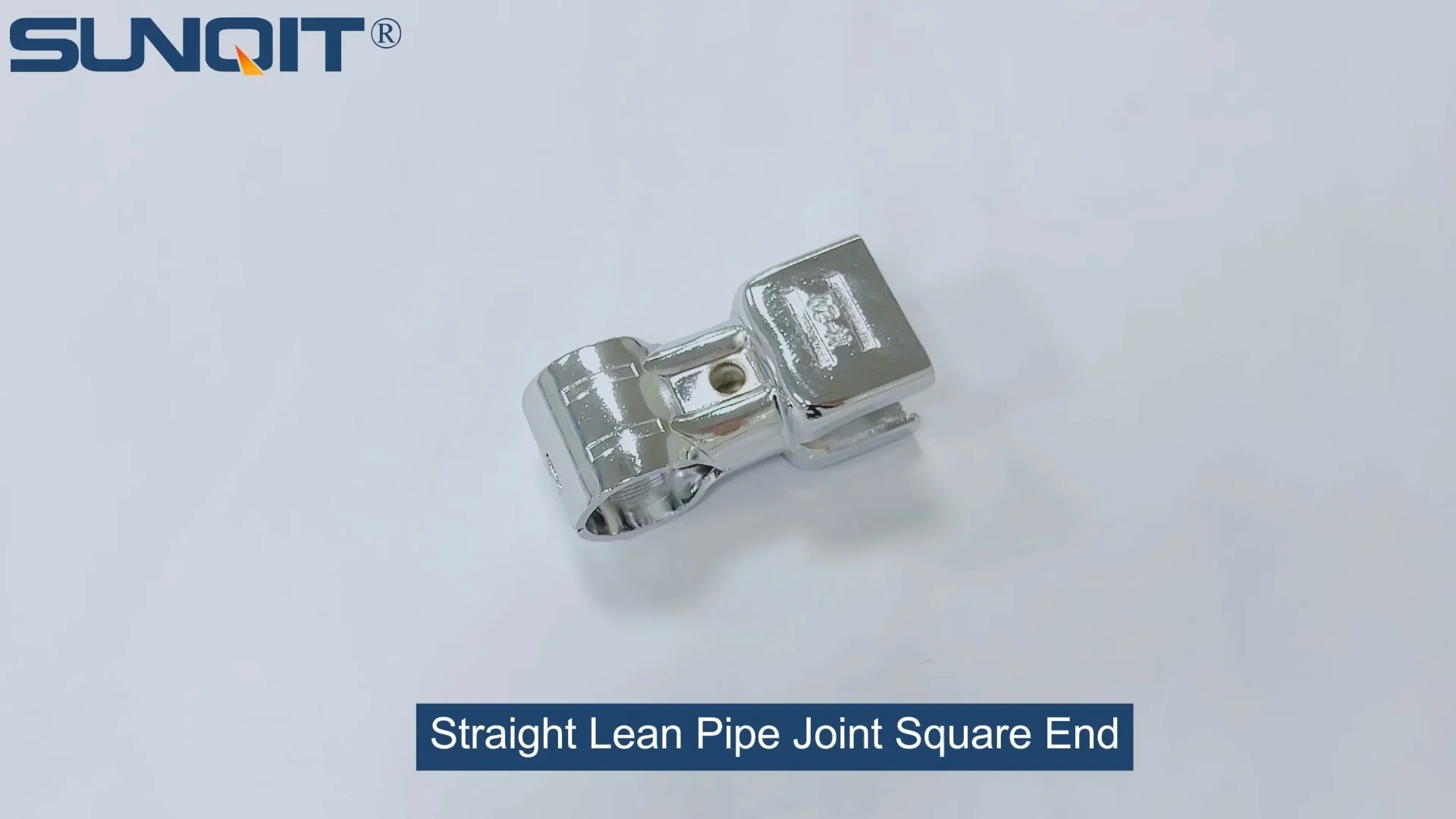
Straight Lean Pipe Joint Square End Chrome
Straight lean pipe joint square end, one side connect with 28mm round pipe, the other side connect with square tube.
Walk into any busy automotive repair shop on a Tuesday morning, and you'll likely be greeted by a symphony of clanging wrenches, the hum of air compressors, and the faint smell of motor oil. It's a place where precision matters, deadlines loom, and every minute counts. But amid the controlled chaos, there's often an unspoken enemy: disorganization. Technicians rummage through overflowing toolboxes, parts get misplaced on cluttered workbenches, and precious time slips away while someone hunts for that one elusive socket. For shop owners, this isn't just frustrating—it's costly. Wasted time means fewer cars serviced, lower profits, and even burnt-out staff. So, what if there was a way to turn that chaos into calm? A solution that doesn't just store tools, but organizes them around the way your shop actually works? Enter the world of lean pipe systems—and at the heart of it all, the straight lean pipe joint square end chrome.
You might be thinking, "A pipe joint? Really?" But stick with me. In the same way a well-designed engine relies on every bolt and gasket working in harmony, a auto repair shop depends on how its tools and space are structured. Lean manufacturing principles—born from the need to eliminate waste in factories—have found their way into garages and repair bays, and for good reason. They prioritize flexibility, customization, and efficiency. And when it comes to building the kind of tool storage that adapts to your shop's unique rhythm, the straight lean pipe joint square end chrome isn't just a component—it's the cornerstone. Let's dive into why this unassuming piece of hardware is quietly revolutionizing how auto repair shops stay organized.
The Problem with "One-Size-Fits-All" Tool Storage
Before we talk about solutions, let's acknowledge the elephant in the garage: traditional tool storage just isn't cutting it. Think about the average shop setup. You've got heavy metal toolboxes that cost a fortune and take up half the floor space. They're fixed in place, so if a technician needs a specific tool, they either drag the entire box across the shop (risking scratches on the floor) or trek back and forth. Then there are the generic shelves—too deep, too shallow, or spaced at weird heights that never quite fit your parts bins. And let's not forget the "junk drawer" phenomenon: that catch-all bench where sockets, screwdrivers, and random washers pile up until it's easier to buy a new tool than dig through the mess.
Maria, who runs a small independent repair shop in Austin, puts it bluntly: "I used to spend $500 every quarter on new tools—not because the old ones broke, but because we lost them. My techs are great mechanics, but they're not organizers. The toolboxes were a disaster, and the shelves? Half the time, parts would fall off the back because the shelves were too deep. We were wasting money on tools and time on searching. I knew we needed a change, but I didn't want to shell out for custom cabinetry that would be obsolete the second we added a new service."
The issue here is rigidity. Traditional storage is built for the "average" shop, but no two shops are the same. Maybe your team specializes in European cars, which require smaller, more specialized tools. Or perhaps you do a mix of oil changes and engine rebuilds, so you need space for both quick-access items (like oil filters) and bulkier parts (like alternators). What you need isn't a prefab solution—it's a system that bends to your needs. And that's where lean pipe systems shine.
What Is a Straight Lean Pipe Joint Square End Chrome, Anyway?
Let's start with the basics. Lean pipe systems (also called "flexible pipe systems") are modular setups made from lightweight steel or aluminum pipes connected by joints. They're used to build everything from workbenches and shelves to flow racks and material trolleys. And the straight lean pipe joint square end chrome? It's the connector that holds it all together—literally. But not all joints are created equal. This one stands out for three key reasons: durability, precision, and versatility.
First, the material. These joints are typically made from high-grade steel, then coated in a layer of chrome. Why chrome? In a shop where oil, grease, and cleaning chemicals are part of daily life, rust and corrosion are constant threats. Chrome plating acts as a shield, resisting moisture and grime. Wipe it down with a rag at the end of the day, and it stays shiny and functional for years. Compare that to uncoated steel joints, which can start rusting after a few months of exposure to shop conditions. For a tool storage system you're investing in, longevity matters.
Then there's the "square end" design. Most lean pipe joints have rounded ends, which work fine for basic setups, but they lack stability. The square end on this joint is a game-changer. When you slide a lean pipe into the joint, the square edges grip the pipe's interior, creating a tighter, wobble-free connection. This might not sound like a big deal until you've ever used a wobbly workbench—one that shakes when you're torquing a bolt, or shifts when you lean on it. A square-end joint eliminates that. It's the difference between a rickety bookshelf and a solid workbench; you'll feel the stability the first time you use it.
Finally, the "straight" design ensures alignment. No more squinting to make sure pipes are level or fighting with joints that angle off-kilter. These joints connect pipes in a straight line, so building a level workbench or a vertical shelf takes minutes, not hours. And since they're compatible with standard 28mm lean pipes (the industry norm), you won't have to hunt for specialty parts. It's simplicity by design—and in a busy shop, simplicity is golden.

Building Your Dream Workbench: From Pipes to Productivity
Let's get practical. How do you actually use these joints to solve real shop problems? Let's start with the most essential piece of equipment: the workbench. A technician's workbench is their office, their command center. It should be organized, within arm's reach of tools, and adaptable to whatever job is on the hoist that day. With straight lean pipe joint square end chrome, you can build a workbench that does all that—and more.
Here's how it works: Start with four vertical lean pipes (steel or aluminum, depending on your load needs). Connect them at the bottom with horizontal pipes using the square-end joints—this forms the base. Add another set of horizontal pipes at the top for the work surface frame. Then, secure a plywood or metal top to the frame (thick enough to handle the weight of tools and parts). But here's where the magic happens: customization. Want a pegboard on one side for hanging wrenches? Use pipe clamps (lean pipe accessories) to attach it to the vertical pipes. Need a shelf underneath for toolboxes? Add two more horizontal pipes halfway up the vertical supports, again using the square-end joints for stability. And if you want the whole thing to move? Swap out the fixed feet for caster wheels (locking ones, of course, to keep it steady when in use).
Jake, a master technician with 15 years of experience, recently helped his shop build three of these workbenches. "I used to have a toolbox that weighed 300 pounds and stayed in one spot," he says. "Now, my lean pipe workbench has caster wheels, so I roll it right up to the car I'm working on. The square-end joints mean it doesn't shake when I'm using a breaker bar, and I added a little shelf on the side for my torque wrench and socket set. I don't waste time walking back and forth anymore. It's like having a mobile tool station that's mine ."
| Aspect | Traditional Toolbox + Fixed Workbench | Lean Pipe Workbench with Straight Lean Pipe Joints |
|---|---|---|
| Space Usage | Bulky toolboxes take up floor space; workbench is fixed and often underutilized. | Vertical design maximizes space; caster wheels let you move the bench, freeing up floor area when not in use. |
| Customization | Pre-drilled holes and fixed shelves limit how you organize tools. | Add/remove shelves, pegboards, or bins anytime using pipe clamps and joints—no tools needed beyond a hex key. |
| Durability | Toolboxes dent easily; wooden workbenches warp with exposure to oil/chemicals. | Chrome-plated joints resist rust; steel/aluminum pipes handle heavy loads without bending. |
| Cost Over Time | Expensive upfront; replacement parts (like drawer slides) add up. | Affordable to start; modular design means you expand only as needed, no wasted investment. |

Beyond Workbenches: Flow Racks and the Art of "First In, First Out"
Workbenches are just the beginning. Any auto repair shop knows that parts storage is another battlefront. From oil filters and spark plugs to belts and hoses, keeping track of small, high-turnover items can feel like herding cats. Traditional shelves work, but they have a flaw: the parts you need most end up at the back, buried under newer stock. Enter flow racks—another lean pipe staple that relies on the straight lean pipe joint square end chrome to function.
A flow rack is exactly what it sounds like: a sloped rack with roller tracks that let parts bins "flow" forward as you take the front one. It's based on the "first in, first out" (FIFO) principle, ensuring you use older parts before they expire or become obsolete. Building one is surprisingly simple with lean pipes and square-end joints. Here's how: vertical lean pipes form the sides, connected by horizontal supports (using those square-end joints for stability). Then, attach roller tracks to the horizontal supports at a slight angle (about 5-10 degrees). Load your parts bins onto the tracks, and gravity does the rest. When you grab the front bin, the one behind it slides forward—no more digging to the back of the shelf.
Lisa, who manages inventory at a chain of auto repair shops in Florida, swears by her flow racks. "Before, we'd have oil filters stacked three deep on shelves," she recalls. "Technicians would yank the front one, and the whole stack would topple. We'd find expired filters at the back all the time. Now, with the lean pipe flow rack, each filter type has its own track. The square-end joints keep the rack steady, even when it's fully loaded, and the roller tracks mean the next filter is right there. We've cut down on waste by 30%—and the techs stop complaining about bins falling on their feet!"
The Secret Sauce: Lean Pipe Accessories
If the straight lean pipe joint square end chrome is the backbone of these systems, then lean pipe accessories are the muscles and tendons that make them flexible. You could build a basic workbench with just pipes and joints, but adding a few key accessories turns it into a powerhouse. Let's break down the ones that matter most for auto repair shops:
Caster wheels: As we mentioned, locking caster wheels transform a static workbench into a mobile station. Look for heavy-duty options (at least 200 lbs. capacity per wheel) with rubber treads to protect shop floors. Swivel casters make maneuvering around cars and equipment a breeze, while brake levers keep the bench rock-solid when you're torquing bolts.
Pipe clamps and brackets: These let you attach just about anything to your lean pipe setup. Need a place to hang air hoses? Use a pipe clamp with a hook. Want to mount a small parts bin under your workbench? A simple L-bracket and clamp do the trick. The best part? They're tool-free—just tighten by hand.
Roller tracks: Essential for flow racks, but also useful for sliding parts across workbenches. Made from plastic or metal, they come in different widths to fit various bin sizes. Pair them with the square-end joints to build custom-length tracks for long or short parts.
End caps: A small detail, but important. Lean pipes have open ends, which can collect dust, trap oil, or even scratch hands. Rubber or plastic end caps snap on easily, keeping your system clean and safe.
The beauty of these accessories is that you don't have to buy them all at once. Start with a workbench and a few caster wheels, then add a flow rack with roller tracks next month. As your shop's needs change—maybe you start offering EV repairs and need space for battery tools—you can tweak the setup without starting over. It's a "grow as you go" approach that fits any budget.
From Chaos to Calm: A Shop Owner's Journey
Let's wrap this up with a real-world example. Take Mike, who owns a mid-sized repair shop in Chicago with 5 technicians. Two years ago, his shop was drowning in disorganization. "We had toolboxes everywhere, parts stacked on the floor, and the workbenches looked like a tornado hit them," he says. "I was losing good techs because they were tired of the chaos. One day, a rep from a lean pipe supplier stopped by and showed me a demo of the straight lean pipe joint square end chrome. I was skeptical—until he built a mini workbench right in my office in 10 minutes. I thought, 'If this is that easy, maybe we can do this ourselves.'"
Mike bought a starter kit: 20 lean pipes, 50 square-end chrome joints, 8 caster wheels, and a handful of clamps. He and his technicians spent a Saturday building three mobile workbenches and a flow rack for common parts. "The techs were hesitant at first—'Why are we building furniture on our day off?'—but by the end, they were arguing over who got which bench," Mike laughs. "We customized each one: one tech added a pegboard for his specialty wrenches, another wanted a shelf for his laptop (he uses it to look up repair manuals). The flow rack went near the parts counter, and we labeled each track with part numbers. Within a week, the mood in the shop shifted. No more yelling for tools. No more wasted time. The techs started taking pride in their workbenches—they even decorated them with stickers! And financially? We're servicing 15% more cars per week, and I haven't bought a new toolbox in two years. Best $2,000 I ever spent."
Why Chrome Matters (And Why Quality Joints Are Non-Negotiable)
You might be tempted to cut costs with cheaper, uncoated joints or generic pipes. But in a shop environment, quality matters. Chrome plating isn't just about shine—it's about resistance to oil, grease, and corrosion. A rusted joint will loosen over time, making your workbench wobbly and unsafe. Similarly, poorly made joints with uneven square ends won't grip the pipes properly, leading to instability. When shopping for lean pipe systems, look for joints with:
- A smooth, even chrome finish (no bubbles or flaking).
- Precision-cut square ends that fit snugly into standard 28mm lean pipes.
- Steel construction (avoid plastic joints—they won't hold up to heavy tools).
It's also worth buying from a supplier that specializes in lean pipe systems, not just a general hardware store. They'll have the right accessories (like heavy-duty caster wheels and roller tracks) and can help you troubleshoot if you're not sure how to build a specific setup. Remember: this is an investment in your shop's efficiency—and your team's sanity.
Final Thoughts: More Than Storage—A Culture of Efficiency
At the end of the day, the straight lean pipe joint square end chrome is more than a piece of hardware. It's a symbol of a shift in how auto repair shops operate—away from rigid, one-size-fits-all solutions and toward systems that adapt to people . When technicians have a clean, organized space that's built around their needs, something changes. They take ownership. They waste less time. They feel valued. And that translates to better work, happier customers, and a shop that runs like a well-tuned engine.
So, if your shop is still stuck in the chaos of overflowing toolboxes and cluttered benches, maybe it's time to think smaller. Not smaller in ambition, but smaller in components. Start with a few pipes, a handful of square-end chrome joints, and a vision for how you want your shop to work. Build a workbench. Add a flow rack. Watch as the minutes saved turn into hours, and the hours turn into more cars, more profits, and a shop that feels like a place where great work happens—not just a place where work gets done.
After all, in auto repair, the difference between good and great often comes down to the details. And in this case, that detail is a simple, chrome-plated joint that's quietly changing the game—one organized workbench at a time.