- Company Articles
- Products and Technology
- Product knowledge
- Ball Bearing vs Roller Bearing: Swivel Stem Caster Wheel with Brake Performance

Ball Bearing vs Roller Bearing: Swivel Stem Caster Wheel with Brake Performance
Related Product
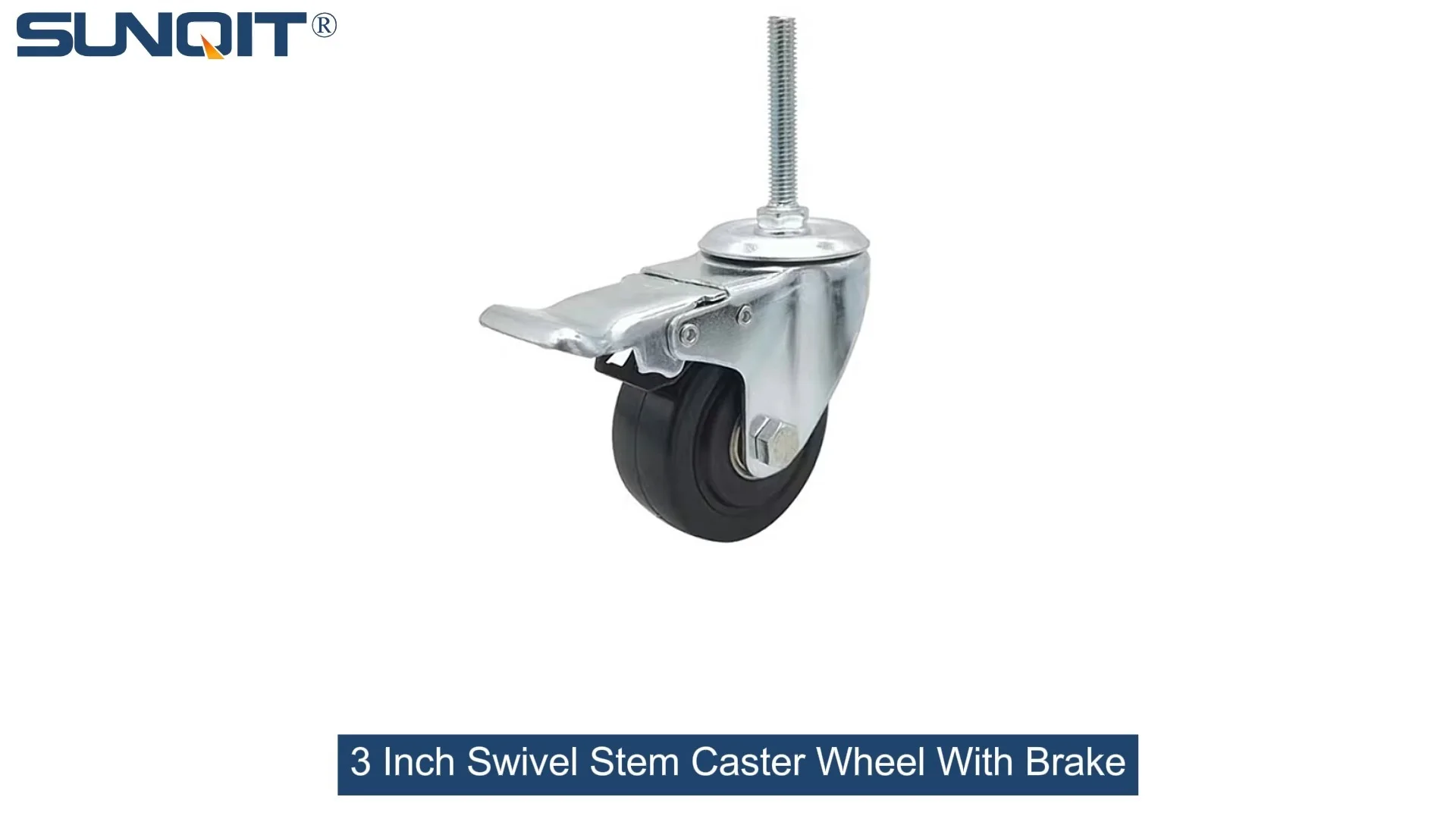
Swivel Stem Caster Wheel with Brake
360 Degree Swivel Stem Caster with brake. Threaded-post mount design, castors diameter 3 inch.Each swivel caster wheels loading 70KGS. Heavy enough and widely suit for carts, chairs, cabinet, flow rack, workbench, turnover rolley.
In the world of material handling, where efficiency and reliability can make or break a workflow, few components are as yet critical as the caster wheel. From the bustling floors of manufacturing plants to the organized workspaces of lean pipe workbenches, caster wheels keep operations moving—literally. Among the many types of caster wheels, the swivel stem caster wheel with brake stands out for its versatility, allowing equipment to rotate 360 degrees while offering the security of a quick-stop brake. But what truly determines its performance? The answer lies in its bearings: ball bearings and roller bearings. In this article, we'll dive deep into how these two bearing types impact the functionality, durability, and overall effectiveness of swivel stem caster wheels with brakes, helping you make informed choices for your specific needs.
Understanding Bearings: The Heart of Caster Wheel Performance
Before we compare ball and roller bearings, let's clarify their role in a caster wheel. Bearings are mechanical components that reduce friction between moving parts—in this case, between the caster wheel's hub and axle. By minimizing friction, they allow the wheel to spin smoothly, even under heavy loads, and reduce wear on the entire assembly. For swivel stem caster wheel with brake units, bearings do more than just facilitate movement; they also influence how effectively the brake engages, how much force is needed to push or pull the equipment, and how long the caster will last in daily use.
What Are Ball Bearings?
Ball bearings are the most common type of bearing, recognizable by their small, spherical rolling elements. These balls are housed in a circular raceway (inner and outer rings) and distribute weight evenly across their surface area. In caster wheels, ball bearings are prized for their simplicity and low friction. Because the contact point between a ball and the raceway is a single point (or a very small area), they generate less resistance when rolling, making them ideal for applications where smooth, effortless movement is a priority.
What Are Roller Bearings?
Roller bearings, by contrast, use cylindrical, tapered, or spherical rollers instead of balls. These rollers have a larger contact area with the raceway, which allows them to handle heavier loads. Unlike ball bearings, which excel in reducing friction, roller bearings are designed for strength and stability. The cylindrical shape of the rollers means they distribute weight over a longer, linear contact patch, making them better suited for high-load environments where durability and resistance to deformation are key.
Performance Showdown: Ball Bearings vs. Roller Bearings in Swivel Stem Casters
To truly understand how ball and roller bearings stack up in swivel stem caster wheel with brake systems, we need to evaluate them across critical performance metrics: load capacity, friction and ease of movement, durability, brake interaction, and real-world application suitability. Let's break down each factor.
1. Load Capacity: Handling the Weight of the Job
One of the biggest differences between ball and roller bearings is their ability to support weight. In caster wheels, load capacity isn't just about how much the wheel can carry—it's about safety, too. A bearing that's overloaded will wear prematurely, leading to squeaky, stiff movement or even sudden failure, which could damage equipment or injure workers.
Ball bearings, with their point-contact design, have a lower load capacity compared to roller bearings. A typical ball bearing caster wheel might comfortably support 200–400 pounds per wheel, depending on the size of the balls and the quality of the materials. Beyond that, the small contact area can lead to stress concentration, causing the balls or raceways to deform over time.
Roller bearings, with their larger contact area, are built for heavy lifting. Cylindrical roller bearings, for example, can often handle 500–1,000 pounds per wheel or more. This makes them the go-to choice for equipment like turnover trolley and rack units, which frequently transport bulk materials or heavy components in warehouses and factories. If your workflow involves moving loaded pallets, machinery parts, or stacked inventory, roller bearings will provide the stability you need.
2. Friction and Ease of Movement: Smooth vs. Sturdy
When it comes to pushing or pulling equipment, friction is the enemy. Lower friction means less effort is required to move the load, reducing operator fatigue and increasing productivity. Here, ball bearings have a clear edge.
Because ball bearings have minimal contact with the raceway, they generate less rolling resistance. This translates to a "lighter" feel when moving the caster—even when the load is near the bearing's maximum capacity. For applications like lean pipe workbench setups, where workers might adjust the position of tools or materials dozens of times a day, this smoothness can make a noticeable difference in daily comfort and efficiency.
Roller bearings, while sturdier, create more friction due to their larger contact area. Pushing a roller bearing caster with a heavy load may require more force, especially when starting from a stop. However, this extra friction can be an advantage in situations where controlled movement is key—for example, on inclines or uneven floors, where a "sluggish" caster is less likely to roll away unexpectedly.
3. Durability: Longevity in Harsh Environments
Durability is about more than just load capacity; it's about how well the bearing withstands daily wear, debris, and environmental factors like moisture or temperature extremes. Here, roller bearings often come out on top.
The larger contact area of roller bearings distributes stress more evenly, reducing the risk of pitting, cracking, or deformation in the raceway. This makes them more resistant to impact and shock loads—common in busy warehouses where equipment might be bumped into racks or other trolleys. Roller bearings also tend to handle contamination better: dust, dirt, or small debris is less likely to get trapped between the rollers and raceway compared to the tight gaps in ball bearings.
Ball bearings, while smooth, are more vulnerable to damage from debris. A single grain of sand or metal shard can scratch the raceway or ball surface, increasing friction and leading to premature failure. They also struggle with misalignment; if the caster wheel isn't perfectly perpendicular to the axle, ball bearings can wear unevenly. For clean environments like assembly lines or office settings, this is less of an issue, but in dusty or gritty workshops, roller bearings may offer longer service life.
4. Brake Interaction: How Bearings Affect Stopping Power
For swivel stem caster wheel with brake units, the brake is the final line of safety. A reliable brake prevents unintended movement, keeping equipment stable during loading/unloading or when parked on slopes. But how do bearings influence brake performance?
Ball bearings, with their low friction, can make brakes feel more responsive. Because the wheel spins freely with minimal resistance, the brake pad (a common caster accessory ) can quickly grip the wheel surface, stopping movement almost instantly. However, this free-spinning nature also means that if the brake is slightly worn or misaligned, the wheel may "creep" under load—a risky scenario for precision workbenches or equipment holding fragile items.
Roller bearings, with their higher friction, create more inherent resistance, which can act as a secondary "brake" even when the brake isn't engaged. This means that when the brake is applied, the combination of the brake pad and the bearing's natural resistance makes for a more secure stop. Roller bearings are also less likely to "slip" if the brake is slightly loose, making them a safer choice for heavy-duty applications where a failed brake could have serious consequences.

At a Glance: Ball Bearing vs. Roller Bearing Comparison
| Performance Metric | Ball Bearings | Roller Bearings |
|---|---|---|
| Load Capacity | Moderate (200–400 lbs per wheel) | High (500–1,000+ lbs per wheel) |
| Friction & Movement | Low friction; smooth, effortless rolling | Higher friction; sturdier, more controlled rolling |
| Durability | Good in clean environments; vulnerable to debris | Excellent in harsh environments; resistant to impact/shock |
| Brake Interaction | Responsive but may creep if brake is worn | Secure stop; natural resistance enhances brake performance |
| Ideal Applications | Lean pipe workbenches, office equipment, light trolleys | Turnover trolley and rack units, heavy machinery, warehouse carts |

Real-World Applications: When to Choose Which Bearing
The choice between ball and roller bearings in swivel stem caster wheel with brake units ultimately depends on your specific needs. Let's explore two common scenarios to see how this plays out.
Scenario 1: Lean Pipe Workbench in an Electronics Assembly Line
Imagine a lean pipe workbench in a precision electronics factory. Workers here assemble small components, often moving tools, PCBs, and bins of parts across the bench dozens of times a day. The workbench itself is lightweight (under 300 lbs when fully loaded), and the environment is clean, with minimal dust or debris. For this setup, ball bearings are the clear choice.
The low friction of ball bearings makes it easy to reposition the workbench or slide accessories like tool holders. The smooth rolling reduces operator fatigue, and the responsive brake ensures the bench stays put during delicate assembly tasks. Since the load is light and the environment is clean, durability concerns with ball bearings are minimal—they'll likely last for years with basic maintenance.
Scenario 2: Turnover Trolley and Rack in a Automotive Warehouse
Now, consider a turnover trolley and rack used to transport engine blocks in an automotive warehouse. These trolleys often carry loads of 800–1,000 lbs, and the warehouse floor is rough, with occasional debris and oil spills. Here, roller bearings are the better option.
The high load capacity of roller bearings ensures the trolley can handle the heavy engine blocks without failing. Their durability resists damage from debris and impacts with racking, and the higher friction helps prevent the trolley from rolling away on uneven floors. The brake, paired with the roller bearings' inherent resistance, provides a secure stop even when loaded to capacity—critical for worker safety in a busy, high-traffic area.

Maintenance Tips: Extending the Life of Your Caster Bearings
Regardless of whether you choose ball or roller bearings, proper maintenance is key to maximizing performance and longevity. Here are some tips to keep your swivel stem caster wheel with brake units in top shape:
- Clean Regularly: Wipe down caster wheels and bearings with a dry cloth to remove dust, dirt, and debris. For roller bearings, pay extra attention to the gaps between rollers, where grit can accumulate and cause wear.
- Lubricate Often: Both ball and roller bearings need lubrication to reduce friction and prevent corrosion. Use a high-quality bearing grease (check the manufacturer's recommendations for type) and apply it every 3–6 months, or more frequently if used in wet or dusty environments.
- Inspect Brakes and Caster Accessories: Check brake pads (a critical caster accessory ) for wear—replace them if they're thin or cracked. Ensure the brake lever engages smoothly and that the stem swivels freely without sticking, which can strain the bearing.
- Check for Misalignment: If a caster wobbles or drags, the bearing or wheel may be misaligned. Tighten loose bolts and adjust the stem to ensure the wheel spins evenly. Misalignment is more harmful to ball bearings, so address it promptly.
Final Thoughts: Choosing the Right Bearing for Your Caster
Ball bearings and roller bearings each bring unique strengths to swivel stem caster wheel with brake systems. Ball bearings shine in light to moderate load applications where smooth movement and responsive braking are priorities—think lean pipe workbenches, office carts, or small material handlers. Roller bearings, on the other hand, dominate in heavy-duty, high-load scenarios like turnover trolleys, industrial racks, and warehouse equipment, where durability and stability are non-negotiable.
By understanding your load requirements, environment, and movement needs, you can select the bearing type that will keep your operations running smoothly, safely, and efficiently. And with proper maintenance, your caster wheels—whether ball or roller bearing—will be a reliable partner in your workflow for years to come.