- Company Articles
- Products and Technology
- Product knowledge
- Benefits of 40 Steel Roller Track Green for Flexible Manufacturing Workstations

Benefits of 40 Steel Roller Track Green for Flexible Manufacturing Workstations
Related Product
40 Steel Roller Track Green
The roller track can be installed with multiple accessories to create different slopes and configurations of flow racks.All steel conveyor 40 roller track accessories are engineered to perfectly fit the sliding rail.
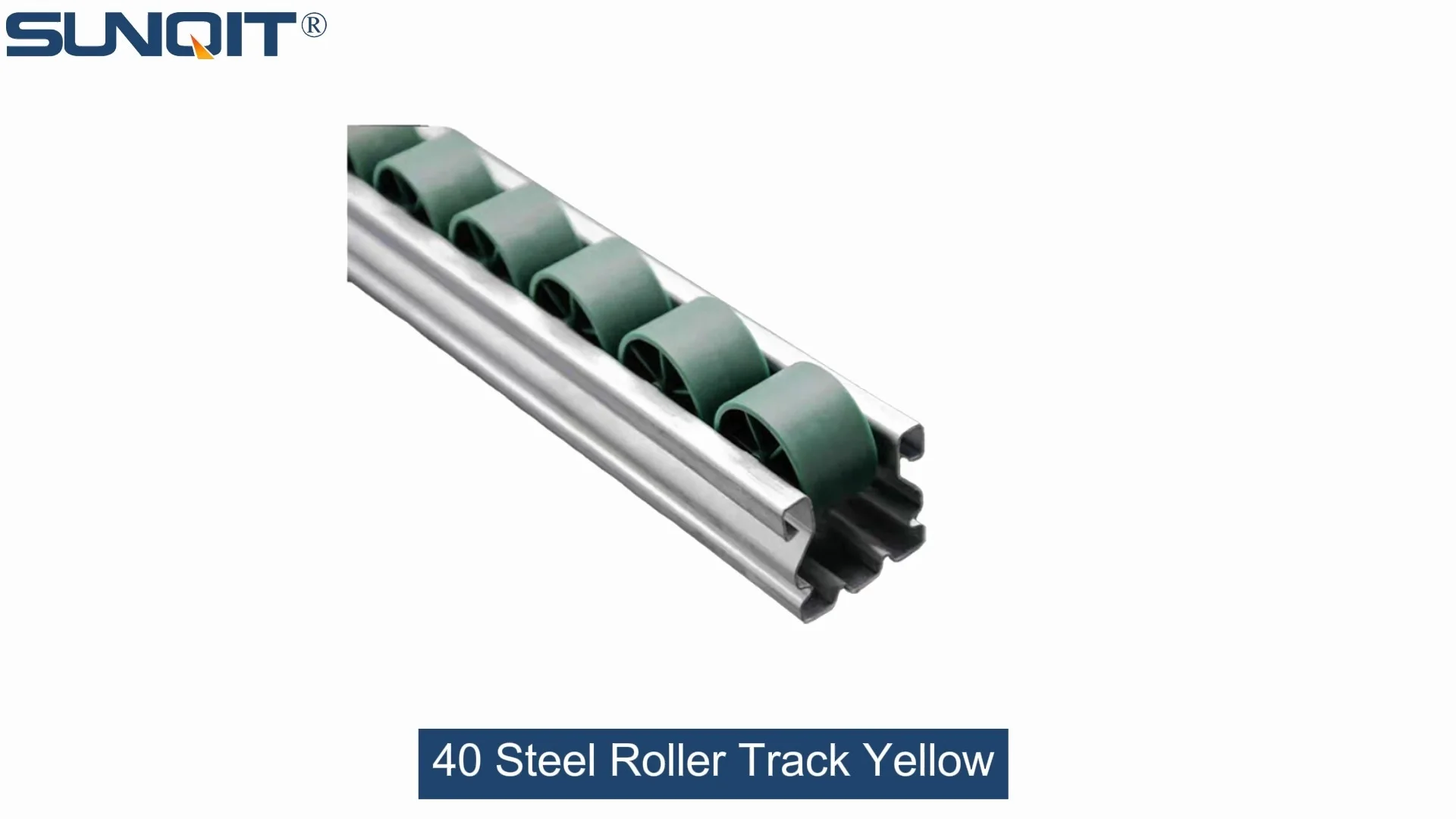
Benefits of 40 Steel Roller Track Green for Flexible Manufacturing Workstations
The Unsung Hero of Smooth Manufacturing Flows
Flexible manufacturing is all about adaptability—being able to shift gears fast, cut waste, and keep your team moving without hiccups. But if you've spent any time on a production floor, you know how easy it is for small bottlenecks to derail an entire shift. A stuck part here, a wobbly track there, or equipment that can't keep up with a new product line—these are the kinds of issues that eat into profits and frustrate workers.
That's why the 40 Steel Roller Track Green is such a game-changer. It's not just another piece of metal; it's a solution designed to fix those small but critical problems. Whether you're assembling 3C devices, building medical equipment, or putting together automotive parts, this roller track works with your lean pipe system to create a workflow that's smooth, adaptable, and built to last.
What Makes 40 Steel Roller Track Green Stand Out?
Let's start with the basics. This track is made from high-grade steel (Q235, for those who like specifics) with a thick, protective green coating. The "40" refers to its standard width, which fits perfectly with most lean pipe workstations and flow racks. Unlike plastic tracks that crack under heavy loads or uncoated steel that rusts in humid environments, this green-coated track is built to handle the toughest manufacturing conditions.
The rollers themselves are smooth and durable—they glide even when carrying heavy parts like battery packs or metal components. And because it's part of a lean solution ecosystem, you can use roller track connectors to adjust the length or layout in minutes. No welding, no special tools—just snap the connectors in place and keep going. It's the kind of flexibility that makes flexible manufacturing actually work.
Key Benefits for Your Flexible Workstation
1. Seamless Material Flow (No More Stuck Parts)
The biggest pain point in many workstations is material flow. When parts get stuck on a track, everything stops. The 40 Steel Roller Track Green solves this with its smooth-rolling design. Pair it with a conveyor system to move parts from storage to assembly, or use it with flow racks to keep components within easy reach. Workers no longer have to push or pull heavy items—parts glide where they need to go, saving time and energy.
2. Durability That Saves You Money
Let's talk about long-term savings. Plastic tracks might be cheaper upfront, but they break easily—you'll end up replacing them every few months. Uncoated steel tracks rust, which means you have to spend time and money on maintenance. The green coating on this track protects against moisture and scratches, so it lasts for years. It can support up to 500 kg per meter (depending on the variant), so you don't have to worry about it bending or breaking under heavy loads. This is the kind of investment that pays off over time.
3. Flexibility to Adapt Fast
Flexible manufacturing means changing your setup often. With roller track connectors, you can adjust the 40 Steel Roller Track Green to fit new product lines without stopping production. For example, if you're switching from assembling smartphones to tablets, you can lengthen the track or add a curve to connect to a new workstation. It's so easy that even your line workers can do it—no need to call in a technician.
This flexibility also means you can reuse the track for different projects. When a product line ends, just take it apart and rebuild it for the next one. That's the lean way—reduce waste, reuse what you have, and keep improving.
4. Ergonomic Design for Happier Workers
Worker fatigue is a big issue in manufacturing. Pushing heavy parts on rough tracks leads to back pain and repetitive strain injuries. The 40 Steel Roller Track Green reduces that strain by making material movement effortless. Workers don't have to bend or exert extra force—parts move smoothly to their hands. This not only reduces sick days but also boosts morale. A happy team is a productive team, after all.
5. Sustainability That Fits Your Lean Goals
Lean manufacturing isn't just about efficiency—it's about sustainability too. The green coating on this track is non-toxic and eco-friendly. And because the track is reusable, you're not throwing away plastic or rusted steel every few months. This aligns with the "reduce, reuse, recycle" principles that many modern factories are adopting. Plus, the green color gives your workstation a clean, professional look that makes the floor feel more organized.
How Does It Compare to Other Tracks?
You might be wondering: why not just stick with what I have? Let's break down the differences with a simple comparison:
| Feature | 40 Steel Roller Track Green | Plastic Roller Track | Uncoated Steel Track |
| Max Load Capacity | 500 kg/m | 150 kg/m | 400 kg/m (but rusts) |
| Corrosion Resistance | Excellent (green coating) | Good (but not for wet areas) | Poor (rusts quickly) |
| Maintenance Cost | Low (wipe clean) | High (replace cracked parts) | Medium (rust removal + oiling) |
| Adaptability | High (use roller track connectors) | Low (fixed length) | Medium (needs tools to adjust) |
| Lifespan | 5+ years | 1-2 years | 3 years (if maintained) |
As you can see, the 40 Steel Roller Track Green outperforms other options in every key area. It's the kind of investment that saves you money and headaches in the long run.
Real-World Impact: A Medical Device Factory Success Story
How ABC Medical Increased Efficiency by 22%
ABC Medical is a manufacturer of surgical instruments. They were facing a problem: their old plastic tracks kept breaking when moving heavy stainless steel tools. This led to 10-15 minutes of downtime per shift, and workers were complaining about back pain from pushing stuck parts.
The team decided to switch to the 40 Steel Roller Track Green. They paired it with lean pipe workstations and conveyor systems to connect their sterilization area to the assembly line. Using roller track connectors, they adjusted the track layout to fit their new line of laparoscopic instruments—all without stopping production.
The results were amazing:
Downtime dropped by 30% (from 15 mins to 4 mins per shift).
Production efficiency increased by 22%—they could make 18 more instruments per day.
Worker complaints about back pain decreased by 85%.
The green coating made the floor look cleaner, which helped them pass their next ISO audit with flying colors.
This story shows how a small change—like switching to the right roller track—can have a huge impact on your factory's performance.
How to Integrate It Into Your Workstation
Integrating the 40 Steel Roller Track Green into your setup is easy. Here's a step-by-step guide that's simple enough for anyone to follow:
Step 1: Assess Your Workflow
Take a look at your current setup. Where are the bottlenecks? Do parts get stuck between storage and assembly? Are workers having to carry heavy items long distances? This will help you decide where to place the track.
Step 2: Choose Compatible Accessories
Pair the track with flow racks to store parts, conveyor systems to move them, and roller track connectors to adjust the layout. If you need mobility, add casters to your workstation—this makes it easy to move the entire setup when needed.
Step 3: Install the Track
No special tools required! Just snap the roller track connectors into place to join sections of track. Attach the track to your lean pipe system using clamps. It's so simple that you can do it during a lunch break without stopping production.
Step 4: Optimize Over Time
The best part about this track is its adaptability. As your needs change, use the connectors to adjust the layout. Add more sections, change the angle, or move the track to a new area—whatever works for your current project.
Final Thoughts: Why This Track Is a Must-Have
The 40 Steel Roller Track Green is more than just equipment—it's a partner in your lean manufacturing journey. It helps you build a workstation that's flexible, efficient, and kind to your workers. It saves you money on maintenance and replacements, and it aligns with your sustainability goals.
If you're tired of dealing with stuck parts, broken tracks, or inflexible setups, it's time to make the switch. This track works with your lean solution to create a workflow that's smooth, adaptable, and built to last. After all, in flexible manufacturing, the best tools are the ones that work as hard as your team does.