- Company Articles
- Products and Technology
- Product knowledge
- Benefits of Chrome-Plated One Way Rotatory Straight Lean Pipe Joints in Manufacturing

Benefits of Chrome-Plated One Way Rotatory Straight Lean Pipe Joints in Manufacturing
Related Product
One Way Rotatory Straight Lean Pipe Joint
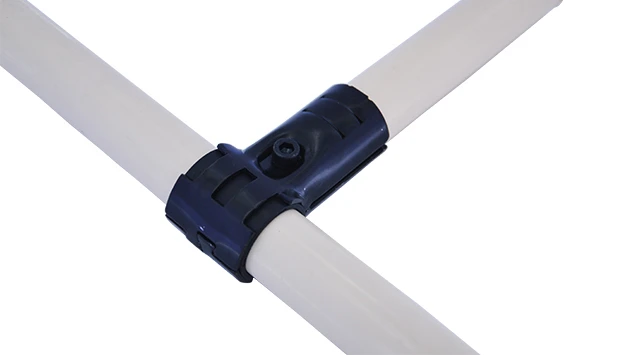
Two way lean pipe joint for 2 pcs 28MM lean pipe connection in straight angle with rotatory fucntion, which used widely in workbench, flow rack, hand trolley frame connection.
In the fast-paced world of manufacturing, where every second counts and adaptability can make or break a production line, the smallest components often hold the biggest potential to drive efficiency. Think about it: a single misaligned workbench, a stuck roller track, or a joint that takes too long to adjust can throw off an entire shift's output. That's where lean manufacturing systems come into play—designed to eliminate waste, streamline workflows, and keep operations agile. At the heart of these systems lies the humble lean pipe, but what truly brings them to life are the joints that connect them. Today, we're shining a spotlight on a component that's quietly revolutionizing how factories build, adapt, and thrive: the chrome-plated one way rotatory straight lean pipe joint. Let's dive into why this unassuming piece of hardware deserves a spot in your manufacturing toolkit.
Understanding the Lean Pipe Ecosystem: More Than Just Pipes and Joints
Before we zoom in on the star of the show, let's set the stage with a quick refresher on lean pipe systems. If you've walked through a modern factory, warehouse, or assembly plant, you've likely seen them in action: sturdy, modular structures like workbenches, flow racks, turnover trolleys, and conveyor systems, all built from interconnected pipes and joints. These systems are the backbone of lean manufacturing, a philosophy centered on maximizing value while minimizing waste—whether that's time, materials, or unnecessary movement.
Lean pipes themselves are typically made from materials like steel, aluminum, or plastic-coated steel, chosen for their strength, lightweight, and versatility. But without the right joints, these pipes are just pieces of metal. Joints are the connectors that turn pipes into functional structures, allowing you to build everything from a simple workbench to a complex material handling system. And not all joints are created equal. Traditional fixed joints, for example, lock pipes into rigid angles, making reconfiguration a hassle. Swivel joints offer more movement but can sometimes lack stability. Enter the chrome-plated one way rotatory straight lean pipe joint—a hybrid that marries flexibility with control, and durability with ease of use.
Anatomy of a Game-Changer: What Makes This Joint Unique?
Let's break down the name first, because it tells us a lot. "Chrome-plated" speaks to its finish, which we'll dig into later for its durability benefits. "One way rotatory" means it allows rotation in a single direction (think of a ratchet—turn it one way, and it locks; turn it the other, and it releases), giving controlled adjustability without accidental movement. "Straight" refers to its design, which aligns pipes in a straight line or fixed angle, ensuring structural stability once locked. Combine these features, and you get a joint that's both precise and adaptable—two qualities that are gold in manufacturing.
At first glance, it might look similar to other lean pipe joints, but the devil is in the details. The chrome plating isn't just for shine; it's a hard, corrosion-resistant layer that stands up to the wear and tear of factory life—think oil, dust, moisture, and the occasional bump from a forklift. The one-way rotation mechanism is engineered with precision: a series of internal gears or cams that let you pivot the joint smoothly in one direction to adjust angles, then lock it firmly in place when you're done. No wrenches, no bolts, no fuss. And the straight design ensures that when you're building a roller track or a workbench shelf, pipes align perfectly, reducing gaps that could cause jams or instability.

The Top Benefits: Why Manufacturers Are Making the Switch
Now, let's get to the "why." What makes this joint a must-have for modern manufacturing? Let's unpack the benefits, from flexibility to cost savings, and everything in between.
1. Unmatched Flexibility for Dynamic Production Lines
Manufacturing isn't static. Product lines change, order volumes fluctuate, and new technologies require reconfigured workspaces. A workbench that assembles smartphones today might need to handle larger tablets tomorrow; a flow rack moving small components might need to adapt to bulkier parts next month. Traditional fixed joints make this kind of change a headache—you'd have to disassemble the entire structure, replace joints, and rebuild from scratch. With the chrome-plated one way rotatory joint, reconfiguration is as simple as rotating the joint, adjusting the angle, and locking it into place.
Imagine a team on the automotive assembly floor that needs to adjust their workbench height to accommodate a taller operator or a different tool setup. With fixed joints, this could take an hour of unscrewing, repositioning, and tightening. With a one-way rotatory joint? They rotate the joint to loosen, slide the pipe to the new height, rotate back to lock, and they're back to work in 10 minutes. That's less downtime, more productivity, and a team that feels empowered to adapt on the fly.
This flexibility also shines in prototyping or small-batch production, where setups change weekly (or even daily). Instead of investing in multiple rigid structures, manufacturers can use a single modular system, reconfiguring it with these joints to meet each project's needs. It's like having a Swiss Army knife for your factory floor—one tool, endless possibilities.
2. Chrome Plating: Durability That Stands the Test of Time
Factories are tough environments. Dust, grease, chemicals, and constant use can take a toll on equipment. Unplated steel joints might rust over time, plastic joints can crack, and even basic coated joints can wear thin. The chrome plating on this joint is a game-changer here. Chrome is known for its hardness (it ranks 8.5 on the Mohs scale, just below diamonds) and resistance to corrosion, scratches, and tarnish. That means even in humid warehouses, oily automotive plants, or cleanrooms with strict hygiene standards, these joints hold up.
Let's put this into perspective. A standard unplated steel joint might start showing signs of rust after 6 months in a damp environment, requiring replacement. A chrome-plated joint, on the other hand, can last 3–5 years under the same conditions, with minimal maintenance. Just a quick wipe with a cloth to remove dust or oil, and it's good as new. This durability translates to lower replacement costs and less downtime spent swapping out worn parts—a win for your bottom line.
3. Assembly and Reconfiguration: Fast, Tool-Free, and Foolproof
Time is money, and nowhere is that truer than on the factory floor. Traditional joints often require tools—wrenches, Allen keys, maybe even power drills—to tighten or loosen. This adds steps to assembly, slows down reconfiguration, and introduces the risk of human error (over-tightening can crack pipes; under-tightening leads to instability). The chrome-plated one way rotatory joint eliminates all that with its tool-free design.
Here's how it works in practice: To attach two pipes, you slide the joint onto the end of one pipe, align the second pipe, and rotate the joint's collar in the "loose" direction to adjust the angle. Once aligned, rotate the collar in the "lock" direction until it clicks into place. That's it—no tools, no measuring, no guesswork. Even a new operator can master it in minutes. This speed is a lifesaver during initial setup (think building a new flow rack in hours instead of days) and during reconfiguration (adjusting a workbench mid-shift to fix a bottleneck). It also reduces the risk of injury from using tools in tight spaces, making your workplace safer.
4. Seamless Compatibility with the Lean Pipe Ecosystem
A great joint shouldn't just work well on its own—it should play nice with the rest of your lean system. The chrome-plated one way rotatory straight lean pipe joint is designed to be compatible with standard lean pipes (including steel, aluminum, and plastic-coated options), as well as other common components like roller tracks, workbench surfaces, and caster wheels. This means you don't have to overhaul your entire system to start using it; you can mix and match with existing parts.
For example, let's say you're building a roller track to move parts from one workstation to another. Roller tracks rely on precise alignment to ensure smooth flow—if the track is even slightly crooked, parts can get stuck, causing delays. Using these joints, you can (fine-tune) the angle of each pipe section, ensuring the rollers line up perfectly. The one-way rotation prevents the joint from slipping out of alignment once locked, so the track stays stable even with heavy use. Pair this with a workbench built using the same joints, and you've got a cohesive, efficient workflow where materials move seamlessly from station to station.
5. Cost-Effective in the Long Run: Less Waste, More Value
At first glance, a chrome-plated joint might cost a bit more than a basic plastic or unplated steel joint. But when you factor in durability, flexibility, and time savings, it's an investment that pays for itself. Let's do the math: Suppose a basic joint costs $5 and lasts 6 months, requiring replacement twice a year. A chrome-plated rotatory joint costs $10 but lasts 5 years. Over 5 years, you'd spend $50 on basic joints (5 years x 2 replacements/year x $5) versus $10 on the chrome-plated one. That's a 80% savings on replacement costs alone.
Then there's the cost of downtime. If reconfiguring a workbench with traditional joints takes 2 hours (and pays your team $25/hour), that's $50 in labor per reconfiguration. With the rotatory joint, it takes 20 minutes, costing just $8. If you reconfigure that workbench 10 times a year, you save $420 annually. Multiply that across multiple workbenches, flow racks, and conveyor systems, and the savings add up fast. Plus, because the joint lets you adapt existing structures instead of building new ones, you reduce waste from discarded materials—a win for both your budget and sustainability goals.

Real-World Impact: How Factories Are Using This Joint Today
Theory is great, but real-world examples tell the story best. Let's look at how two different manufacturers are leveraging chrome-plated one way rotatory straight lean pipe joints to solve common challenges.
Case Study 1: Electronics Assembly Plant
A mid-sized electronics manufacturer was struggling with frequent product changes—one week assembling smartwatches, the next tablets, then Bluetooth headsets. Each product required a different workbench setup, with varying shelf heights, tool holders, and ESD (electrostatic discharge) protection. Using traditional fixed joints, reconfiguring a single workbench took 1.5 hours, and with 10 workstations, that meant 15 hours of downtime per product change. Production schedules were often delayed, and operators grew frustrated with the constant disassembly.
After switching to chrome-plated one way rotatory joints, reconfiguration time dropped to 15 minutes per workbench—a 90% reduction. The team could now adjust shelf heights, add or remove tool hooks, and reposition ESD mats in minutes, not hours. As a result, product changeovers that used to take a full day now took 2.5 hours, allowing the plant to take on more orders without adding shifts. Operators also reported higher job satisfaction, as they could tweak their workstations to fit their individual needs, reducing fatigue and errors.
Case Study 2: Automotive Parts Supplier
A supplier of automotive brake components needed to improve the flow of parts from the machining department to assembly. Their existing roller track system used fixed joints, and over time, slight misalignments had caused parts to jam, leading to 3–4 production stops per day. Each stop lasted 10–15 minutes, costing the company an estimated $2,000 in lost output daily.
By replacing the fixed joints with chrome-plated rotatory joints, the maintenance team was able to realign the roller track sections with precision. The one-way rotation ensured the joints stayed locked, even when heavy brake calipers rolled over them. In the first month, jams dropped to zero, and production stops ceased entirely. The team also found that cleaning the tracks was easier, as the chrome plating resisted grease buildup, reducing maintenance time by 30%.
| Feature | Traditional Fixed Lean Pipe Joints | Chrome-Plated One Way Rotatory Straight Lean Pipe Joints |
|---|---|---|
| Flexibility | Rigid; requires disassembly for reconfiguration | One-way rotation allows tool-free angle adjustment |
| Durability | Prone to rust (unplated) or cracking (plastic); lasts ~6–12 months | Chrome plating resists corrosion/scratches; lasts 5+ years |
| Assembly Time | 30–60 minutes per structure (requires tools) | 10–15 minutes per structure (tool-free) |
| Compatibility | Limited to specific pipe sizes/ materials | Works with standard lean pipes, roller tracks, workbenches |
| Long-Term Cost | Higher (frequent replacement + downtime) | 80% lower (fewer replacements + faster reconfigurations) |
Addressing Common Questions: What You Might Be Wondering
Q: Why chrome plating instead of other finishes like zinc or nickel?
A: Chrome plating offers superior hardness and corrosion resistance compared to zinc or nickel, making it ideal for high-wear environments. It also has a smooth, non-porous surface that's easy to clean, which is crucial in industries like food processing or pharmaceuticals where hygiene matters.
Q: Is one-way rotation limiting? Why not 360-degree swivel?
A: One-way rotation is intentional—it prevents accidental movement. In manufacturing, stability is key; a 360-degree swivel joint might shift under heavy loads, causing misalignment. The one-way design lets you adjust when needed but locks securely during use, striking the perfect balance between flexibility and stability.
Q: Can these joints handle heavy loads?
A: Absolutely. When properly installed, chrome-plated rotatory joints can support loads up to 200kg per joint, depending on pipe size and material. For heavier applications (like industrial conveyor systems), manufacturers often use multiple joints spaced closely together to distribute weight evenly.
Conclusion: Small Joint, Big Impact
In the world of manufacturing, success often hinges on the details. The chrome-plated one way rotatory straight lean pipe joint might seem like a small component, but its impact is anything but. By combining flexibility, durability, and ease of use, it empowers manufacturers to build adaptable, efficient systems that keep up with the demands of modern production. Whether you're assembling electronics, automotive parts, or consumer goods, this joint helps reduce waste, save time, and boost productivity—all while lowering long-term costs.
So, the next time you're looking to optimize your lean system, don't overlook the joints. Sometimes, the smallest tools are the ones that build the biggest success stories. After all, in lean manufacturing, it's not just about working harder—it's about working smarter. And with the right joint, smart work becomes a whole lot easier.