- Company Articles
- Products and Technology
- Product knowledge
- Benefits of Four Way Straight Lean Pipe Joint in Lean Manufacturing: Reusability & Sustainability

Benefits of Four Way Straight Lean Pipe Joint in Lean Manufacturing: Reusability & Sustainability
Related Product
Four Way Straight Lean Pipe Joint
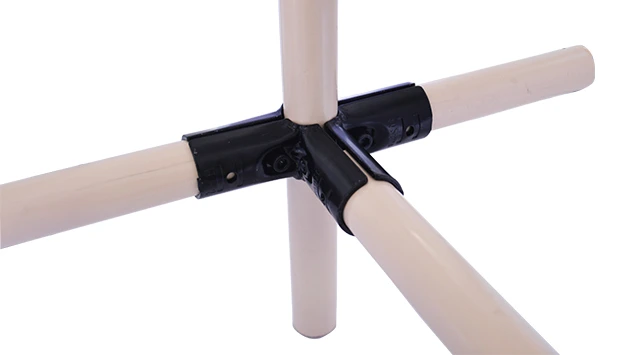
Four way lean pipe joint for 4 pcs 28MM lean pipe connection in straight angle, which used widely in workbench, flow rack, hand trolley frame connection.
In the fast-paced world of manufacturing, where every second and every cent counts, lean principles have become more than just a buzzword—they're the backbone of efficient, waste-free operations. From Toyota's legendary production system to modern factories worldwide, the goal remains the same: eliminate waste, streamline processes, and create value. But here's the thing: lean manufacturing isn't just about big-picture strategies like just-in-time inventory or continuous improvement. It's often the smallest components that quietly drive the biggest changes. Today, we're shining a light on one such unsung hero: the four way straight lean pipe joint. This unassuming piece of hardware might not grab headlines, but its impact on reusability, sustainability, and overall lean system performance is nothing short of transformative.
Understanding Lean Manufacturing: It's the Little Things That Matter
Before diving into the specifics of the four way straight lean pipe joint, let's take a step back and revisit why lean manufacturing matters. At its core, lean is about respect for people and respect for resources. It's about looking at every process, every tool, and every material and asking: "Is this adding value, or is it waste?" Waste, in lean terms, comes in many forms—overproduction, waiting, unnecessary transportation, defects, and even unused talent. But one often overlooked form of waste is material waste —the kind that happens when tools, equipment, or components are used once and then discarded, simply because they can't adapt to changing needs.
This is where lean pipe systems come into play. Lean pipes—often made of aluminum, steel, or plastic-coated steel—are the building blocks of flexible workstations, flow racks, conveyor systems, and material handling trolleys. They're lightweight, strong, and infinitely customizable. But none of that flexibility would matter without the right joints. Joints are the connectors that hold the pipes together, determining how easily a structure can be built, modified, or disassembled. And among all the joint types out there, the four way straight lean pipe joint stands out for its ability to balance strength, versatility, and sustainability.
What Exactly Is a Four Way Straight Lean Pipe Joint?
Let's start with the basics. A four way straight lean pipe joint is a connector designed to join four lean pipes at a single point, all aligned in a straight, linear configuration. Picture a cross shape, but with all arms extending in the same straight line—like a plus sign (+) where the vertical and horizontal lines are perfectly aligned. This design allows for connections in four directions (up, down, left, right, depending on orientation) from a single central hub. Unlike fixed-angle joints (which lock pipes at 90° or 45° angles) or two-way joints (which only connect two pipes), the four way straight joint offers unparalleled flexibility in building multi-directional structures.
Most four way straight joints are made from durable materials like aluminum or zinc-plated steel, chosen for their strength and resistance to corrosion. They typically feature threaded holes or clamping mechanisms that secure the lean pipes in place, often with the help of set screws or bolts. This means no welding, no glue, and no permanent modifications to the pipes themselves. And that's where the magic of reusability begins.

Reusability: The Game-Changer in Lean Systems
In manufacturing, change is constant. A workstation that's perfect for assembling small electronics today might need to be reconfigured next month to handle larger components. A flow rack that once stored 10 types of parts might need to expand to 15 as product lines grow. Traditional fixed structures—built with welded steel or glued components—simply can't keep up. When they become obsolete, they're often cut up, thrown away, or left to collect dust in a corner, wasting both materials and money.
The four way straight lean pipe joint flips this script. Because it's modular and tool-free (or tool-light) to assemble, it allows for quick disassembly and reassembly. Let's say you have a workbench built with four way joints and aluminum lean pipes. When production needs shift, you can loosen the set screws, take the workbench apart, and reuse those same pipes and joints to build a new material trolley or a taller flow rack. The joint itself doesn't degrade with repeated use—its clamping mechanism remains just as effective after 10 disassemblies as it was after the first. This isn't just convenience; it's a direct attack on material waste.
Consider this: A typical manufacturing facility might replace or modify 20-30% of its workstations or material handling structures each year. With traditional fixed structures, that means purchasing new steel, hiring welders, and disposing of old materials. With four way straight lean pipe joints, those modifications can be done in hours, not days, using existing components. A study by the Lean Enterprise Institute found that companies using modular lean pipe systems reduced their annual material waste from workstation modifications by up to 65%. That's a staggering number—and it's largely thanks to joints that enable reusability.
But reusability isn't just about saving materials. It's also about saving time and labor. When a production line needs to be reconfigured, the last thing a manufacturer wants is downtime. Four way joints allow teams to make changes during breaks or off-hours, with minimal disruption. No need to wait for a welding crew or a custom fabrication shop—just a few tools and a team that knows how to loosen and tighten screws. This agility is a cornerstone of lean manufacturing, where adaptability can mean the difference between meeting a tight deadline and falling behind.

Sustainability: Beyond Reusability, Reducing Environmental Impact
In today's world, sustainability isn't just a corporate responsibility checkbox—it's a business imperative. Customers, investors, and regulators are increasingly demanding that companies reduce their environmental footprint, from carbon emissions to waste generation. The four way straight lean pipe joint contributes to sustainability in ways that go far beyond just reusing materials.
First, let's talk about material selection. Many four way straight joints are made from aluminum, a highly recyclable material. Aluminum can be recycled repeatedly without losing its strength, and recycling aluminum uses just 5% of the energy required to produce new aluminum from raw ore. When a joint eventually reaches the end of its life (after years, if not decades, of use), it can be melted down and turned into a new joint, a new lean pipe, or even a completely different product. Compare that to plastic joints, which often end up in landfills, or welded steel joints, which are harder to separate and recycle due to their permanent connections.
Second, the modular design of four way joints reduces the need for overproduction of components. In traditional manufacturing setups, if you need a new workstation, you might order a custom-built steel frame, which requires the manufacturer to produce more steel, cut it to size, weld it, and ship it. With lean pipe systems, you can build the same workstation using standard pipes and four way joints that are already in stock. This reduces the demand for new raw materials and cuts down on the carbon emissions associated with manufacturing and shipping custom parts.
Third, the longevity of four way joints plays a role in sustainability. Because they're built to withstand repeated assembly and disassembly, they have a much longer lifespan than single-use or disposable connectors. A well-maintained four way joint can last 10 years or more, outliving multiple generations of workstations. This means fewer replacements, fewer shipments, and less overall resource consumption.
Let's put this into perspective with a simple example. Suppose a factory needs 10 new workstations each year. Using traditional welded steel workstations, each workstation might require 50kg of steel, and the steel production for those 10 workstations would generate approximately 250kg of CO2 emissions (based on average steel production emissions). Now, using lean pipe systems with four way joints, the factory can reuse 80% of the pipes and joints from old workstations, reducing the need for new steel to just 10kg per workstation. That cuts CO2 emissions by 80%, to 50kg per year. Over a decade, that's a reduction of 2000kg of CO2—equivalent to taking a small car off the road for six months.
How Four Way Straight Joints Compare to Other Joint Types
To truly appreciate the benefits of four way straight lean pipe joints, it helps to compare them to other common joint types. Let's take a look at how they stack up against two-way joints, three-way joints, and fixed-angle joints in terms of reusability, sustainability, and versatility.
| Joint Type | Number of Pipe Connections | Reusability | Sustainability (Material & Lifespan) | Best For |
|---|---|---|---|---|
| Two-Way Straight Joint | 2 (straight line) | High (modular, tool-free assembly) | Medium (fewer connections mean more joints needed per structure) | Simple linear structures (e.g., single-level flow racks) |
| Three-Way Fixed Angle Joint | 3 (e.g., 90° angles) | Medium (fixed angle limits reconfiguration) | Medium (angle limits reuse in non-90° structures) | Right-angle structures (e.g., corner workbenches) |
| Four Way Straight Joint | 4 (straight line) | Very High (four connections, fully modular) | High (aluminum construction, long lifespan, reduces total joints needed) | Multi-directional structures (e.g., multi-level flow racks, complex workstations) |
| Welded Joints | 2+ (fixed) | Very Low (permanent, cannot be disassembled) | Low (no reusability, hard to recycle) | Heavy-duty, never-changing structures (rare in lean environments) |
As the table shows, four way straight joints offer the highest reusability and sustainability among modular options, thanks to their ability to connect four pipes at once and their durable, recyclable materials. They also reduce the total number of joints needed for complex structures. For example, building a multi-level flow rack with horizontal and vertical pipes might require 10 two-way joints, but with four way joints, that number could drop to 5 or 6. Fewer joints mean less material used overall, lower shipping emissions (since fewer parts need to be transported), and less waste in the long run.
Real-World Applications: How Manufacturers Are Using Four Way Straight Joints
Theory is one thing, but real-world application is where the four way straight lean pipe joint truly shines. Let's take a look at how different industries are leveraging this versatile component to enhance their lean systems.
Electronics Manufacturing: In electronics assembly, workstations need to adapt to tiny, delicate components one day and larger circuit boards the next. A leading smartphone manufacturer in Asia uses four way straight joints to build adjustable workbenches with integrated flow racks. By connecting pipes in four directions, they've created workstations with overhead shelving (up), under-bench storage (down), left-side component bins, and right-side conveyor connections—all from a single joint hub. When a new phone model is introduced, the team disassembles the upper shelving, reconfigures the flow racks, and adds new bins, reusing 90% of the original pipes and joints. This has cut their workstation reconfiguration time from 2 days to 4 hours per line.
Automotive Parts Production: Automotive suppliers deal with heavy materials and high volumes. A tier-1 auto parts manufacturer in Europe uses four way straight joints in their flow rack systems for transporting engine components. The racks, built with aluminum lean pipes and four way joints, feature multiple levels (connected vertically via four way joints) and horizontal lanes for different part sizes. When production shifts from sedans to SUVs (which require larger components), the team simply adjusts the vertical spacing by moving the four way joints up or down the pipes, no new parts needed. This flexibility has reduced their need for new racking by 60% year-over-year.
Pharmaceutical Packaging: In pharmaceutical manufacturing, cleanliness and compliance are critical. A U.S.-based pharmaceutical company uses stainless steel four way straight joints (to resist corrosion and meet standards) in their material handling trolleys. These trolleys, used to transport vials and packaging materials, are built with four way joints to allow for adjustable shelves and dividers. When a new product line requires smaller vials, the dividers are moved, and the shelves are repositioned—all without replacing the trolley frame. The stainless steel construction ensures the joints can be sanitized repeatedly without degradation, extending their lifespan to over 15 years.
Choosing the Right Four Way Straight Lean Pipe Joint: What to Look For
Not all four way straight lean pipe joints are created equal. If you're considering integrating them into your lean system, here are a few key factors to keep in mind:
Material: Aluminum joints are lightweight, corrosion-resistant, and highly recyclable—ideal for most indoor applications. Steel joints are stronger and better for heavy loads or outdoor use, but they're heavier and may require more maintenance (like rust prevention). Stainless steel is best for cleanrooms or environments with frequent sanitization.
Clamping Mechanism: Look for joints with secure clamping systems, like set screws or cam levers. Set screws offer a tighter hold for heavy loads, while cam levers allow for tool-free adjustments (great for quick reconfigurations). Avoid joints that require glue or welding—those defeat the purpose of reusability.
Compatibility: Ensure the joint fits your existing lean pipes. Most lean pipes come in standard diameters (16mm, 28mm, etc.), so check the joint's specifications to match. A reputable lean pipe supplier will offer joints that work with their pipes, but it's always good to double-check.
Load Capacity: Different joints have different weight limits. If you're building heavy-duty structures (like flow racks for automotive parts), opt for joints rated for higher loads. Don't skimp here—overloading a joint can lead to structural failure and safety risks.
Sustainability Certifications: Some manufacturers offer joints made from recycled materials or with eco-friendly production processes. While this may cost a bit more upfront, it aligns with sustainability goals and can improve your company's ESG (Environmental, Social, Governance) metrics.
The Future of Lean Manufacturing: Small Components, Big Impact
As manufacturing continues to evolve—with trends like automation, customization, and reshoring driving change—the need for flexible, sustainable systems will only grow. The four way straight lean pipe joint, while small in size, is a critical enabler of this future. It's a reminder that lean manufacturing isn't just about grand strategies; it's about the sum of many small, smart choices.
Imagine a factory where every workstation, every flow rack, and every trolley is built with reusability in mind—a factory where waste is the exception, not the rule. A factory where sustainability isn't an afterthought but a design principle. That future is already here, and it's built, in part, with four way straight lean pipe joints.
So the next time you walk through a manufacturing facility, take a closer look at the structures around you. Chances are, you'll spot the unassuming four way joint holding it all together—quietly driving efficiency, reducing waste, and building a more sustainable future. It may not be glamorous, but in the world of lean manufacturing, that's the mark of a true hero.