- Company Articles
- Products and Technology
- Product knowledge
- Benefits of Modular Aluminum Pipe with Tray Holder for Flexible Production

Benefits of Modular Aluminum Pipe with Tray Holder for Flexible Production
Related Product
Aluminum Pipe with Tray Holder
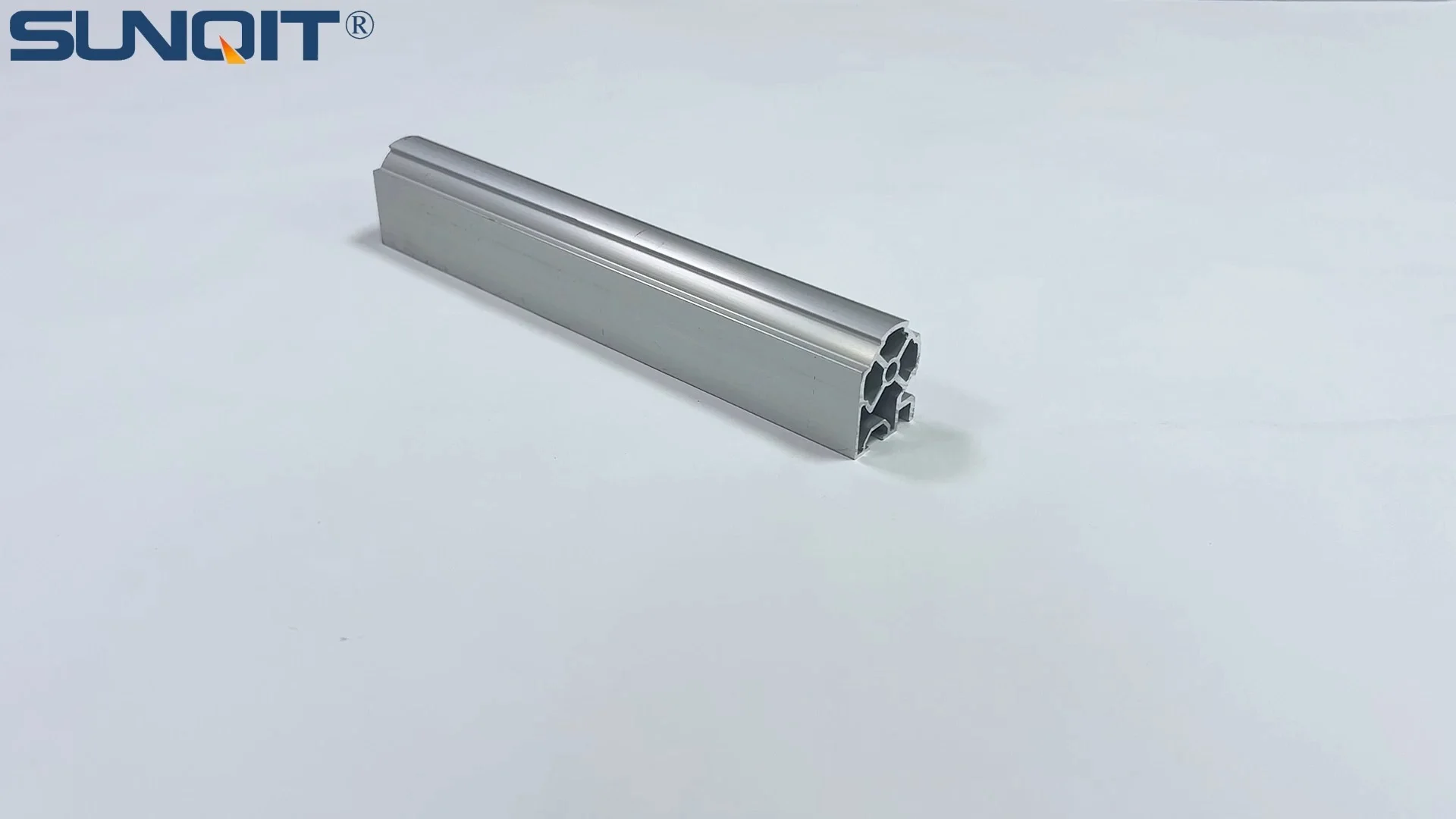
Aluminum pipe with tray holder,the pipe one side connected by a joint, the other side with a slot which can hold a tray or a aluminum pannel.
How a simple design choice is transforming manufacturing floors, one reconfigurable workbench at a time
The Shift to Flexible Production: Why Rigid Systems No Longer Cut It
Walk into any modern manufacturing facility, and you'll notice a quiet revolution unfolding. Production lines that once stayed fixed for years—cranking out the same product day in and day out—are now shifting gears faster than ever. Consumer demand for customization, shorter product life cycles, and the need to pivot quickly to new market trends have turned "flexibility" from a buzzword into a survival skill. Yet, many businesses are still held back by their own infrastructure: clunky steel workbenches bolted to the floor, custom-built flow racks that can't adapt to new part sizes, and storage systems that feel more like obstacles than assets.
This is where modular aluminum pipe with tray holder enters the picture. It's not just another piece of factory equipment; it's a mindset shift. By combining lightweight, durable aluminum profiles with customizable tray holders, this system empowers manufacturers to build, rebuild, and optimize their workspace on demand. Whether you're assembling smartphones, automotive parts, or medical devices, the ability to adjust your setup in hours (not weeks) can mean the difference between meeting a tight deadline and falling behind.
In this article, we'll dive into why modular aluminum pipe with tray holder is becoming the backbone of flexible production. We'll explore its core benefits—from adaptability and cost savings to ergonomic design and seamless integration with lean system practices—and show how it's helping businesses of all sizes stay agile in an unpredictable market.
What Exactly Is Modular Aluminum Pipe with Tray Holder?
Before we jump into the benefits, let's clarify what we're talking about. At its core, modular aluminum pipe with tray holder is a building system made from lightweight aluminum extrusion profiles (often called simply "aluminum profile") connected by versatile joints, with attached tray holders designed to organize and store materials. Think of it as industrial-grade Legos for adults—only sturdier, more functional, and built to withstand the rigors of a factory floor.
The key components are straightforward: the aluminum pipes themselves (hollow, lightweight, and available in various diameters), a range of joints (90-degree angles, T-joints, swivel connectors) that lock the pipes together without welding, and tray holders—plastic, metal, or wood platforms that attach to the pipes to hold tools, parts, or finished products. What makes it "modular" is that every piece is interchangeable. You can take apart a workbench at the end of the day and rebuild it as a flow rack the next morning. No special tools, no contractors, no downtime waiting for custom fabrication.
Aluminum is the star here, and for good reason. Unlike steel, it's lightweight enough for one person to maneuver, yet strong enough to support heavy loads (think: stacks of circuit boards or metal components). It resists corrosion, so it holds up in damp or dusty environments, and it's easy to clean—critical for industries like food processing or electronics where hygiene matters. The tray holders, meanwhile, come in endless configurations: shallow trays for small screws, deep bins for bulky parts, angled holders for easy access, and even ESD-safe options for sensitive electronics.

Benefit 1: Adaptability That Keeps Up with Your Business
If there's one thing manufacturers hate, it's saying, "We can't do that because our setup won't allow it." Modular aluminum pipe with tray holder erases that sentence from the vocabulary. Let's say your team has been assembling wireless headphones for months, with a workbench configured to hold tiny batteries, circuit boards, and plastic casings. Suddenly, a client orders a batch of larger, over-ear headphones with bigger components. With a traditional steel workbench, you'd either (and risk inefficiency) or wait weeks for a custom solution. With modular aluminum, you grab a few extra pipes, swap out the small tray holders for larger ones, and adjust the height in under an hour. Done.
This adaptability extends beyond day-to-day changes. As your business grows, you can scale your setup incrementally. Need an extra shelf on your flow rack? Add a pipe and a tray holder. Expanding to a second shift? Duplicate your existing workbench design without reinventing the wheel. And if a product line gets discontinued? Dismantle the old setup and repurpose the pipes and tray holders for something new. We've seen clients turn a defunct assembly line into a packaging station, then into a quality control area—all with the same core components.
Tray holders are the unsung heroes of this flexibility. Many manufacturers underestimate how much time is wasted hunting for parts buried in a jumbled bin. With modular tray holders, you can color-code by part type (red for screws, blue for wires), label compartments, or even tilt them at 30 degrees so parts roll forward as they're used—no more digging. One electronics manufacturer we worked with reported a 25% reduction in "part hunting" time after switching to angled tray holders, simply because workers could see and reach components without bending or rummaging.

Benefit 2: Cost-Effectiveness That Adds Up Over Time
Let's talk numbers—because at the end of the day, every manufacturing decision comes down to ROI. On the surface, modular aluminum pipe with tray holder might seem pricier than, say, a cheap plastic shelving unit. And yes, it's more of an upfront investment than plywood and cinder blocks. But compare it to traditional steel workbenches or custom-built flow racks, and the math shifts dramatically.
Traditional steel systems often require hiring welders or fabricators, which adds labor costs on top of materials. If you need to reconfigure later? You're looking at cutting, welding, and repainting—all while production grinds to a halt. Modular aluminum, by contrast, requires no specialized labor. Your existing team can assemble a basic workbench in under an hour with nothing more than a hex key. Reconfiguration? That's a 15-minute task, not a week-long project. The result: less downtime, lower labor costs, and faster time-to-market for new products.
Durability plays a big role in the ROI, too. Aluminum profiles are built to last. We've visited factories where 10-year-old modular setups still look and function like new, minus a few worn tray holders (easily replaced for $20 each). Plastic systems, by comparison, crack under heavy use, and cheap steel rusts or bends. Over a 5-year span, the modular aluminum system often ends up costing less than constant replacements of cheaper alternatives.
Then there's the "no waste" factor. When you invest in a custom steel workbench, you're stuck with it—even if your needs change. With modular aluminum, you never throw away a whole system. A pipe from an old workbench becomes part of a new flow rack; a tray holder from a discontinued product line holds tools in the maintenance area. It's circular economy in action, and it keeps money in your pocket.
Benefit 3: Ergonomics That Make Workers Happier (and More Productive)
Manufacturing isn't just about machines—it's about people. And people work best when their environment supports them, not fights them. Traditional workbenches are often one-size-fits-all, forcing tall workers to hunch and short workers to stretch. Modular aluminum pipe with tray holder changes that. Since the pipes are adjustable in 1-inch increments, you can set each workbench to the exact height of the person using it. A 5'2" assembler gets a bench at 32 inches; a 6'1" coworker next to them gets 38 inches. No more back pain, no more wrist strain, and fewer workers' comp claims.
Tray holder placement takes this a step further. The goal of lean manufacturing is to eliminate "motion waste"—unnecessary reaching, bending, or twisting. With modular tray holders, you can position parts exactly where the worker's hand falls naturally. For example, a worker assembling a laptop might have screws in a tray holder 12 inches to their right, screen bezels in a holder 12 inches to their left, and tools directly in front. No more turning, stretching, or walking to a distant bin. One automotive parts plant we consulted with tracked worker movements before and after installing modular workbenches; they found that workers took 30% fewer steps per hour, freeing up time to assemble more units.
Cleanliness is another ergonomic win. Cluttered workspaces aren't just messy—they're stressful. Modular tray holders enforce organization by giving every part a designated home. Spills are easier to clean (aluminum wipes down quickly), and there's no more "junk drawer" of random parts. This isn't just about productivity; it's about pride. Workers who feel their employer cares about their comfort and workspace tend to be more engaged, which translates to better quality and lower turnover. It's a ripple effect: happy workers = better work = better business.
Benefit 4: Seamless Integration with Lean System Practices
Lean manufacturing isn't a trend—it's a proven methodology for eliminating waste and maximizing value. And modular aluminum pipe with tray holder is practically built for lean. Let's break down the 5S principles (Sort, Set in Order, Shine, Standardize, Sustain) and see how this system supports each one:
- Sort: Tray holders force you to separate necessary parts from unnecessary clutter. If a tray is empty at the end of the day, you know that part isn't needed—so you remove it.
- Set in Order: With designated spots for every part (thanks to labeled tray holders), everything has a "home." Workers don't waste time deciding where to put things.
- Shine: Aluminum is easy to wipe down, and tray holders can be removed and cleaned individually. No more grime buildup in hard-to-reach corners.
- Standardize: Since modular setups are repeatable, you can standardize workbench designs across shifts or departments. New hires learn the system faster, and training time drops.
- Sustain: When a system is easy to maintain, workers are more likely to keep it up. Unlike fixed steel benches that get "grandfathered" into messiness, modular setups invite constant improvement—if a tray holder isn't working, you change it.
Beyond 5S, modular aluminum supports other lean tools like kanban and continuous flow. Flow racks, for example, are a cornerstone of lean material handling—they ensure parts move smoothly from one workstation to the next, just in time for assembly. With modular aluminum pipes, you can build flow racks that match your exact production pace. Need parts to move faster? Tilt the rack slightly and use roller track (another modular accessory) to let gravity do the work. Have delicate parts that need gentle handling? Add soft, padded tray holders. It's lean customization without the custom price tag.
One furniture manufacturer we worked with used modular aluminum to implement a "cellular manufacturing" model, where small teams build entire products instead of passing parts down a long line. Each cell had a custom workbench with tray holders for wood screws, glue bottles, and upholstery tools, plus a flow rack feeding in pre-cut lumber. The result? A 40% reduction in work-in-progress inventory and a 25% increase in on-time deliveries—all because the workspace was designed around the lean principle of minimizing waste.
How It Stacks Up: Modular Aluminum vs. Traditional Systems
Still on the fence? Let's put modular aluminum pipe with tray holder head-to-head with the two most common alternatives: traditional steel systems and cheap plastic shelving. The table below breaks down key factors like cost, adaptability, and durability.
| Feature | Traditional Steel Systems | Cheap Plastic Shelving | Modular Aluminum Pipe with Tray Holder |
| Initial Cost | High ($1,000–$3,000 per workbench) | Low ($100–$300 per unit) | Moderate ($300–$800 per workbench) |
| Adaptability | Very low (fixed design, requires welding to modify) | Low (limited adjustability, flimsy when modified) | Very high (reconfigurable in minutes, no tools needed) |
| Durability | High (5–10 year lifespan, but prone to rust) | Low (1–2 year lifespan, cracks under heavy loads) | High (7–15 year lifespan, corrosion-resistant aluminum) |
| Ergonomics | Low (fixed height, no customization) | Very low (flimsy, often too short/tall) | High (adjustable height, customizable tray placement) |
| Lean Integration | Low (hard to adapt to 5S or flow principles) | Low (messy, hard to standardize) | High (built for 5S, flow racks, and continuous improvement) |
| ROI Timeline | 5+ years (high initial cost, low adaptability) | Negative (frequent replacement costs) | 1–2 years (lower initial cost, long-term savings on reconfiguration/downtime) |
The data speaks for itself: while steel might seem like a "forever" solution, its lack of adaptability makes it a poor fit for modern manufacturing. Plastic is cheap upfront but costs more in the long run. Modular aluminum, meanwhile, hits the sweet spot—durable enough to last, flexible enough to grow with your business, and ergonomic enough to keep workers happy. It's not just a purchase; it's an investment in your ability to adapt, compete, and thrive.
Real-World Results: Manufacturers Who Made the Switch
Don't just take our word for it—let's look at a few real examples of businesses that embraced modular aluminum pipe with tray holder and never looked back.
Case Study 1: A Small Electronics Manufacturer
This company made custom circuit boards for medical devices, with production runs as small as 10 units. Their old setup included plywood workbenches with plastic bins duct-taped to the edges (yes, duct-taped). When they switched to modular aluminum workbenches with labeled tray holders, they saw immediate results: setup time for new orders dropped from 4 hours to 30 minutes, and errors (like using the wrong resistor) fell by 35% because parts were organized and visible. Best of all, when they landed a contract for larger boards, they added two extra pipe sections and deeper tray holders—no new workbench needed.
Case Study 2: A Mid-Size Automotive Parts Supplier
This supplier produced door handles for major car brands, with frequent design changes (different colors, materials, or shapes). Their traditional steel flow racks couldn't handle the varying sizes, leading to parts getting stuck or damaged. After replacing the racks with modular aluminum and roller track, they reduced part damage by 60%. They also added adjustable tray holders on the racks, so workers could sort handles by color without extra bins. The result? A 20% increase in daily output and a spot on their client's "preferred supplier" list.
Case Study 3: A Large Food Packaging Plant
Hygiene is non-negotiable in food packaging, so this plant needed a system that was easy to clean and resistant to corrosion. They replaced their rusting steel workbenches with modular aluminum ones, adding plastic tray holders that could be removed and sanitized nightly. Within six months, they passed a surprise FDA audit with zero violations (up from two minor violations the year before). Workers also reported less fatigue, thanks to adjustable heights—turnover in the packaging department dropped by 15%.
Choosing the Right System: What to Look for in a Supplier
Ready to make the switch? Not all modular aluminum systems are created equal. Here's what to look for when choosing a supplier:
- Quality of Aluminum Profile: Opt for 6063-T5 aluminum—the industry standard for strength and durability. Avoid thin-walled pipes that bend under heavy loads.
- Joint Strength: Look for joints made from die-cast aluminum (not plastic) with a secure locking mechanism. A good joint should hold firm even when jostled.
- Tray Holder Variety: Make sure the supplier offers options like ESD-safe trays, stackable bins, and adjustable angles. The more choices, the more you can customize.
- Accessory Compatibility: Check if the system works with other modular tools like roller track, casters, or LED light bars—you'll want to expand later.
- Technical Support: A good supplier will help you design your setup, not just sell you parts. Ask if they offer layout consultations or CAD drawings.
Remember, this isn't just about buying pipes and tray holders—it's about partnering with someone who understands your production goals. Don't be afraid to ask for references or visit other factories using their systems. A little due diligence now will save you headaches later.
The Future of Manufacturing Is Modular
Flexible production isn't coming—it's here. And at the heart of that flexibility is modular aluminum pipe with tray holder. It's a system that grows with you, adapts to your needs, and puts your workers first. It turns "we can't" into "we can," and "maybe later" into "let's start today."
Whether you're a small shop making custom parts or a large plant churning out thousands of products daily, the benefits are clear: adaptability that keeps up with market changes, cost savings that boost your bottom line, ergonomic design that makes workers happier and more productive, and seamless integration with lean system practices that eliminate waste. It's not just a tool—it's a competitive advantage.
So, what are you waiting for? The next time you walk onto your production floor, look at your workbenches and flow racks. Do they inspire innovation, or hold you back? If it's the latter, it might be time to go modular. Your business, your workers, and your bottom line will thank you.