- Company Articles
- Products and Technology
- Product knowledge
- Benefits of One Side Rotatory Design in Parallel Lean Pipe Joints (Chrome Finish)

Benefits of One Side Rotatory Design in Parallel Lean Pipe Joints (Chrome Finish)
Related Product
Parallel Lean Pipe Joint
Parallel lean pipe joint used for 2 pcs 28MM lean pipe connection in parallel direction to enhance frame structure, usually for heavy payload requirement for workbench. flow rack, hand trolley.
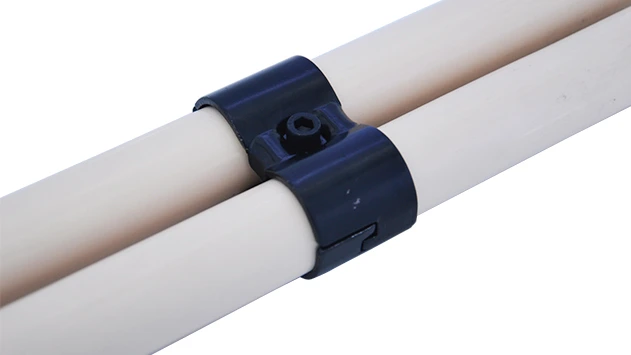
In the world of manufacturing and production, where every second counts and efficiency is the name of the game, lean systems have become more than just a buzzword—they're the backbone of how successful operations run. At the heart of these systems lie countless small but mighty components, each playing a role in keeping workflows smooth, adaptable, and cost-effective. Today, we're shining a spotlight on one such unsung hero: the parallel lean pipe joint one side rotatory chrome . It might sound like a mouthful, but trust me—this little piece of engineering is quietly revolutionizing how teams build, adjust, and maintain everything from workbenches to material racks. Let's dive into why this joint deserves a spot on your production floor.
First Things First: What Even Is a Parallel Lean Pipe Joint?
Before we get into the "one side rotatory" and "chrome finish" details, let's make sure we're all on the same page about lean pipe joints. Lean pipes—also called "lean tubes"—are the building blocks of lean systems. They're typically lightweight, durable tubes (often steel or aluminum) used to construct workbenches, flow racks, conveyor systems, and turnover trolleys. But pipes alone can't form structures—you need joints to connect them. That's where lean pipe joints come in: they're the connectors that hold the pipes together, dictating how rigid, flexible, or adjustable the final structure can be.
Now, parallel lean pipe joints are designed to connect two pipes that run parallel to each other. Think of the side rails of a workbench or the vertical supports of a material rack—those often use parallel joints to keep pipes aligned and stable. But not all parallel joints are created equal. The one side rotatory version adds a twist (pun intended): while one side of the joint stays fixed to a pipe, the other side can rotate, allowing the connected pipe to pivot or angle. And the "chrome finish"? That's the protective, shiny coating that makes this joint stand out in both looks and longevity.
Why "One Side Rotatory" Matters: Flexibility That Keeps Up With Your Needs
Let's start with the star feature: the one side rotatory design. Imagine you're setting up a workbench for a new product line. Your team needs the shelves to angle slightly downward to make parts easier to grab, or maybe you want a section that can tilt to accommodate larger tools. With a fixed parallel joint, you'd have to disassemble the entire structure, buy new parts, and rebuild—wasting time and money. But with a one side rotatory joint? You simply loosen the connection, rotate the adjustable side to the angle you need, and tighten it back up. Done. No disassembly, no extra parts, no downtime.
This flexibility is a game-changer for dynamic production environments. Maybe your company shifts from assembling small electronics to larger machinery next quarter—your workbench shouldn't become obsolete. The rotatory joint lets you reconfigure on the fly. Need to add a roller track to a material rack to slide boxes more easily? Rotate the joint to angle the track downward. Training new employees who prefer a different workbench height? Adjust the angle of the support rails without rebuilding the whole setup. In short, this joint turns rigid structures into adaptable tools that grow with your business.

Chrome Finish: More Than Just Shiny—Durability That Lasts
Okay, so the rotatory design is cool, but what about the chrome finish? Why does that matter? Let's talk about life on the production floor: oil, grease, dust, occasional spills, and constant handling. A plain steel joint might start rusting after a few months, or get scratched up to the point where it's hard to adjust. Not the case with chrome plating.
Chrome is a tough customer. It forms a hard, protective layer over the steel joint, acting as a shield against corrosion, wear, and tear. That means even in humid warehouses or shops where chemicals are used, this joint won't degrade. And let's not forget about cleaning—chrome is smooth and non-porous, so a quick wipe with a damp cloth is all it takes to keep it looking (and working) like new. No more scrubbing rust off stuck joints or replacing parts prematurely. Over time, this durability translates to lower replacement costs and less maintenance hassle—music to any operations manager's ears.

Ease of Assembly: No Fancy Tools, No Headaches
If you've ever tried to build furniture with those tiny Allen wrenches or struggled with bolts that just won't line up, you know how frustrating assembly can be. Industrial equipment? It's often worse—think heavy tools, complicated instructions, and a team of people standing around waiting. But the parallel lean pipe joint one side rotatory chrome is here to change that narrative.
These joints are designed with simplicity in mind. Most models use a standard hex key (the kind you probably already have in your toolbox) to tighten or loosen the connection. No need for power tools, welding, or specialized training. Even someone new to lean systems can figure it out in minutes. Here's how it works: slide the fixed side onto one lean pipe, secure it with the hex key, then slide the rotatory side onto the parallel pipe. Want to adjust the angle? Loosen the rotatory side's bolt, pivot the pipe to your desired position, and retighten. That's it. This quick assembly cuts down on setup time, reduces the risk of human error, and means your team can spend less time building and more time producing.
Compatibility: Plays Well With Others (Your Existing Gear)
One of the biggest fears when adopting new equipment is whether it will work with what you already have. No one wants to replace their entire stock of lean pipes, accessories, or tools just to use a new joint. Luckily, the parallel lean pipe joint one side rotatory chrome is a team player—it's designed to work seamlessly with standard lean pipes, aluminum profiles, and a wide range of accessories.
Whether you're using 28mm pe-coated lean pipes, aluminum extrusion profiles, or even stainless steel pipes, this joint fits right in. Need to add casters to a trolley? Connect the joint to the pipe, attach the caster mount, and you're mobile. Want to integrate a workbench with a roller track for moving parts? The joint's rotatory side can angle the track to the perfect slope, working with roller track connectors and placon mounts without a hitch. This compatibility means you don't have to start from scratch—you can upgrade specific parts of your lean system while keeping the rest intact, saving money and minimizing disruption.
Real-World Impact: How This Joint Solves Everyday Problems
Let's get practical. How does this joint actually make a difference in day-to-day operations? Let's look at a few common scenarios:
Scenario 1: The Ever-Changing Workbench – A small electronics manufacturer produces multiple product lines, each requiring different tools and part storage. Their old workbenches had fixed shelves, so whenever they switched products, they'd have to unload all the shelves, move them manually, and reload—taking up to an hour per bench. After switching to parallel lean pipe joint one side rotatory chrome, they can now adjust shelf angles in minutes. One employee can reconfigure a bench while another preps the next product, cutting changeover time by 75%. Plus, the chrome finish has held up to solder flux and cleaning solvents, so the joints still look new after a year of use.
Scenario 2: The Material Rack That Refuses to Slow Down – A warehouse team was struggling with heavy boxes on a fixed material rack. Employees had to lift boxes straight up to place them on higher shelves, leading to fatigue and occasional injuries. By adding roller tracks connected with rotatory joints, they angled the tracks downward, letting boxes slide gently into place. The rotatory joints allowed them to adjust the angle per shelf (steeper for heavier boxes, shallower for lighter ones), reducing lifting strain and cutting loading time by 40%. The chrome joints have resisted the warehouse's humid air, so no rust means no stuck tracks.
Scenario 3: The Training Nightmare – A manufacturer with high turnover was spending too much time training new hires on how to adjust old, rusted joints. The bolts were often seized, requiring pliers or hammers to loosen—leading to damaged parts and frustrated employees. After switching to chrome rotatory joints, new hires can adjust the joints with a simple hex key, and the smooth chrome finish means bolts never seize. Training time for equipment setup dropped from 2 hours to 30 minutes, and part damage from forced adjustments decreased by 90%.
| Feature | Parallel Lean Pipe Joint One Side Rotatory Chrome | Standard Fixed Parallel Joint (Uncoated) | Two-Side Rotatory Joint (No Chrome) |
|---|---|---|---|
| Adjustability | One side rotates (0-180°), other fixed; easy angle changes | No rotation; fixed angle only | Both sides rotate; risk of instability if over-adjusted |
| Durability | Chrome-plated; resists corrosion, scratches, and wear | Uncoated steel; prone to rust and wear over time | Steel; no chrome layer; higher risk of corrosion |
| Assembly Time | 5-10 minutes per joint (no special tools) | 10-15 minutes (may require alignment tools) | 15-20 minutes (more parts to adjust) |
| Compatibility | Works with standard lean pipes, aluminum profiles, roller tracks, casters | Limited to fixed pipe setups; no roller track/angle adjustments | Compatible with pipes, but over-rotation can limit accessory use |
| Long-Term Cost | Lower (no replacement due to rust/wear; reconfigurable) | Higher (replacement needed every 6-12 months; rigid structure) | Moderate (corrosion risk; potential instability leads to repairs) |
Why Not Just Use Any Rotatory Joint? The "Parallel" Difference
You might be thinking, "Okay, rotatory joints are great, but why specifically a parallel one?" Let's clarify: parallel joints are designed to connect two pipes that run alongside each other, maintaining a consistent distance between them. This is crucial for stability. For example, the side rails of a workbench need to stay parallel to support the tabletop evenly. A non-parallel joint might allow pipes to splay or converge, weakening the structure.
The parallel design here ensures that even when you rotate one side, the two pipes stay aligned—no wobbling, no sagging, no risk of collapse. This is especially important for heavy-duty applications, like supporting a workbench loaded with tools or a material rack holding hundreds of pounds of inventory. Other rotatory joints might sacrifice parallelism for adjustability, but not this one. It's the best of both worlds: flexibility and stability.
Maintenance Tips: Keeping Your Joints in Top Shape
Like any tool, your parallel lean pipe joint one side rotatory chrome will perform best with a little TLC. Luckily, maintenance is a breeze:
- Keep it clean: Wipe the joint with a damp cloth weekly to remove dust and grime. For stubborn grease, use a mild detergent—avoid harsh chemicals that could damage the chrome.
- Lubricate occasionally: Every 3-6 months, apply a small amount of machine oil to the rotatory mechanism (the part that swivels). This keeps it moving smoothly and prevents seizing.
- Check tightness: After heavy use or reconfiguration, give the hex bolt a quick tighten to ensure the joint stays secure. Don't over-tighten—just snug is enough.
- Inspect for damage: If you notice deep scratches in the chrome (down to the steel), or if the rotation feels gritty, it might be time to replace the joint. But with proper care, this should be a rare occurrence—these joints are built to last.
Final Thoughts: Small Component, Big Impact
At the end of the day, the parallel lean pipe joint one side rotatory chrome is more than just a connector—it's a tool for empowerment. It empowers your team to adapt quickly, reduce waste, and focus on what really matters: making great products. Whether you're running a small workshop or a large manufacturing plant, this joint proves that sometimes the smallest components have the biggest impact on efficiency.
So, the next time you're evaluating your lean system, don't overlook the joints. Ask yourself: Are my current connectors holding me back? Could a little flexibility save my team hours of work? If the answer is yes, it might be time to give this chrome-plated, rotatory wonder a try. Your production floor (and your bottom line) will thank you.