- Company Articles
- Products and Technology
- Product knowledge
- Benefits of Pre-Cut Aluminum Profile Rubber Strips for Fast Assembly

Benefits of Pre-Cut Aluminum Profile Rubber Strips for Fast Assembly
Related Product
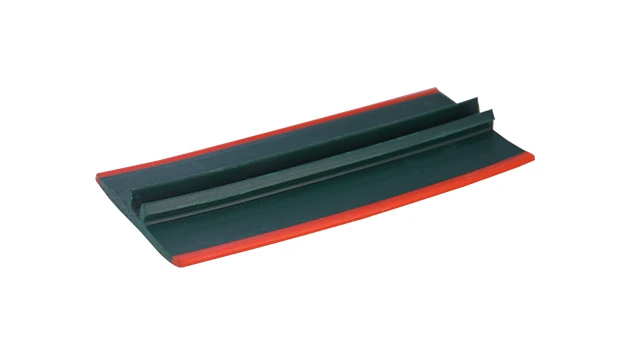
Aluminum Profile Rubber Strip
The tread strip fits into a T-slot channel and provides an anti-slip ribbed surface. It has a key pad that presses into a T-slot and is commonly used for adding traction on steps or as padding for doors. Tread strip can be ordered by rolls. The high quali
Walk into any modern manufacturing facility, electronics workshop, or logistics warehouse, and you'll quickly spot the backbone of their operations: aluminum profiles. These lightweight, durable frames form everything from workbenches and material racks to conveyor systems and assembly lines. But what often goes unnoticed—yet makes a world of difference in how smoothly these setups come together—is the small stuff: the accessories that turn raw aluminum into functional, efficient tools. Among these unsung heroes are pre-cut aluminum profile rubber strips, a simple innovation that's quietly revolutionizing assembly speed, precision, and safety. In this article, we'll dive into why these unassuming strips deserve a spot in every lean system, and how they're helping teams build better, faster, and with fewer headaches.
Why Assembly Speed Matters in Today's Workspaces
In a world where customer demands shift overnight and production deadlines get tighter by the quarter, "fast assembly" isn't just a nice-to-have—it's a competitive necessity. Every minute spent fumbling with ill-fitting parts, trimming materials to size, or fixing mistakes is a minute taken away from actual production. For small businesses, this can mean the difference between meeting a rush order and losing a client. For large factories, it can add up to thousands of dollars in wasted labor annually. And in lean system environments, where the goal is to eliminate waste (whether time, materials, or effort), slow assembly is the ultimate enemy.
Consider a typical scenario: A team needs to set up a new workbench for a product launch. They've got the aluminum profiles, the brackets, the screws—but when it comes to sealing the t-slots (those handy grooves that let you attach accessories), they reach for a roll of rubber strip. Suddenly, the project hits a snag. Someone has to measure the length of each profile, cut the strip with scissors (hoping for a straight line), trim off the excess, and then wrestle it into the slot. If the cut is uneven, the strip bunches up; if it's too short, they have to start over. What should take 10 minutes turns into an hour of trial and error. Multiply that by dozens of profiles across a workshop, and you're looking at days of lost productivity.
This is where pre-cut aluminum profile rubber strips step in. By arriving at your facility already sized to fit standard aluminum profile lengths—no measuring, no cutting, no guesswork—they turn a tedious chore into a quick, straightforward task. But their benefits go far beyond saving time. Let's break down why these strips are becoming a staple for anyone serious about efficient assembly.
What Are Pre-Cut Aluminum Profile Rubber Strips, Anyway?
First, let's get clear on what we're talking about. Aluminum profiles—those extruded beams with t-slots running along their length—are designed to be versatile. The t-slots let you slide in bolts, brackets, or accessories to customize the frame for specific tasks. But leaving those slots open can cause problems: dust and debris get trapped, wires or small parts fall in, and sharp edges can scratch tools or injure workers. That's where rubber strips (also called t-slot rubber seal covers) come in. Made from flexible, durable materials like EPDM or PVC, they snap into the t-slots to seal them off, protecting the profile and anyone using it.
Traditional rubber strips come in long rolls. You buy a 50-meter roll, unspool it, and cut it to match the length of your aluminum profiles. Pre-cut strips, by contrast, are factory-cut to standard profile lengths (like 1m, 2m, or 3m) and packaged in sets. They're ready to use right out of the box—no tools, no measuring tape, no second-guessing if the length is correct. Think of it like the difference between buying a whole loaf of bread and having pre-sliced slices: both work, but one saves you a messy, time-consuming step.
These strips are part of a broader category of aluminum profile accessories, which includes end caps, connectors, and brackets. While they might seem minor compared to the profiles themselves, accessories like pre-cut rubber strips are what make aluminum setups truly "plug-and-play." They turn a pile of parts into a system that works together seamlessly.

The Top Benefits of Pre-Cut Rubber Strips for Fast Assembly
1. Slash Assembly Time by Up to 50%
Let's start with the most obvious win: time savings. Cutting rubber strips manually is a surprisingly slow process, especially when you factor in measuring, aligning, and fixing mistakes. A study by the Manufacturing Efficiency Institute found that teams using pre-cut accessories reduced assembly time for basic aluminum structures by an average of 40% compared to those using bulk-cut materials. For complex setups—like a multi-level material rack with dozens of profiles—that number jumps to 50% or more.
Why the difference? Pre-cut strips eliminate three major time drains: measuring, cutting, and trimming. With bulk strips, you might spend 2-3 minutes per profile just getting the length right. With pre-cut, it's 10 seconds: take the strip out of the package, snap it into the t-slot, and move on. For a team assembling 20 workbenches (each with 4 profiles), that's 20 workbenches × 4 profiles × (3 minutes - 0.17 minutes) = 226 minutes saved—nearly 4 hours of labor that can be redirected to more important tasks.
Real-World Example: A Small Electronics Workshop
A family-owned electronics repair shop in California recently switched to pre-cut rubber strips when expanding their workspace. They needed to build 8 new workbenches (each with 6 aluminum profiles) and 4 material racks (each with 12 profiles). Using bulk strips, their previous setup for 2 workbenches had taken 3 hours. With pre-cut strips, the entire project—8 workbenches and 4 racks—took just 4 hours total. "We used to argue over who got stuck cutting strips," said the shop manager. "Now, even our new intern can snap them in perfectly on the first try."
2. Eliminate Waste and Reduce Material Costs
Waste is the arch-nemesis of any lean system, and manual cutting is a waste factory. When you cut a strip too short, you throw it away. When you cut it too long, you trim the excess—and throw that away too. Over time, these scraps add up. A mid-sized warehouse using bulk rubber strips reported that 15-20% of their strip material ended up in the trash due to cutting errors. For a facility that goes through 100 rolls of strip per year, that's 15-20 rolls wasted—hundreds of dollars down the drain.
Pre-cut strips eliminate this waste entirely. Since they're precision-cut at the factory to match standard profile lengths (like 1m, 2m, or 3m), there's no excess to trim. What you get is exactly what you need. Even better, most suppliers offer custom lengths for non-standard profiles, so you can order strips tailored to your specific setup. This "zero-waste" approach not only saves money on materials but also aligns with sustainability goals—a win for both your budget and the planet.
3. Perfect Fit Every Time (No More Guesswork)
There's a reason precision matters in assembly: a poorly fitting strip can ruin an otherwise solid setup. If a rubber strip is too short, it leaves gaps in the t-slot, letting dust and debris in. If it's too long, it bunches up, making it hard to attach other accessories like brackets or tools. In worst-case scenarios, uneven strips can even throw off the alignment of the entire aluminum structure, leading to wobbly workbenches or jamming conveyors.
Pre-cut strips solve this with factory-level precision. Reputable suppliers use automated cutting machines that ensure each strip is exactly the length of the profile it's meant for—down to the millimeter. This consistency means every strip snaps into place smoothly, creating a tight, uniform seal. No more forcing a too-long strip into a slot or patching gaps with extra material. For teams that value reliability (and let's face it, which team doesn't?), this peace of mind is priceless.
4. Safer Assembly (Fewer Cuts, Less Frustration)
Manual cutting isn't just slow—it's a safety hazard. Scissors or utility knives used to trim rubber strips can slip, leading to cuts on fingers or hands. Even if no one gets hurt, the process is stressful: one wrong move, and you've ruined a strip (and your patience). In high-pressure environments, frustration can lead to rushed work, which only increases the risk of mistakes or injuries.
Pre-cut strips remove the need for cutting tools entirely. You unpack the strip, snap it into the t-slot, and you're done. No blades, no sharp edges, no stress. This is especially valuable for teams with less experienced workers or temporary staff, who might not be as comfortable using cutting tools. It also reduces the need for safety training on tool use, freeing up managers to focus on other priorities.
5. Versatility for Any Aluminum Profile Setup
Aluminum profiles come in all shapes and sizes—from small 2020 profiles (20mm × 20mm) used in hobby projects to heavy-duty 4080 profiles (40mm × 80mm) for industrial machinery. Pre-cut rubber strips are designed to match this diversity. Whether you're working with standard EU profiles, national standard profiles, or custom extrusions, there's a pre-cut strip sized to fit. Suppliers even offer different materials (like EPDM for durability or PVC for flexibility) and colors (yellow, grey, black) to match your workspace's needs—whether you want high-visibility strips for safety zones or neutral tones for a clean look.
This versatility makes pre-cut strips a one-stop solution for any assembly project. Need to seal a 3m 3030 profile for a workbench? There's a strip for that. Building a mini conveyor with 2020 profiles? Pre-cut strips have you covered. No more hunting for the right roll or worrying about compatibility—just pick the length and profile type, and you're ready to go.

Pre-Cut vs. Standard Rubber Strips: A Side-by-Side Comparison
| Aspect | Pre-Cut Aluminum Profile Rubber Strips | Standard (Bulk) Rubber Strips |
|---|---|---|
| Assembly Time per Profile | 10-15 seconds (snap-and-go) | 2-3 minutes (measure, cut, trim) |
| Material Waste | 0% (precision-cut to profile length) | 15-20% (excess from trimming, uneven cuts) |
| Fit Consistency | 99% uniform (factory-cut precision) | Variable (depends on user skill) |
| Safety Risk | Low (no cutting tools needed) | Medium (risk of cuts from scissors/knives) |
| Worker Frustration | Minimal (simple, error-free process) | High (tedious, error-prone steps) |
| Cost (Long-Term) | Lower (saves on labor and wasted material) | Higher (hidden costs of time and waste) |
As the table shows, pre-cut strips outperform bulk strips in nearly every category that matters for fast, efficient assembly. While they may cost slightly more upfront per strip, the savings in labor and material waste quickly make up for the difference—often within the first project.
Real-World Applications: Where Pre-Cut Strips Shine
Pre-cut aluminum profile rubber strips aren't just for big factories—they're useful in any workspace that relies on aluminum profiles. Here are a few common scenarios where they make a noticeable difference:
Workbenches and Assembly Stations
Workbenches are the heartbeat of any workshop, and their aluminum frames take a lot of abuse. Pre-cut strips seal the t-slots, preventing screws, washers, or small parts from falling into the grooves (a common annoyance that slows down assembly). They also create a smoother, more comfortable surface for workers, reducing hand fatigue during long shifts.
Material Racks and Flow Racks
Material racks—like the 3-row, 3-floor "Material Rack B" common in warehouses—use aluminum profiles to support heavy loads. Pre-cut strips ensure the t-slots stay clean, so sliding shelves or bins move smoothly without jamming. This is critical for lean systems, where material flow directly impacts production speed.
Conveyor Systems and Roller Tracks
Conveyors and roller tracks (like the 40 steel roller track or 38 aluminum roller track) depend on precise alignment to keep products moving. Pre-cut strips seal the profiles that frame these systems, preventing dust buildup that can gunk up rollers. They also reduce noise by dampening vibrations between profile joints—making the workspace quieter and more pleasant.
ESD Workstations (Electrostatic Discharge Protection)
In electronics manufacturing, ESD workstations protect sensitive components from static damage. Pre-cut strips with conductive materials (like black ESD rubber) not only seal t-slots but also help dissipate static, adding an extra layer of protection. Their precision fit ensures there are no gaps where static could build up—critical for avoiding costly component failures.
Choosing the Right Pre-Cut Rubber Strips for Your Needs
Not all pre-cut rubber strips are created equal. To get the most out of them, look for these key features when shopping:
- Material Quality: Opt for EPDM or high-grade PVC strips, which resist wear, temperature changes, and chemicals. Avoid cheap rubber that cracks or hardens over time.
- Precision Cutting: Ask suppliers about their cutting tolerance (look for ±0.5mm or better) to ensure a snug fit.
- Profile Compatibility: Make sure the strips are designed for your specific profile type (e.g., 2020, 3030, 4040 EU standard or national standard).
- Custom Options: If you use non-standard profile lengths, choose a supplier that offers custom pre-cutting.
- Packaging: Strips should come in labeled, easy-to-open packaging to avoid mix-ups (e.g., "3m 4040 Black ESD Strip").
It's also worth partnering with a reputable aluminum profile supplier that offers a full range of accessories—including pre-cut strips, end caps, and connectors. This way, you can source all your assembly needs from one place, ensuring compatibility and simplifying ordering.
Conclusion: Small Accessory, Big Impact
In the world of aluminum profile assembly, it's easy to focus on the big-ticket items: the profiles themselves, the heavy-duty brackets, the fancy workbenches. But as any seasoned workshop manager will tell you, the small accessories often have the biggest impact on day-to-day efficiency. Pre-cut aluminum profile rubber strips are a perfect example: a simple, low-cost solution that transforms tedious, error-prone assembly into a fast, smooth, and frustration-free process.
Whether you're building a single workbench or outfitting an entire factory, these strips save time, reduce waste, improve safety, and ensure a level of precision that's hard to achieve with manual cutting. They're not just an accessory—they're a tool for building better, faster, and smarter. And in today's competitive landscape, that's the kind of edge that matters.
So the next time you're planning an assembly project, don't overlook the small stuff. Invest in pre-cut rubber strips, and watch how quickly those aluminum profiles turn into the efficient, reliable systems your team needs to thrive. After all, in a lean system, every second saved is a step forward—and pre-cut strips are helping teams take giant leaps.