- Company Articles
- Products and Technology
- Product knowledge
- Benefits of Reusable Vertical Lean Pipe Joints in Sustainable Manufacturing

Benefits of Reusable Vertical Lean Pipe Joints in Sustainable Manufacturing
Related Product
Vertical Lean Pipe Joint
Vertical lean pipe joint is used for 28mm lean pipe fixed on ground and keep it stable.
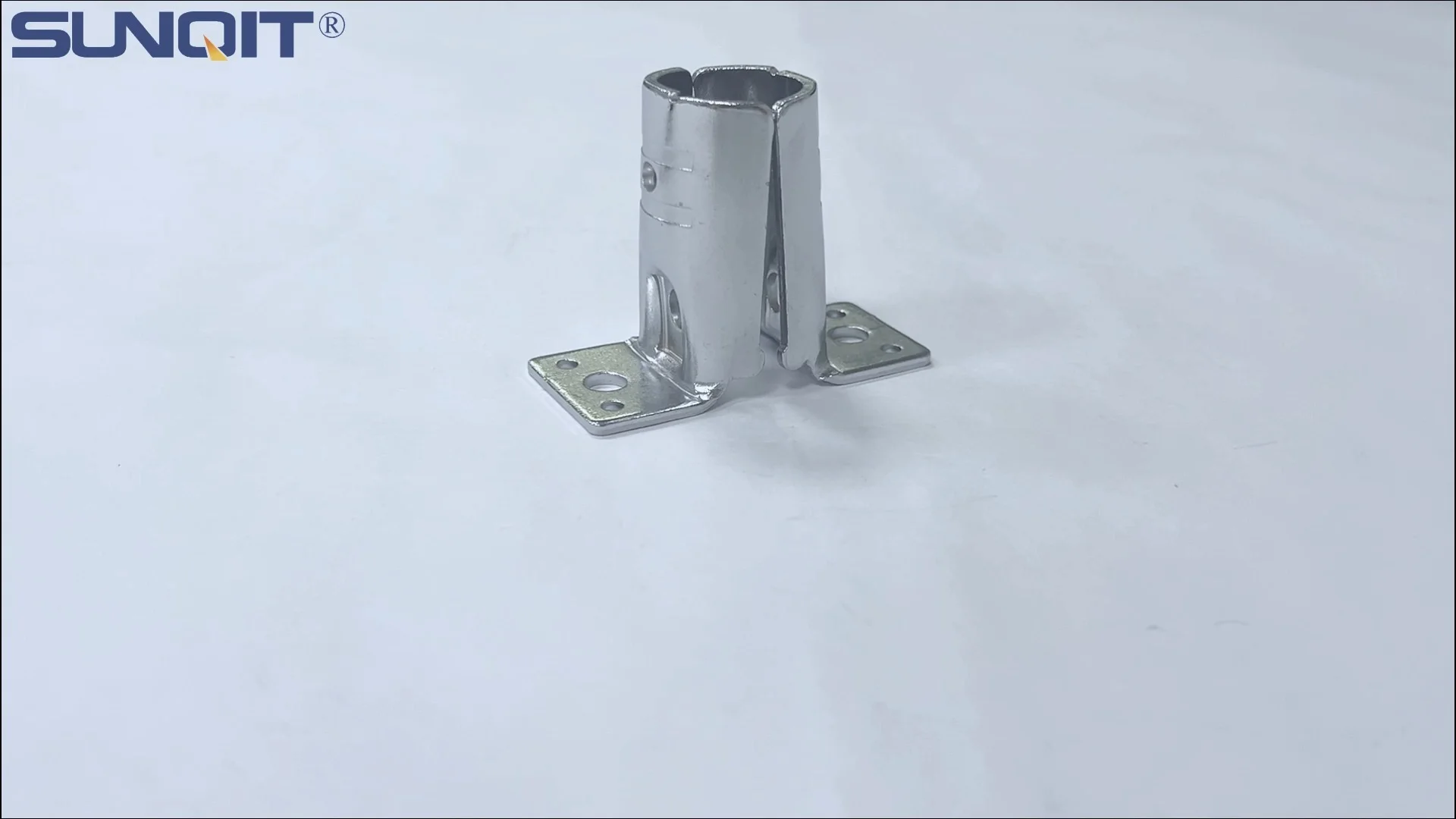
In today's fast-paced manufacturing world, the pressure to do more with less has never been greater. Factories and production facilities are under constant scrutiny to cut costs, reduce waste, and meet increasingly strict sustainability targets—all while keeping up with evolving customer demands and shifting production needs. It's a balancing act that requires innovation at every level, from high-tech machinery down to the smallest components on the factory floor. And sometimes, the most impactful solutions are the ones we overlook: unassuming, hardworking parts that quietly drive efficiency behind the scenes. One such unsung hero? The reusable vertical lean pipe joint.
You might not think much about the joints that hold together your lean pipe workbench, flow rack, or turnover trolley. After all, they're just "connectors," right? But in reality, these small components play a critical role in how adaptable, cost-effective, and eco-friendly your manufacturing setup can be. Traditional fixed joints, often made of rigid plastic or welded metal, are designed for one-time use: once they're installed, reconfiguring or repurposing the structure means cutting, replacing, or even scrapping the entire system. This not only wastes materials but also drains time and money—two resources no manufacturer can afford to lose.
Enter the reusable vertical lean pipe joint. Built with flexibility and sustainability in mind, these joints are changing the game for manufacturers who prioritize lean principles and environmental responsibility. Whether you're assembling an aluminum lean pipe workstation, a dynamic flow rack, or a modular production line, these joints offer a level of adaptability that traditional components simply can't match. In this article, we'll dive deep into why reusable vertical lean pipe joints are becoming a cornerstone of sustainable manufacturing, exploring their benefits for cost savings, operational flexibility, environmental impact, and long-term efficiency. We'll also look at how they integrate with broader lean systems, why material choice (like aluminum) matters, and how partnering with the right lean system supplier can amplify their value. Let's start by understanding what makes these joints so special.
What Are Reusable Vertical Lean Pipe Joints, Anyway?
Before we jump into the benefits, let's get clear on what we're talking about. Reusable vertical lean pipe joints are specialized connectors designed to link lean pipes—hollow tubes typically made of steel, aluminum, or aluminum lean pipe—to create structures like workbenches, flow racks, material trolleys, and production lines. What sets them apart from traditional joints is their
reusability
and
versatility
. Unlike fixed joints that require tools, adhesives, or welding to install (and often destroy the joint if removed), reusable vertical lean pipe joints use a simple, tool-free locking mechanism. Think of them as the "Lego blocks" of manufacturing: twist, lock, and you're done. Need to take it apart? Twist again, pull, and the joint is ready to be reused in a new configuration.
These joints are engineered to handle vertical loads (hence "vertical" in the name), making them ideal for supporting shelves, work surfaces, and overhead structures in lean systems. They come in various materials, but aluminum and high-grade plastic are common choices—both lightweight and durable, with aluminum offering the added benefit of corrosion resistance and recyclability. Many are also compatible with a range of lean pipe sizes, from 28mm basic aluminum tubes to larger 40mm aluminum profiles, giving manufacturers the freedom to mix and match components without being locked into a single system.
But here's the key: their design prioritizes
longevity
and
adaptability
. A well-made vertical lean pipe joint can be disassembled and reassembled dozens of times without losing structural integrity. This might sound like a small detail, but in a manufacturing environment where production lines are reconfigured quarterly (or even monthly) to meet new product demands, it's a game-changer. Now, let's explore how this reusability translates into tangible benefits.
Cost Efficiency: More Bang for Your Buck (and Less Waste)
Let's start with the bottom line: money. For manufacturers, every dollar saved on components frees up resources for innovation, labor, or growth. Reusable vertical lean pipe joints deliver cost savings in three key ways: reducing waste, lowering replacement costs, and minimizing downtime during reconfigurations.
Traditional fixed joints are often "use once and discard" items. If you need to adjust the height of a workbench, add a shelf to a flow rack, or repurpose a trolley for a new task, you'll likely have to cut the old pipes, break the fixed joints, and buy new ones. Over time, this adds up. A mid-sized factory might replace hundreds of joints annually, each costing $2–$5—quickly totaling thousands of dollars in unnecessary expenses. Reusable joints eliminate this waste: instead of buying new, you simply reuse the existing ones. Even if a reusable joint costs slightly more upfront (which it often doesn't), the savings from avoiding replacements pay for it within the first year of use.
Then there's downtime. Reconfiguring a traditional setup with fixed joints can take hours: measuring, cutting pipes, welding or gluing new joints, and testing stability. During that time, the workbench or flow rack is out of commission, slowing down production. Reusable vertical lean pipe joints slash that time to minutes. No cutting, no tools, no waiting for adhesives to dry. A team can disassemble a workstation, reconfigure it, and have it back in operation before lunch—keeping production on track and employees focused on value-adding tasks, not setup work.
To put this in perspective, let's consider a hypothetical scenario: a electronics manufacturer that reconfigures its assembly line twice a year to accommodate new product models. With traditional fixed joints, each reconfiguration costs $1,200 in new joints and 16 hours of labor (at $30/hour, totaling $480). Over five years, that's $16,800 spent on joints and labor alone. Switching to reusable vertical lean pipe joints eliminates the need for new joints (saving $6,000) and cuts labor time to 2 hours per reconfiguration (saving $4,200 over five years). Total savings? $10,200—enough to invest in new tools, employee training, or sustainability initiatives. And that's just for one assembly line. Multiply that across an entire facility, and the numbers become staggering.

Flexibility: Adapting to the Unexpected (Because Manufacturing Rarely Goes as Planned)
Manufacturing is dynamic. Customer orders fluctuate, product designs evolve, and new regulations emerge—all of which demand production lines that can pivot quickly. A rigid setup that works today might be obsolete tomorrow, leaving manufacturers stuck with "dead weight" equipment that can't keep up. Reusable vertical lean pipe joints thrive in this environment, offering the flexibility to adapt on the fly.
Imagine you run a small furniture factory, and a sudden surge in demand for a new chair model requires you to add two more workstations to your assembly line. With traditional fixed joints, you'd need to order new pipes, cut them to size, weld or glue the joints, and hope they align with your existing setup. If the demand drops next month, those new workstations become clutter, taking up space and collecting dust. With reusable vertical lean pipe joints, you can repurpose existing materials: disassemble a underused flow rack, reconfigure the pipes and joints into workstations, and have them operational by the end of the day. When demand fades, you can break them down again and rebuild the flow rack—no waste, no hassle.
This flexibility is especially valuable for lean manufacturing systems, which prioritize "just-in-time" production and continuous improvement. Lean principles teach us to eliminate waste (muda), and one of the biggest sources of waste is overproduction or underutilization of resources. Reusable joints let you scale your setup up or down as needed, ensuring every square foot of your factory floor is used efficiently. Need to add a third shelf to a material rack to accommodate more inventory? Twist, adjust, lock. Want to lower a workbench to ergonomic height for a new employee? No problem. The joint doesn't care if it's holding a pipe vertically, horizontally, or at an angle—it adapts to your needs, not the other way around.
Even better, reusable vertical lean pipe joints play well with other lean accessories. Pair them with casters, and you've got a mobile workstation that can move between production lines. Add roller track accessories, and your flow rack becomes a gravity-fed system for seamless material handling. Mix in aluminum profile accessories, and you can integrate tool holders, cable management, or ESD (electrostatic discharge) features for sensitive electronics assembly. The possibilities are limited only by your needs—and with reusable joints, those possibilities can evolve over time.

Environmental Impact: Building a Greener Factory Floor
Sustainability isn't just a buzzword anymore—it's a business imperative. Customers, investors, and regulators are demanding transparency in supply chains and accountability for environmental impact. For manufacturers, reducing carbon footprints and minimizing waste has moved from "nice to have" to "must do." Reusable vertical lean pipe joints contribute to these goals in tangible ways, making them a cornerstone of eco-friendly manufacturing.
Let's start with material waste. The Environmental Protection Agency (EPA) estimates that manufacturing generates over 11 million tons of plastic and metal waste annually, much of it from discarded equipment components. Traditional fixed joints, often made of non-recyclable plastic or low-grade steel, end up in landfills once they're removed or damaged. Reusable vertical lean pipe joints, by contrast, are designed for a long lifecycle—often 10+ years of repeated use. This drastically reduces the number of joints that need to be produced, transported, and eventually discarded. For example, a single reusable joint can replace 5–10 traditional joints over its lifetime, cutting material consumption by 80% or more.
Then there's the carbon footprint of production. Manufacturing new joints requires energy: mining raw materials, melting metal, molding plastic, and transporting finished products. By reusing existing joints, you reduce the demand for new production, which in turn lowers greenhouse gas emissions. Aluminum lean pipe joints offer an added eco-benefit: aluminum is 100% recyclable, with no loss in quality. Even if a joint eventually wears out (after decades of use), it can be melted down and repurposed into new components—closing the loop on the material lifecycle. Compare that to traditional plastic joints, which often end up as microplastics in oceans or landfills, and the environmental advantage is clear.
Many manufacturers are also using reusable vertical lean pipe joints to support circular economy models. Instead of buying new systems, they're renting or leasing lean pipe setups from suppliers, who then collect, refurbish, and redeploy the joints and pipes to other customers. This "shared resource" approach minimizes waste and maximizes the value of each component. A lean system supplier that specializes in reusable components can help facilities track their waste reduction metrics, making it easier to report progress to stakeholders and meet sustainability certifications like ISO 14001.
It's not just about big-picture impact, either. Employees care about sustainability, too. A 2023 survey by Deloitte found that 70% of manufacturing workers prefer to work for companies with strong environmental commitments. By investing in eco-friendly components like reusable joints, you're not just reducing waste—you're boosting morale and attracting top talent. It's a win-win for the planet and your team.

Comparing Traditional vs. Reusable: A Closer Look
To truly appreciate the benefits of reusable vertical lean pipe joints, it helps to see them side by side with traditional fixed joints. The table below breaks down key factors like cost, flexibility, and environmental impact, so you can make an informed decision for your facility.
| Feature | Traditional Fixed Joints | Reusable Vertical Lean Pipe Joints |
|---|---|---|
| Material | Low-grade plastic, welded steel, or non-recyclable composites | High-grade aluminum, durable plastic, or stainless steel (often recyclable) |
| Installation Time | 30–60 minutes per joint (requires tools, cutting, or welding) | 2–5 minutes per joint (tool-free, twist-lock mechanism) |
| Reusability | Single-use; often damaged during removal | Reusable 50+ times with no loss in integrity |
| Cost Over 5 Years* | $15–$25 per joint (includes replacements and labor) | $3–$8 per joint (one-time purchase + minimal labor) |
| Environmental Impact | High: contributes to landfill waste; requires frequent production of new joints | Low: reduces waste by 80%+; recyclable materials; lower carbon footprint |
| Flexibility | Rigid; limited to initial configuration | Highly adaptable; supports unlimited reconfigurations |
| Compatibility | Often proprietary; works only with specific pipe sizes | Universal design; compatible with standard lean pipes, aluminum profiles, and accessories |
*Based on average usage: 2 reconfigurations per year, $30/hour labor cost, and $2–$5 per traditional joint.
As the table shows, reusable vertical lean pipe joints outperform traditional options in nearly every category—especially when viewed through the lens of long-term value and sustainability. But their benefits don't stop at the joint itself; they also enhance the performance of the entire lean system they're part of.
Integration with Lean Systems: More Than Just a Joint
Lean manufacturing is all about optimizing workflows, eliminating waste, and creating value for customers. It's a holistic approach that requires every component—from machinery to workbenches to material handling systems—to work together seamlessly. Reusable vertical lean pipe joints aren't just standalone components; they're enablers of lean principles, making it easier to implement and maintain lean systems across your facility.
Take
continuous improvement
(kaizen), a core lean principle. Kaizen encourages small, incremental changes to processes to boost efficiency over time. With traditional fixed joints, testing a new workflow idea means investing in new materials and risking disruption if the idea fails. Reusable joints remove that risk. Want to test a U-shaped assembly line instead of a straight line? Disassemble the current setup, rearrange the lean pipes and joints, and try it out. If it works, keep it; if not, revert in minutes. This freedom to experiment fosters a culture of innovation, where employees feel empowered to suggest improvements without fear of wasting resources.
Then there's
just-in-time (JIT) production
, which relies on having the right materials in the right place at the right time. Flow racks, a staple of JIT systems, use gravity to feed materials to workers as needed, reducing inventory and storage costs. Reusable vertical lean pipe joints make flow racks highly customizable: adjust shelf heights to fit different sized bins, add roller tracks to control material speed, or reconfigure the layout to match changing production schedules. This adaptability ensures your flow rack evolves with your JIT needs, rather than becoming a bottleneck when product sizes or volumes change.
For manufacturers using lean pipe workbenches, reusable joints are a game-changer for ergonomics. A one-size-fits-all workstation can lead to employee discomfort, fatigue, and even injury—costing companies billions annually in workers' compensation and lost productivity. Reusable vertical lean pipe joints let you adjust workbench height, add or remove shelves, and reposition tools to fit each worker's needs. This not only improves comfort but also reduces errors and speeds up task completion, as employees have everything they need within easy reach.
Of course, none of this works without a reliable lean system supplier. The best suppliers don't just sell joints—they offer expertise, customization, and a full ecosystem of compatible components. They'll work with you to design a system that fits your space, production goals, and sustainability targets, ensuring your reusable vertical lean pipe joints are part of a cohesive, efficient setup. Look for suppliers who prioritize quality materials (like aluminum lean pipe), offer technical support, and have a track record of helping manufacturers reduce waste and improve flexibility.
The Future of Manufacturing: Why Small Components Matter
As manufacturing continues to evolve—with trends like automation, smart factories, and mass customization reshaping the industry—the need for flexible, sustainable components will only grow. Reusable vertical lean pipe joints are well-positioned to meet this demand, offering a scalable, cost-effective solution that aligns with the future of production.
Consider the rise of "lights-out" manufacturing, where automated systems run with minimal human intervention. Even in these high-tech environments, physical infrastructure like workbenches, material racks, and conveyance systems still play a critical role. Reusable joints make it easier to reconfigure these systems to accommodate new robots or changing production flows, ensuring your facility can adapt to new technologies without overhauls.
Or take mass customization, where customers expect products tailored to their preferences. This requires production lines that can switch between product variants quickly—sometimes in a matter of minutes. Reusable vertical lean pipe joints enable this agility, letting you retool workstations or flow racks on the fly to handle different part sizes, assembly steps, or packaging requirements. In a world where speed to market is everything, this flexibility can be the difference between winning and losing a customer.
Looking further ahead, we might even see smart reusable joints—equipped with sensors to monitor load capacity, wear and tear, or even location in a factory. Imagine a joint that alerts maintenance when it's approaching the end of its lifecycle, or that tracks how often a workstation is reconfigured to help optimize future layouts. While this technology is still emerging, the foundational design of reusable joints—modular, durable, and adaptable—makes them ripe for innovation.
Conclusion: Small Joints, Big Impact
In the grand scheme of manufacturing, reusable vertical lean pipe joints might seem like small players. But as we've explored, their impact is anything but minor. They reduce costs by eliminating waste and downtime, boost flexibility by enabling endless reconfigurations, support sustainability by cutting material use and carbon footprints, and enhance lean systems by fostering continuous improvement. They're a testament to the idea that sustainability and efficiency don't have to compete—they can work hand in hand, driven by smart, thoughtful design.
For manufacturers ready to embrace the future, investing in reusable vertical lean pipe joints is more than a purchase—it's a commitment to a more agile, eco-friendly, and profitable way of doing business. Whether you're a small workshop looking to reduce waste or a large facility aiming to scale sustainably, these joints offer a clear path forward. And when paired with high-quality materials like aluminum lean pipe, compatible accessories, and a trusted lean system supplier, their benefits multiply.
So the next time you look at your factory floor, take a closer look at those joints holding together your workbench or flow rack. Are they holding you back, or propelling you forward? With reusable vertical lean pipe joints, the answer can be the latter—one twist, one lock, one sustainable step at a time.