- Company Articles
- Products and Technology
- Product knowledge
- Benefits of Using 40 Aluminum Roller Track Grey in Automotive Assembly Lines

Benefits of Using 40 Aluminum Roller Track Grey in Automotive Assembly Lines
Related Product
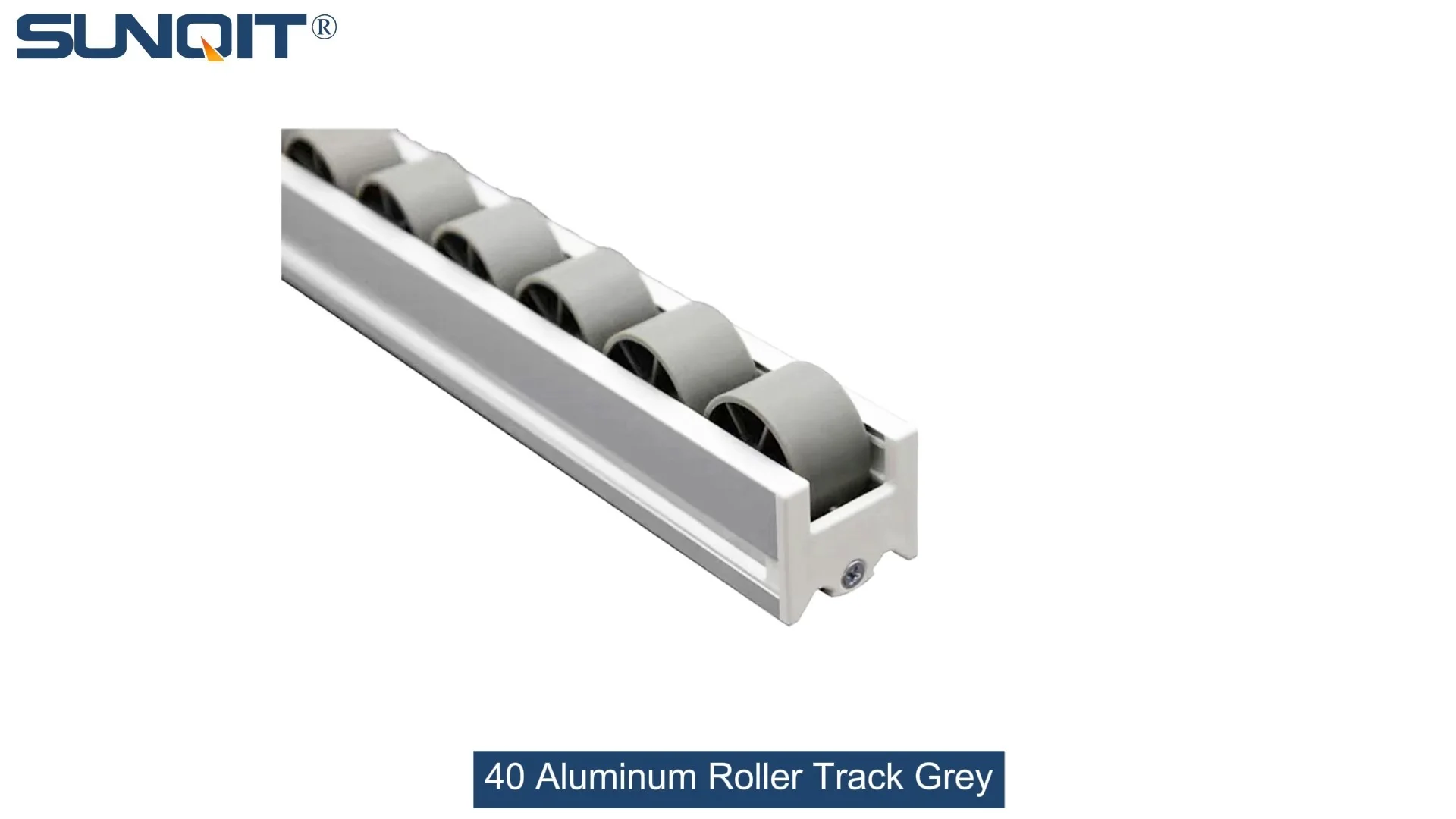
40 Aluminum Roller Track Grey
Durable and smooth-running modular roller rails. The system is fully assembled. The roller rail profile contains plastic rollers mounted on steel axles. Aluminum frame with plastic wheel make it anti corrosion,and material convey more smooth.
In the high-stakes world of automotive manufacturing, where every minute counts and precision is non-negotiable, the tools and equipment that keep production lines moving are the unsung heroes of efficiency. Among these, the humble roller track might not grab headlines, but its role in streamlining material flow, reducing downtime, and ensuring worker safety is irreplaceable. Today, we're shining a spotlight on a specific star in this category: the 40 Aluminum Roller Track Grey. Designed with the unique demands of automotive assembly lines in mind, this unassuming component packs a punch of benefits that resonate from the factory floor to the bottom line. Let's dive into why more and more automotive plants are making the switch—and why you might want to too.
What Is 40 Aluminum Roller Track Grey, Anyway?
Before we jump into the benefits, let's get clear on what we're talking about. The 40 Aluminum Roller Track Grey is a specialized material handling component engineered for automotive assembly environments. The "40" refers to its standard width (40mm), a size optimized for transporting medium to large automotive parts—think door panels, instrument clusters, or even small engine components. The "aluminum" in its name is key: unlike heavier steel alternatives or less durable plastic versions, aluminum brings a unique blend of strength and lightness. And the "grey"? That's not just for aesthetics. The neutral grey finish resists scuffs, hides minor wear, and maintains visibility in busy workspaces, where bright colors might clash with safety markings or distract workers.
But it's not just a track with rollers. This system is part of a larger ecosystem, often integrating with aluminum profiles, flow racks, and conveyors to create seamless material pathways. Its design includes precision-machined rollers, corrosion-resistant aluminum frames, and compatibility with standard aluminum profile accessories—making it a versatile player in modern lean manufacturing setups. Now, let's break down why this combination of features matters in the fast-paced world of automotive assembly.
1. Lightweight Yet Rugged: The Aluminum Advantage
Automotive assembly lines are tough places. Parts weighing anywhere from a few pounds to over 50 lbs glide across tracks hundreds of times a day. The track itself needs to withstand constant use without bending, warping, or failing. Steel tracks can handle the weight, but they come with a downside: they're heavy. Installing steel tracks requires more labor, and their weight puts extra strain on supporting structures like flow racks or conveyor frames. Over time, this added stress can lead to premature wear on the entire system.
Enter aluminum. The 40 Aluminum Roller Track Grey leverages aluminum's natural strength-to-weight ratio. Aluminum is about 30% the weight of steel, which makes installation a breeze—two workers can carry and position a section that would require four with steel. But don't let the lightness fool you: aluminum extrusion profiles (the same technology used in airplane frames and high-performance machinery) give this track impressive load-bearing capacity. Tests show it can comfortably support up to 200 lbs per linear foot, more than enough for most automotive parts. And because aluminum is naturally resistant to corrosion, it holds up against the oils, coolants, and cleaning agents that are part of daily life on the factory floor. Unlike steel, which can rust if the coating chips, aluminum forms a protective oxide layer that self-heals, ensuring the track stays functional for years with minimal maintenance.

2. Smooth, Jam-Free Flow: Precision Rollers for Uninterrupted Production
In automotive manufacturing, downtime is the enemy. A single jammed part on the line can ripple through the entire process, delaying shifts, increasing labor costs, and even impacting delivery deadlines. The 40 Aluminum Roller Track Grey is engineered to eliminate this risk with its precision roller system. Each roller is mounted on sealed bearings, reducing friction and ensuring smooth rotation. The grey plastic or aluminum wheels (depending on the variant) are designed to grip parts without sticking, even when handling slightly irregular shapes like curved door panels or textured dashboards.
What sets this track apart is its attention to detail. The rollers are spaced evenly (typically 3-4 inches apart) to prevent parts from tipping or getting caught, and the track's edges are rounded to avoid snagging on packaging or component edges. For parts that need to stop at specific workstations, optional brake mechanisms can be integrated without disrupting the flow of other items. In one case study, a mid-sized automotive plant reported a 22% reduction in line stoppages after switching to 40 Aluminum Roller Track Grey, simply because parts moved more predictably and jams became a rarity.

3. Seamless Integration with Lean Systems and Existing Infrastructure
Modern automotive manufacturing thrives on lean principles—eliminating waste, optimizing flow, and adapting quickly to changes. The 40 Aluminum Roller Track Grey isn't just a standalone component; it's a team player in lean systems. Its compatibility with aluminum profiles and standard accessories means it can be easily integrated into existing setups, whether you're retrofitting an old line or building a new one from scratch.
For example, if your plant uses flow racks to store incoming parts, the 40 Aluminum Roller Track Grey can be mounted directly onto aluminum profile frames, creating a gravity-fed system where parts roll forward as the front ones are taken. This reduces the need for workers to reach or bend, cutting down on ergonomic strain and speeding up access. Similarly, when paired with conveyors, the track can act as a transfer point, smoothly moving parts from a powered conveyor to a manual workstation without drops or jolts.
The track's modular design also supports continuous improvement, a core tenet of lean manufacturing. Need to reconfigure the line to accommodate a new car model? The aluminum sections can be disassembled, re-cut, and reassembled in hours, not days. No welding, no heavy tools—just basic hand tools and aluminum profile connectors. This flexibility is a game-changer in an industry where product cycles are getting shorter and customization is increasingly common.

4. Ergonomics First: Protecting Workers, Boosting Morale
Automotive assembly line workers are the backbone of production, but repetitive motion, heavy lifting, and awkward postures can lead to fatigue, injuries, and high turnover. The 40 Aluminum Roller Track Grey addresses this by putting ergonomics at the forefront. Its lightweight design makes it easy to adjust heights—whether you're mounting it on a workbench at waist level or integrating it into a floor-level conveyor. This ensures parts are always within easy reach, reducing bending, stretching, or twisting.
The smooth rolling action also minimizes the force required to move parts. Pushing a 40-lb door panel along a steel track might take 15-20 lbs of force; on the 40 Aluminum Roller Track Grey, that drops to 5-8 lbs—about the same as pushing a shopping cart. Over an 8-hour shift, that adds up to significant energy savings for workers, who report less fatigue and higher job satisfaction. In fact, a survey of workers at a plant that adopted the track found a 35% decrease in reported muscle strain and a 12% improvement in productivity, as workers could focus on assembling parts rather than struggling to move them.
5. Cost-Effective Over the Long Haul: Lower Maintenance, Higher ROI
Let's talk numbers. At first glance, aluminum track systems can cost more upfront than plastic or basic steel options. But automotive manufacturing is a long game, and the total cost of ownership (TCO) tells a different story. Here's why the 40 Aluminum Roller Track Grey delivers a stronger ROI:
- Minimal Maintenance: Aluminum's corrosion resistance means no painting, sanding, or rust treatment. The sealed bearings in the rollers rarely need lubrication, and when they do, it's a quick spray with standard machine oil. Compare that to steel tracks, which require regular coating touch-ups, or plastic tracks, which can crack under heavy use and need frequent replacement.
- Long Lifespan: A well-maintained aluminum track can last 10-15 years, even in high-traffic areas. Plastic tracks might need replacement every 2-3 years, and steel tracks often start showing significant wear after 5-7 years.
- Energy Savings: When integrated with conveyors, the low-friction rollers reduce the power needed to move parts, trimming electricity costs. Over time, these savings add up.
- Reduced Downtime: As mentioned earlier, fewer jams and breakdowns mean less time spent fixing equipment and more time producing cars. For a plant with a daily output of 500 vehicles, even a 1-hour reduction in downtime per week translates to thousands of additional cars per year.
How Does It Stack Up? A Comparison with Other Track Materials
Still on the fence? Let's put the 40 Aluminum Roller Track Grey head-to-head with two common alternatives: steel roller tracks and plastic roller tracks. The table below breaks down key factors automotive manufacturers care about most:
| Feature | 40 Aluminum Roller Track Grey | Steel Roller Track | Plastic Roller Track |
|---|---|---|---|
| Weight (per 10ft section) | 15 lbs | 45 lbs | 8 lbs |
| Max Load Capacity (per linear ft) | 200 lbs | 300 lbs | 75 lbs |
| Corrosion Resistance | Excellent (no rust) | Poor (requires coating) | Good (but prone to cracking) |
| Installation Time (per 10ft section) | 30 mins (2 workers) | 90 mins (4 workers) | 20 mins (2 workers) |
| Estimated Lifespan (in high use) | 10-15 years | 5-7 years | 2-3 years |
| Maintenance Frequency | Quarterly (basic inspection) | Monthly (coating, lubrication) | Bi-monthly (roller replacement) |
| Cost (per 10ft section, installed) | $180-$220 | $150-$190 | $80-$110 |
As the table shows, while steel tracks can handle heavier loads, they're bulkier, harder to install, and cost more in the long run. Plastic tracks are cheap upfront but lack durability and can't support automotive-grade weights. The 40 Aluminum Roller Track Grey hits the sweet spot: strong enough for most parts, easy to handle, and built to last—making it the most cost-effective choice for automotive assembly lines.
Real-World Impact: A Case Study
Let's ground this in reality with a story from a major automotive supplier. ABC Auto Components, a manufacturer of interior door panels for a leading automaker, was struggling with their existing steel roller tracks. The tracks were heavy, prone to rust in their humid facility, and required frequent lubrication to keep parts moving. Jams were common, leading to 2-3 hours of downtime per week. Workers complained about the effort needed to push panels along the tracks, and turnover in the material handling team was high.
In 2023, ABC Auto Components switched to 40 Aluminum Roller Track Grey across three of their assembly lines. The results were striking:
- Downtime dropped by 70% (from 3 hours/week to under 1 hour/week), translating to an additional 150 door panels produced monthly.
- Installation took half the time of the original steel tracks, saving 40 man-hours.
- Maintenance costs fell by 65%—no more rust treatment or frequent lubrication.
- Worker satisfaction scores in the material handling team rose by 40%, with zero turnover in the six months following installation.
"We were skeptical at first—paying more upfront felt risky," said Maria Gonzalez, ABC's Plant Manager. "But within three months, the savings in downtime and maintenance paid for the upgrade. Now, we're planning to roll out the aluminum tracks to our remaining lines next quarter."
Conclusion: More Than a Track—A Catalyst for Efficiency
The 40 Aluminum Roller Track Grey might not be the most glamorous piece of equipment in an automotive plant, but its impact is undeniable. It's a testament to how small, well-designed components can drive big improvements in efficiency, safety, and cost-effectiveness. By combining aluminum's strength and lightness, precision engineering, and compatibility with lean systems, it addresses the unique challenges of automotive assembly lines head-on.
Whether you're looking to reduce downtime, protect your workforce, or future-proof your facility for leaner, more flexible production, this track delivers. It's not just an upgrade—it's an investment in the smooth, uninterrupted flow of manufacturing, where every part moves exactly where it needs to be, exactly when it needs to be there. And in the competitive world of automotive manufacturing, that's the difference between keeping up and leading the pack.
So, the next time you walk through an automotive plant, take a closer look at the tracks beneath those moving parts. Chances are, if they're grey, aluminum, and 40mm wide, you're looking at a system that's quietly driving success—one roller at a time.