- Company Articles
- Products and Technology
- Product knowledge
- Benefits of Using One Side Rotatory Parallel Lean Pipe Joints in Assembly Lines

Benefits of Using One Side Rotatory Parallel Lean Pipe Joints in Assembly Lines
Related Product
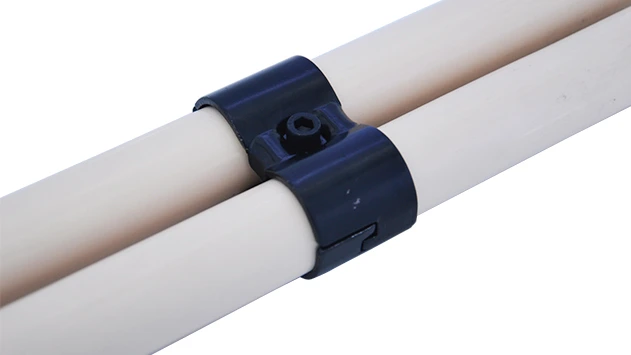
Parallel Lean Pipe Joint
Parallel lean pipe joint used for 2 pcs 28MM lean pipe connection in parallel direction to enhance frame structure, usually for heavy payload requirement for workbench. flow rack, hand trolley.
Introduction: The Pulse of Modern Assembly Lines
Let's start with the obvious: assembly lines are the backbone of manufacturing. They're the reason we can produce everything from smartphones to refrigerators at scale, keeping store shelves stocked and customers happy. But here's the thing—for all their efficiency, assembly lines have a hidden Achilles' heel: rigidity. Too often, they're built to handle one product, one process, one way of working. When a new model comes in, or demand shifts, or a better workflow is discovered, reconfiguring that line can feel like trying to rearrange a brick wall with a toothpick. Time is lost, frustration builds, and opportunities to innovate slip through the cracks.
That's where the magic of lean manufacturing comes in. At its core, lean is about cutting waste—waste of time, waste of space, waste of effort—and replacing it with flexibility, adaptability, and continuous improvement. And if lean is the philosophy, then the tools that bring it to life are the unsung heroes of the factory floor. Today, we're shining a spotlight on one such tool: the one side rotatory parallel lean pipe joint. It might sound like a small part, but in the world of assembly lines, small parts often make the biggest difference.
In this article, we'll dive into why these joints are becoming a game-changer for production supervisors, factory managers, and anyone who's ever thought, "There has to be a better way to set up this line." We'll break down their design, their benefits, and how they fit into a lean system that keeps your assembly line not just running, but thriving—no matter what the market throws at it.
That's where the magic of lean manufacturing comes in. At its core, lean is about cutting waste—waste of time, waste of space, waste of effort—and replacing it with flexibility, adaptability, and continuous improvement. And if lean is the philosophy, then the tools that bring it to life are the unsung heroes of the factory floor. Today, we're shining a spotlight on one such tool: the one side rotatory parallel lean pipe joint. It might sound like a small part, but in the world of assembly lines, small parts often make the biggest difference.
In this article, we'll dive into why these joints are becoming a game-changer for production supervisors, factory managers, and anyone who's ever thought, "There has to be a better way to set up this line." We'll break down their design, their benefits, and how they fit into a lean system that keeps your assembly line not just running, but thriving—no matter what the market throws at it.
What Are One Side Rotatory Parallel Lean Pipe Joints, Anyway?
Let's start with the basics. If you've ever walked through a factory, you've probably seen lean pipe structures—those modular frames made of pipes and joints that hold tools, parts bins, conveyors, or workbenches. They're lightweight, sturdy, and way easier to set up than traditional steel frames. But the real star of that system? The joints. They're the connectors that hold everything together, and their design can make or break how useful the whole structure is.
Now, most lean pipe joints are fixed. You tighten them down, and that's it—your pipe stays at a 90-degree angle, or a 45, or straight, and changing it means loosening bolts, repositioning, and retightening. Effective? Sure. But flexible? Not so much. That's where the one side rotatory parallel lean pipe joint flips the script.
Picture this: a joint with two ends. One end is fixed to a lean pipe—solid, stable, not going anywhere. The other end? It rotates. Not a full 360-degree spin (though some models come close), but enough to let the pipe connected to it pivot, tilt, or swing into different positions. Think of it like a door hinge, but for your assembly line. One side stays put, the other moves, and suddenly, that rigid workbench or parts rack becomes a dynamic tool that adapts to what you need, when you need it.
These joints are usually made from durable materials like aluminum or high-grade steel, coated to resist rust and wear—important in busy factories where oil, dust, and constant use can take a toll. And while they might look similar to standard lean pipe joints at first glance, that rotatory feature is a game-changer. It's the difference between a line that says, "This is how we've always done it" and one that says, "Let's try something better."
Now, most lean pipe joints are fixed. You tighten them down, and that's it—your pipe stays at a 90-degree angle, or a 45, or straight, and changing it means loosening bolts, repositioning, and retightening. Effective? Sure. But flexible? Not so much. That's where the one side rotatory parallel lean pipe joint flips the script.
Picture this: a joint with two ends. One end is fixed to a lean pipe—solid, stable, not going anywhere. The other end? It rotates. Not a full 360-degree spin (though some models come close), but enough to let the pipe connected to it pivot, tilt, or swing into different positions. Think of it like a door hinge, but for your assembly line. One side stays put, the other moves, and suddenly, that rigid workbench or parts rack becomes a dynamic tool that adapts to what you need, when you need it.
These joints are usually made from durable materials like aluminum or high-grade steel, coated to resist rust and wear—important in busy factories where oil, dust, and constant use can take a toll. And while they might look similar to standard lean pipe joints at first glance, that rotatory feature is a game-changer. It's the difference between a line that says, "This is how we've always done it" and one that says, "Let's try something better."
Fitting into the Lean System: More Than Just a Joint
Lean manufacturing isn't just a buzzword—it's a mindset. It's about asking, "How can we do this with less?" Less time, less space, less effort, less waste. And when it comes to assembly lines, waste often starts with inflexible equipment. A fixed workbench that's too tall for one worker and too short for another. A parts bin that's stuck in a corner, forcing employees to walk extra steps. A conveyor that can't adjust to a new product's size, leading to jams and delays.
This is where the one side rotatory parallel lean pipe joint shines as a key part of a lean system. By letting you adjust structures on the fly, it cuts down on the two biggest enemies of lean: overproduction and waiting. Overproduction happens when you're stuck making more of the same because reconfiguring the line takes too long. Waiting happens when workers stand around while tools or parts are moved into place. With these joints, reconfiguration takes minutes, not hours. Parts bins swing into reach, workbenches tilt to the perfect angle, and suddenly, your line is producing what's needed, when it's needed—no more, no less.
Think about it: in a traditional setup, if you need to add a new step to your assembly process, you might have to build an entirely new workstation from scratch. With rotatory joints, you can take the existing structure, pivot a section, add a roller track, and boom—you're ready. That's lean in action: using what you have to create what you need, without unnecessary waste.
This is where the one side rotatory parallel lean pipe joint shines as a key part of a lean system. By letting you adjust structures on the fly, it cuts down on the two biggest enemies of lean: overproduction and waiting. Overproduction happens when you're stuck making more of the same because reconfiguring the line takes too long. Waiting happens when workers stand around while tools or parts are moved into place. With these joints, reconfiguration takes minutes, not hours. Parts bins swing into reach, workbenches tilt to the perfect angle, and suddenly, your line is producing what's needed, when it's needed—no more, no less.
Think about it: in a traditional setup, if you need to add a new step to your assembly process, you might have to build an entirely new workstation from scratch. With rotatory joints, you can take the existing structure, pivot a section, add a roller track, and boom—you're ready. That's lean in action: using what you have to create what you need, without unnecessary waste.
5 Key Benefits for Production Assemble
Let's get practical. What does this mean for your day-to-day production assemble? Let's break down the benefits, one by one, with real-world scenarios that might sound familiar.
1. Flexibility That Keeps Up with Change
Imagine you run a small electronics factory, and you've just landed a contract to produce a new tablet model. The problem? Your current assembly line is set up for smartphones—smaller parts, tighter spaces. To make tablets, you need wider workbenches and more room for larger components. With fixed lean pipe joints, you'd be looking at hours (maybe even a full day) of taking apart the old setup, re-cutting pipes, and rebuilding. With one side rotatory parallel joints? You loosen a few bolts, swing the workbench extensions out, adjust the height of the parts racks, and you're back to production in under an hour.
That's the power of flexibility. These joints turn your assembly line into a chameleon, able to adapt to new products, new processes, and new demands without skipping a beat. No more putting projects on hold while you "figure out the line"—you can pivot as quickly as your customers do.
2. Efficiency That Adds Up (in Dollars and Sense)
Time is money, and nowhere is that truer than on the assembly line. Every minute a worker spends walking to grab a part, or adjusting a tool, or waiting for a workstation to be reconfigured is a minute they're not adding value to the product. One side rotatory joints cut that wasted time down to almost zero.
Take a simple example: a parts bin mounted on a rotatory joint. Instead of the worker having to step away from their station to reach the bin, they can swing it right in front of them, grab what they need, and swing it back. Multiply that by 50 workers, 500 times a day, and you're looking at hours of saved time every week. Over a year, that's thousands of dollars in increased productivity.
And it's not just time—space efficiency matters too. In a crowded factory, every square foot counts. With rotatory joints, you can tuck unused equipment out of the way when it's not needed. A roller track that's only used for the morning shift? Swing it against the wall in the afternoon to free up floor space for other tasks. It's like having a factory that expands and contracts based on your needs.
3. Ergonomics: Happy Workers = Better Results
Here's a statistic that might surprise you: according to the Bureau of Labor Statistics, overexertion and repetitive motion injuries cost U.S. businesses billions of dollars each year in workers' compensation and lost productivity. A big part of that? Poor workstation design. Workers bending, reaching, or twisting awkwardly to access tools or parts day in and day out.
One side rotatory joints fix this by putting control in the worker's hands—literally. Need the workbench higher? Tilt it up. Need the parts bin lower? Swing it down. No more straining to reach a bolt or hunching over a conveyor. When workers are comfortable, they're faster, more accurate, and less likely to call in sick with a backache. It's a win-win: happier employees and a healthier bottom line.
4. Cost-Effectiveness: Invest Once, Benefit Forever
Let's talk about the upfront cost. Yes, one side rotatory parallel lean pipe joints might cost a bit more than standard fixed joints. But here's the thing: they pay for themselves in no time. Think about how much you spend on replacing fixed structures when your needs change. New pipes, new joints, new tools—all that adds up. With rotatory joints, you reuse the same pipes and structures over and over. Need a new workstation? Repurpose the old one with a few twists and turns. No more buying new materials for every product change.
Plus, these joints are built to last. Made from tough materials and designed to handle constant use, they won't wear out or break down easily. That means fewer replacements, fewer repairs, and more money in your pocket long-term. It's not just a purchase—it's an investment in your factory's future.
5. Compatibility: Works with What You Already Have
Maybe you're thinking, "This sounds great, but I already have a lean pipe setup with standard joints. Do I have to start over?" Nope. One of the best things about these rotatory joints is that they're designed to work with standard lean pipes, roller tracks, and accessories. You don't need to replace your entire system—just swap out the fixed joints for rotatory ones where flexibility is needed. It's like upgrading your smartphone's software instead of buying a whole new phone: same device, way better performance.
1. Flexibility That Keeps Up with Change
Imagine you run a small electronics factory, and you've just landed a contract to produce a new tablet model. The problem? Your current assembly line is set up for smartphones—smaller parts, tighter spaces. To make tablets, you need wider workbenches and more room for larger components. With fixed lean pipe joints, you'd be looking at hours (maybe even a full day) of taking apart the old setup, re-cutting pipes, and rebuilding. With one side rotatory parallel joints? You loosen a few bolts, swing the workbench extensions out, adjust the height of the parts racks, and you're back to production in under an hour.
That's the power of flexibility. These joints turn your assembly line into a chameleon, able to adapt to new products, new processes, and new demands without skipping a beat. No more putting projects on hold while you "figure out the line"—you can pivot as quickly as your customers do.
2. Efficiency That Adds Up (in Dollars and Sense)
Time is money, and nowhere is that truer than on the assembly line. Every minute a worker spends walking to grab a part, or adjusting a tool, or waiting for a workstation to be reconfigured is a minute they're not adding value to the product. One side rotatory joints cut that wasted time down to almost zero.
Take a simple example: a parts bin mounted on a rotatory joint. Instead of the worker having to step away from their station to reach the bin, they can swing it right in front of them, grab what they need, and swing it back. Multiply that by 50 workers, 500 times a day, and you're looking at hours of saved time every week. Over a year, that's thousands of dollars in increased productivity.
And it's not just time—space efficiency matters too. In a crowded factory, every square foot counts. With rotatory joints, you can tuck unused equipment out of the way when it's not needed. A roller track that's only used for the morning shift? Swing it against the wall in the afternoon to free up floor space for other tasks. It's like having a factory that expands and contracts based on your needs.
3. Ergonomics: Happy Workers = Better Results
Here's a statistic that might surprise you: according to the Bureau of Labor Statistics, overexertion and repetitive motion injuries cost U.S. businesses billions of dollars each year in workers' compensation and lost productivity. A big part of that? Poor workstation design. Workers bending, reaching, or twisting awkwardly to access tools or parts day in and day out.
One side rotatory joints fix this by putting control in the worker's hands—literally. Need the workbench higher? Tilt it up. Need the parts bin lower? Swing it down. No more straining to reach a bolt or hunching over a conveyor. When workers are comfortable, they're faster, more accurate, and less likely to call in sick with a backache. It's a win-win: happier employees and a healthier bottom line.
4. Cost-Effectiveness: Invest Once, Benefit Forever
Let's talk about the upfront cost. Yes, one side rotatory parallel lean pipe joints might cost a bit more than standard fixed joints. But here's the thing: they pay for themselves in no time. Think about how much you spend on replacing fixed structures when your needs change. New pipes, new joints, new tools—all that adds up. With rotatory joints, you reuse the same pipes and structures over and over. Need a new workstation? Repurpose the old one with a few twists and turns. No more buying new materials for every product change.
Plus, these joints are built to last. Made from tough materials and designed to handle constant use, they won't wear out or break down easily. That means fewer replacements, fewer repairs, and more money in your pocket long-term. It's not just a purchase—it's an investment in your factory's future.
5. Compatibility: Works with What You Already Have
Maybe you're thinking, "This sounds great, but I already have a lean pipe setup with standard joints. Do I have to start over?" Nope. One of the best things about these rotatory joints is that they're designed to work with standard lean pipes, roller tracks, and accessories. You don't need to replace your entire system—just swap out the fixed joints for rotatory ones where flexibility is needed. It's like upgrading your smartphone's software instead of buying a whole new phone: same device, way better performance.
Comparing the Options: Why Rotatory Beats Fixed
Still on the fence? Let's put this in black and white. Below is a comparison of one side rotatory parallel lean pipe joints with traditional fixed lean pipe joints. You'll see why more and more factories are making the switch.
| Feature | Traditional Fixed Lean Pipe Joints | One Side Rotatory Parallel Lean Pipe Joints |
|---|---|---|
| Reconfiguration Time | 1-2 hours (requires tools, disassembly, and reassembly) | 5-10 minutes (simple adjustment, no disassembly) |
| Flexibility | Low—fixed angles only; no on-the-fly changes | High—rotates to multiple angles; adapts to tasks instantly |
| Ergonomic Benefits | Limited—workstation height/angle can't be adjusted for individual workers | High—workers can adjust to their preferred position, reducing strain |
| Long-Term Cost | Higher—requires replacement parts for reconfigurations | Lower—reusable; minimal replacement needed |
| Best For | Static assembly lines with no product/process changes | Dynamic lines with frequent product updates or varying workflows |
As you can see, the rotatory joint isn't just a "nice-to-have"—it's a "need-to-have" for any assembly line that wants to stay competitive in today's fast-paced market.
Real-World Success: How Factories Are Winning with Rotatory Joints
Let's hear from the front lines. Take ABC Electronics, a mid-sized manufacturer in Ohio that produces circuit boards for medical devices. A few years back, they were struggling with frequent product changes—each new circuit board model required a slightly different setup, and reconfiguring their assembly line took up to 8 hours. Production fell behind, and overtime costs skyrocketed.
Then, they switched to one side rotatory parallel lean pipe joints. Today, reconfiguring a workstation takes 15 minutes. "It's like night and day," says Mike, their production supervisor. "We used to dread new orders because we knew we'd be stuck rebuilding lines. Now, we can pivot so quickly, we actually look forward to new challenges. Our workers are happier, our output is up 20%, and we've cut overtime by half."
Or take XYZ Automotive, a parts supplier in Texas. They were dealing with high turnover due to ergonomic issues—workers complaining of shoulder and back pain from reaching across fixed workbenches. After installing rotatory joints, they let employees adjust their stations to fit their height and reach. The result? Turnover dropped by 35%, and error rates (caused by fatigued workers) fell by 18%. "We didn't just improve our line—we improved people's lives," says their HR manager, Lisa.
These aren't isolated cases. From food packaging to aerospace, factories of all sizes are discovering that the right lean pipe joint isn't just a tool—it's a catalyst for change.
Then, they switched to one side rotatory parallel lean pipe joints. Today, reconfiguring a workstation takes 15 minutes. "It's like night and day," says Mike, their production supervisor. "We used to dread new orders because we knew we'd be stuck rebuilding lines. Now, we can pivot so quickly, we actually look forward to new challenges. Our workers are happier, our output is up 20%, and we've cut overtime by half."
Or take XYZ Automotive, a parts supplier in Texas. They were dealing with high turnover due to ergonomic issues—workers complaining of shoulder and back pain from reaching across fixed workbenches. After installing rotatory joints, they let employees adjust their stations to fit their height and reach. The result? Turnover dropped by 35%, and error rates (caused by fatigued workers) fell by 18%. "We didn't just improve our line—we improved people's lives," says their HR manager, Lisa.
These aren't isolated cases. From food packaging to aerospace, factories of all sizes are discovering that the right lean pipe joint isn't just a tool—it's a catalyst for change.
Maintenance Made Simple: Keeping Your Joints in Top Shape
You might be wondering, "If these joints move, do they require a lot of maintenance?" The short answer: no. They're designed to be low-fuss, even in busy factory environments. Here are a few simple tips to keep them working like new:
1. Keep them clean: Wipe away dust, oil, and debris regularly with a dry cloth. Built-up grime can slow down rotation, so a quick wipe-down once a week goes a long way.
2. Lubricate occasionally: Every 3-6 months (depending on use), add a drop of light machine oil to the rotatory mechanism. This keeps it moving smoothly and prevents rust.
3. Check for wear: Every month, inspect the joints for loose bolts or signs of damage. Tighten any loose parts, and replace joints if you notice cracks or excessive wear (though this should be rare with proper care).
That's it. No complicated schedules, no special tools—just basic common sense. These joints are built to handle the chaos of the factory floor, so you can focus on what matters: making great products.
1. Keep them clean: Wipe away dust, oil, and debris regularly with a dry cloth. Built-up grime can slow down rotation, so a quick wipe-down once a week goes a long way.
2. Lubricate occasionally: Every 3-6 months (depending on use), add a drop of light machine oil to the rotatory mechanism. This keeps it moving smoothly and prevents rust.
3. Check for wear: Every month, inspect the joints for loose bolts or signs of damage. Tighten any loose parts, and replace joints if you notice cracks or excessive wear (though this should be rare with proper care).
That's it. No complicated schedules, no special tools—just basic common sense. These joints are built to handle the chaos of the factory floor, so you can focus on what matters: making great products.
Conclusion: The Future of Assembly Lines Is Flexible
At the end of the day, assembly lines aren't just about machines and parts—they're about people. People trying to do their jobs better, faster, and safer. People looking for ways to adapt, innovate, and stay ahead. The one side rotatory parallel lean pipe joint might be a small part, but it's a big step toward that future.
It's about more than just flexibility. It's about empowering workers. It's about cutting waste and boosting efficiency. It's about building assembly lines that don't just keep up with change—they lead it.
So, if you're tired of rigid lines that hold you back, if you're ready to embrace the lean system and all its benefits, it might be time to take a closer look at these rotatory joints. They're not just changing how assembly lines work—they're changing how we think about manufacturing itself. And that's a change worth making.
It's about more than just flexibility. It's about empowering workers. It's about cutting waste and boosting efficiency. It's about building assembly lines that don't just keep up with change—they lead it.
So, if you're tired of rigid lines that hold you back, if you're ready to embrace the lean system and all its benefits, it might be time to take a closer look at these rotatory joints. They're not just changing how assembly lines work—they're changing how we think about manufacturing itself. And that's a change worth making.